Thermal Imaging Meaning: The Technology Category Explained
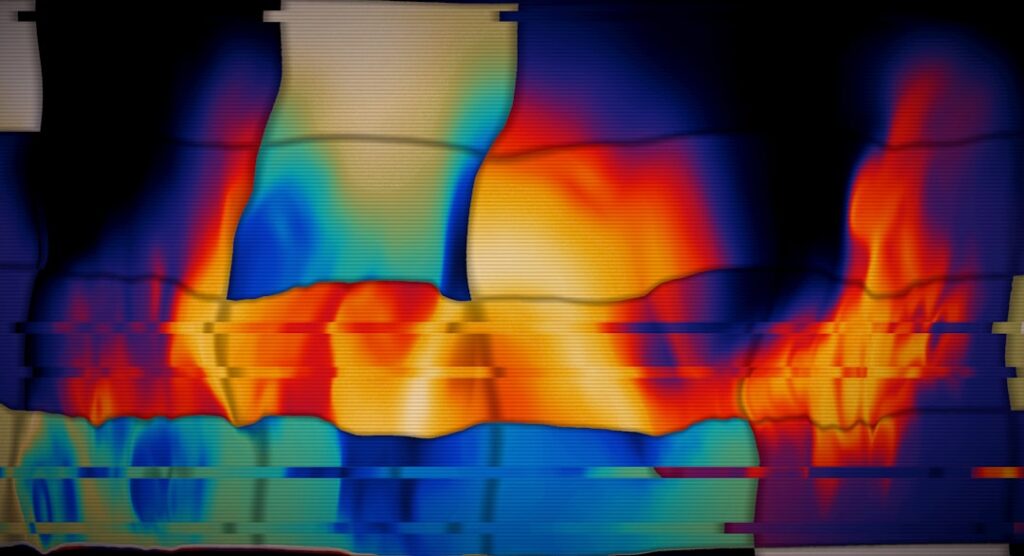
To understand thermal imaging meaning at the category level, separate the technology from the device. Thermal imaging is the practice of detecting and visualizing infrared radiation emitted by objects, presented as a two-dimensional false-color picture. It is a sensing capability, not a single product. The capability is delivered through handheld cameras, smartphone modules, drone payloads, fixed-mount industrial sensors, and aerospace instruments. This guide explains the broader category — what thermal imaging means as a class of technology, where it came from, and where homeowners and inspectors encounter it in 2026.
Part of our Thermal Imaging for Homes guide — start there for the full picture →
What Thermal Imaging Is, in One Sentence
Thermal imaging is the conversion of long-wave infrared radiation — energy that every object above absolute zero emits as a function of its temperature and surface emissivity — into a visible image that maps temperature differences across a scene. The eye cannot see infrared. The camera does the conversion, assigning false colors (most commonly an iron-tone gradient or rainbow palette) to temperature ranges chosen by the operator. The result is a picture in which hot zones glow bright and cold zones appear dark, or vice versa depending on the palette.
The Physics That Makes It Possible
Every object radiates electromagnetic energy. The wavelength of peak emission depends on the object’s temperature. Human skin at 33°C peaks around 9.5 microns; a room-temperature wall peaks slightly longer; a hot motor casing peaks shorter. The atmospheric window between roughly 7 and 14 microns lets long-wave infrared travel through air with relatively little absorption, which is why most building-diagnostics imagers are tuned to that band. The Stefan-Boltzmann law gives the relationship between absolute temperature and total radiated power, while Wien’s displacement law gives the peak wavelength. The U.S. Department of Energy’s energy-saver guidance explains that this physics is what allows infrared inspections to find air leaks, missing insulation, and moisture intrusion in residential and commercial buildings.
Brief History of the Category
Thermal imaging began as a military and aerospace technology in the mid-twentieth century. Early infrared cameras used cooled detectors that required liquid nitrogen and cost tens of thousands of dollars. The shift that opened the consumer market was the development of the uncooled microbolometer in the 1990s, which let manufacturers build sensor arrays that worked at room temperature. By the mid-2000s handheld units were available for under $5,000; by 2015 phone-attached modules dropped the entry price below $250. The 2020s have seen drone-mounted thermal payloads become standard equipment for commercial roof inspections, solar-array audits, and search-and-rescue work.
Where Thermal Imaging Is Used in 2026
Building Diagnostics
The largest civilian application by volume. Home inspectors, energy auditors, and HVAC technicians use thermal imaging to locate insulation gaps, air leaks, plumbing leaks behind walls, electrical hot spots, and HVAC distribution problems. ASHRAE guidance recommends a minimum temperature differential of about 10°F across the wall assembly for confident interpretation of residential thermal images.
Electrical and Industrial Inspection
Electrical contractors use thermal imaging to find loose connections, overloaded breakers, and failing transformers before they cause outages or fires. Industrial maintenance programs scan motors, bearings, and process equipment to catch failures while still repairable. The temperature signatures that precede a hardware failure typically appear weeks before the failure event.
Medical and Veterinary Applications
Medical thermography has a long history but a contested clinical role. The technology is used in screening for circulation disorders, deep-vein thrombosis, and some breast-tissue evaluations as an adjunct to mammography. Veterinary applications include detecting lameness in horses and inflammation in livestock. Always consult a physician for medical screening decisions.
Search and Rescue, Wildlife, and Public Safety
Search-and-rescue teams use thermal imaging to find lost hikers and disaster victims who emit body-heat signatures against cooler backgrounds. Police and fire services use thermal imaging in low-visibility conditions. Wildlife biologists use it for population surveys.
Solar and Wind Energy
Solar-panel installations are routinely scanned for hot cells indicating panel failure or bypass-diode issues. Wind-turbine generators and gearboxes are scanned for bearing failures.
Thermal Imaging vs Other Imaging Technologies
Several technologies sound similar but work on different principles. Thermal imaging detects emitted long-wave infrared radiation from objects at ambient temperature. Night vision (image intensification) amplifies reflected near-infrared light from the moon, stars, or an IR illuminator — it is reflective, not emissive. X-ray imaging detects high-energy electromagnetic radiation transmitted through an object. Ultrasound imaging detects sound waves reflected from internal boundaries. Of these, only thermal imaging works in absolute darkness without any external illumination, because the heat radiation comes from the targets themselves.
Spectral Bands and Why Long-Wave Infrared Wins for Buildings
Infrared radiation spans a wide wavelength range, and different bands serve different applications. Near-infrared (0.7 to 1.4 microns) is used in night-vision goggles and some security cameras — it requires an external illuminator or moonlight to work. Short-wave infrared (1.4 to 3 microns) is used in industrial moisture sensing and some satellite imaging. Mid-wave infrared (3 to 5 microns) is used in high-temperature industrial monitoring and some military applications. Long-wave infrared (7 to 14 microns) is the band most building diagnostic and consumer imagers use, because the atmospheric window in this range allows radiation from room-temperature objects to reach the sensor with minimal absorption.
The choice of long-wave for residential and commercial inspection is not arbitrary. Building components at typical operating temperatures emit peak radiation in the 8-to-12-micron range. Designing the sensor and lens for that band maximizes signal at the temperatures that matter most for diagnostic work.
Resolution Considerations Across the Category
Detector resolution in thermal imaging is measured in thermal pixels — the number of independent temperature measurements the sensor captures in a single frame. The progression across product tiers in 2026:
- 80×60 (4,800 pixels): entry consumer modules and clip-on phone attachments. Adequate for close-range obvious problems.
- 160×120 (19,200 pixels): mid-tier consumer and entry-inspector. The InterNACHI-recommended minimum for inspectors who will document thermal findings.
- 320×240 (76,800 pixels): professional inspector tier. Suitable for documentation and most commercial work.
- 640×480 (307,200 pixels): premium professional and entry-aerospace. Used in scientific and large-scale commercial work.
The Hardware That Delivers the Capability
A thermal imaging system has four core components: a germanium lens (regular glass is opaque to long-wave infrared), a microbolometer detector array, signal-processing electronics, and a display. The Germanium-lens requirement is a major cost driver — germanium is rarer than silicon and harder to grind into optical-grade lenses. Newer chalcogenide-glass lenses have started to appear in low-cost consumer units, lowering the entry price further.
The detector array’s pixel count is the most-marketed specification. Categories run from 80×60 entry units to 1024×768 professional aerospace-grade arrays. The thermal sensitivity figure — NETD in millikelvin — measures the smallest temperature difference the sensor can resolve. For a homeowner-grade unit, expect 80×60 to 160×120 resolution with 80-to-100 mK NETD; for a professional inspector unit, expect 320×240 or higher with 40-to-60 mK NETD. For more on form factors see our infrared thermal imaging cameras category guide and our parent home inspection tools hub.
Limitations and Common Misconceptions
Thermal imaging does not see through walls. It detects surface temperature on the side facing the camera. Patterns on the surface can imply what lies behind — a cold ceiling stripe usually marks a missing strip of attic insulation between two joists — but the imager does not penetrate solid materials. Thermal imaging is also not a moisture meter. Wet surfaces often appear cooler because evaporation pulls heat from them, but the camera measures temperature, not water content. Pair with a pin-type meter to confirm.
A thermal image of a window does not reveal what is happening on the other side of the glass. Standard window glass is opaque to long-wave infrared. The image shows the temperature of the glass itself.
Certifications and Standards That Reference the Term
ASTM publishes consensus standards for infrared thermography practice, including standards for building-envelope inspection and electrical-system thermography. ASHRAE references thermal imaging in its standards on building diagnostics. InterNACHI offers an Infrared Certified credential for home inspectors. The credentials matter because emissivity, reflected apparent temperature, and ambient compensation are technical variables that untrained operators routinely misread.
What Homeowners Should Take Away
Thermal imaging meaning, in the everyday homeowner context, comes down to two propositions. First, it is a powerful diagnostic technology that reveals heat-loss pathways, insulation defects, plumbing leaks, and electrical hot spots that are invisible to the naked eye. Second, it is interpretation-dependent — the same image can be read as a leak by one operator and a thermal bridge by another. For high-stakes uses (insurance claims, pre-purchase inspections, energy-audit certifications), hire a credentialed thermographer rather than rely on a consumer-grade image alone.
Sensitivity Thresholds Across the Category
Thermal imaging sensitivity is quantified by noise-equivalent temperature difference (NETD), expressed in millikelvin. Lower numbers mean smaller temperature differences become visible. The tiers in 2026 consumer and professional markets:
- Entry consumer (under $500): 100-150 mK NETD
- Mid-tier consumer ($500-$1,500): 60-100 mK NETD
- Professional ($1,500-$5,000): 40-60 mK NETD
- Premium scientific (cooled detectors, $10,000+): under 20 mK NETD
For most homeowner and inspector applications, 60-80 mK NETD is the practical sweet spot. Lower noise produces smoother images and reveals subtler patterns, but the diminishing returns set in quickly for static-target inspection work.
Drone-Based Thermal Imaging Specifically
Drone-mounted thermal payloads have become a significant subcategory of thermal imaging over the past decade. The use cases — roof inspections, solar-array surveys, wildlife detection, search-and-rescue — combine the thermal sensing technology with the flexibility of aerial vantage. Payload thermal cameras differ from handheld units in being designed for vibration resistance, integrated GPS metadata, and remote operation. Resolution and sensitivity remain the same key specifications, with most drone thermal payloads ranging from 320×240 to 640×512 detectors. Costs for the payload alone range from $1,500 (basic 320×240) to $10,000+ (high-resolution radiometric units with onboard processing).
Industrial Applications Beyond Buildings
Beyond residential and commercial building diagnostics, thermal imaging serves a wide range of industrial functions. Process-monitoring systems in chemical plants scan reactor vessels and pipelines for temperature anomalies that signal developing failures. Steel-mill operations use thermal cameras to monitor furnace conditions and continuous-casting equipment. Food-processing plants use fixed-mount thermal sensors to confirm cooking and pasteurization temperatures. Glass manufacturing depends on thermal monitoring of forming and tempering operations. These industrial applications drove the development of the cooled and high-temperature thermal imaging market that later trickled down into residential equipment as costs fell.
Common Misconceptions About the Technology
Several misconceptions about thermal imaging persist among consumers and even some real-estate professionals. The first is that thermal cameras see through walls; they do not — they detect surface temperature only. The second is that any cold spot on a thermal image means a moisture problem; cold spots have many possible causes including normal thermal bridges, ductwork, and reflective surfaces. The third is that more thermal pixels always means better detection; resolution matters but so do sensitivity (NETD), lens quality, and operator skill. The fourth is that consumer-grade thermal cameras produce litigation-grade documentation; only radiometric units with measurement-grade calibration meet that bar.
Correcting these misconceptions matters when communicating findings to clients. An inspector who reports a thermal anomaly without explaining its limitations risks the client interpreting the finding as more definitive than it is.
How Thermal Imaging Fits Into Home Inspection Reports
Most home inspections that include thermal imaging treat it as a supplementary tool rather than a primary deliverable. The base inspection identifies findings through visual observation; thermal imaging refines specific findings or confirms suspected issues. A typical report includes 5-15 thermal images of representative findings — usually concentrated on the building envelope, attic, basement, and electrical panel. Each thermal image is paired with a visible-light image of the same scene and an interpretive caption. Standalone thermography reports, distinct from general inspection reports, run longer (20-50 images) and are commissioned specifically when thermal diagnostics are the primary scope of work.
References
- ENERGY STAR: Seal and Insulate — U.S. Environmental Protection Agency (ENERGY STAR)
- InterNACHI Infrared Certified credential — InterNACHI
- ASHRAE building diagnostics standards — ASHRAE
Frequently asked questions
Is thermal imaging the same as infrared imaging?
In practical use the terms are synonyms. Thermal imaging emphasizes the temperature-measurement application; infrared imaging emphasizes the physics of the radiation being detected. Both refer to the same long-wave infrared sensing technology in most consumer and inspector contexts.
Can thermal imaging see in total darkness?
Yes. Because the imager detects radiation emitted by the objects themselves rather than reflected ambient light, it works in absolute darkness. This separates it from night-vision goggles, which require some ambient light or an IR illuminator.
What temperature range can thermal imaging detect?
Consumer and inspector-grade imagers typically cover -10°C to 400°C. Specialized industrial models extend higher for hot processes. Scientific imagers extend down to a few kelvin with cooled detectors.
Is thermal imaging dangerous to use?
No. The camera is a passive detector — it only receives radiation, never emits any. There is no laser, no X-ray, and no health risk to the operator or anyone being imaged.
Thermal imaging cameras
Infrared cameras reveal hidden moisture, missing insulation, and air leaks. Phone-attachment models are the budget entry point; standalone units have higher resolution.
| Product | Why | Buy |
|---|---|---|
 FLIR ONE Pro (phone) FLIR ONE Pro (phone) | Plugs into iPhone/Android; inspector favorite. | Amazon — $349.00 |
 Topdon TC001 Topdon TC001 | High-res phone module at a low price. | Amazon — $199.99 |
 FLIR C5 Compact FLIR C5 Compact | Standalone pocket camera with Wi-Fi. | Amazon — $611.50 |