Thermal Imagery Definition: Terms and Glossary Guide
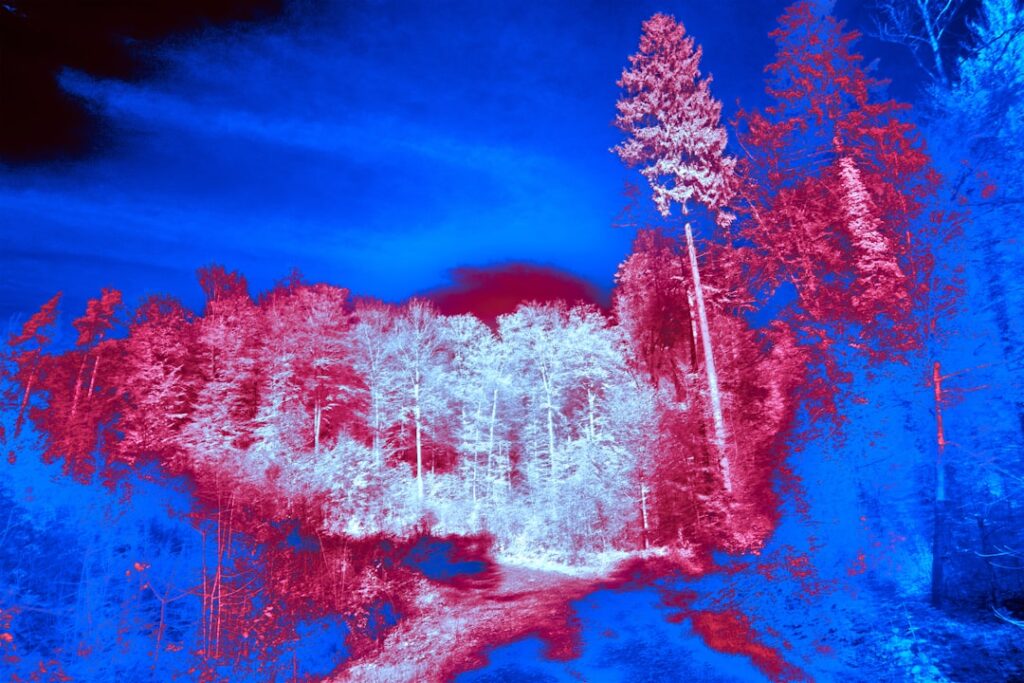
“Thermal imagery” is a term used loosely to cover a family of related but technically distinct concepts: thermography, infrared imaging, thermal imaging, and thermal vision. The terms overlap significantly in everyday use but carry specific meanings in technical literature, inspector training, and standards documents. This glossary-style guide defines thermal imagery and distinguishes it from neighboring terms, so homeowners and inspectors can read product specs and standards documents with confidence. The framework draws on Department of Energy thermography publications, InterNACHI inspection standards, and ASHRAE technical resources current as of 2026.
Part of our Thermal Imaging for Homes guide — start there for the full picture →
Thermal Imagery — The Core Definition
Thermal imagery is the visual product of measuring infrared radiation emitted by objects and rendering the temperature field as an image. The image displays temperature variations across the field of view, typically through color or grayscale mapping where each pixel represents a measured temperature. The underlying measurement is real (the temperature is genuinely sensed); the colors are interpretive (they translate measurement to human-readable form).
The term “imagery” emphasizes the visual output. The same underlying measurement could be expressed as a numeric table of temperature values, but imagery refers specifically to the rendered visualization. Imagery is a deliverable; the temperature measurement is the underlying data.
Thermography — The Broader Discipline
Thermography is the practice and science of obtaining and interpreting thermal imagery. It encompasses the equipment (thermal cameras), the techniques (scanning workflows, environmental conditions), the interpretation (pattern recognition, building science), and the documentation (reports, standards-compliant presentations). A thermographer is a person trained in this discipline.
Thermography is to thermal imagery as photography is to photographs. The discipline produces the imagery. Standards bodies — ASNT (American Society for Nondestructive Testing), InterNACHI, ASHRAE — publish thermography certification frameworks. The cluster on what is a thermographer covers the role in depth.
Infrared Imaging — The Technology Layer
Infrared imaging describes the underlying technology that produces thermal imagery. Cameras detect infrared radiation in the long-wave (LWIR, 8-14 microns) or mid-wave (MWIR, 3-5 microns) bands, depending on application. The technology layer includes detector types (microbolometer, cooled InSb, etc.), optics (germanium lenses for LWIR), and signal processing.
“Infrared imaging” can technically refer to imaging in any infrared band, including near-infrared used in night vision and remote sensing. In residential and inspection contexts, infrared imaging is essentially synonymous with thermal imaging because the relevant band is LWIR.
Thermal Imaging — The Common Term
Thermal imaging is the most common general-purpose term for producing thermal imagery. It is used by consumer marketing, news media, and most inspectors. The term emphasizes the act of imaging — capturing the temperature field as an image — and applies regardless of specific technology, application, or output format.
In everyday use, “thermal imaging” and “infrared imaging” are interchangeable. Manufacturers use both terms in product naming and specifications. Standards documents tend to prefer “infrared thermography” for the formal discipline.
Thermal Vision — The Capability Framing
“Thermal vision” frames the same technology from the user’s perspective: the ability to see in thermal infrared. The term appears in consumer marketing for night-vision-style applications, smartphone accessories aimed at outdoor enthusiasts, and gaming or entertainment contexts. It is rarely used in technical or inspection contexts.
The capability framing emphasizes what the user can do (see heat patterns) rather than the technology that enables it. This makes “thermal vision” more accessible to general audiences but less precise in technical specifications.
The Color Mapping Vocabulary
Thermal imagery uses several standard color mappings called palettes. Iron palette runs from black (cold) through purple, red, orange, yellow, to white (hot) — the most common general-purpose palette. Rainbow palette runs blue (cold) through green, yellow, orange, red (hot) — high contrast but can mislead by emphasizing intermediate colors. Grayscale runs black-cold to white-hot — useful for structural detail without color distraction. Arctic palette emphasizes cool patterns with blue tones.
Palette is interpretive overlay. The same underlying temperature data produces different-looking images depending on palette choice. Inspector reports typically specify the palette used so readers can interpret the image correctly.
Temperature Measurement Vocabulary
Thermal imagery vocabulary includes specific measurement terms. “Apparent temperature” is what the camera reads at a point, which equals actual temperature only when emissivity is correctly entered. “Spot temperature” is a single-point reading at the cursor or center. “Min/max” are the lowest and highest temperatures in the visible scene. “Delta T” is the temperature difference between two points or regions.
NETD (Noise-Equivalent Temperature Difference) measures the camera’s sensitivity — the smallest temperature difference the sensor can resolve. Lower NETD values indicate better sensitivity. Common values: 100 mK (entry-level), 50 mK (mid-tier), 25-30 mK (professional).
Emissivity — The Critical Variable
Emissivity is the efficiency with which a surface radiates infrared compared to a perfect blackbody at the same temperature. Values range from 0.0 (perfectly reflective) to 1.0 (perfect emitter). Painted wood and drywall emit at ~0.95. Polished metals can emit as low as 0.05. Low-emissivity surfaces reflect surrounding thermal radiation rather than emit their own, producing misleading apparent temperatures.
Thermal cameras allow emissivity adjustment. Entering the correct value is essential for accurate temperature measurement. For routine building inspection, 0.95 is a reasonable default; for metals, apply temporary high-emissivity coatings to the measurement spot.
Wavelength Bands
Thermal imagery vocabulary includes wavelength band designations. Long-wave infrared (LWIR) at 8-14 microns is the residential and building-inspection band. Mid-wave infrared (MWIR) at 3-5 microns is used for hot industrial targets. Short-wave infrared (SWIR) at 1-3 microns serves remote sensing and certain night-vision applications. Near-infrared (NIR) at 0.7-1.4 microns is closer to visible light and used in different applications entirely.
For building and residential context, LWIR is the only relevant band. Other bands appear in specialty applications outside the typical homeowner or inspector domain.
Detector Types
Thermal imagery vocabulary includes detector technology terms. Microbolometers are uncooled arrays that change resistance with absorbed infrared — the standard for residential and inspection cameras. Quantum detectors (InSb, MCT) are cooled to cryogenic temperatures for higher sensitivity, used in scientific and military applications. Pyroelectric detectors are older technology rarely used in modern cameras.
Microbolometer is the relevant detector type for almost all residential and inspection thermal imaging. The cluster on thermal imaging detector technology covers detectors in depth.
Resolution Vocabulary
Thermal imagery resolution is measured in detector pixels — typically 80×60, 160×120, 320×240, or 640×480. These are not the same as visible-light camera megapixels. The pixel count matters because each pixel is an independent temperature measurement, and lower pixel counts produce blurrier images on the same target.
“Native resolution” is the actual detector resolution. “Enhanced” or “interpolated” resolution is upsampled output that looks higher resolution but does not add independent measurements. Buy on native resolution; interpolation does not add information.
Field of View and Spatial Resolution
Field of view (FOV) is the angular extent of the scene captured in one frame. Spatial resolution is the smallest physical area resolved at a given distance. Spatial resolution improves with higher pixel count, narrower FOV, or closer scanning distance. Diagnostic work often involves trading FOV for spatial detail by changing distance or lens.
Documentation Vocabulary
Thermography reports use specific terms. “Reference image” is a visible-light photo of the same scene. “Radiometric image” is a thermal image with embedded temperature data allowing later analysis. “Annotation” adds text, markers, or measurements to the image. “Palette” specifies the color mapping used. Reports specify these elements to support interpretation by future readers.
How These Terms Appear in Standards
ASNT publishes Personnel Qualification and Certification in Nondestructive Testing covering thermography. ASHRAE publishes standards covering HVAC thermography. InterNACHI publishes Infrared Certified inspector standards for residential applications. Department of Energy publishes thermographic inspection guidance for building diagnostics. Each uses the vocabulary above with specific technical precision.
Why the Vocabulary Matters
Precise vocabulary supports defensible inspection work. A report that says “thermal scan shows missing insulation” is weaker than one that says “thermal imagery at 0.95 emissivity reveals cold pattern between studs at coordinates X consistent with absent or compressed insulation, confirmed by moisture meter readings of Y%.” The vocabulary precision converts impressions into actionable diagnostic findings. The pillar on home inspection tools covers the diagnostic toolkit broadly.
References
- ENERGY STAR: Seal and Insulate — U.S. Environmental Protection Agency (ENERGY STAR)
- Infrared Certified Inspector Resources — InterNACHI
- HVAC Thermography Standards — ASHRAE
- Electrical Thermography Resources — Occupational Safety and Health Administration
Frequently asked questions
What is thermal imagery?
The visual product of measuring infrared radiation and rendering the temperature field as an image. Pixels represent measured temperatures translated to color or grayscale through a palette. The measurement is real; the colors are interpretive.
How does thermal imagery differ from thermography?
Thermal imagery is the visual output. Thermography is the broader discipline that produces it — equipment, techniques, interpretation, and documentation. Thermographers practice thermography to produce thermal imagery.
Is thermal imaging the same as infrared imaging?
In everyday use, yes — both terms refer to capturing the temperature field as an image, typically in long-wave infrared. Technically, infrared imaging can refer to any infrared band including near-infrared used in night vision.
Why does emissivity matter in thermal imagery?
Different surfaces radiate infrared with different efficiency. Low-emissivity surfaces (polished metals) reflect surrounding radiation rather than emit their own, producing misleading apparent temperatures. Correct emissivity setting is essential for accurate measurement; 0.95 is a reasonable default for building surfaces.
Thermal imaging cameras
Infrared cameras reveal hidden moisture, missing insulation, and air leaks. Phone-attachment models are the budget entry point; standalone units have higher resolution.
| Product | Why | Buy |
|---|---|---|
 FLIR ONE Pro (phone) FLIR ONE Pro (phone) | Plugs into iPhone/Android; inspector favorite. | Amazon — $349.00 |
 Topdon TC001 Topdon TC001 | High-res phone module at a low price. | Amazon — $199.99 |
 FLIR C5 Compact FLIR C5 Compact | Standalone pocket camera with Wi-Fi. | Amazon — $611.50 |