Test Home Air for Mold: What Homeowners Need to Know

Homeowners reach for an air test when they smell something musty, watched a small leak go undetected for weeks, or developed lingering respiratory symptoms in one room. The decision to test home air for mold sits at the intersection of indoor air quality and visible building science, and the right answer depends on whether the concern is whole-house, hidden behind drywall, or a single visible patch you can see and touch. This guide summarizes EPA and CDC guidance current as of 2026 — consult a certified mold inspector for testing decisions and your physician for symptom evaluation.
Part of our Mold Testing & Inspection guide — start there for the full picture →
Is this mold, asbestos, or water damage? Get a free instant screen
Upload a clear photo of the suspect area. You'll get an instant AI screening opinion and what to do next. This is screening guidance, not a professional determination.
Screening guidance only. AI can be wrong. Confirm asbestos, mold type, or lead with lab testing or a licensed professional before acting.
Should you test home air for mold, or sample the surface?
The U.S. Environmental Protection Agency takes a practical position. If visible mold exists, identification by lab analysis usually adds no value because the response is the same: find the moisture, fix it, and clean or remove affected materials under containment. Air testing earns its keep when the concern is broader than a single patch — when you suspect hidden growth behind walls, under flooring, or in HVAC ductwork, or when one room produces symptoms the rest of the house does not.
Surface sampling, by contrast, answers a narrow question: what is this spot? A tape-lift or swab from a single suspicious stain can identify whether the dark patch on your basement joist is mold, mildew residue, or simply efflorescence salt left behind by evaporating water. Air sampling answers a wider question: are the indoor spore concentrations elevated compared with outdoor reference air? Each method has a role; choosing the wrong one wastes money and produces results that cannot guide a remediation plan.
Homeowners often arrive at air testing after a sequence of events. A spring snowmelt creates a basement leak. Carpet dries on the surface but the pad underneath stays damp for weeks. The visible drywall looks fine. Six months later, the family notices a faint musty odor near the stairwell and the youngest child develops a persistent cough at home that disappears on vacation. Air testing is built for exactly this scenario.
How home air testing actually works
Professional air testing typically uses a spore-trap cassette pulled across a calibrated pump for five to ten minutes per location. The cassette catches airborne spores on an adhesive strip; a laboratory then identifies and counts the spores under a microscope and reports results as spores per cubic meter of air. A second sample is collected outdoors on the same day to serve as a baseline — outdoor mold is normal, so the interpretation hinges on comparison rather than absolute numbers.
A standard residential air-quality investigation captures three to five indoor samples plus one outdoor control. Inspectors typically place samplers in the suspect room, an adjacent room, and a neutral comparison area such as a living room. The lab returns a report listing genera detected (Aspergillus, Penicillium, Cladosporium, Stachybotrys, Alternaria, and others) along with counts. A report showing a single indoor sample with markedly elevated Stachybotrys or Chaetomium versus the outdoor control points toward water damage somewhere in the building envelope.
The lab work itself follows ASTM and AIHA protocols. A trained mycologist examines the cassette under 400x to 1000x magnification, identifies spores by morphology, and counts a representative field. The report includes total counts per cubic meter, percentage breakdown by genus, and often a notation flagging water-indicator species. Most accredited labs hold certifications from the American Industrial Hygiene Association (AIHA) Environmental Microbiology Laboratory Accreditation Program.
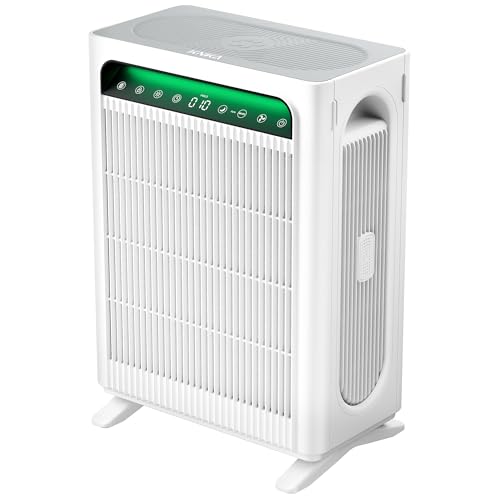
Best Air Purifiers for Mold: our top 3 picks
| Product | Best for | Key features | Price | Buy |
|---|---|---|---|---|
| Clorox Medium Room 11030 | Best overall for mold-prone rooms |
| $139.95as of Nov 4, 2026 2:55 pm GMT+0000 | Buy now →Check current price |
| KNKA APH4000 | Best for basements |
| $99.99as of Nov 4, 2026 2:55 pm GMT+0000 | Buy now →Check current price |
| Coway Mighty AP-1512HH | Best for open living areas |
| $229.99as of Nov 4, 2026 2:55 pm GMT+0000 | Buy now →Check current price |


Prices are Amazon’s listed prices as of the time shown and change often; check Amazon for today’s price. As an Amazon Associate we earn from qualifying purchases.
When air testing tells you something useful
Three scenarios justify the cost. First, whole-house concern: a family with respiratory symptoms that resolve outside the home but return indoors, with no visible source. Second, hidden-mold rule-out: a real-estate transaction where the buyer or seller wants documentation that no significant elevation exists despite a past leak history. Third, post-remediation verification: after a remediation contractor has removed visible growth and dried the structure, a clearance air test confirms indoor counts are at or below outdoor levels.
For a deeper look at the broader topic, our mold inspection and testing hub explains how air sampling fits inside a complete investigation that also includes moisture mapping, visual inspection, and surface verification. Air testing is rarely a standalone diagnostic — it is one chapter in a longer story that starts with finding the water.
A fourth scenario worth mentioning: HVAC concerns. If a system has been off for months in a humid basement, or if the cooling coils show visible biofilm, air sampling at supply registers versus return registers can localize the source. Counts that spike when the blower runs and drop when it shuts off implicate the duct system or air handler.
When surface sampling is the better tool
If there is a visible patch you want to characterize — say, a black ring around a bathroom vent or a fuzzy growth on shower caulk — surface sampling is faster and cheaper. A tape lift costs a fraction of an air-sample sequence and answers the question “what is this?” with high confidence. For protocols specific to confined-space sampling, our basement mold sampling protocol guide walks through the decision tree.
Surface methods include tape lifts, swabs into a sterile transport tube, and bulk samples (a small piece of the substrate itself, packaged and sent to the lab). Tape lifts work well on smooth, flat surfaces. Swabs handle textured surfaces and grout lines. Bulk samples are reserved for situations where the substrate matters — drywall paper, insulation, or wood that may need to be removed regardless of the test result.
The limits of consumer air tests
Drugstore settle-plate kits — a Petri dish exposed to room air for 60 minutes — rarely deliver actionable data. Mold spores are everywhere in normal indoor air. A Petri dish will grow colonies in almost any home. Without an outdoor control collected the same day and a quantitative analysis by an accredited lab, the result tells you only that mold exists, which was true before the test. The EPA recommends spending the money on moisture investigation and remediation instead of inconclusive settle-plate experiments.
Some consumer kits ship with a mail-in lab option that does provide quantitative spore counting. Those kits are more useful, but still depend on the homeowner running a proper sampling protocol — closed-house conditions, outdoor control, multiple indoor locations. A single mail-in cassette without comparison data leaves too much unanswered.
What spore counts mean in plain language
There is no federal “safe” airborne mold limit in the United States. The CDC and EPA both decline to publish numeric thresholds because human sensitivity varies and the relevant species mix matters as much as the total count. Industry practitioners typically read elevated indoor counts as those exceeding outdoor baselines by a factor of two or more, or as the presence of water-indicator species (Stachybotrys, Chaetomium, Fusarium) at any level indoors when they are absent outdoors.
A typical residential outdoor reading might range from 500 to 5,000 spores per cubic meter depending on season, weather, and region. An indoor reading near or below that baseline, with a similar species mix, suggests no active indoor source. A reading at 10,000 spores per cubic meter indoors against a 1,000-spore outdoor baseline tells a different story. The species breakdown matters: Cladosporium dominates outdoor air in many climates, so indoor Cladosporium near outdoor levels is normal. Indoor Penicillium or Aspergillus far above outdoor levels usually signals an indoor source.
Front Range homeowners face a regional quirk worth noting. Colorado’s dry climate produces relatively low outdoor spore counts most of the year, especially in winter. Indoor sources stand out more clearly against that low baseline than they would in humid Gulf Coast or Pacific Northwest air, so air testing in Colorado can be more diagnostic per dollar spent.
What an air test costs and who runs it
A professional air-quality investigation typically runs $300 to $800 in the Front Range market depending on the number of samples and the inspector’s report depth. The fee usually includes site visit, sample collection, lab analysis, and a written report with interpretation. DIY mail-in air-cassette kits cost $40 to $100 per sample and require renting or buying a calibrated pump — the equipment cost alone often exceeds hiring a professional for a single visit.
InterNACHI and ASHI both publish guidance for member inspectors who add mold sampling as an ancillary service. Look for an inspector who carries a moisture meter, can document HVAC inspection, and uses an accredited environmental lab (typically EMLab P&K, EMSL, or similar). Ask the inspector whether they hold a separate mold-assessment certification — some states regulate the discipline, others rely on voluntary credentials such as the InterNACHI mold inspector designation or the ACAC Certified Microbial Investigator (CMI).
How to prepare a room for air sampling
Closing the room for 24 hours before sampling — windows shut, HVAC running normally, no vacuuming — gives the lab a representative reading. Sampling immediately after cleaning, opening windows, or running a HEPA air purifier suppresses counts and produces a falsely reassuring result. The inspector should photograph each sample location, note temperature and humidity, and record the time the pump ran. These details belong in the final report.
Pets, smoke, and recent construction dust can all affect spore counts indirectly. A house with a cat that sheds heavily, a wood stove burning daily, or recent drywall repair will show different microbial profiles than a quiet, sealed home. None of these factors prevent a meaningful test, but the inspector should note them in the report so the lab interpretation accounts for context.
Reading the lab report without overreacting
Lab reports can look alarming to a homeowner seeing them for the first time. Numbers in the thousands, Latin genus names, and color-coded summary tables create an impression of crisis even when the data is reassuring. The interpretation paragraph at the top of the report — written by the lab mycologist or the inspector — is the part that matters. It compares indoor counts to the outdoor control, flags any water-indicator species, and recommends next steps.
A useful question for any inspector: would you remediate based on this report? If the answer is yes, ask for the specific findings that justify the recommendation. If the answer is no, the report should explicitly state that indoor conditions match outdoor baseline and no further action is warranted. Reports that hedge with vague phrases like “elevated levels of concern” without naming species or comparison numbers are not actionable.
When to call a professional
Call a certified mold inspector when symptoms persist without a visible source, when a past leak has dried but the smell remains, or when a real-estate transaction needs documentation. The investigation should always start with moisture — a moisture meter on suspect walls and ceilings catches most active problems faster and cheaper than any air test. Air sampling supplements that work; it rarely replaces it.
A professional visit typically lasts 90 minutes to three hours depending on house size. The inspector walks the property exterior to identify grading and gutter issues, checks the attic and crawl space, runs the HVAC, and only then collects air samples. That sequence ensures the samples are interpreted in the context of the building, not as raw numbers on a lab report.
References
- Mold Testing or Sampling — U.S. Environmental Protection Agency
- About Mold — Centers for Disease Control and Prevention
- Mold Inspection Standards — International Association of Certified Home Inspectors
- Why and Where Mold Grows — U.S. Environmental Protection Agency
Frequently asked questions
Is air testing for mold worth the money?
Air testing is worth the money when symptoms point to hidden growth, when a past leak left no visible damage but a lingering smell, or when post-remediation clearance is needed. If visible mold already exists, the EPA suggests skipping the test and proceeding directly to moisture repair and cleanup.
How long does it take to get results from a home air mold test?
Most accredited labs return spore-trap analysis within three to five business days. Same-day or next-day rush turnaround is available at most labs for an added fee, usually $50 to $150 above the standard rate.
Can a home air mold test detect black mold specifically?
A standard spore-trap air sample identifies all common mold genera including Stachybotrys (often called black mold). Species-level identification requires culture or DNA analysis, which costs more and takes longer than routine spore counting.
Do you need to leave the house during air testing?
Occupants can remain inside but should avoid vacuuming, cleaning, opening windows, or running air purifiers for 24 hours before sampling. Normal HVAC operation should continue so the test reflects everyday conditions.
Front Range homeowners who want a vetted inspector to coordinate moisture mapping and air sampling at the same visit can reach our team through the contact page and we will route you to a qualified local professional.