How Do You Know If You Have Radon in Your House: A Guide
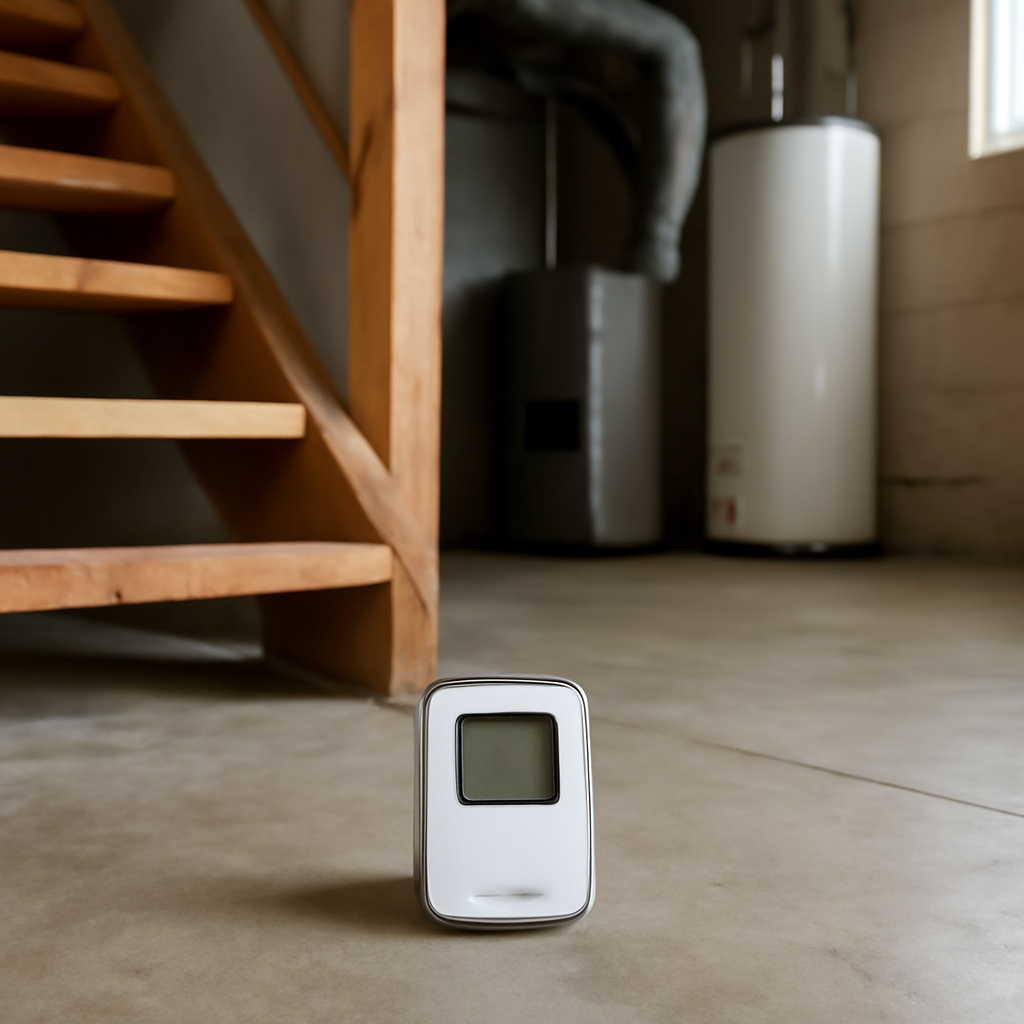
How do you know if you have radon in your house? Only by testing. There is no smell, no taste, no visible sign, and no sound that indicates radon presence. Air-quality monitors that detect dust, VOCs, or carbon dioxide do not measure radon. This guide explains why radon is undetectable without a proper test, why Front Range Colorado homeowners should assume elevated risk until proven otherwise, and how a fifteen-dollar kit settles the question in about two weeks. EPA, CDC, and Colorado Department of Public Health and Environment guidance current as of 2026 underpins the answer.
Part of our Radon Levels guide — start there for the full picture →
The short answer: testing is the only way
Radon is a colorless, odorless, tasteless radioactive gas produced by the natural decay of uranium and radium in soil and rock. It seeps into homes through foundation cracks, sump pits, slab penetrations, and the soil-to-air interface beneath basement floors. Human senses cannot detect it. The federal classification of radon as a Group 1 carcinogen by the International Agency for Research on Cancer is summarized at the EPA radon page.
Because radon cannot be sensed, the only way to know whether a home has elevated levels is a quantitative measurement using a calibrated detector. Short-term test kits, long-term test kits, and Continuous Radon Monitors all serve this purpose. Visual inspection, smell, air-pressure observation, and general “feeling” provide no information about radon presence.
Why Front Range homes should assume elevated risk until tested
The EPA radon zone map classifies all Colorado Front Range counties as Zone 1, the highest predicted screening level. CDPHE estimates indicate roughly half of Colorado homes test above the EPA action level of 4.0 picocuries per liter, summarized at the CDPHE radon program page. Denver, Douglas, Elbert, Arapahoe, Jefferson, El Paso, Adams, Boulder, and Broomfield counties all fall within Zone 1.
The geology behind the elevated risk is straightforward: the Front Range sits over uranium-bearing granite and shale that release radon as part of natural radioactive decay. The gas migrates through soil and into building interiors at every below-grade contact point.
None of this means every Front Range home tests above 4.0. Many test below, and some test well below. But the prior probability is high enough that “I assume my home is fine” is not a defensible position. Testing settles the question.
What radon is not, and why common misconceptions persist
Radon is not radon dust. It is a gas. Carbon-monoxide detectors, smoke detectors, and general air-quality monitors do not detect radon. Some integrated home air monitors advertise “radon detection,” but only a few include calibrated radon sensors. Verify the spec sheet before relying on any consumer device for radon data.
Radon is not concentrated in just basements. Basements typically read higher because they sit closer to the source and have more foundation contact area, but radon migrates upward through the home. Slab-on-grade houses without basements still have radon entry points and can test elevated.
Radon is not a problem only in old houses. New construction can test high if the geology is right. Tighter building envelopes in modern homes actually concentrate radon by reducing natural ventilation. The construction year matters less than the geology, foundation type, and ventilation rate.
The signs you might infer from health symptoms
Radon exposure does not produce acute symptoms. There is no headache, no fatigue, no respiratory irritation that signals “this room has radon.” The health effect is long-term: lung cancer risk increases roughly linearly with cumulative exposure over years and decades. Children exposed during developmental years carry the risk forward.
The CDC publishes the radon-cancer connection at the CDC radon and health page. Symptoms of radon-induced lung cancer mirror other lung cancers and typically appear decades after exposure. By the time symptoms develop, the cause is hard to attribute, but the population-level data is unambiguous: radon is the second-leading cause of lung cancer in the United States.
This is why testing is preventive, not diagnostic. The point is not to discover radon after someone is sick. The point is to find it before exposure accumulates.
How a fifteen-dollar test kit answers the question
A short-term radon test kit purchased online or at a hardware store costs fifteen to thirty-five dollars including lab analysis. The kit ships with a charcoal canister or alpha-track detector. Place the detector in the lowest occupied level of the home at breathing height, away from drafts and exterior walls. Keep doors and windows closed except for normal entry and exit during the test period (typically two to seven days, per kit instructions). Seal and mail the detector to the lab when the test ends.
The lab analyzes the detector and reports the average radon concentration in picocuries per liter (pCi/L). Results arrive within three to seven business days of lab receipt. The in-batch how to test your home for radon guide walks through the kit procedure in detail. The how to check for radon in your house guide covers the quick informal-check version.
Reading the result and what each level means
Above 4.0 pCi/L: EPA action level. Mitigation strongly recommended. Front Range mitigation typically costs twelve to twenty-five hundred dollars for a sub-slab depressurization system installed by a certified contractor.
2.0 to 4.0 pCi/L: consider mitigation. The EPA acknowledges that any radon level carries some risk, and homes in this range may be worth mitigating particularly when children or non-smokers live in the home.
Below 2.0 pCi/L: no mitigation recommended at the current reading. Retest every two years or after major foundation, basement, or HVAC changes.
What happens after a positive test
A first elevated short-term result should be confirmed with a follow-up test before committing to mitigation. The follow-up can be a second short-term kit, a long-term (90+ day) test, or a Continuous Radon Monitor measurement by a certified professional. Mitigation contractors will install a system based on any verified elevated reading, but the verification step saves homeowners money when the first reading turned out to be unrepresentative.
Mitigation systems for typical Front Range homes use sub-slab depressurization: a PVC pipe penetrates the basement slab, a small fan pulls air from beneath the slab, and the pipe routes the radon-laden air to a discharge point above the roof line. Post-installation testing should bring the home well below 4.0 pCi/L and typically below 2.0.
Who should test most urgently
Homes in EPA Zone 1 (all Front Range counties) — assume elevated risk until tested. Homes with finished basements used as living space. Homes with children, pregnant residents, or non-smoking adults who would be at higher relative risk from any lung-cancer-promoting exposure. Homes recently purchased without prior radon documentation. Homes that have not been tested in the past five years or since a major foundation, basement, or HVAC change.
The parent radon testing in Colorado hub covers the broader Front Range context. The how to measure radon levels guide covers numeric interpretation.
Common questions that confuse first-time testers
Does my basement need to be finished for radon to matter?
No. Radon enters the home through the foundation regardless of finish status. An unfinished basement that no one occupies still allows radon to migrate upstairs through the stack effect. Finishing a basement adds living space and changes the relevant occupancy, but the underlying radon entry rate depends on geology, foundation construction, and ventilation patterns.
Does new construction reduce radon risk?
Not necessarily. Modern construction has tighter building envelopes, which can concentrate radon by reducing natural ventilation. Many Front Range builders include radon-resistant new construction features (vent pipes pre-installed through the slab, sealed sump pits, vapor barriers) that make later mitigation easier, but the new home still needs testing to verify whether mitigation is needed.
Does running the HVAC help reduce radon?
Sometimes, depending on system design. A forced-air system that pulls return air from the basement can pressurize the basement slightly, reducing radon entry. A system that pulls return air from upstairs can depressurize the basement, increasing radon entry. Homeowners should not change HVAC operation specifically to address radon — the right intervention is a dedicated mitigation system.
Does opening windows fix high radon?
It dilutes radon during the time the windows are open, yes. But for most homeowners, leaving windows open year-round is impractical and inefficient. Radon mitigation systems address the entry rate directly and produce sustained low levels without changing occupancy patterns.
What mitigation actually does
Sub-slab depressurization is the dominant mitigation method for slab-on-grade and basement-foundation homes. A PVC pipe penetrates the basement slab; a small fan (typically 50 to 100 watts) pulls air from beneath the slab; the pipe routes the radon-laden air to a discharge point above the roof line. Sealing slab cracks and sump pit lids reduces leakage paths so the fan’s pull is focused on soil gas rather than indoor air.
Front Range mitigation contractors typically install systems for twelve to twenty-five hundred dollars depending on home size, foundation complexity, and discharge routing requirements. Post-installation, the home should retest below 4.0 pCi/L and typically well below 2.0. The system runs continuously and uses roughly the same electricity as a single incandescent bulb.
How long mitigation systems typically last
A properly installed sub-slab depressurization system has a service life measured in decades. The fan is the main wear component, typically rated for ten to fifteen years of continuous operation before replacement. Replacement fans cost roughly two hundred to three hundred dollars installed. Other system components — PVC piping, seals, manometers — last much longer with minimal maintenance.
The system should include a visible manometer (a small U-tube pressure indicator) at the fan or at an accessible point in the piping. The manometer’s fluid level shifts visibly when the fan is running and pulls a slight vacuum on the system. Homeowners can verify the system is operating by checking the manometer monthly. A flat-fluid manometer indicates fan failure or piping leakage requiring immediate service.
What if a test comes back below 2.0?
A clean test is great news. Save the report. Retest after major changes: foundation repair, basement finishing, new HVAC system, addition or remodel that changes the building envelope. Otherwise, retest every two years. Radon levels can change over time as soil moisture, seasonal pressure, and building envelope conditions shift.
Why “knowing” matters
The benefit of testing is not the test itself — it is the information that follows. A home with documented low radon needs no further action. A home with elevated radon and an installed mitigation system has the same lifetime cumulative exposure risk as a home that never had elevated radon in the first place. The intervention works. The barrier is detection.
References
- EPA radon program and A Citizen’s Guide to Radon — U.S. Environmental Protection Agency
- Colorado Department of Public Health and Environment radon program — CDPHE
- CDC radon and health information — Centers for Disease Control and Prevention
Frequently asked questions
Can you smell radon in a house?
No. Radon is colorless, odorless, and tasteless. It cannot be detected by any human sense. The only way to determine whether radon is present is to test using a calibrated detector or short-term test kit.
Do I need to test for radon if my neighbor's house tested fine?
Yes. Radon levels can vary significantly between adjacent homes due to foundation differences, ventilation rates, and slab construction details. Each home needs its own test.
How often should I retest my home for radon?
Every two years for homes with prior low readings, or after major foundation work, basement finishing, HVAC changes, or any significant building-envelope renovation. After mitigation, retest in 30 to 90 days to confirm system performance, then every two years thereafter.
If a Front Range homeowner is unsure whether their house has been tested and wants a certified measurement, reach out through our contact page for a vetted local radon professional.
Test your home for radon
Radon is invisible and odorless, so a test is the only way to know your level. A short-term kit gives a first reading in days; a digital monitor tracks it over time.
| Product | Why | Buy |
|---|---|---|
 AirChek Charcoal Radon Test Kit AirChek Charcoal Radon Test Kit | Lab fee usually included; EPA short-term protocol. | Amazon — $21.95 |
 First Alert RD1 Radon Test Kit First Alert RD1 Radon Test Kit | Widely stocked; 48-hour charcoal test. | Amazon — $16.98 |
 Airthings Corentium Home Airthings Corentium Home | Digital monitor with a long-term average. | Amazon — $142.99 |