How to Measure Radon: Units, Test Types, and Results
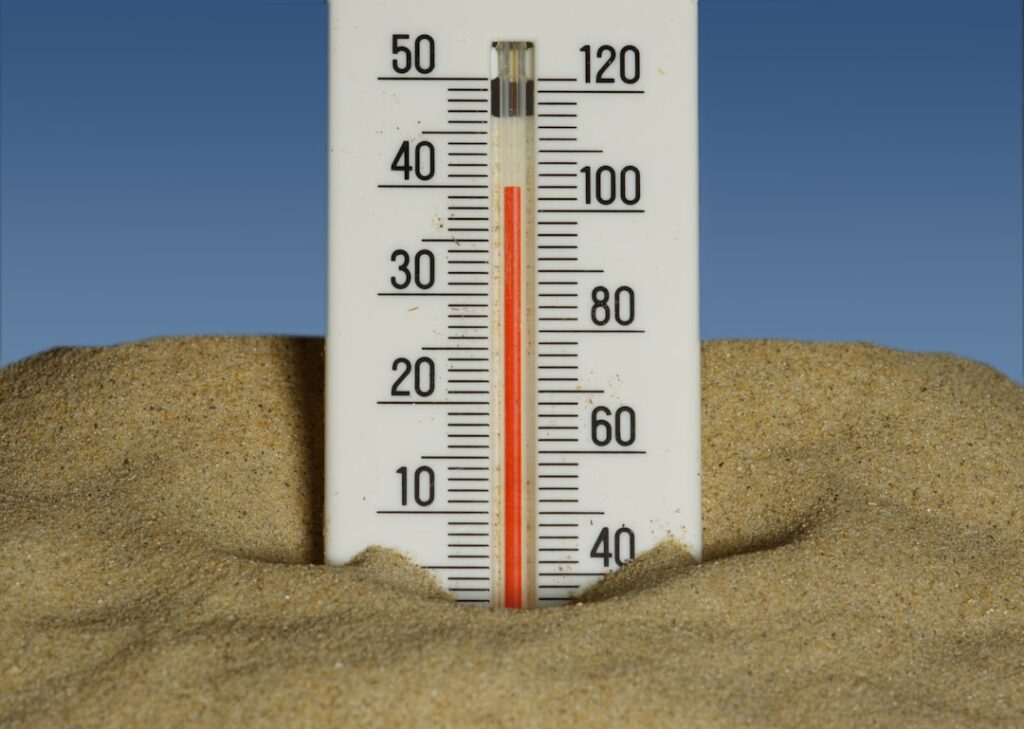
“How to measure radon” has three legitimate answers, and they measure slightly different things. A short-term kit gives you one number averaged over a few days. A long-term kit gives one number averaged over months. A continuous radon monitor gives a running curve of readings. All three report in picocuries per liter (pCi/L), but their numbers are not interchangeable because they cover different time windows. This guide explains the unit, the three methods, how to read the lab report, and how to judge the result against the thresholds the EPA and CDC actually use.
Part of our Radon Levels guide — start there for the full picture →
What a pCi/L reading actually represents
The picocurie per liter is the U.S. unit for radon concentration in air. One picocurie is about 0.037 radioactive decays per second (roughly 2.2 disintegrations per minute), so a reading of 4.0 pCi/L means radon in that liter of air was decaying about 8.8 times per minute, averaged across the whole test. The key word is averaged: no test gives you an instantaneous value. A two-day kit that happened to run through a snowstorm and a locked-up house can read well above the home’s true annual level, while the same kit in a breezy week can read below it.
Europe reports in becquerels per cubic meter (Bq/m³). The conversion is 1 pCi/L ≈ 37 Bq/m³, so the U.S. action level of 4.0 pCi/L is about 148 Bq/m³, and the World Health Organization reference level of 100 Bq/m³ works out to roughly 2.7 pCi/L.
The three ways to measure, side by side
Most homeowners only need the first. The other two answer more specific questions.
| Method | Duration | Typical cost | Best for |
|---|---|---|---|
| Short-term kit (charcoal or alpha-track) | 2–7 days, closed-house | $15–$35 incl. lab | First screen; time-sensitive real-estate deadlines |
| Long-term kit (alpha-track) | 90 days to 1 year | $25–$50 incl. lab | Most representative single number; captures winter vs. summer swing |
| Continuous radon monitor (CRM) | Ongoing, live readout | $150–$400 consumer; more for pro-grade | Seeing hour-by-hour patterns; verifying a mitigation fan over time |
A short-term charcoal canister adsorbs radon decay products, which the lab counts after you mail it back; turnaround is usually three to seven business days once it arrives. Alpha-track detectors etch physical damage tracks from alpha particles and can run short or long. A CRM is an electronic instrument that samples continuously and reports on a screen or app, so there is no lab wait. Professional-grade CRMs are what most certified measurement providers use for real-estate and post-mitigation clearance testing because the EPA accepts their calibrated data as a transaction record.
Set the test up so the number is trustworthy
Where and how you place the detector changes the result more than most people expect. Follow EPA protocol: measure in the lowest level you regularly occupy, place the detector two to six feet off the floor, keep it at least three feet from exterior walls, windows, and vents, and away from drafts, heat, and high humidity. Maintain closed-house conditions (windows and exterior doors shut except for normal entry) for 12 hours before and throughout any short-term test. Our guide on where to place a radon test walks through room-by-room placement, and the broader kit procedure is covered in how to test for radon in the home.
Reading the lab report
A short-term report is short. It lists the property address, the detector serial or lot number, the start and stop date/time, the total hours the detector ran, the measured concentration in pCi/L, and a note referencing the EPA action level. A report from a certified measurement professional adds the instrument’s calibration date, closed-house verification, and the lab’s accreditation. Check that the elapsed hours match the kit’s required window: a charcoal canister left out for ten days has largely saturated and its number is no longer reliable, and a kit pulled after 36 hours may not have run long enough.
Accreditation is worth confirming. The National Radon Proficiency Program (NRPP) and National Radon Safety Board (NRSB) certify radon labs and measurement professionals; reputable consumer kits are analyzed by NRPP- or NRSB-accredited labs.
What the number means: EPA thresholds
The EPA frames results around one figure and one softer band:
- 4.0 pCi/L and above — fix the home. This is the federal action level; the EPA recommends mitigation at or above it.
- 2.0 to 3.9 pCi/L — consider fixing. The EPA notes there is no risk-free level and says you may want to reduce concentrations in this range; many homeowners retest first.
- Below 2.0 pCi/L — no action generally needed. Retest every two years or after major structural changes.
Radon is the leading cause of lung cancer among non-smokers and the second leading cause overall, per the CDC; the American Lung Association and the WHO both endorse acting below the U.S. threshold, which is why the 2.0-to-3.9 band is not automatically “safe.” For a deeper read on the thresholds themselves, see what counts as a safe radon level.
Why two tests rarely match, and when to worry
Back-to-back tests on the same house routinely differ by 25–30%. That spread comes from barometric pressure shifts, how much the HVAC ran, closed-house compliance, detector placement, and each detector’s built-in measurement uncertainty. Practical rule: treat two results within about 25% of each other as consistent, and treat a gap over 50% as a red flag that one test had a procedural problem, then run a tie-breaker.
The same uncertainty explains borderline readings. A short-term kit carries roughly ±25% precision near the action level, so a “3.8” could genuinely represent a true level anywhere from about 3.0 to 4.8. A single number that close to 4.0 is ambiguous by nature; the EPA’s own advice is to follow a borderline short-term result with a second short-term test or a long-term test before deciding. When you compare a short-term result to a long-term one, expect the short-term to be the more extreme of the two in whichever direction the weather pushed it.
What Front Range homes typically read
Every Denver-area county — Denver, Jefferson, Douglas, Arapahoe, Adams, Boulder, Broomfield, Elbert, El Paso — sits in EPA Radon Zone 1, the highest predicted-average tier, and Colorado’s health department estimates roughly half of homes tested statewide come back above 4.0 pCi/L. A Front Range basement reading of 6, 8, or 10 pCi/L is ordinary, and figures above 20 turn up. None of that warrants panic: sub-slab depressurization systems routinely pull a 10–12 pCi/L home down under 2.0, and post-install verification confirms it. The Colorado radon testing hub covers the mitigation decision, and what radon mitigation involves explains the systems themselves.
What to do with your result
Above 4.0: get quotes from a Colorado-certified mitigation contractor (Front Range installs commonly run $1,200–$2,500) and retest 30 to 90 days after the fan goes in. Between 2.0 and 3.9: run a long-term kit or a CRM to confirm the level before committing. Below 2.0: file the report and retest in two years, or sooner if you finish a basement, replace the HVAC, or do foundation work — any of which can change the radon entry rate.
Frequently asked questions
Frequently asked questions
What unit are radon levels measured in?
Picocuries per liter (pCi/L) in the United States and becquerels per cubic meter (Bq/m³) in Europe. One pCi/L is about 37 Bq/m³, so the EPA action level of 4.0 pCi/L equals roughly 148 Bq/m³. The number is a time-averaged concentration over the length of the test, not an instantaneous reading.
Which test should I use if I only run one?
For a first screen or a real-estate deadline, a 2-to-7-day short-term kit under closed-house conditions is fine and costs $15–$35. If you have time and want the single most representative number, a 90-day-plus long-term kit captures seasonal swings that a short test misses.
Why did my two radon tests give different numbers?
A 25–30% difference between back-to-back tests is normal and comes from weather, HVAC operation, placement, and each detector's measurement uncertainty. Treat results within about 25% as consistent; if they differ by more than 50%, one test likely had a procedural problem, so retest.
Is a reading between 2.0 and 4.0 pCi/L safe?
The EPA sets its action level at 4.0 pCi/L but notes no level is risk-free and suggests considering mitigation from 2.0 up. Because short-term kits carry about ±25% precision, a borderline number near 4.0 is best confirmed with a second short-term or a long-term test before you decide.
Figures here follow current EPA, CDC, and Colorado Department of Public Health and Environment radon guidance. Front Range homeowners weighing a measured result can reach a vetted radon professional through our contact page.
Test your home for radon
Radon is invisible and odorless, so a test is the only way to know your level. A short-term kit gives a first reading in days; a digital monitor tracks it over time.
| Product | Why | Buy |
|---|---|---|
 AirChek Charcoal Radon Test Kit AirChek Charcoal Radon Test Kit | Lab fee usually included; EPA short-term protocol. | Amazon — $21.95 |
 First Alert RD1 Radon Test Kit First Alert RD1 Radon Test Kit | Widely stocked; 48-hour charcoal test. | Amazon — $16.98 |
 Airthings Corentium Home Airthings Corentium Home | Digital monitor with a long-term average. | Amazon — $147.14 |