Radon Test Kits: Types, Use, and Action Levels
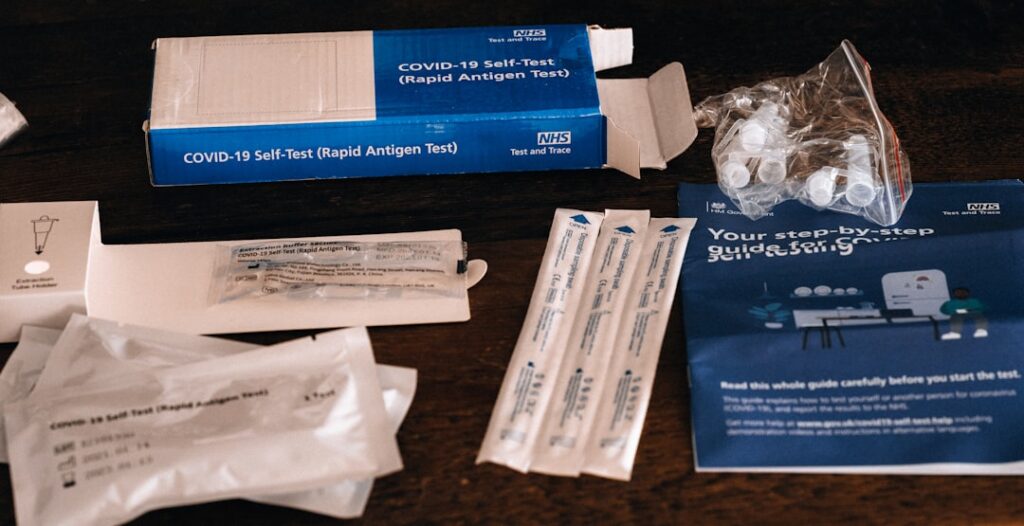
Radon test kits are the front line of defense against a gas that causes thousands of lung cancer deaths each year and cannot be seen, smelled, or tasted. Because Colorado’s Front Range sits largely in a high radon-potential zone, testing is a routine part of responsible homeownership from Boulder to El Paso County. This guide summarizes EPA and CDPHE guidance current as of 2026 and is educational only; consult a certified professional for mitigation decisions and your physician about health concerns. It covers how the kits work, how to use them, and how to read the numbers.
Part of our Radon Levels guide — start there for the full picture →
What Radon Test Kits Do
A radon test kit measures the concentration of radon in indoor air over a defined period and reports it in picocuries per liter, or pCi/L. Radon enters a home from the soil beneath it, migrating through foundation cracks, sump openings, and utility penetrations, then accumulating where airflow is limited. A kit quantifies that buildup so a homeowner can decide whether action is needed.
The EPA’s action level is 4 pCi/L. At or above that figure, mitigation is recommended; the agency also notes that no amount of radon is risk-free and that lowering levels below 4 pCi/L is worthwhile when achievable. The kit’s value lies in turning an invisible hazard into a clear number.
That translation from invisible to measurable is the whole point. Radon gives no warning signs, produces no symptoms a homeowner would connect to it, and damages health only over years of exposure. A test kit is the one practical tool that converts this silent, slow-acting threat into a figure a homeowner can compare to a threshold and act on. Without testing, an elevated level can persist unnoticed for decades, which is precisely the scenario testing exists to prevent.
Short-Term Versus Long-Term Kits
Test kits differ mainly in how long they collect data, and that window shapes how reliable the result is.
Short-Term Kits
Short-term kits run from two to about 90 days, with charcoal canisters typically covering two to seven days. They deliver a fast answer, which suits real estate transactions and initial screening. Their limitation is that a brief snapshot may not reflect the home’s year-round average, since radon fluctuates with weather and season.
Long-Term Kits
Long-term kits, often alpha-track detectors, stay in place for more than 90 days. By spanning seasons, they capture the higher winter levels common when homes are sealed and produce a more representative annual average. The drawback is the wait, which makes them unsuitable for urgent decisions.
The EPA generally suggests starting with a short-term test, then following up with a long-term test or a second short-term test when the first result is borderline. Matching the window to the question is the core decision.
The reason a follow-up matters is that a single short-term reading near the action level could reflect unusual conditions on those particular days. A storm, a cold snap that keeps the house sealed tight, or a brief change in how the home was used can all nudge a short reading up or down. Confirming with a second measurement, ideally a longer one, separates a genuine elevated level from a temporary fluctuation before any money is committed to mitigation.
Continuous Radon Monitors
Beyond passive kits, electronic continuous monitors sample air on a rolling basis and display results without a lab. Consumer models support ongoing awareness, while professional continuous monitors are favored in real estate deals for their detailed logging and tamper resistance.
These devices reveal how radon shifts hour to hour, exposing patterns a single passive reading would miss. They cost more initially but avoid repeat lab fees. For a side-by-side of passive kits and electronic monitors, our guide to radon testing devices by category breaks down the trade-offs.
How to Place and Run a Test Kit
Correct placement is what makes a result trustworthy. The EPA recommends testing the lowest level of the home that is regularly occupied, such as a finished basement or ground-floor living space. Set the device away from drafts, exterior doors, windows, fireplaces, and humid spots, a couple of feet above the floor and clear of walls.
For short-term tests, hold closed-house conditions: keep windows and exterior doors shut for at least 12 hours before and during the test, opening only for normal entry. Avoid testing during high winds or severe storms. Note exact start and stop times and return passive kits to the lab promptly. Our hub on radon testing for Front Range homeowners places these steps within a full testing strategy.
Interpreting the Numbers
Compare the reported value to the 4 pCi/L action level. A result at or above 4 pCi/L calls for action, usually a confirmatory test followed by consultation with a certified mitigation professional. A reading between 2 and 4 pCi/L falls in a range where the EPA suggests considering mitigation, because risk does not disappear under the action level.
Low readings are reassuring but not permanent. Radon can climb after renovations, foundation changes, or shifts in ventilation, so periodic retesting is wise, especially in Colorado’s high-potential geology. The first result is a baseline, and revisiting it every few years keeps the picture current.
Common Mistakes That Skew Results
A few errors undermine otherwise good kits. Placing the device in a bathroom, near a window, or in a crawlspace can distort the reading. Failing to keep the house closed during a short-term test lets radon vent out and produces an artificially low number. Delaying the mailing of a charcoal kit lets captured radon escape before analysis.
Testing only once and assuming the result holds forever is another pitfall. Conditions change, and so can radon. Reading the kit instructions carefully and following them to the letter prevents most of these problems. Where results conflict or stakes are high, a professional test resolves the uncertainty.
Passive Versus Active Test Kits
Radon test kits fall into two broad families that work in fundamentally different ways. Passive kits, including charcoal canisters and alpha-track detectors, have no moving parts and no power source. They simply sit in place, allowing radon to interact with an absorbing or recording medium, and then go to a lab for analysis. Their simplicity and low cost make them the most common choice.
Active kits, meaning electronic continuous monitors, draw power and sample the air on a rolling schedule, calculating and displaying readings without a lab. They reveal how radon changes hour by hour, which a passive kit cannot, and professional-grade versions add tamper resistance and detailed data logs prized in real estate transactions.
Each family suits different needs. Passive kits excel at affordable screening and, in the case of long-term alpha-track detectors, at producing accurate annual averages. Active monitors excel at ongoing awareness and at situations where the pattern over time matters. Recognizing which family fits the goal, rather than chasing the newest device, is the foundation of a smart testing decision.
How Radon Enters and Builds Up
Understanding how radon gets indoors clarifies why testing and placement work the way they do. Radon is produced continuously as uranium in soil and rock decays beneath and around a home. The gas migrates upward through the ground and finds its way inside through foundation cracks, expansion joints, sump openings, crawlspaces, and gaps where pipes and wires penetrate the slab.
Once inside, radon tends to concentrate in the lowest levels because that is where it enters and because air pressure differences can actively draw it in. A home often operates at slightly lower pressure than the soil around it, especially in winter when heating creates a stack effect, pulling soil gas upward into the living space. This is why basements and ground floors typically show the highest readings.
Seasonal and operational factors cause levels to fluctuate. Sealed-up winter homes usually read higher than the same homes in summer with windows open. This natural variation is precisely why a long-term test captures a truer annual picture than a brief snapshot, and why short-term tests require closed-house conditions to produce a comparable, conservative reading.
Mistakes That Compromise Accuracy
Even a quality kit fails if used carelessly, and a few mistakes recur often. Poor placement leads the list. Setting the device in a bathroom, kitchen, closet, or crawlspace, or near a window, door, or heat source, distorts the reading. The correct spot is the lowest regularly used level, in open air, a couple of feet above the floor and away from walls.
Failing to maintain closed-house conditions undermines short-term tests. Leaving windows or exterior doors open vents radon and yields a falsely low number, as does running whole-house ventilation during the test. Severe weather and high winds can also skew short-term results, so it is best to avoid testing during such conditions when possible.
Handling errors round out the list. Letting a charcoal kit sit past its window or mailing it late allows captured radon to dissipate, lowering the reported figure. Forgetting to record exact start and stop times complicates interpretation. Each of these is easily avoided by reading and following the kit instructions precisely, which is the single best safeguard of accuracy.
What Happens After a High Reading
A reading at or above the 4 pCi/L action level sets a clear sequence in motion. The first step is confirmation, because a single short-term result can be influenced by temporary conditions. A second test, either short-term under strict closed-house conditions or a longer-term measurement, establishes whether the level is genuinely elevated.
If confirmed, mitigation follows, and it belongs to a certified professional. The standard remedy is an active sub-slab depressurization system that uses a fan and vent pipe to draw radon from beneath the foundation and release it above the roof, where it disperses harmlessly. After installation, a follow-up test verifies the system brought levels down as intended.
The cost of mitigation is modest measured against the long-term health risk it removes, and a well-built system requires little ongoing attention beyond periodic checks of the fan and an occasional retest. Acting decisively on a confirmed high reading is the entire point of testing, turning a measurement into a lasting reduction in risk.
Choosing the Right Kit
The best kit depends on the goal. A short-term charcoal kit suits a first screen or a transaction deadline. A long-term alpha-track kit gives the most accurate year-round average for a home you intend to keep. A continuous monitor offers ongoing feedback for those who want constant awareness. Whatever the choice, use a kit with lab analysis or a documented electronic device, follow the protocol exactly, and act on a high reading by consulting a certified professional. In a high-radon region, testing is one of the most cost-effective health safeguards a homeowner can adopt.
References
- EPA Citizen’s Guide to Radon — U.S. Environmental Protection Agency
- Colorado radon testing program — Colorado Department of Public Health and Environment
- CDC radon health information — Centers for Disease Control and Prevention
Frequently asked questions
What is the difference between short-term and long-term radon test kits?
Short-term kits run from two to about 90 days and give a fast answer for screening or transactions. Long-term kits run over 90 days and capture seasonal variation for a more accurate annual average.
What radon level requires action?
The EPA action level is 4 pCi/L. At or above that figure, confirm with a second test and consult a certified mitigation professional. Levels between 2 and 4 pCi/L are also worth considering for mitigation.
Where should a radon test kit go?
In the lowest regularly occupied level of the home, away from drafts, doors, windows, fireplaces, and humidity, a couple of feet off the floor. Keep the house closed during a short-term test.
How often should I retest?
Retest every few years and after renovations, foundation changes, or ventilation changes, since radon levels can shift over time. A single low result is a baseline, not a permanent clearance.
Front Range homeowners with elevated radon readings can reach a certified mitigation professional through our contact page to plan the next step.
Test your home for radon
Radon is invisible and odorless, so a test is the only way to know your level. A short-term kit gives a first reading in days; a digital monitor tracks it over time.
| Product | Why | Buy |
|---|---|---|
 AirChek Charcoal Radon Test Kit AirChek Charcoal Radon Test Kit | Lab fee usually included; EPA short-term protocol. | Amazon — $21.95 |
 First Alert RD1 Radon Test Kit First Alert RD1 Radon Test Kit | Widely stocked; 48-hour charcoal test. | Amazon — $17.95 |
 Airthings Corentium Home Airthings Corentium Home | Digital monitor with a long-term average. | Amazon — $142.49 |