Radon Mitigation in Centennial, Colorado | InspectandTest
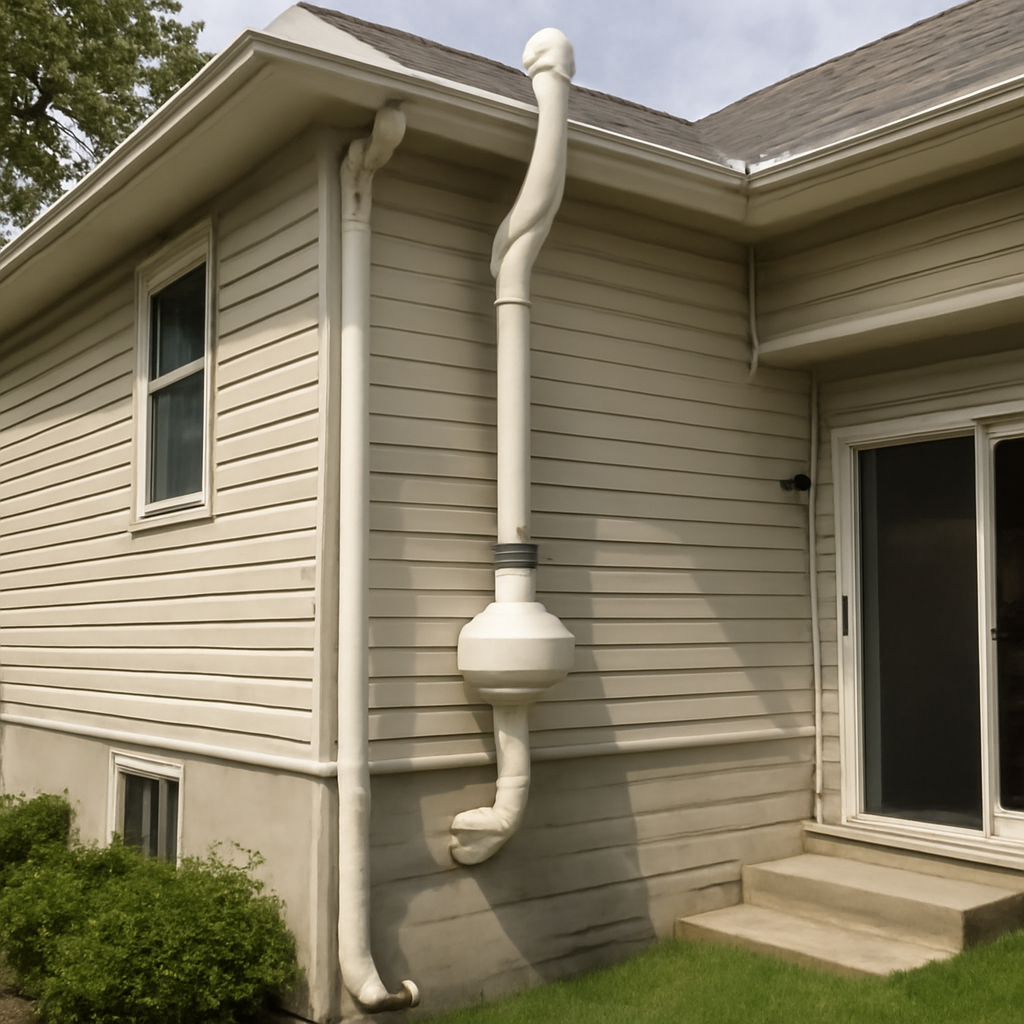
When a Centennial home tests at or above the EPA action level of 4 pCi/L, the next step is mitigation, the engineered fix that pulls radon out from under the foundation before it reaches the living space. Centennial sits in Arapahoe County, inside EPA Radon Zone 1, so elevated readings here are common rather than rare, particularly in the city’s many finished basements. Radon is a colorless, odorless radioactive gas and the second-leading cause of lung cancer after smoking. This page explains how radon mitigation centennial homeowners can expect it to work, what a system costs, and how disclosure factors into a sale. This summary reflects EPA and CDPHE guidance current as of 2026; consult a certified mitigation professional for installation decisions.
Part of our Radon Mitigation Systems guide — start there for the full picture →
Radon mitigation in Centennial: what to know
Mitigation redirects radon rather than sealing it out. The standard Front Range fix is active sub-slab depressurization, a system that draws soil gas from beneath the foundation slab and vents it above the roofline before it can enter the home. A continuously running inline fan maintains negative pressure under the slab, so radon follows the path of least resistance up the pipe and out, instead of seeping through cracks into a Centennial basement.
A confirmed test result is the trigger. If you have not measured your home yet, start there; our overview of radon testing in Centennial explains short-term versus long-term methods. For the underlying science across the region, the plain-language radon guide for Front Range homeowners covers how the gas behaves and why Arapahoe County reads high.
A well-designed system reliably brings most homes below 4 pCi/L, and many under 2 pCi/L. The EPA notes that sub-slab depressurization commonly cuts indoor radon by 90 percent or more when installed correctly. The design variables are the foundation type, the sub-slab material, and where the radon is entering, which is why a finished 1970s Centennial basement and a slab-on-grade ranch may need different routing even within the same neighborhood.
Why Centennial homes need radon mitigation
Geology paired with finished basements drives demand. Arapahoe County’s soils release radon readily, and Centennial’s 1970s-through-1990s housing put bedrooms, family rooms, and offices below grade in direct contact with that soil. When a test comes back high in a Centennial home, the elevated reading is usually in the exact finished room the family uses most, which is what makes mitigation worth doing rather than ignoring.
Cold sealed winters make the problem persistent. Centennial homes stay closed for months, and furnaces create negative pressure that pulls soil gas upward through the entire heating season. A home that reads near the action level in summer can climb well above it in a closed-up January, so a single high winter reading is a strong case for a permanent engineered fix rather than seasonal ventilation.
The age of the housing affects the approach. Older Centennial basements may have block foundations, sump pits, and slab penetrations that influence where suction points go and how much sealing the system needs. A mitigation contractor familiar with the area’s 1970s-and-1980s construction designs around those features. Many homes also benefit from sealing the sump and visible cracks, which improves the system’s efficiency once the fan is running.
Block-wall foundations, common in older Centennial homes, sometimes call for a different technique than slab suction alone. The hollow cores of a concrete-block foundation can act as a pathway that channels soil gas upward, and in some homes a block-wall suction point, drawing from inside the wall cavity, complements or replaces a sub-slab point. A contractor evaluates whether the home’s radon is entering primarily through the slab or the walls, since matching the suction strategy to the entry path is what brings a stubborn older home reliably below the action level.
Finished basements complicate access, and that shapes both design and cost. When drywall, drop ceilings, and flooring already cover the slab and foundation, the installer has to choose a suction location that minimizes disruption to finishes while still depressurizing the whole footprint. A mechanical room or utility closet is often the entry point. In a Centennial home where the basement was finished decades ago, planning the routing to avoid tearing into living space is part of what a skilled installer brings, and it is why a walk-through beats a sight-unseen quote.
What a Centennial radon mitigation system covers
A standard active sub-slab system has a few core parts: a suction point cut through the basement slab, PVC piping that routes soil gas up and out above the roofline, an inline fan that maintains constant suction, and a manometer that lets the homeowner confirm the system is running.
Sub-slab depressurization
The installer cores a hole through the slab, often in a closet or mechanical area to keep piping discreet, and excavates a small pit beneath to create a suction cavity. PVC pipe carries the gas up through the home or along an exterior wall to a fan mounted in the attic, garage, or outside, then vents above the eave. Sealing visible slab cracks and the sump lid improves suction efficiency, which matters in older Centennial basements with more openings.
Verification re-test
A reputable installer re-tests after the system runs for at least 24 hours to confirm the home is below 4 pCi/L. This post-mitigation measurement proves the fix worked, and in a Centennial real-estate transaction it is the document a buyer’s agent will want to see. If the first design does not get the home low enough, the installer adjusts the fan or adds a second suction point.
Radon mitigation cost in Centennial
A typical residential radon mitigation system in the Centennial market runs about $800 to $2,500, with most single-family homes landing near $1,200 to $1,800. Older homes with block foundations, multiple slab areas, or a sump that needs sealing can sit toward the higher end, since they require more sealing and sometimes additional suction points.
Operating cost is modest. The continuously running fan adds roughly $5 to $15 a month in electricity, plus a small amount of conditioned air loss. Fans typically carry a multi-year warranty and last around a decade before a replacement that runs a few hundred dollars.
Set the price against the payoff. A roughly $1,500 system that takes a finished-basement Centennial bedroom from 8 pCi/L to under 2 pCi/L cuts radon exposure by 90 percent or more for as long as the family lives there. Against the EPA’s estimate of thousands of radon-linked lung-cancer deaths a year and Centennial’s Zone 1 status, that is a strong return for a one-time fix.
Maintenance keeps the value intact over the years. A radon system is largely set-and-forget, but the manometer should be checked periodically to confirm the fan is still pulling suction, and the fan itself will eventually need replacement after roughly a decade. A Centennial homeowner who glances at the gauge a few times a year catches a failed fan before radon quietly climbs back up. Re-testing every couple of years, and after any major basement remodel, confirms the system is still doing its job.
For a home sale, the timing of mitigation can work in a seller’s favor. A Centennial seller who tests early, finds an elevated level, and installs a system before listing turns a potential negotiation sticking point into a documented selling feature, a labeled system with a clean post-mitigation result. Buyers read that as a home that has been cared for, whereas a radon problem discovered during the contingency becomes a credit request and a source of friction. Proactive mitigation, in other words, is often the smoother path for everyone.
Colorado regulations and disclosure
Colorado requires radon disclosure in residential real-estate transactions, and the Seller’s Property Disclosure asks sellers to report known radon results and whether a mitigation system is installed. A documented post-mitigation re-test below 4 pCi/L is the reassurance buyers look for. CDPHE runs the state radon program and references the 4 pCi/L action level throughout its guidance.
Colorado does not license home inspectors, and mitigation installers should follow AARST/ANSI standards for system design and venting. For a Centennial sale, confirm the installer provides a labeled system with a working manometer and a post-mitigation test result, because an unpermitted or undocumented system can stall a closing while a clean post-mitigation number turns a radon finding into a non-issue.
Neighborhoods and areas served
Mitigation work spans Centennial’s subdivisions: finished-basement homes in Southglenn, Willow Creek, Walnut Hills, Foxridge, and Homestead all sit over the same Arapahoe County geology. Older block-foundation homes often need more sealing, while newer 1990s builds may install more simply. Service typically extends to adjacent Greenwood Village, Littleton, and the Arapahoe County side of Aurora, all in the same Zone 1 footprint.
Because the geology that drives radon is consistent across Arapahoe County, a home does not have to be in a flagged neighborhood to read high; the entire area is Zone 1. Whether the house is a 1970s Centennial ranch or a 1990s two-story, a confirmed reading at or above the action level calls for the same engineered sub-slab fix.
How to choose a Centennial radon mitigation provider
Hire an installer who follows AARST/ANSI mitigation standards, provides a written post-mitigation re-test, and labels the system so a future buyer can see it is permitted and functioning. For an older Centennial home, ask how they will handle a block foundation or an open sump, since those features affect suction design. Pairing mitigation with a broader home inspection in Centennial gives buyers one coordinated view.
Get an itemized quote that states the number of suction points, the fan model and warranty, the venting route, and the guaranteed post-mitigation level. A reputable Centennial installer guarantees the system will bring the home below 4 pCi/L and returns to adjust it if the first design falls short. Be cautious of a bid that omits the verification re-test, since that test is the only proof the system works.
For borderline readings between 2 and 4 pCi/L, a good provider discusses whether mitigation is worth it rather than pushing a sale, since the EPA frames that range as a judgment call. That kind of straight guidance, paired with documented results, marks an installer worth hiring in a Zone 1 city where radon work is routine.
Warranty terms and follow-up service distinguish the better Centennial installers. Ask whether the fan carries a multi-year manufacturer warranty, whether the installer guarantees the post-mitigation level in writing, and what they charge to return if a future re-test creeps back up. A reputable contractor stands behind the system’s performance and will adjust it without a fight if the home does not test below the action level after installation. That commitment matters most on older Centennial homes, where a stubborn block foundation may need a second suction point to fully depressurize, and you want an installer who treats that follow-up as part of the job rather than a new bill.
References
- Consumer’s guide to radon reduction — U.S. Environmental Protection Agency
- Colorado radon program and mitigation guidance — Colorado Department of Public Health and Environment
- Radon and lung cancer — Centers for Disease Control and Prevention
Frequently asked questions
How much does radon mitigation cost in Centennial?
Most Centennial systems run $800 to $2,500, with typical single-family homes near $1,200 to $1,800. Older block-foundation homes that need more sealing or extra suction points can sit toward the higher end.
How does a radon mitigation system work?
The standard fix is active sub-slab depressurization. A fan draws soil gas from beneath the foundation slab and vents it above the roofline, keeping negative pressure under the slab so radon leaves before it enters the living space.
Does a Centennial radon system need a post-install re-test?
Yes. A reputable installer re-tests after the system runs at least 24 hours to confirm the home is below 4 pCi/L. That post-mitigation result is the proof the fix worked and the document buyers want to see.
Why do older Centennial basements cost more to mitigate?
Older homes may have block foundations, open sumps, and more slab penetrations that need sealing, and sometimes a second suction point. That extra sealing and design work pushes the cost toward the higher end of the range.
If a Centennial home has tested at or above 4 pCi/L, an engineered sub-slab system is the proven fix, and Arapahoe County’s Zone 1 geology makes it routine. To connect with a vetted local mitigation installer who documents the result, get in touch through our contact page.
Test your home for radon
Radon is invisible and odorless, so a test is the only way to know your level. A short-term kit gives a first reading in days; a digital monitor tracks it over time.
| Product | Why | Buy |
|---|---|---|
 AirChek Charcoal Radon Test Kit AirChek Charcoal Radon Test Kit | Lab fee usually included; EPA short-term protocol. | Amazon — $21.95 |
 First Alert RD1 Radon Test Kit First Alert RD1 Radon Test Kit | Widely stocked; 48-hour charcoal test. | Amazon — $16.98 |
 Airthings Corentium Home Airthings Corentium Home | Digital monitor with a long-term average. | Amazon — $142.99 |