Radon Machine: A 2026 Consumer Detector Guide for Homeowners
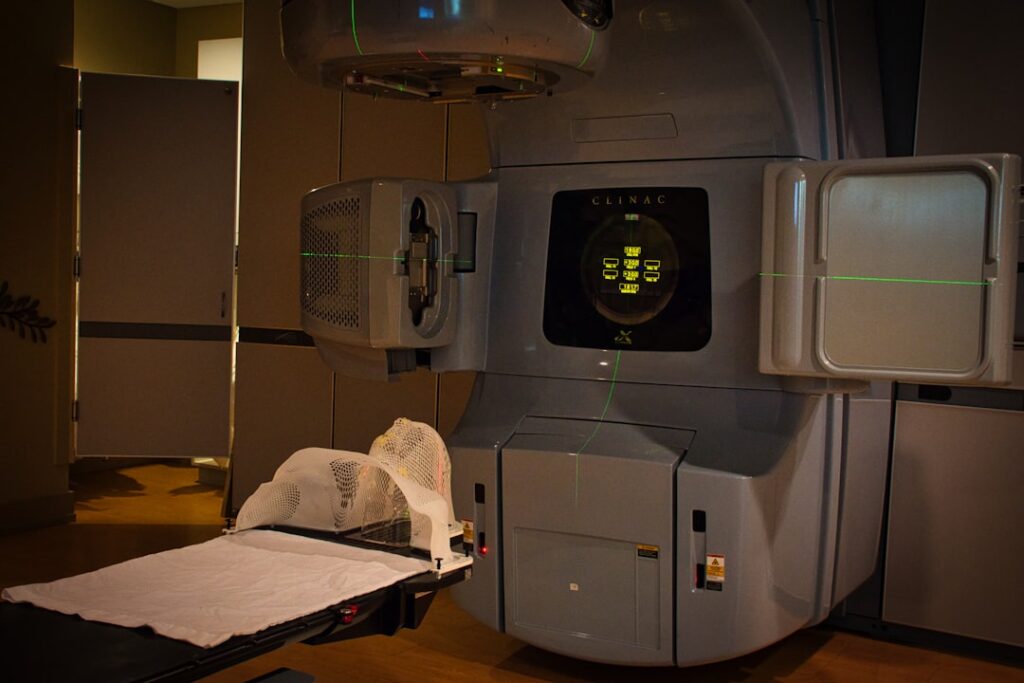
A radon machine in homeowner usage almost always means a consumer-grade continuous electronic radon detector — AirThings, RadonEye, Ecosense, and a handful of competitors — that gives ongoing radon readings displayed on the unit or in a companion app. These are the home equivalents of the professional continuous radon monitors (CRMs) that certified measurement professionals deploy during real-estate testing, but at a lower price point and with less precise calibration. This guide summarizes EPA, CDPHE, and manufacturer guidance current as of 2026 for general homeowner education only — consult a NRPP- or NRSB-certified radon measurement professional for testing decisions tied to real-estate transactions or post-mitigation verification.
Part of our Radon Levels guide — start there for the full picture →
What Is a Radon Machine?
A consumer radon machine — sometimes called a radon detector or radon monitor — is an electronic device that continuously samples the air for radon decay products and reports a running concentration in picocuries per liter (pCi/L) or becquerels per cubic meter (Bq/m³). Most units take readings on an hourly basis and display a 1-day, 7-day, and long-term average. The technology inside the unit is typically a pulsed-ion chamber or alpha-particle detector that registers each radioactive decay event from radon’s alpha-emitting daughters.
This differs from the two passive testing methods most homeowners are familiar with. A charcoal-canister kit is a short-term passive test — radon gas adsorbs onto activated charcoal for 2 to 7 days, and the canister is mailed to a lab for gamma counting. An alpha-track detector is a long-term passive test — alpha particles emitted by radon decay etch tracks in a plastic film over 90+ days, and the film is sent to a lab for counting. Both are accurate within their intended use, but neither gives the homeowner a running readout. The continuous electronic machine fills that gap.
How Consumer Radon Machines Work
Most consumer units use one of two detection technologies. Pulsed-ion chambers (used by AirThings) pull air into a sealed chamber where radon’s alpha decay ionizes gas molecules, producing measurable current pulses. Alpha-particle solid-state detectors (used by some Ecosense and similar units) use a silicon detector that registers each alpha-particle strike directly. Both technologies trade off measurement precision and response time for cost.
Sensitivity matters. A laboratory-grade CRM used by certified professionals has a measurement uncertainty of roughly 10% at 4 pCi/L. Consumer units have measurement uncertainties of 15% to 25% depending on model and averaging window. The shorter the averaging window the larger the uncertainty — a single-hour reading on a consumer unit can vary widely from the rolling weekly average, even when conditions are stable. This is why consumer-machine specifications emphasize long-term averages over individual hourly readings.
AirThings, RadonEye, Ecosense, and Other Models
Three brands dominate the consumer market in 2026. AirThings (Wave Plus, View Radon, Corentium Home) uses pulsed-ion chamber technology with smartphone-app integration; pricing runs $150 to $300 depending on model. RadonEye (RD200) uses pulsed-ion chamber technology with faster response; pricing is around $150 to $250. Ecosense (RadonEye Pro, EcoQube) uses solid-state alpha detection; pricing runs $200 to $400. All three brand families publish independent third-party validation data showing typical accuracy within 15% to 20% at 4 pCi/L over multi-day averages. The best home radon detector buyer’s roundup covers detailed model comparisons.
What the Readouts Mean
Consumer radon machines display several numbers. The most useful is the long-term average (7-day, 30-day, or all-time). EPA’s action level of 4.0 pCi/L is an annual average; the closest consumer-machine equivalent is the rolling long-term reading after the unit has been deployed for several months. Short-term averages (1-day, 1-hour) fluctuate substantially with weather, HVAC operation, ventilation changes, and time of year and should not be used as the basis for mitigation decisions.
Common patterns in the data. Indoor radon typically rises overnight and in colder months when stack-effect pressure draws more soil gas into the home, and falls during summer when windows are open and air-exchange rates are higher. Readings tend to be highest in the basement or lowest occupied level, where the unit should be deployed; readings on upper floors are typically 50% lower or more. Heavy rainfall or rapid pressure drops can produce short-term radon spikes as soil-gas pathways change. None of these short-term variations override the rolling long-term average for mitigation decisions.
When a Consumer Radon Machine Is the Right Tool
Three scenarios. First, ongoing monitoring of a home that has already been tested by a professional and is below the action level — the consumer machine provides continuous verification that conditions haven’t changed. Second, post-mitigation verification — after a professional installs a sub-slab depressurization system, a consumer machine gives the homeowner ongoing confidence that the system is reducing radon below 4 pCi/L. Third, monitoring during basement renovation or major construction that might affect radon entry, where a continuous machine catches changes the homeowner can address before they become long-term problems.
For real-estate transactions, professional CRM testing is the standard. Most state real-estate radon protocols require the CRM be deployed and retrieved by a certified professional with documented closed-house conditions. A consumer machine’s readings — while useful — typically don’t satisfy real-estate testing protocols because of tamper-resistance and chain-of-custody documentation requirements. The Colorado radon testing pillar guide covers when professional testing is required versus when consumer testing is reasonable.
Limitations of Consumer Radon Machines
Three limitations matter for homeowner decisions. First, measurement uncertainty at low radon levels (below 2 pCi/L) can be substantial — consumer machines may register 0.5 to 1.5 pCi/L variation in their readouts at conditions where actual radon is essentially constant. This is normal sensor behavior and is not a sign the unit is broken. Second, individual-hour readings should never be the basis for action; only multi-day rolling averages are meaningful. Third, consumer machines are not calibrated traceable to a NIST radon reference standard the way professional CRMs are, so disagreements between a consumer machine and a professional CRM are not necessarily evidence either is wrong.
None of these limitations mean consumer machines are useless. They mean consumer machines are the right tool for trend-monitoring, post-mitigation verification, and general awareness — and not the right tool for high-stakes one-time measurements where regulatory documentation is needed. The consumer radon detector overview covers the trade-offs in more detail.
Where to Deploy a Radon Machine
Deploy the unit in the lowest occupied level of the home — typically a basement or lowest-floor bedroom or living space. Avoid spots within 3 feet of exterior walls, windows, or doors, where ventilation can locally suppress readings. Avoid spots near kitchens or bathrooms where humidity, cooking, or steam can interfere with sensors. The unit should sit on a stable surface at typical breathing height (2 to 6 feet above the floor) for at least 48 hours before the first meaningful average is established.
For homeowners running the unit long-term, the deployment location should be consistent — moving the unit around the house produces variable readings that aren’t directly comparable. Many users keep the primary unit in the basement and a second unit on the main floor if monitoring multiple zones is important.
Should You Buy a Consumer Radon Machine Before or After Testing?
EPA’s longstanding recommendation is to start with a short-term passive test (charcoal canister, $15 to $30) to get a baseline. If results are below 2 pCi/L, retesting every two to five years is sufficient. If results are between 2 and 8 pCi/L, follow up with a long-term passive test (alpha-track, $20 to $50) to refine the annual average. If results are above 8 pCi/L, plan for mitigation without waiting for additional testing.
A consumer radon machine is most useful after a baseline has been established — either to verify ongoing low levels in an unmitigated home or to verify a mitigation system is performing after installation. Buying a $200 to $400 consumer machine before doing any baseline testing is reasonable but somewhat backward; the $15 passive kit gives a faster, lower-cost answer to the threshold question.
References
- EPA Radon page and Citizen’s Guide — U.S. Environmental Protection Agency
- CDPHE Colorado Radon Program — Colorado Department of Public Health and Environment
- CDC radon health information — Centers for Disease Control and Prevention
- American Lung Association radon information — American Lung Association
Frequently asked questions
How accurate are consumer radon machines?
Most third-party validations show typical accuracy within 15% to 25% of professional-grade measurements at 4 pCi/L over multi-day averages. Short-term hourly readings have higher uncertainty. Consumer machines are accurate enough for trend monitoring and post-mitigation verification but typically aren't used for real-estate testing where regulatory chain-of-custody is required.
AirThings versus RadonEye — which is better?
Both use pulsed-ion chamber technology and both publish independent validation data showing comparable accuracy at multi-day averages. AirThings tends to have stronger app integration and additional sensors (humidity, VOC). RadonEye tends to have faster response time at lower price points. Either is a reasonable choice for most homeowner monitoring.
Should I buy a radon machine or use a test kit?
Start with a $15 to $30 passive charcoal canister kit for an initial baseline. If results are above 2 pCi/L, follow up with a long-term alpha-track test. Buy a consumer machine for ongoing monitoring after mitigation, or for households where continuous awareness is wanted. The $200 to $400 machine is most useful after the threshold question has been answered.
Where should I place a radon detector in my home?
In the lowest occupied level — typically a basement or lowest-floor bedroom or living space. Avoid placement within 3 feet of exterior walls, windows, or doors. Avoid kitchens and bathrooms where humidity and steam interfere. Place the unit at breathing height, 2 to 6 feet above the floor, on a stable surface.
Front Range homeowners who want a connection to a vetted local inspector for professional CRM testing before installing a consumer machine can get in touch here.
Test your home for radon
Radon is invisible and odorless, so a test is the only way to know your level. A short-term kit gives a first reading in days; a digital monitor tracks it over time.
| Product | Why | Buy |
|---|---|---|
 AirChek Charcoal Radon Test Kit AirChek Charcoal Radon Test Kit | Lab fee usually included; EPA short-term protocol. | Amazon — $21.95 |
 First Alert RD1 Radon Test Kit First Alert RD1 Radon Test Kit | Widely stocked; 48-hour charcoal test. | Amazon — $16.98 |
 Airthings Corentium Home Airthings Corentium Home | Digital monitor with a long-term average. | Amazon — $143.65 |