Radon Companies Near Me: How to Find a Good One
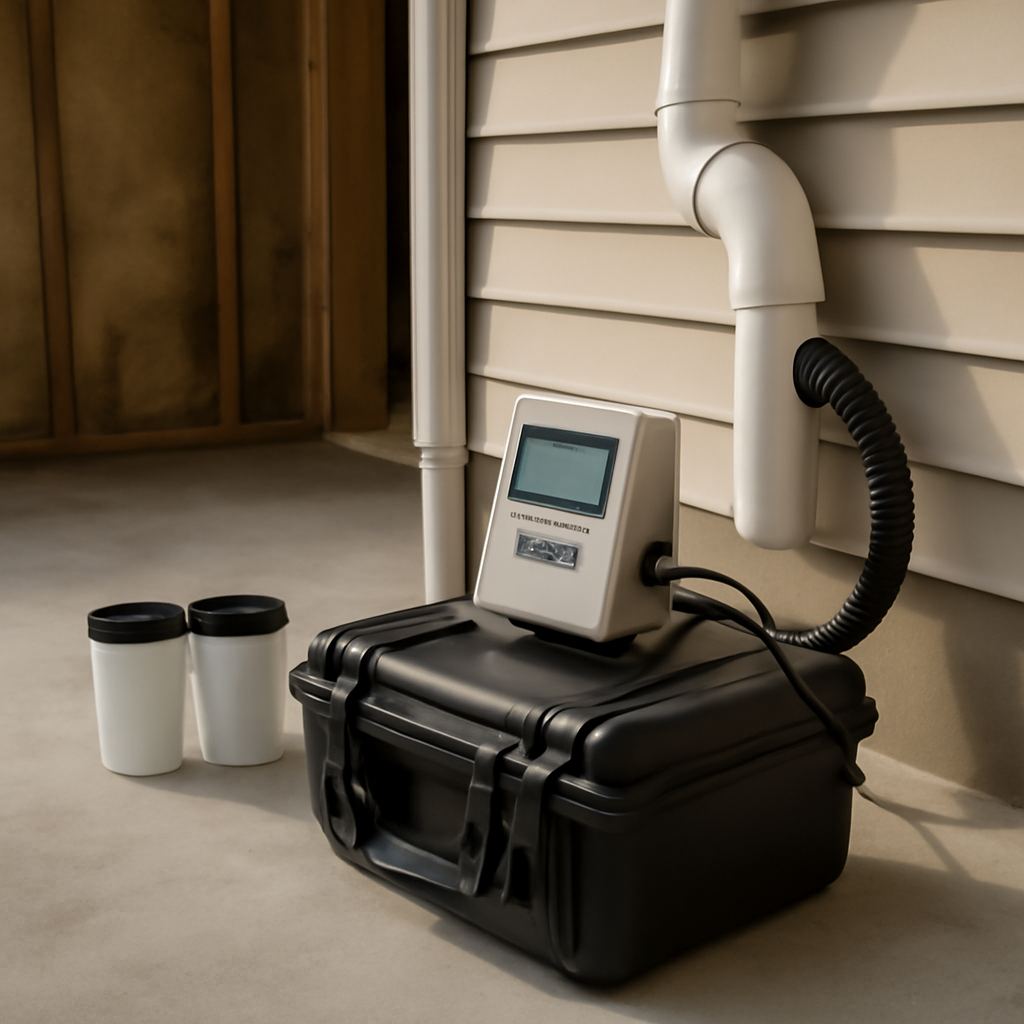
Typing “radon companies near me” into a search bar returns a jumble of testing labs, mitigation contractors, general home inspectors, and a few outfits that do all of it. Sorting out which one you actually need, and which one is competent, is the difference between a system that quietly protects your family for a decade and one that fails silently while you assume you are safe. This guide summarizes EPA and Colorado state guidance current as of 2026 and is educational only; consult a certified radon professional for testing and mitigation decisions and your physician for any health concerns. Below is how to identify the right kind of radon company, how to vet credentials, what Front Range pricing looks like, and how to avoid the most common pitfalls.
Part of our Radon Levels guide — start there for the full picture →
What do radon companies near you actually do?
Radon companies fall into two broad functions that are sometimes combined and sometimes separate. Testing companies measure the radon level in a home, either by deploying passive devices or calibrated continuous monitors and interpreting the result against the EPA’s 4.0 pCi/L action level. Mitigation companies design and install systems that lower elevated radon, most commonly active sub-slab depressurization that vents soil gas above the roofline. Some firms do both; many home inspectors offer testing as an add-on but refer mitigation out.
Knowing which service you need narrows the search immediately. If you have never tested, start with testing. If a test came back at or above 4.0 pCi/L, you need a mitigation company. If you are buying a home, you likely want a testing company or an inspector who tests during the inspection. The Colorado radon testing guide explains the whole sequence, and on the Front Range it matters because the region sits in the EPA’s highest-risk Zone 1, where elevated readings are common rather than rare.
Testing companies versus mitigation companies
The distinction is worth dwelling on because hiring the wrong type wastes time. A pure testing company or inspector places a device, collects the result, and reports it. They do not install systems. A mitigation company installs hardware but may not perform independent testing, which raises a conflict-of-interest question if the same firm both tests and recommends its own mitigation.
The cleanest approach for a homeowner not under a real estate deadline is to keep the two functions somewhat independent: get an objective test, and if it is high, hire a mitigation firm and have an independent follow-up test confirm the system worked. During a home purchase, the inspector usually handles the initial test as part of the visit. The overview of continuous radon monitors explains the equipment serious testers use, and the guide on choosing a local mitigation company covers the installation side.
That independence is not always practical, and many reputable firms competently do both testing and mitigation. The point is awareness: when one company tests, recommends a system, installs it, and then tests again to “confirm” success, every step is internal. A reasonable safeguard is to request that the confirming post-mitigation test be performed under conditions you can verify, or to commission an independent retest yourself afterward. Honest companies welcome that scrutiny because their systems pass; only a firm cutting corners has reason to resist an outside check.
How to vet a radon company near you
Search rankings do not measure competence, so the vetting falls to you. Work through these checks before signing anything.
Confirm national certification
The two recognized credentialing bodies are the National Radon Proficiency Program (NRPP) and the National Radon Safety Board (NRSB). A certified company has staff who passed an exam and follow established measurement or mitigation standards. Ask for the certification number and confirm it is current. Certification is the single strongest signal that a company knows what it is doing.
Check Colorado-specific requirements
Colorado regulates radon professionals, so confirm the company meets the state’s requirements in addition to national certification. A firm that works the Front Range regularly will be familiar with local building styles, expansive clay soils, and the basement-heavy housing stock that shapes how systems are designed here.
Demand a mitigation guarantee
For installation work, a quality mitigation company guarantees the system will bring radon below 4.0 pCi/L and confirms it with a post-installation test. If the level is not met, they adjust the system at no charge. A contractor who will not guarantee the outcome is telling you something about their confidence.
Verify insurance, references, and a written scope
Confirm liability insurance, ask for recent local references or reviews, and insist on a written proposal that specifies the system type, fan model and warranty, pipe routing, sealing work, the guaranteed level, and the post-test. The guidance on comparing radon companies walks through reading bids side by side. Vague quotes invite disputes and corner-cutting.
What radon services cost on the Front Range
Pricing is fairly predictable in Colorado, though complex homes push higher. Ranges current in 2026:
- DIY test kit: $15–$40 including the lab fee
- Professional short-term test: $125–$250
- Real estate transaction test: $150–$300 with chain-of-custody documentation
- Standard sub-slab mitigation system: $800–$2,500 installed
- Complex or crawl-space mitigation: $2,000–$3,500+
- Fan replacement (every 5–10 years): a few hundred dollars
Most straightforward Front Range homes land between $1,000 and $2,000 for a complete mitigation system. The detailed radon mitigation cost breakdown explains the factors, foundation type, home size, fan sizing, and finished-basement routing, that move a quote up or down. Use cost as one input, not the deciding factor; the cheapest bid is frequently the one that skips the post-test or undersizes the fan.
How to compare bids fairly
When two bids differ by several hundred dollars, the gap usually reflects scope rather than profit margin. Read each proposal for what it actually includes: the number of suction points, the fan model and its warranty, whether the discharge routes internally to the roof or up an exterior wall, whether sump and crack sealing is included, and whether a post-mitigation test is part of the price. A $900 bid with one suction point, a budget fan, no sealing, and no post-test is not really cheaper than a $1,600 bid that includes all of those, it is a different, smaller job that may not lower the radon level. Comparing line items rather than bottom-line numbers is how a homeowner avoids paying twice.
Red flags and common scams
The radon trade is mostly populated by honest professionals, but a few practices should make you walk away. Watch for these:
- No certification: a company that cannot produce an NRPP or NRSB credential should not be touching your foundation.
- No post-mitigation test: installing a system without confirming it lowered radon is selling hardware, not a solution.
- Pressure to mitigate after a single high short-term test: a responsible company confirms a borderline result before recommending a system.
- Fear-based upselling: wildly alarmist sales tactics or claims that every home is in imminent danger are manipulation, not science.
- Bids far below market: a $400 “system” usually means an undersized fan, improper venting, or no sealing.
- Fan installed in the living space: code and standards require the fan outside the living area so a leak does not re-enter the home.
Tampering is the flip side during real estate deals. A buyer should know that opening windows or moving a passive device can artificially lower a reading, which is why transaction tests use tamper-resistant continuous monitors. The explainer on how mitigation works helps homeowners judge whether a proposed design is legitimate.
What a good radon company delivers
A competent firm starts with diagnosis, not a sales pitch. For testing, that means correct device placement in the lowest lived-in level under closed-house conditions, and a clear report stating the result against the action level. For mitigation, it means evaluating the foundation and soil, choosing the right system, and installing it to standard.
A quality installation has the vent pipe terminating above the roofline and away from windows, the fan mounted outside the living space with a warranty, a manometer so the homeowner can confirm the fan is running, sealed entry points at sumps and cracks, and a follow-up test proving the level dropped. The explainer on what a mitigation system looks like shows the visible parts so you can verify you got what you paid for. A company that explains maintenance, fan lifespan, manometer checks, and retesting every two years, at handoff is treating you as a long-term client rather than a one-time sale.
Why the choice matters more in Colorado
The Front Range is not an average radon market. Colorado’s geology produces high soil-gas radon, and the EPA places Denver, Boulder, Douglas, El Paso, Jefferson, and most surrounding counties in Zone 1, the highest-risk category. A large share of homes here test above the action level, which means radon is a routine concern rather than a rare one. That prevalence is exactly why local experience matters: a company that installs systems on Front Range foundations every week understands the expansive soils, the deep-basement designs, and the seasonal pressure swings that affect readings.
It also means the stakes of choosing poorly are higher here. A failed or undersized system in a high-radon home leaves residents exposed to a known lung-cancer risk while believing they are protected. The American Lung Association and EPA both rank radon as the second leading cause of lung cancer overall and the leading cause among people who have never smoked. Picking a certified, guaranteed company is not bureaucratic box-checking; it is what ensures the invisible problem actually gets fixed.
Radon companies during a home sale
Real estate transactions are where radon companies and homeowners interact most often, and the dynamics are specific. Buyers typically arrange a test during the inspection contingency; a result at or above 4.0 pCi/L becomes a negotiating point. Sellers may agree to install mitigation, credit the buyer for the cost, or split the difference. Because money and deadlines are involved, the test must be defensible, which is why transaction testing uses tamper-resistant continuous monitors with documented chain of custody rather than a mailed kit anyone could disturb.
For sellers, getting ahead of the issue can smooth a sale. Testing before listing and mitigating if needed removes a common point of friction and lets the seller present documentation that the home’s radon is controlled. A buyer who sees a quality mitigation system with a post-test below the action level gains confidence rather than alarm. The broader guide to the inspection and hiring process explains how radon testing fits into the transaction timeline, and choosing a certified company for either the test or the system protects both sides of the deal.
What ongoing service a good company provides
The relationship with a radon company should not end when the installer drives away. A quality firm explains how to read the manometer, what fan failure looks like, and when to retest, generally every two years and after major home changes. They stand behind the fan warranty and offer fan replacement service when the unit reaches the end of its 5-to-10-year life. Some provide reminders for biennial retesting. This after-sale support is part of what the higher-quality price buys, and it is worth asking about before signing, because a company that disappears after installation leaves the homeowner to manage the system blind.
How to start your search the right way
Begin by deciding which service you need, testing or mitigation, then filter the local results to certified firms only. Collect at least two or three written bids for mitigation, compare them on system design and guarantee rather than price alone, and confirm each company’s certification and insurance. For testing, prefer a professional continuous monitor over a mailed kit when the result will drive a purchase decision.
If you are buying a Front Range home, fold radon testing into the inspection; the guide to hiring a home inspector explains how ancillary services like radon attach to the visit. Keep all documentation, test results, the system proposal, the post-mitigation test, and the warranty, because it matters for disclosure and resale. A methodical search that prioritizes certification, a written guarantee, and a confirming post-test consistently produces a system that works, which is the only outcome that counts.
References
- Consumer’s Guide to Radon Reduction — U.S. Environmental Protection Agency
- Radon Information and Professional Requirements — Colorado Department of Public Health and Environment
- Radon and Lung Cancer Risk — American Lung Association
Frequently asked questions
How do I find a good radon company near me?
Decide whether you need testing or mitigation, then filter to companies certified by NRPP or NRSB that also meet Colorado requirements. Get two or three written mitigation bids, compare system design and guarantees rather than price alone, and confirm insurance and references.
What's the difference between radon testing and mitigation companies?
Testing companies measure your home's radon level; mitigation companies install systems that lower it. Some firms do both, but keeping them somewhat independent avoids a conflict of interest, especially confirming a system worked with a follow-up test from a separate source.
How much do radon companies charge in Colorado?
Professional testing runs $125 to $300, and a standard mitigation system $800 to $2,500 installed, with most Front Range homes between $1,000 and $2,000. Complex or crawl-space systems can reach $3,500 or more. DIY test kits cost $15 to $40.
What are radon company red flags?
No NRPP or NRSB certification, no post-mitigation test, pressure to install after a single high short-term reading, fear-based upselling, bids far below market, and a fan installed inside the living space. Any of these is a reason to walk away.
Why does radon matter more on the Front Range?
Colorado's geology produces high soil-gas radon, and the EPA places most Front Range counties in Zone 1, the highest-risk category. A large share of homes test above the 4.0 pCi/L action level, making certified, guaranteed work especially important here.
Front Range homeowners comparing radon testing or mitigation companies can connect with a vetted, certified local professional through our contact page.
Test your home for radon
Radon is invisible and odorless, so a test is the only way to know your level. A short-term kit gives a first reading in days; a digital monitor tracks it over time.
| Product | Why | Buy |
|---|---|---|
 AirChek Charcoal Radon Test Kit AirChek Charcoal Radon Test Kit | Lab fee usually included; EPA short-term protocol. | Amazon — $21.95 |
 First Alert RD1 Radon Test Kit First Alert RD1 Radon Test Kit | Widely stocked; 48-hour charcoal test. | Amazon — $16.98 |
 Airthings Corentium Home Airthings Corentium Home | Digital monitor with a long-term average. | Amazon — $147.14 |