Mold Inspection in Wellington, Colorado | InspectandTest
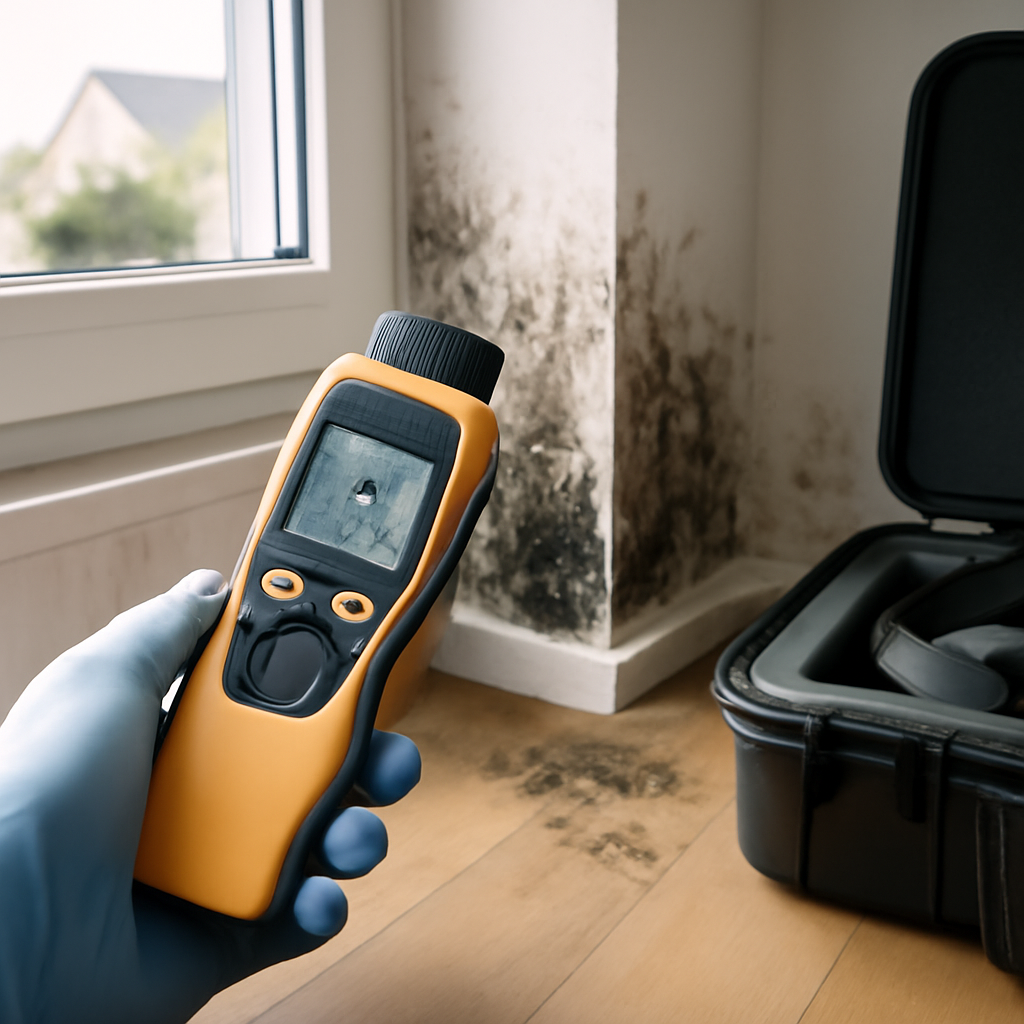
Wellington sits on the agricultural plains of Larimer County, about ten miles north of Fort Collins along the I-25 corridor, and it has been one of northern Colorado’s fastest-growing small towns for two decades. That growth shapes the local mold picture in a specific way: most homes are 2000s-to-2020s subdivisions with finished basements, while a small historic core in Old Town Wellington dates to the early-1900s railroad and farming era. A mold inspection wellington owners schedule looks at both patterns, because each traps moisture differently. This page explains how a local mold inspection works, why Wellington’s housing and climate create the conditions mold needs, what an inspection covers, and what it costs. This summary reflects EPA and CDC guidance current as of 2026; consult a certified professional for testing decisions and your physician for health symptoms.
Part of our Mold Testing & Inspection guide — start there for the full picture →
Is this mold, asbestos, or water damage? Get a free instant screen
Upload a clear photo of the suspect area. You'll get an instant AI screening opinion and what to do next. This is screening guidance, not a professional determination.
Screening guidance only. AI can be wrong. Confirm asbestos, mold type, or lead with lab testing or a licensed professional before acting.
Mold inspection in Wellington: what to know
A mold inspection is a visual and moisture-driven assessment of where water has entered a home and whether fungal growth has followed. An inspector does not guess from the street. They walk the structure, read moisture levels in drywall and framing, and trace the source of any dampness back to its origin. In Wellington that usually means a close look at finished basements, where the majority of the town’s housing stock puts living space below grade.
Mold needs three things: a food source, which most building materials provide; a temperature range that ordinary indoor conditions satisfy; and moisture. Only the moisture is controllable, so a competent inspection is really a moisture investigation. For the underlying science and the difference between inspection and lab testing, our plain-language mold inspection and testing hub walks homeowners through both.
Wellington’s rapid build-out matters here. When a town grows as fast as Wellington has, subdivisions like Sage Meadows, Harvest Village, and Buffalo Creek go up quickly, and construction-phase moisture, framing rained on before the roof went up, or a basement poured during a wet spell, can be sealed inside finished walls. A new home is not automatically a dry home, and an inspection catches the moisture a fresh coat of paint hides.
The contrast with Old Town Wellington is instructive. Those early-1900s homes near the historic core have had a century for grading to shift, gutters to fail, and additions to be tacked on with imperfect flashing. Different era, same underlying issue: water finding a way in. An inspector reads both kinds of home with the same moisture-first logic, then adapts to the construction in front of them.
Why Wellington homes develop mold
The dominant driver is the finished basement. Wellington’s subdivision homes were built to maximize living space, and that means bedrooms, family rooms, and home offices below grade. Below-grade walls sit against soil that holds snowmelt and irrigation water, and any crack in the foundation or gap at a window well becomes an entry point. Once moisture reaches the back of finished drywall, it can feed growth that stays hidden until an odor or a stain appears.
Climate adds its own pressure. The Front Range plains swing hard between dry and wet. Chinook winds and freeze-thaw cycles work foundation cracks open a little wider each winter, and spring snowmelt across flat plains-soil lots can pond against a foundation that was graded a degree too shallow. Boxelder Creek and the area’s irrigated agricultural setting mean the local water table and surface drainage are real considerations, not abstractions.
Evaporative coolers, common across northern Colorado, are another local factor. A swamp cooler deliberately adds moisture to indoor air to cool it, and a unit that runs hard through a dry July can push indoor humidity high enough to support growth on cool basement surfaces. The same cold, sealed winters that concentrate radon in Wellington homes also trap humidity from cooking, showering, and a furnace-warmed house, giving condensation a place to settle on the coldest below-grade walls.
Many Wellington-area properties, especially on the rural fringe toward Waverly, Nunn, and Severance, run on well water and septic. A failing septic field or a leaking well line can introduce chronic ground moisture that an inspector needs to rule out, since the symptom inside the home, persistent basement dampness, can look identical regardless of source.
What a Wellington mold inspection covers
A thorough inspection starts at the outside and works in. The inspector checks grading, gutters, downspout extensions, and window wells, because most interior moisture problems begin as exterior drainage problems. On a flat plains lot, even a slight negative slope toward the foundation can route every storm and every irrigation cycle against the basement wall.
Moisture mapping and hidden growth
Inside, the inspector uses a moisture meter on drywall, baseboards, and framing, and often an infrared camera to find cool, damp areas behind finished surfaces without cutting holes. In a Wellington finished basement, the usual suspects are the bottom foot of drywall near the slab, the area around egress window wells, and any wall shared with a below-grade mechanical room. Growth behind paneling or under carpet is common precisely because it stays out of sight.
Source diagnosis over spot-checking
Finding mold is the easy part; finding why it is there is the value. A good inspector ties every damp reading back to a cause, a downspout dumping at the foundation, a sump pump that has stopped cycling, condensation on an uninsulated cold-water line, so the fix addresses the source rather than wiping a surface that will regrow. When the inspector cannot identify a source visually, that is when sampling and lab analysis enter the picture, which our guide to mold testing in Wellington covers in detail.
Mold inspection cost in Wellington
A visual mold inspection in the Wellington and northern Larimer County market typically runs about $300 to $500 for a standard single-family home, depending on size, basement finish, and crawlspace access. Adding air or surface samples sent to an accredited lab usually costs another $100 to $200 per sample, since the lab work and chain-of-custody documentation carry their own fee.
Bundling a mold assessment into a broader pre-purchase inspection often costs less than two separate visits, because the inspector is already on site reading moisture and looking at the foundation. For a Wellington buyer under contract on a subdivision home, that combined approach gives one coordinated report on both the structure and any moisture concern.
Weigh the inspection cost against the alternative. Catching a small, source-driven moisture problem behind basement drywall early might mean a few hundred dollars in drainage correction. Missing it until the growth spreads through framing and finished walls can turn into a multi-thousand-dollar remediation plus the disruption of tearing out a finished basement. The inspection is the cheapest step in that sequence, and in a town where finished basements are the norm, it is rarely wasted spending.
Colorado regulations and disclosure
Colorado does not license mold inspectors or remediators, and the state sets no legal action level for indoor mold. That places the burden on the buyer to vet credentials directly rather than assuming a license guarantees competence. Colorado’s Seller’s Property Disclosure does require sellers to report known moisture or mold problems, so a Wellington seller who has dealt with a wet basement is expected to disclose it, and a documented inspection protects both sides during a transaction.
Because there is no state standard, reputable inspectors follow national guidance instead. The EPA’s mold remediation recommendations and CDC guidance on damp indoor environments are the references competent local providers work from. For a Wellington home sale, a written inspection report that documents moisture readings, photos, and any sampling gives the disclosure conversation a factual basis rather than leaving it to a seller’s memory of a long-ago leak.
Neighborhoods and areas served
Mold concerns turn up across Wellington regardless of the build year. The newer subdivisions, Sage Meadows, Harvest Village, Buffalo Creek, and the Boxelder-area developments, share the finished-basement-below-plains-soil pattern that drives most local calls. The older homes in and around Old Town Wellington bring century-old grading, original foundations, and additions whose flashing has had decades to fail.
Service typically extends across northern Larimer County and into adjacent communities, including Fort Collins to the south, Timnath, Severance, and the rural stretches toward Waverly and Nunn. For the broader county picture and how mold behaves across the region’s housing eras, the Larimer County mold inspection hub ties the local towns together. Homes on well and septic in those rural fringes get extra attention on ground-moisture sources during an inspection.
Common moisture sources in Wellington basements
Most Wellington mold problems trace back to a short list of moisture sources, and a good inspection runs through them systematically rather than chasing the visible growth. Knowing the usual culprits helps a homeowner understand what the inspector is looking for and why the fix targets water rather than mold.
Exterior drainage is the leading source. On Wellington’s flat plains lots, grading that slopes even slightly toward the foundation routes every snowmelt and irrigation cycle against the basement wall, and a downspout that discharges at the foundation rather than several feet out concentrates roof runoff exactly where it does the most harm. Window wells without proper drainage fill during a storm and leak into finished basements through the egress window. These are the first things an inspector checks, because correcting grading and downspouts often solves a basement moisture problem at its root.
Interior plumbing and mechanical sources come next. A sump pump that has stopped cycling, a water heater near the end of its life, a slow supply-line drip behind finished drywall, or condensation on uninsulated cold-water lines can each sustain growth in a Wellington basement. Evaporative coolers add seasonal humidity that condenses on cool below-grade surfaces through a dry summer. The inspector reads each of these as a potential cause and ties any damp reading back to a specific source.
Ground moisture is the rural wildcard. On properties toward Waverly, Nunn, and Severance running on well and septic, a failing septic field, a leaking well line, or a high seasonal water table near Boxelder Creek can introduce chronic dampness that mimics an interior leak. Distinguishing ground moisture from a fixable plumbing or drainage source is exactly the kind of diagnosis that separates a useful inspection from a surface wipe-down, since the corrective action is entirely different.
How to choose a Wellington mold inspection provider
Ask whether the provider carries moisture-meter and infrared equipment and whether they diagnose the source rather than just confirming growth exists. A useful report names the cause, documents readings with photos, and recommends a fix that addresses the water, not just the visible mold. Be cautious of any provider who both inspects and sells remediation, since that pairing creates an incentive to find expensive problems.
Confirm the inspector follows EPA and CDC guidance for damp indoor environments and explains when sampling is and is not worthwhile. Surface or air samples make sense when growth is hidden or when a buyer needs documentation for a negotiation; they are wasted money when the source is obvious and the fix is straightforward. A straight answer about when to test is the mark of a provider worth hiring. Pairing the mold check with a full inspection during a purchase keeps the process efficient and gives a Wellington buyer one clear picture of the home.
References
- Mold and moisture guidance — U.S. Environmental Protection Agency
- Mold and damp indoor environments — Centers for Disease Control and Prevention
- Mold and health research — National Institute of Environmental Health Sciences
Frequently asked questions
Do new Wellington subdivision homes need a mold inspection?
Yes. Rapid build-out means construction-phase moisture can be sealed inside finished walls, and most Wellington homes have finished basements below plains soil. A new home is not automatically a dry home, and an inspection reads the moisture a fresh finish can hide.
How much does a mold inspection cost in Wellington?
A visual inspection typically runs $300 to $500 for a standard home, with accredited lab samples adding about $100 to $200 each. Bundling the mold check into a pre-purchase inspection usually costs less than two separate visits.
Why are Wellington basements prone to mold?
Most local homes finish their basements, putting living space below grade against soil that holds snowmelt and irrigation water. Foundation cracks, window wells, and condensation in cold sealed winters give moisture entry points, and finished drywall hides growth until an odor or stain appears.
Does Colorado regulate mold inspectors?
No. Colorado does not license mold inspectors or set a legal action level, so vet credentials directly. Reputable local providers follow EPA and CDC guidance, and Colorado's seller disclosure still requires reporting known moisture or mold problems.
Do well and septic affect mold risk near Wellington?
They can. Rural properties toward Waverly and Nunn often run on well and septic, and a failing septic field or leaking well line introduces chronic ground moisture. An inspector rules those sources out, since the basement symptom looks the same regardless of cause.
Wellington’s finished-basement housing makes moisture the local default risk, not the exception. If you’re buying, selling, or worried about a damp lower level, connect with a vetted Front Range inspector through our contact page to get a clear read before it spreads.