Mold Home Testing: What Homeowners Need to Know
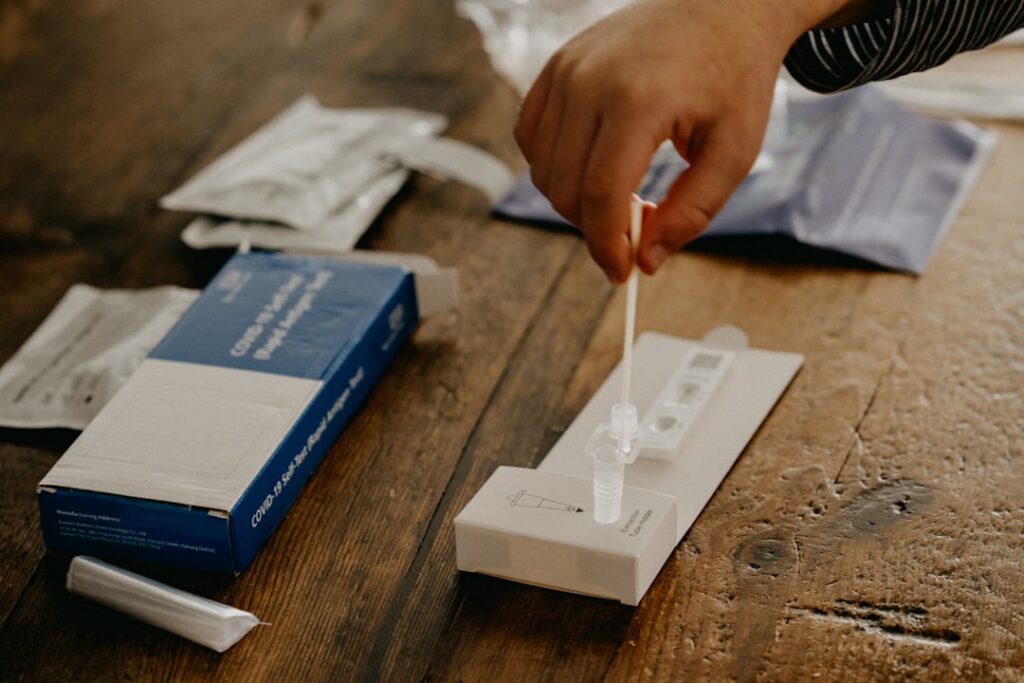
For a homeowner researching mold home testing, the menu of options runs from $20 hardware-store kits to $700 professional inspections. Each method answers a different question. Some confirm presence, some identify species, some measure airborne concentration, some document historical exposure. Choosing the right test requires knowing what question matters in your situation. This guide breaks down the methods, costs, and use cases. This guide summarizes EPA and CDC guidance current as of 2026 — consult a certified mold inspector for testing decisions and your physician for symptom evaluation.
Part of our Mold Testing & Inspection guide — start there for the full picture →
Is this mold, asbestos, or water damage? Get a free instant screen
Upload a clear photo of the suspect area. You'll get an instant AI screening opinion and what to do next. This is screening guidance, not a professional determination.
Screening guidance only. AI can be wrong. Confirm asbestos, mold type, or lead with lab testing or a licensed professional before acting.
Why Home Testing Exists
Mold spores are present in all indoor environments. The question is whether the concentration or species mix indicates a hidden problem. Visual inspection finds visible growth; testing finds the rest. Testing earns its cost when:
- A musty odor persists with no visible source.
- Health symptoms appear that improve when occupants leave the home.
- A real-estate transaction, insurance claim, or rental dispute requires documentation.
- Post-remediation verification is needed after a documented project.
If visible mold is present and the source is obvious, the EPA suggests skipping testing and proceeding to source repair and removal. The parent mold inspection and testing hub covers the decision framework.
Home Test Methods
Settle-Plate Kits ($15 to $40)
A Petri dish of agar is opened in a room for an hour, sealed, and either mailed to a lab or incubated by the homeowner. Colonies grow over 3 to 7 days. The method indicates that spores are present in the room but offers no quantitative comparison. Best for casual screening.
Bulk and Tape-Lift Mailer Kits ($30 to $80)
Lift tape pressed against visible growth, or a piece of cut material, ships to an AIHA-accredited lab for microscopic identification. The lab reports genus and sometimes species. Useful when species ID matters — for example, when distinguishing Stachybotrys from harmless surface darkening.
Air-Spore Cassette Kits ($60 to $150)
A calibrated pump or pump rental kit draws air through a spore-trap cassette for 5 to 10 minutes. Lab counts spores by genus, reports total spores per cubic meter, and compares indoor and outdoor samples. The strongest method for confirming airborne contamination above outdoor baseline. The spore-test measurement guide covers CFU/m3 interpretation.
ERMI Dust Kits ($250 to $400)
The Environmental Relative Moldiness Index uses qPCR DNA analysis on settled dust to detect 36 species and generate a single index score against a national reference database. Useful for sensitized occupants and for capturing historical exposure that air sampling might miss.
Professional Inspector Visit ($300 to $700)
A certified inspector conducts visual inspection, moisture mapping, and typically collects three to five air-spore samples plus an outdoor control. The fee includes interpretive reporting that ties findings to suspected sources. Strongest option for actionable documentation. The whole-house testing workflow walks through the inspector’s process.
Best At Home Mold Test Kit: our top 3 picks
| Product | Best for | Key features | Price | Buy |
|---|---|---|---|---|
| Varify 6-Pack | All-round DIY plate kit |
| $13.39as of Nov 25, 2026 9:07 pm GMT+0000 | Buy now →Check current price |
| KAYENQO 12-Test | Testing many rooms |
| $21.65as of Nov 25, 2026 9:07 pm GMT+0000 | Buy now →Check current price |
| Detekt Indoor Air Quality Kit | HVAC vents |
| $36.99as of Nov 25, 2026 9:07 pm GMT+0000 | Buy now →Check current price |


Prices are Amazon’s listed prices as of the time shown and change often; check Amazon for today’s price. As an Amazon Associate we earn from qualifying purchases.
What Each Method Measures
- Settle plates — presence/absence of culturable species, with no spatial or quantitative context.
- Tape lifts — species identification on a known visible growth.
- Air-spore cassettes — quantitative airborne concentration by genus, compared to outdoor baseline.
- ERMI — historical accumulation of 36 species in settled dust via DNA analysis.
- Professional inspection — visual, moisture-meter, and sampling combined with expert interpretation.
None of these methods independently identifies hidden growth location. That requires visual inspection, moisture mapping, and sometimes wall-cavity borescoping. The wall-cavity inspection guide covers the location side.
Where DIY Kits Fall Short
Three persistent weaknesses limit DIY accuracy:
- No calibrated airflow on most kits means airborne concentrations are not directly comparable to professional sampling.
- No outdoor control on most kits removes the baseline that makes indoor numbers interpretable.
- Untrained sample handling introduces contamination artifacts — handprints on tape, settled dust from disturbance, packaging delays affecting viable counts.
For screening, DIY kits suffice. For documentation in insurance claims, real-estate deals, or rental disputes, professional sampling with chain-of-custody handling is the standard.
Sample Collection Protocol
Across methods:
- Don’t run HVAC during sampling — airflow redistributes spores.
- Wait at least 24 hours after vacuuming, sweeping, or any disturbance.
- Collect an outdoor control sample on the same day, in similar weather, away from obvious mold sources.
- Document conditions — recent rain, season, HVAC operation status.
- Seal samples per kit instructions; ship promptly.
Reading the Lab Report
A typical air-spore report shows a table of genera with spores-per-cubic-meter for each indoor sample and the outdoor control. Suspect patterns:
- Indoor counts substantially exceed outdoor.
- Water-damage indicator species — Stachybotrys, Chaetomium, Aspergillus, Penicillium — dominate indoor counts.
- Indoor genus distribution differs sharply from outdoor.
A clean result shows indoor at or below outdoor with matching distribution. Interpretation requires context — a single elevated reading in a basement with a known leak is read differently from the same number in a bedroom with no water history.
Cost Versus Value Examples
For a homeowner with visible black mold on bathroom drywall, skip testing. Spend $300 on PPE and remediation supplies and follow the cleanup workflow. For a homeowner with no visible growth but persistent symptoms relieved when away from home, $150 for one indoor air sample plus outdoor control gives an actionable answer. For a homeowner with documented water-damage history and sensitized occupants, $350 for ERMI plus $200 for one air sample produces the strongest combined picture. The test-the-house workflow guide covers the cost-versus-value decision in more detail.
Lab Accreditation Matters
Use a lab accredited by AIHA — the American Industrial Hygiene Association — for the specific analysis run. AIHA accreditation covers sample handling, calibration of counting microscopy or qPCR equipment, and competence in genus identification. Many DIY kit brands ship samples to AIHA-accredited labs. Look for the logo on the kit or call to confirm before purchase.
Post-Remediation Verification
After mold cleanup work, clearance testing documents success. The cleaned area is sampled after physical removal, drying, and treatment but before reconstruction. Pass criteria typically include indoor counts at or below outdoor baseline, no dominant water-damage indicator genera, and visual confirmation of complete removal. Insurance carriers and real-estate transactions often require this step.
What Testing Doesn’t Solve
A mold test does not:
- Locate hidden growth — visual inspection and moisture mapping do that.
- Identify the moisture source — that comes from a building diagnostic.
- Predict occupant symptoms — individual sensitivity varies dramatically.
- Replace remediation — finding mold is not the same as removing it.
Testing supports a complete diagnostic process. Visual inspection, moisture mapping, sampling, and interpretation together produce defensible findings.
How DIY Kits Compare on Cost Per Useful Answer
Comparing DIY-kit options on a “cost per useful answer” basis tells a clearer story than raw price:
- $15 settle plate — answers “are there spores in this room” (yes, always). Useful answer rating: low.
- $40 tape-lift kit with AIHA lab — answers “what species is this visible growth.” Useful answer rating: high when species ID matters.
- $80 air-spore mailer kit without outdoor control — answers “what indoor count exists.” Useful answer rating: medium because comparison context is missing.
- $150 air-spore mailer kit with outdoor control sampler — answers “is indoor count elevated against outdoor.” Useful answer rating: high.
- $350 ERMI kit — answers “what species DNA is accumulated in this home.” Useful answer rating: high for sensitized-occupant and historical-exposure cases.
The price-per-useful-answer math favors species-specific or context-bearing tests over generic presence-absence kits.
Best Practices for Sample Shipping
DIY test kits depend on careful sample handling between collection and lab analysis. Several practices preserve sample integrity:
- Seal samples per the kit instructions immediately after collection. Tape any joints in the sample housing.
- Ship same day or next business day. Overnight delivery is worth the cost for time-sensitive samples.
- Keep samples at room temperature during shipping — extreme heat or freezing can damage some sample types.
- Include the completed chain-of-custody paperwork with full collection notes.
- Photograph the sample housing before shipping in case of transit damage disputes.
When Testing Multiple Times Helps
One sample at one point in time captures one snapshot. For homes with intermittent symptom patterns, a second round of sampling at a different time of day, weather condition, or season can reveal whether the pattern correlates with environmental factors. Common scenarios where repeat sampling helps:
- Symptoms that worsen after rain — sample during dry weather and again 24 hours after a storm.
- Symptoms that improve when HVAC is off — sample with HVAC running and not running.
- Symptoms in only one room — sample multiple zones simultaneously to localize the source.
Repeat sampling adds cost but produces actionable patterns when single samples come back ambiguous.
What to Do With a Negative Result
A clean mold test result is not a guarantee of zero risk — it’s evidence that at the sampled time and location, indoor counts were at or below outdoor baseline with normal species distribution. If occupant symptoms persist despite a clean test, consider:
- Other indoor air-quality factors — VOCs from new finishes, combustion byproducts, pet dander, dust mites.
- Repeat testing at a different time or location.
- ERMI dust analysis to capture historical accumulation.
- Medical evaluation by an allergist or pulmonologist for non-environmental causes.
A negative test result paired with persistent symptoms warrants a broader diagnostic, not the assumption that nothing is wrong.
Test Comparison Quick-Reference
A side-by-side decision aid:
- Settle plate: $15-$40, presence/absence only, no calibration, no outdoor control. Casual screening.
- Tape-lift sample: $30-$60, species ID on visible growth, accurate within scope, requires lab. Best for confirming species.
- Air-spore cassette (DIY): $60-$150, semi-quantitative spore counts, often lacks outdoor control. Screening-grade.
- Air-spore cassette (professional): $50-$200 per sample plus inspector fee, calibrated, with outdoor control. Defensible.
- ERMI: $250-$400, 36-species DNA panel on settled dust, historical context. Best for sensitized occupants.
- Professional inspection: $300-$700, combines visual, moisture, sampling, interpretation. Strongest for documentation.
Home Testing for Specific Situations
Pre-Purchase Inspection
Buyers ordering a general home inspection can typically add a mold-specific scope for $200 to $400. The inspector runs moisture mapping, conducts visual inspection in high-risk areas, and may include one or two air-spore samples. Result documented in the inspection report.
Rental Disputes
Tenants facing suspected mold in rental properties benefit from professional sampling with chain of custody. DIY screening results are easily disputed; AIHA-accredited lab reports with documented sampling protocol carry more weight in formal disputes.
Workplace Concerns
Employees suspecting mold in their workplace can request testing through facilities management or environmental health and safety departments. OSHA does not have a specific mold standard but addresses indoor air quality through general-duty requirements.
School and Public Building Concerns
Parents concerned about mold in school facilities can request information through facilities management. Many districts have indoor air quality policies and conduct routine inspections after water-damage events.
More Questions About Mold Home Testing
Can you do mold home testing while living in the house?
Yes, mold home testing is normally done while living in the house, and normal living conditions often give the most realistic results. For air sampling, closing windows and exterior doors for several hours beforehand, often 12 hours or more, is recommended.
Avoid vacuuming, dusting, or running air purifiers in the sampled room right before testing, since these change spore levels. Pets and children should stay out of the room during air sampling. Surface sampling is unaffected by daily activity.
How many rooms should you test during mold home testing?
Most mold home testing covers the rooms with the most concern, typically one to three indoor locations plus one outdoor comparison sample. Testing every room raises cost without adding much information.
Good choices are rooms with musty odors, past water damage, visible staining, or where occupants report symptoms. Adding an unaffected indoor room as a second comparison can help show whether a problem is local or house-wide. Each extra sample usually adds a separate lab fee.
Does mold home testing work for mycotoxins?
Most mold home testing does not measure mycotoxins. Standard kits identify mold types or count spores, and mycotoxin testing of homes is specialized, expensive, and not widely standardized for residential use.
Knowing that a mold capable of producing mycotoxins is present does not show whether toxins are being produced or at what level. Health agencies recommend removing indoor mold growth regardless of type, so mycotoxin testing rarely changes the response. A doctor is the right source for questions about health effects.
Is mold home testing useful for people with allergies?
Mold home testing can be useful for people with allergies when it identifies a hidden source of mold or confirms that indoor spore levels are higher than outdoors. Results can guide where to focus cleanup and humidity control.
Testing does not tell whether a specific person reacts to specific molds; that requires allergy testing by a doctor. For allergy sufferers, keeping humidity between about 30 and 50 percent, using HEPA filtration, and fixing moisture problems are usually more helpful than repeated home tests.
References
- Mold Testing or Sampling — U.S. Environmental Protection Agency
- Mold Testing Information — Centers for Disease Control and Prevention
- Mold Testing Resource — InterNACHI
- Mold Health Effects — National Institute of Environmental Health Sciences
Frequently asked questions
What's the best mold home test kit?
For screening, an AIHA-accredited tape-lift or air-spore mailer kit costs $40 to $150 and produces useful presence/genus data. For insurance, real-estate, or sensitized-occupant cases, a professional inspector visit at $300 to $700 is the standard.
Are home mold test kits accurate?
DIY kits are accurate for what they measure but limited by uncalibrated sampling, missing outdoor controls, and untrained collection. They work for casual screening. Professional sampling is the standard for documentation.
How long does mold home testing take?
Sample collection takes 30 to 60 minutes. Lab analysis returns results within 3 to 5 business days for air-spore counts and 5 to 10 days for ERMI panels. Rush turnaround is sometimes available.
Should I test before or after remediation?
Both, when stakes are high. Pre-cleanup testing documents the problem for insurance. Post-cleanup clearance testing documents success. For routine small DIY jobs, neither test is required by the EPA workflow.
Can mold home testing be done in winter?
Mold home testing can be done in winter, and winter air tests often show a clearer indoor problem because outdoor spore counts are usually lower. Snow cover can make outdoor comparison samples very low. Closed-house conditions in winter can also concentrate indoor spores.
Who should do mold home testing, a homeowner or a professional?
A homeowner can handle simple mold home testing, such as confirming whether a stain is mold. A professional is a better choice for hidden mold, health concerns, real-estate transactions, or post-remediation clearance, since their sampling methods and written reports carry more weight.
How much does professional mold home testing cost?
Professional mold home testing typically costs about $300 to $700 for an average home, according to industry estimates, depending on size and the number of samples. Larger homes, crawl spaces, and extra samples raise the price. Lab fees are sometimes billed separately.
Front Range homeowners weighing DIY screening against a professional inspection can connect with a vetted local inspector through our contact page for guidance on which approach fits the situation and budget.