Is Radon Testing Really Necessary: The Clinical Case Explained
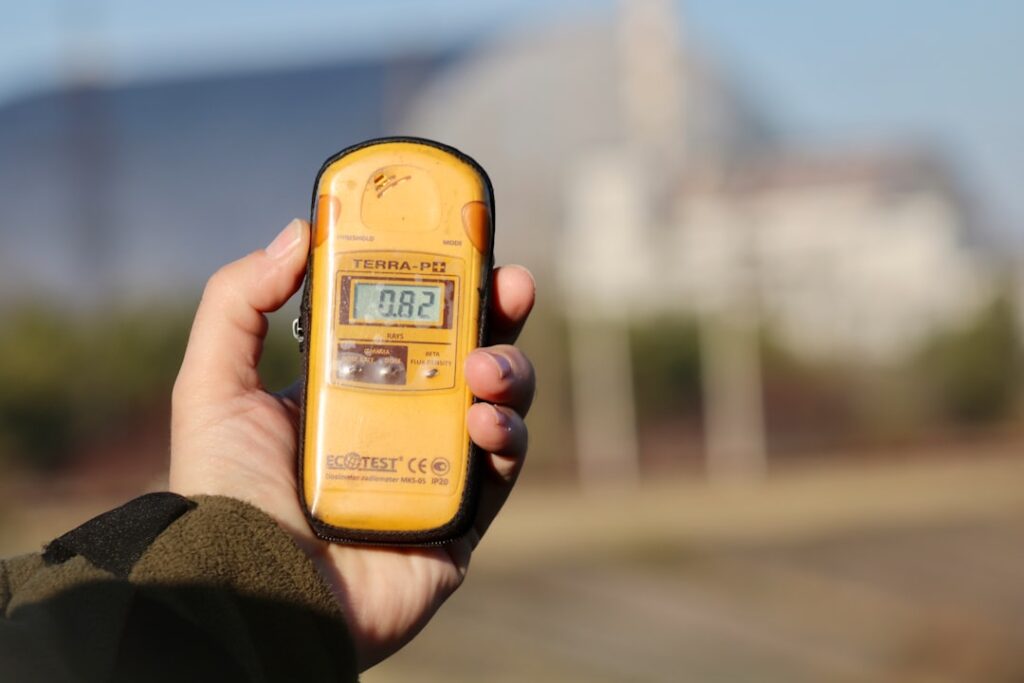
Is radon testing really necessary? Skeptics ask the question fairly — radon is invisible, the action level (4 pCi/L) is sometimes hard to defend as a clean threshold, and lung-cancer latency means the personal benefit of testing today might not be measurable for decades. The clinical case for testing rests on a body of peer-reviewed research, federal agency risk assessments, and the underlying physics of alpha-particle damage to bronchial epithelium. This guide summarizes EPA, CDC, NIH, American Lung Association, and peer-reviewed research current as of 2026 for general homeowner education only — consult your physician for symptoms and a certified professional for testing decisions.
Part of our Radon Levels guide — start there for the full picture →
The Direct Answer: Yes, and Here’s Why
Radon is the leading cause of lung cancer among non-smokers in the United States according to the EPA, CDC, and Surgeon General. EPA’s national risk assessment estimates roughly 21,000 lung-cancer deaths annually in the U.S. are attributable to radon exposure. The CDC and American Lung Association cite the same figure in current public-health communications. This estimate is built from epidemiological data on underground miners (high-dose occupational exposures), residential case-control studies in Europe and North America (lower-dose chronic exposures), and the well-characterized physics of alpha-particle damage to lung tissue.
The clinical case rests on three independently strong lines of evidence. First, occupational miner cohorts show a clear dose-response relationship between radon exposure and lung-cancer incidence with no apparent threshold. Second, pooled residential case-control studies (published in BMJ and other peer-reviewed journals) show a statistically significant lung-cancer risk increase at residential radon concentrations as low as 100 Bq/m³ (roughly 2.7 pCi/L). Third, the biological mechanism — alpha-particle damage to DNA in bronchial epithelial cells — is the same mechanism active in occupational and residential exposures, just at different doses.
Addressing the Common Skeptic Arguments
Three positions recur in skeptical discussions of residential radon testing. Each is worth taking seriously and answering directly.
“The Action Level Is Arbitrary”
EPA’s 4 pCi/L action level is partly arbitrary — there is no clean biological threshold below which radon is “safe.” The dose-response curve is roughly linear, meaning lung-cancer risk continues to fall as exposure decreases but does not drop to zero. EPA chose 4 pCi/L as the action level based on a balance between achievable mitigation in residential construction (most homes can be reduced below 4 pCi/L with sub-slab depressurization) and lung-cancer risk reduction. EPA explicitly acknowledges this in its publications and recommends that homeowners with results between 2 and 4 pCi/L consider mitigation as well.
The arbitrary-threshold critique is therefore directed at the wrong target. The fact that 4 pCi/L is partly an engineering-and-policy choice rather than a biology-only number does not undermine the underlying lung-cancer risk data, which is robust across mining and residential epidemiology. The threshold is a public-health policy that balances cost of intervention against marginal risk reduction.
“Residential Studies Show Weak Effect Sizes”
Individual residential case-control studies often show effect sizes that are statistically marginal, partly because residential radon exposures are lower than occupational and partly because individual exposure assessment over decades is noisy. The pooled analyses — particularly the European pooled analysis (Darby et al. 2005, BMJ) and the North American pooled analysis (Krewski et al. 2005, Epidemiology) — overcome this by combining data across many studies. Both pooled analyses show statistically significant lung-cancer risk increases at residential radon levels, with the European pool estimating roughly 16% increased lung-cancer risk per 100 Bq/m³ (roughly 2.7 pCi/L) sustained exposure.
That effect size is large in public-health terms — radon is responsible for a meaningful fraction of all lung-cancer deaths, especially among never-smokers, because exposure is widespread even though per-individual relative risk is modest. The effects of radon exposure guide covers the epidemiology in more depth.
“I Feel Fine So I Don’t Need to Test”
Radon-related lung cancer has a typical latency of 20 to 50 years from initial exposure to clinical disease onset. The absence of current symptoms tells you nothing about cumulative exposure or future cancer risk. Lung cancer at presentation is often advanced — five-year survival rates for lung cancer remain below 25% in most population-level statistics because early-stage disease is typically asymptomatic. The “I feel fine” argument is structurally similar to the position that one doesn’t need to know one’s cholesterol because one isn’t currently experiencing chest pain — the asymptomatic phase is exactly when intervention is most beneficial.
Radon and Smoking Interact Multiplicatively
This is the most important single fact in the radon-lung-cancer literature, and it’s not well-communicated in casual treatments of the topic. The risk of lung cancer from radon and from smoking is not additive — it’s multiplicative. A smoker exposed to elevated radon faces lung-cancer risk roughly 10 to 25 times higher than a non-smoker exposed to the same radon, because the two exposures attack the bronchial epithelium synergistically. EPA estimates that roughly 86% of radon-attributable lung-cancer deaths occur in current or former smokers, even though smokers are a minority of the population.
The clinical implication is direct. For households with current or former smokers, radon testing is especially worth doing. The combination of stopping smoking and reducing radon exposure produces a larger lung-cancer risk reduction than either intervention alone. Conversely, for never-smokers, residential radon is one of the few modifiable lung-cancer risk factors available — making it disproportionately important in that population even though the absolute risk per individual is lower than in smokers.
What Testing Actually Detects
A passive charcoal-canister test or alpha-track test measures the time-averaged radon concentration in a specific location. EPA’s recommended interpretation is that the home’s long-term annual average is the relevant exposure metric for lung-cancer risk. Short-term tests are useful for initial screening but seasonal and weather variation means the short-term average can differ substantially from the long-term average. Long-term alpha-track tests (90+ days) capture the seasonal variation and give a more accurate annual estimate.
For real-estate transactions, professional continuous radon monitor (CRM) testing under closed-house conditions is the standard. For ongoing homeowner awareness, consumer continuous detectors give running readings that allow trend monitoring. The Colorado-specific radon testing pillar guide covers the choice between testing methods.
What the EPA, CDC, and Surgeon General Actually Recommend
The Surgeon General’s National Health Advisory, the EPA’s “Citizen’s Guide to Radon,” the CDC’s radon page, the American Lung Association’s radon guidance, and CDPHE’s Colorado Radon Program all converge on the same recommendations. Test every home for radon. If the long-term average is at or above 4 pCi/L, install a mitigation system. If between 2 and 4 pCi/L, consider mitigation, particularly in households with smokers, young children, or full-time basement occupants. Retest mitigated homes every two years. The unanimity across agencies that consider this question is itself meaningful — public-health agencies do not agree on much, and they agree on this.
The Cost-Benefit Math
A short-term passive radon test costs $15 to $30. A long-term alpha-track confirmation runs $20 to $50. A professional 48-hour CRM test for real-estate or post-mitigation runs $150 to $300. A residential radon mitigation system in Colorado runs $1,200 to $2,500 installed. Compared to the lifetime medical cost of lung cancer (often $100,000 to $200,000+ in direct medical costs alone, before counting lost income and quality-of-life years), every step in the testing-and-mitigation process is highly cost-effective.
EPA’s own cost-effectiveness analyses place radon mitigation among the most cost-effective lung-cancer-prevention interventions available to homeowners, with cost per life-year saved meaningfully lower than many indoor-air-quality interventions and lower than many medical screening programs. The case for testing is therefore not just clinical — it’s economically reasonable from a household-budget perspective as well. The Colorado radon mitigation guide covers the local cost framework.
Where the Skeptics Are Right
Two positions worth conceding. First, the 4 pCi/L action level is partly a policy choice, not a clean biological threshold — homeowners between 2 and 4 pCi/L should think about mitigation rather than ignore the result. Second, residential radon’s individual relative risk is modest — for any single household, the probability of avoiding lung cancer specifically through radon mitigation is small in absolute terms. Where the skeptics are wrong: extrapolating from “modest individual risk” to “not worth testing” ignores both the very low cost of testing and the cumulative public-health math.
References
- EPA Radon page, Citizen’s Guide, and risk assessments — U.S. Environmental Protection Agency
- CDC radon health information and lung-cancer data — Centers for Disease Control and Prevention
- NIH National Cancer Institute radon and lung-cancer research — National Institutes of Health
- American Lung Association radon and lung-cancer information — American Lung Association
- CDPHE Colorado Radon Program — Colorado Department of Public Health and Environment
Frequently asked questions
How many lung-cancer deaths does radon cause each year?
EPA, CDC, and the American Lung Association all cite roughly 21,000 lung-cancer deaths annually in the U.S. attributable to radon exposure. This makes radon the leading cause of lung cancer among non-smokers and the second-leading cause overall after smoking. The estimate is built from pooled residential case-control studies and occupational miner cohorts.
Why is the EPA action level set at 4 pCi/L if there's no safe level?
The 4 pCi/L action level is a policy threshold that balances achievable mitigation in residential construction against lung-cancer risk reduction. EPA explicitly acknowledges no fully safe level exists and recommends that homeowners between 2 and 4 pCi/L consider mitigation. The threshold is engineering-and-policy, not biology-only.
Does radon really cause cancer in non-smokers?
Yes. Pooled residential case-control studies — including the European pooled analysis published in BMJ and the North American pooled analysis published in Epidemiology — show statistically significant lung-cancer risk increases at residential radon levels in both smokers and non-smokers. Radon is the leading cause of lung cancer in U.S. non-smokers.
What if I'm a smoker — does radon matter more or less?
Considerably more. Radon and smoking interact multiplicatively, not additively. A smoker exposed to elevated radon faces lung-cancer risk roughly 10 to 25 times higher than a non-smoker at the same radon level. EPA estimates roughly 86% of radon-attributable lung-cancer deaths occur in current or former smokers. Testing and mitigation are especially valuable in these households.
Front Range homeowners ready to test or who have received an elevated result and need a mitigation referral can reach out through our contact page.
Test your home for radon
Radon is invisible and odorless, so a test is the only way to know your level. A short-term kit gives a first reading in days; a digital monitor tracks it over time.
| Product | Why | Buy |
|---|---|---|
 AirChek Charcoal Radon Test Kit AirChek Charcoal Radon Test Kit | Lab fee usually included; EPA short-term protocol. | Amazon — $21.95 |
 First Alert RD1 Radon Test Kit First Alert RD1 Radon Test Kit | Widely stocked; 48-hour charcoal test. | Amazon — $16.98 |
 Airthings Corentium Home Airthings Corentium Home | Digital monitor with a long-term average. | Amazon — $142.99 |