Is Mold Living or Nonliving: A Plain-Language Guide
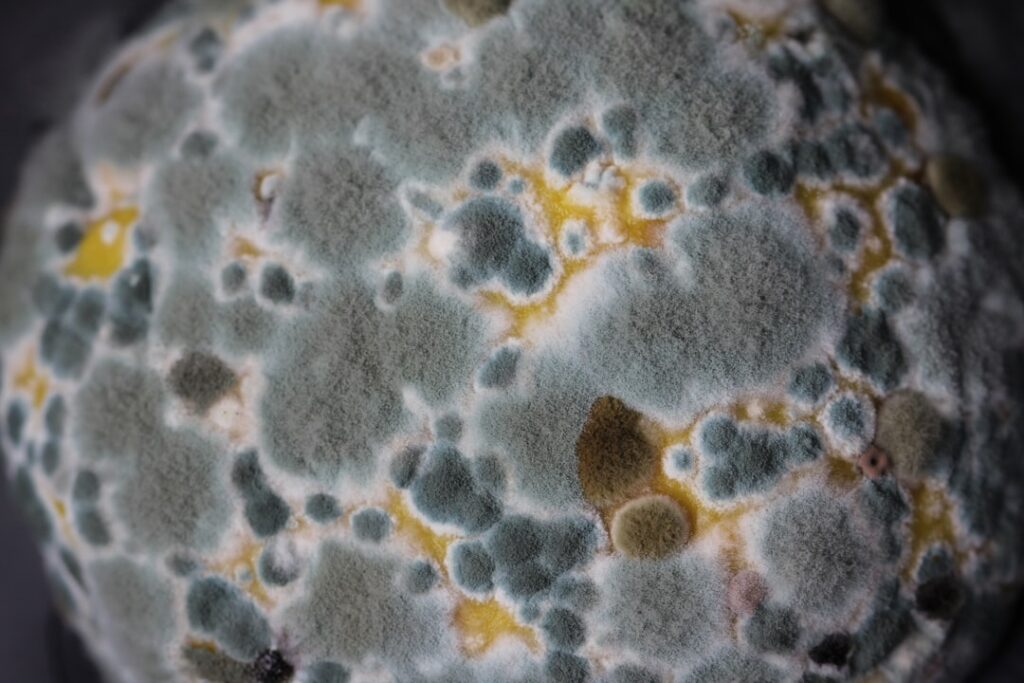
Homeowners who find a fuzzy patch on a wall often ask a surprisingly basic question: is that stuff alive, or is it just a stain? The answer shapes how you think about treating it. So is mold living or nonliving? Mold is unambiguously living. It is a fungus that grows, feeds, reproduces, and spreads as long as it has moisture. This guide summarizes EPA and CDC guidance current as of 2026 to explain the science in plain terms; for active growth or health symptoms, consult a certified professional and your physician rather than relying on a web explainer.
Part of our Types of Mold guide — start there for the full picture →
Is this mold, asbestos, or water damage? Get a free instant screen
Upload a clear photo of the suspect area. You'll get an instant AI screening opinion and what to do next. This is screening guidance, not a professional determination.
Screening guidance only. AI can be wrong. Confirm asbestos, mold type, or lead with lab testing or a licensed professional before acting.
Is Mold Living or Nonliving? The Direct Answer
Mold is a living organism, specifically a type of fungus. It meets every criterion biologists use to define life: it is made of cells, it consumes nutrients for energy, it grows, it responds to its environment, and it reproduces by releasing spores. Unlike a rust stain or a water mark, which are chemical residues that sit inert, a mold colony is an active community of cells doing the business of staying alive. That living nature is exactly why moisture control is the foundation of mold inspection and testing for homeowners: cut off what keeps it alive, and it stops growing.
What Kind of Living Thing Is Mold
Mold belongs to the fungal kingdom, a branch of life separate from plants and animals. Fungi do not photosynthesize the way plants do; instead they absorb nutrients from the organic material they grow on. The familiar mushroom is a fungus, and so are yeasts and the molds that grow on bread, leather, and damp drywall. Calling mold a fungus rather than a plant or a germ is not a technicality; it explains how it feeds and why it thrives in dark, damp places where plants could not.
How Mold Feeds and Grows
A mold colony begins when an airborne spore lands on a damp surface that offers food. The spore germinates and sends out thread-like filaments called hyphae, which spread across and into the material. These hyphae release enzymes that break down organic matter, the cellulose in paper-faced drywall, the wood in framing, the dust on a windowsill, into nutrients the fungus absorbs. As the colony matures, it produces new spores to colonize fresh territory. This feeding is why mold actually damages building materials over time rather than merely discoloring them.
What Mold Needs to Stay Alive
Like any living thing, mold has requirements, and removing any one stops growth.
Moisture
This is the only requirement a homeowner can practically remove. The EPA recommends keeping indoor humidity between 30 and 50 percent to discourage mold, because below that range the fungus cannot maintain the surface moisture it needs.
A Food Source
Organic building materials, wood, paper, drywall, even household dust, all feed mold. These are nearly impossible to eliminate from a home.
The Right Temperature and Spores
Indoor temperatures suit mold as well as people, and spores float in essentially all indoor and outdoor air. Neither can be removed, which is why moisture is the practical control point.
What Mold Has in Common With Other Fungi
Placing mold among its fungal relatives makes its behavior easier to grasp. The mushroom in a forest, the yeast that leavens bread, the mildew on a shower curtain, and the mold on damp drywall are all members of the same kingdom, and they share a common way of life: they absorb nutrients by breaking down organic material rather than making their own food as plants do. A mushroom is simply the visible fruiting body of a much larger fungal network living unseen in soil or wood, much as the visible fuzz of household mold is the spore-bearing tip of a mycelium spread through the material. Recognizing this kinship explains why mold thrives in the dark, damp, organic-rich conditions where plants could never grow, and why it spreads through a material the way a mushroom’s network spreads through a log. It is not a stain, not a germ, but a fungus doing what fungi do: decomposing what it grows on.
Living, but Dormant When Dry
An important nuance: when mold dries out, the colony stops growing, but it does not necessarily die in a way that makes it harmless. Dried mold and its spores can remain capable of regrowth if moisture returns, and the CDC notes that dead mold can still cause allergic reactions in sensitive people. This is why simply drying a moldy area is not the same as remediating it. The material still carries spores and fragments that can disturb air quality and reactivate with the next leak.
Can You Truly “Kill” Mold?
People often ask whether a product can kill mold, and the answer reveals why the living-organism framing matters so much. Biocides and disinfectants can kill mold cells on a surface, but killing is not the same as removing, and dead mold is not the same as gone. The CDC notes that dead mold can still cause allergic reactions in sensitive people, because it is the spores and fungal fragments, alive or not, that the immune system reacts to. Moreover, a product sprayed on the visible surface rarely reaches the mycelium embedded in porous material, and it does nothing about the moisture that allowed growth in the first place. So a colony “killed” on the surface of a damp wall regrows from the living portion below or from new spores landing on the still-wet material. This is why guidance consistently emphasizes physical removal of the growth and the material it has penetrated, plus correction of the moisture, over chemical killing alone.
Why “Living” Changes How You Treat It
Because mold is alive and reproduces, treating it is not like wiping up a stain. Surface cleaning that leaves the colony’s roots in porous material, or that leaves the moisture source intact, invites regrowth. The EPA’s guidance focuses on removing the moisture and, for larger areas, removing the contaminated material entirely. Bleaching the visible surface of a colony growing on a wet wall does little if the wall stays wet, because the living organism simply returns. Our explainer on mold and humidity covers the moisture thresholds in more detail.
How Mold Differs From Bacteria and Viruses
Calling mold “living” sometimes leads people to lump it together with germs, but fungi are a distinct kind of life. Bacteria are single-celled organisms without a true nucleus, and viruses are not even cells; they cannot grow or reproduce on their own outside a host. Mold, as a fungus, is built from cells with nuclei, organized into the branching hyphae described above, and it grows and reproduces independently wherever it has moisture and food. This is why the home response to mold differs from sanitizing against germs. You do not “disinfect” a mold problem away; you remove the colonized material and dry the source. A surface spray that kills bacteria does little against a fungal mycelium rooted in damp drywall, which is one more reason the physical-removal approach in EPA guidance is the standard.
Mold Versus Mildew and Other Look-Alikes
Mildew is itself a form of mold, typically a flat, powdery surface growth, and it is equally alive. Efflorescence, the white crystalline deposit on basement walls, is not living; it is mineral salt left behind by evaporating water. Soot and dirt are nonliving residues. Telling living growth from a nonliving stain matters because only the living growth will keep spreading and only it responds to moisture removal. When the distinction is unclear, testing settles it.
The Life Cycle of a Mold Colony
Seeing mold as a living organism with a life cycle clarifies why it behaves the way it does. It begins as a microscopic spore, one of countless drifting through indoor and outdoor air. When a spore lands on a damp surface with food, it germinates, splitting open and pushing out a germ tube that becomes the first hypha. Those hyphae branch and spread into a network called a mycelium, the actual body of the fungus, much of which grows down into porous material rather than sitting on top. As the colony matures, it forms reproductive structures that release a fresh generation of spores into the air to colonize new surfaces. This cycle can complete in days under the right warmth and moisture, which is why a small damp patch can become a visible, spore-shedding colony so quickly. It also explains why surface wiping fails: the visible fuzz is only the spore-bearing top layer, while the living mycelium remains rooted in the material below.
Why the Distinction Matters for Health and Air
Because mold is alive and reproduces by releasing spores, it interacts with the air people breathe in a way an inert stain never could. The CDC notes that exposure to mold can cause allergic and respiratory symptoms in sensitive people. A living, actively growing colony continually adds spores and fragments to indoor air, and disturbing it, by cleaning, demolition, or even airflow, can release a burst of them. Even dead mold, the CDC notes, can still trigger allergic reactions, which is why “killing” mold with a biocide is not the same as removing the health concern. The living nature of mold is therefore not a biology trivia point; it is the reason remediation focuses on physical removal of the material and control of the moisture, rather than simply bleaching a surface and considering the matter closed.
Common Misconceptions About Mold Being Alive
Several persistent myths follow from misunderstanding mold’s living nature. One is that bleaching visible mold solves the problem; in reality, surface treatment leaves the embedded mycelium and the moisture source intact, so the living colony returns. Another is that once mold dries and stops growing it is harmless; dried mold can reactivate with new moisture and its spores can still provoke reactions. A third is that painting over mold seals it away; paint applied over living growth on a damp surface typically peels as the colony continues underneath. The thread through all three is treating mold like a stain when it is an organism. Effective handling means removing both the living growth and the water that sustains it, which is the consistent message of the guidance throughout our guide to mold on walls.
The Practical Takeaway of Mold Being Alive
For a homeowner, the single most useful consequence of mold being a living organism is this: you control it by controlling what keeps it alive, not by treating it like a stain. It needs moisture, food, the right temperature, and spores, and of those, moisture is the one you can remove. Take away the water and the living colony stops growing. Remove the colonized material and the moisture source together, and the problem is genuinely resolved rather than masked. Every piece of mainstream guidance follows from this living nature, which is why the advice is so consistent: find the moisture, fix it, and physically remove the growth. Understanding that mold is alive turns a confusing, alarming patch into a manageable problem with a clear logic behind the response.
Health Context and When to Call a Professional
Because mold is a living organism that releases spores and fragments, exposure can trigger allergic and respiratory symptoms in sensitive people, according to the CDC. This is a measured statement, not a diagnosis; symptoms vary widely and many people are unaffected. If you have health concerns, consult your physician. If you have a recurring or large area of growth, or growth you cannot identify, a professional assessment is warranted. Our overview of mold assessments explains what an inspection covers and when laboratory testing is worthwhile.
References
- About Mold — Centers for Disease Control and Prevention
- Mold Course Chapter 2: Why and Where Mold Grows — U.S. Environmental Protection Agency
- Mold Health Topic — National Institute of Environmental Health Sciences
Frequently asked questions
Is mold living or nonliving?
Mold is living. It is a fungus made of cells that feeds, grows, responds to its environment, and reproduces by releasing spores. Unlike an inert stain, a mold colony is an active organism that keeps spreading while it has moisture.
Is mold a plant or an animal?
Neither. Mold is a fungus, a separate kingdom of life. Fungi do not photosynthesize like plants; they absorb nutrients by breaking down the organic material they grow on, such as wood, paper, or drywall.
Does mold die when it dries out?
Drying stops growth, but dried mold and its spores can regrow if moisture returns, and the CDC notes dead mold can still cause allergic reactions. Drying alone is not the same as removing the contaminated material.
Why does cleaning not always get rid of mold?
Because mold is alive and its filaments grow into porous materials. Wiping the surface while leaving the moisture source or embedded growth lets the living colony return. Removing the moisture and the affected material is what stops it.
If you have found growth in a Front Range home and are not sure whether it is active mold or a harmless stain, a vetted local inspector can help. Reach one through our contact page.