Human Thermal Imaging: What It Sees and Its Limits
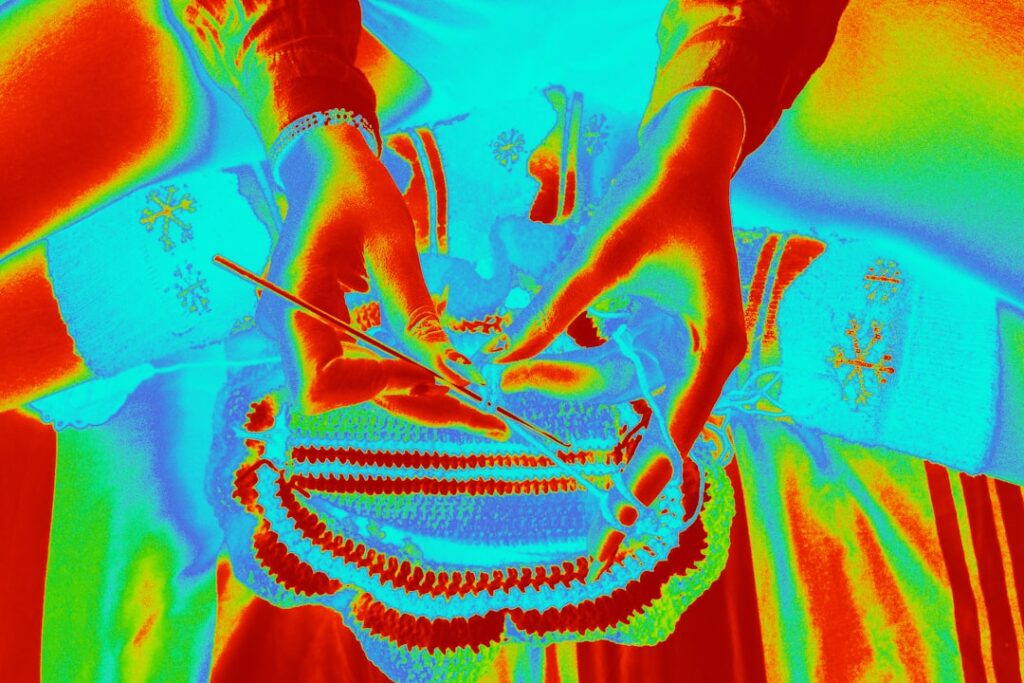
Human thermal imaging fascinates people because a camera that “sees body heat” feels like science fiction, but the reality is more grounded and more limited than the movies suggest. A thermal camera detects the infrared radiation leaving a person’s skin and clothing surface — it does not see beneath the skin, through walls, or through clothing in any meaningful diagnostic way. Understanding what these cameras actually detect clarifies both their legitimate uses and the claims that overreach, including during a home inspection. This guide draws on engineering and public-health references rather than product marketing.
Part of our Thermal Imaging for Homes guide — start there for the full picture →
What does human thermal imaging actually detect?
A thermal camera reads surface temperature. A human body, around 37°C internally, radiates heat that warms the skin and the surface of clothing, and the camera maps those surface temperatures into a color image. Exposed skin — face, hands — appears warmest; clothed areas appear cooler because fabric insulates and the camera reads the fabric’s surface, not the skin beneath.
That single fact governs everything. The camera does not measure core body temperature, does not see internal organs, and does not penetrate clothing to reveal what is underneath. It registers the heat that reaches its sensor from the outermost surface. The same microbolometer technology used to scan a wall for moisture is reading a person’s surface heat — there is no special “human mode.” For how that sensor works, see our explainer on thermal imaging sensors, and for building applications, our guide to thermal imaging a house.
Can thermal cameras detect fever or illness?
This is where careful framing matters most. Thermal cameras were widely deployed for fever screening, but the evidence on their accuracy is mixed and the limitations are significant. A thermal camera measures skin surface temperature, which is influenced by ambient conditions, recent activity, makeup, and airflow — and skin temperature correlates only loosely with the core body temperature that defines a fever.
Public-health and regulatory guidance has stressed that thermal screening is not a reliable standalone diagnostic. The most accurate approach focuses on the inner corner of the eye (the tear duct area), which tracks core temperature better than the forehead, and uses a calibrated reference under controlled conditions. Even then, an elevated reading is a flag for follow-up with a clinical thermometer, not a diagnosis. A person can run a fever with normal skin temperature, or show warm skin without illness. For any health concern, a clinical measurement and a physician’s judgment are what matter — a thermal camera is a screening aid at best.
Medical thermography and its narrow legitimate role
Beyond fever screening, thermal imaging of the body appears in a field called medical thermography, and its standing is worth stating plainly to counter exaggerated marketing. Thermography measures skin surface temperature patterns, and proponents have promoted it for a range of screening purposes. Regulatory and medical authorities have repeatedly cautioned that thermography is not a substitute for established diagnostic methods and should not be used as a standalone screening tool for serious conditions. Surface temperature patterns are influenced by too many variables — circulation, ambient conditions, activity — to reliably diagnose disease on their own.
Where thermography has any accepted role, it is as an adjunct under medical supervision, not a replacement for proven tests, and any claim that a thermal camera can diagnose illness should be treated with skepticism. For a homeowner, the relevance is simple: the same physics that limit a building scan to surface temperature limit a body scan even more severely, because the human body’s surface heat is buffered by skin, blood flow, and clothing in ways that obscure what is underneath. Any health concern belongs with a physician using appropriate diagnostic tools, not a thermal camera.
What human thermal imaging cannot do
Several common beliefs about thermal cameras and people are simply false:
- It cannot see through walls. A camera reads the wall’s surface temperature; a warm person on the other side does not appear unless their heat has conducted to the surface you are viewing.
- It cannot see through clothing to reveal the body in detail. It reads the fabric surface, which is cooler and blurs body heat.
- It cannot diagnose medical conditions. Surface heat patterns are too variable and non-specific to diagnose disease.
- It cannot identify individuals. A thermal image shows heat shape, not facial detail sufficient for recognition.
These limits are the same ones that constrain thermal imaging on a house: surface-only readings, easily confused by reflections and ambient conditions. A glossy surface can reflect a person’s heat and create a confusing “ghost.” The technology is powerful within its band and misleading when pushed past it.
Why this matters for home inspection
On an inspection, the human-thermal-imaging principle is a useful teaching point about what the same camera does and does not reveal in a house. Because the camera reads only surface heat, body heat from occupants, sunlight warming a wall, or a recently used appliance can all create temperature anomalies that have nothing to do with a defect. An inspector must distinguish a true finding from a transient heat source — exactly as fever screeners must distinguish skin temperature from core temperature.
The practical lesson is that thermal imaging finds patterns, and interpretation supplies the meaning. A warm spot on a wall might be a person standing on the other side, a sun-baked exterior, a hot water line, or an electrical problem. The inspector’s job is to rule out the benign explanations. Confirming a suspected moisture anomaly with a moisture meter is the same discipline as confirming a fever with a clinical thermometer — the image alone is not proof. This is why the home inspection tools a professional carries work as a system, not a single magic camera.
Why people, and animals, stand out on thermal
The reason humans appear so vividly on a thermal camera is straightforward physics worth understanding, because it also explains the technology’s limits. A warm-blooded body maintains a temperature well above most indoor surroundings, so the skin and the surface of clothing radiate more infrared energy than the cooler walls, floors, and furniture around them. Against a room at 70°F, a person’s exposed skin near 90°F surface temperature creates strong contrast, which is why a thermal camera renders people as bright shapes even in total darkness.
This contrast is also why thermal cameras are genuinely useful for spotting animals at night — search and rescue, wildlife observation, and security all exploit the same effect. A deer in a dark field or a rodent in an attic shows its body heat against a cool background. But the same principle reveals the limit: the camera sees the surface heat, not the creature itself. A well-insulated animal, like a thick-furred dog, can appear surprisingly cool because the fur traps body heat below the surface the camera reads. Clothing does the same to people. The camera is always reading the outermost surface, and insulation between that surface and the warm core blurs or hides the heat.
How ambient conditions change the image
What a person looks like on thermal depends heavily on the environment. In a cold room, body heat contrasts sharply and the person is unmistakable. In a hot room near body temperature, the contrast collapses and the person nearly disappears into the background — one reason thermal fever-screening struggles in warm settings. Recent activity, sweating, sun exposure, and even a hot drink change skin surface temperature temporarily. This sensitivity to conditions is exactly why a single thermal reading of a person means little without controlled circumstances, and why the same variability complicates reading building surfaces that have been warmed by sun or appliances.
Privacy and responsible use
Because thermal cameras detect heat shapes through some thin coverings and in darkness, their use around people raises reasonable privacy expectations. While a thermal image cannot identify a face or see through walls, it can reveal that a person is present in a space and their general position and movement. Deploying thermal imaging in or around occupied homes should respect occupants’ privacy, and recordings of people should be handled thoughtfully. For inspectors, the practical norm is to scan building surfaces, not occupants, and to be mindful that a scan may incidentally capture people. Fever-screening deployments similarly carry data-handling responsibilities. Used for its intended purpose — reading building surfaces — thermal imaging poses little privacy concern, but pointing it at people invites questions worth taking seriously.
A practical note for home inspectors: when scanning a wall that an occupant is standing behind, the inspector may capture the occupant’s heat shape or be misled by it. The professional norm is to ask occupants to step aside from areas being scanned, both to avoid the privacy question and to prevent body heat from creating a false anomaly. The same courtesy applies to scanning shared walls in multifamily buildings, where a neighbor’s heat or appliances on the other side can appear in the image. Transparency about what the camera does and does not capture reassures occupants who may assume, wrongly, that it sees through walls or clothing.
When thermal imaging is the right tool — and when it isn’t
For building diagnostics, thermal imaging is genuinely valuable: it finds insulation gaps, air leaks, hidden moisture clues, and electrical hot spots that no visual inspection catches. For health screening, it is a limited triage aid that cannot replace a clinical thermometer or a physician. For “seeing through” walls or clothing, it does not work as imagined. Matching expectations to reality is the whole point. When a home inspection turns up a thermal anomaly that matters — a possible leak, an electrical hazard, or a finding that affects a purchase — a trained professional confirms it with the right follow-up tools. The camera reveals where heat differs; people and surfaces alike require interpretation to turn that into a correct conclusion. For any fever or illness concern, consult a physician rather than relying on a thermal reading.
Myths about thermal imaging and people
Popular culture has built a set of beliefs about thermal cameras and the human body that range from exaggerated to flatly wrong, and clearing them up clarifies what the technology really offers.
“Thermal cameras can see through walls to find people.” They cannot. A camera reads the wall’s surface temperature; a person on the other side appears only if their body heat has warmed that surface, which is slow and faint through typical construction. “Thermal imaging sees through clothing.” It sees the clothing’s surface, which insulates and blurs body heat — it does not reveal the body in any meaningful detail. “A thermal camera can tell if someone is lying or stressed.” While stress can cause measurable changes in skin temperature in controlled studies, a handheld camera in real conditions cannot reliably read emotional states. “Thermal cameras can diagnose disease.” Surface temperature patterns are too variable and non-specific for diagnosis; that is a job for clinical tools and a physician.
The thread connecting these myths is the assumption that the camera sees more than surface heat. It does not. Every legitimate use — energy diagnostics, night vision for search and rescue, screening as a triage aid — works within that single capability, and every overreaching claim fails because it asks the camera to see beneath a surface it can only read from outside. Keeping that one fact in mind separates the real applications from the fantasy. For a home inspector, it also sets honest expectations with clients who may arrive believing the camera can do more than physics allows.
References
- Heat Stress and Body Temperature — Centers for Disease Control and Prevention (NIOSH)
- ENERGY STAR: Seal and Insulate — U.S. Environmental Protection Agency (ENERGY STAR)
- Infrared Thermography for Inspectors — International Association of Certified Home Inspectors (InterNACHI)
Frequently asked questions
Can a thermal camera see through clothing or walls?
No. A thermal camera reads the surface temperature of clothing or a wall, not what is behind it. Clothing insulates and blurs body heat, and a wall only shows a warm person behind it if that heat has conducted to the surface you are viewing.
Are thermal cameras accurate for detecting fever?
Only as a limited screening aid. They measure skin surface temperature, which correlates loosely with the core temperature that defines a fever and is affected by ambient conditions. An elevated reading warrants follow-up with a clinical thermometer, not a diagnosis.
Why does this matter for a home inspection?
Because the same camera reads only surface heat, body heat from occupants, sunlight, or appliances can create anomalies unrelated to defects. Inspectors must distinguish a true finding from a transient heat source and confirm it with tools like a moisture meter.
Can thermal imaging diagnose a medical condition?
No. Surface heat patterns are too variable and non-specific to diagnose disease. Thermal imaging cannot replace clinical evaluation, and any health concern should be addressed by a physician using proper diagnostic tools.
Thermal imaging cameras
Infrared cameras reveal hidden moisture, missing insulation, and air leaks. Phone-attachment models are the budget entry point; standalone units have higher resolution.
| Product | Why | Buy |
|---|---|---|
 FLIR ONE Pro (phone) FLIR ONE Pro (phone) | Plugs into iPhone/Android; inspector favorite. | Amazon — $349.00 |
 Topdon TC001 Topdon TC001 | High-res phone module at a low price. | Amazon — $199.99 |
 FLIR C5 Compact FLIR C5 Compact | Standalone pocket camera with Wi-Fi. | Amazon — $611.50 |