How to Reset a Furnace: Power Cycle, Reset Button, Lockouts
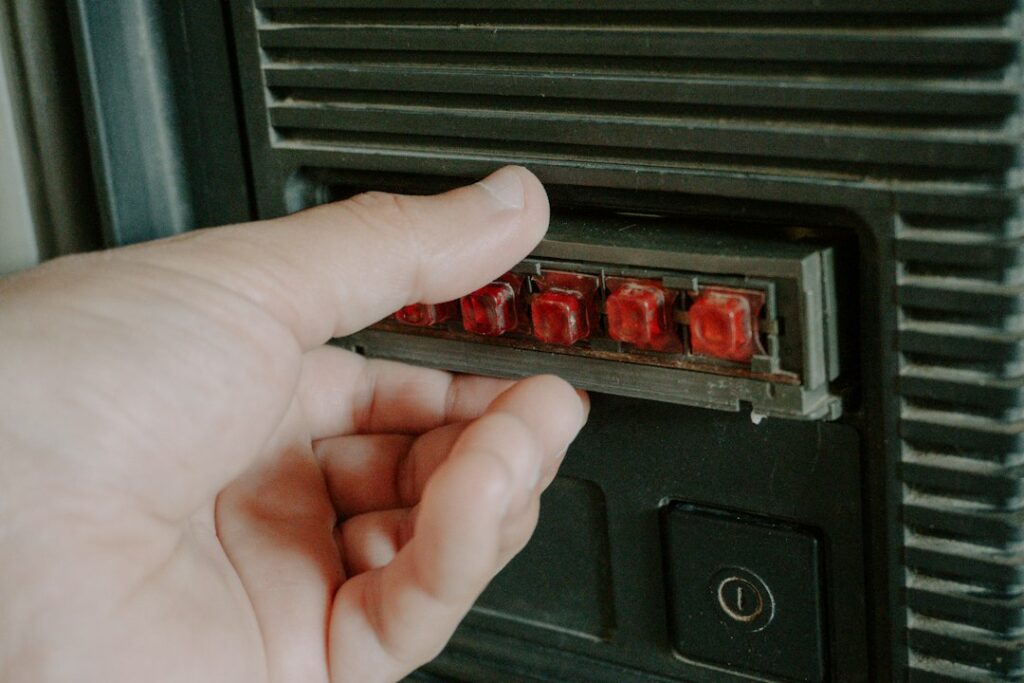
To reset a furnace, first confirm the thermostat is set to heat and calling for warmth, then turn the furnace off at its service switch or breaker, wait about 30 seconds to a minute, and turn it back on so the control board restarts its ignition sequence. If the furnace has a reset button on the blower motor or the burner, press it once only. A furnace that comes back on and stays on has cleared a one-off lockout; a furnace that needs resetting again is telling you something is wrong, and repeated resets can hide a real safety problem.
Part of our Heating, Cooling & Ventilation guide — start there for the full picture →
If you smell gas at any point, do not touch switches, do not try to reset anything, leave the house and call your gas utility or 911 from outside. Everything below assumes there is no gas odor.
This guide explains what “reset” really means on a modern furnace, gives the quick steps first, then walks through each one in detail with the safety notes that matter, covers what lockouts and blinking codes are telling you, and explains when to stop and call a technician. It reflects general guidance as of 2026; the furnace manufacturer’s label and manual take priority for any specific unit.
Heating or cooling trouble? Talk to a local HVAC technician.
📞 Call (833) 491-1876The Short Answer: Reset a Furnace in Six Steps
- Smell first. Any gas odor means leave and call the utility. Do not reset.
- Check the thermostat. Set it to heat, raise the setpoint a few degrees above room temperature, and replace its batteries if it has them.
- Check power. Confirm the furnace service switch (it looks like a light switch on or near the unit) is on, and that the breaker has not tripped.
- Check the door and filter. Make sure the blower door is fully seated, since a safety switch keeps the furnace off when it is loose, and look at the filter.
- Power-cycle. Turn the service switch off, wait 30 to 60 seconds, then turn it back on and give the furnace several minutes to run through its startup sequence.
- Reset button, once. If your furnace or burner has a reset button and the steps above did not work, press it one time. If the furnace does not run, or locks out again, stop and call a technician.
The table below summarizes the different things people mean by resetting a furnace.
| Type of reset | Where it is | What it does | Homeowner-safe? |
|---|---|---|---|
| Thermostat reset | Wall thermostat | Restores the call for heat; fixes dead batteries, wrong mode, schedule errors | Yes |
| Power cycle | Service switch or breaker | Restarts the control board and clears a soft lockout | Yes |
| Blower motor reset | Red button on some blower motors, inside the lower cabinet | Resets the motor’s thermal overload after it overheated | Once, with power off to open the panel |
| Oil burner reset | Red button on the burner’s primary control | Restarts the burner after a flame failure lockout | Once only; never repeatedly |
| Manual rollout or limit reset | Small button on certain safety switches | Restores a safety switch that tripped on overheating or flame rollout | No; call a technician |
What “Resetting” a Furnace Actually Means
Older furnaces had a standing pilot light and few electronics, so a “reset” often meant relighting the pilot. Most furnaces installed in the last few decades use electronic ignition instead: a control board runs a sequence of checks each time the thermostat calls for heat. It starts the inducer fan, confirms airflow through the pressure switch, lights the burners with a hot-surface igniter or spark, proves the flame with a flame sensor, then starts the blower.
If one of those checks fails several times in a row, the board stops trying and goes into a lockout. Some boards clear a soft lockout on their own after an hour or so; cutting power clears it immediately. That is what a power-cycle reset does. It does not repair anything. It simply gives the furnace another chance to pass the checks it just failed.
Reset buttons are different. They belong to individual components, such as a blower motor’s thermal overload or an oil burner’s primary control, and they reset after that component shut itself off for protection. Some safety switches, such as flame rollout switches and certain high-limit switches, require a manual reset because tripping them means something unsafe happened. Those are not routine buttons for a homeowner to push.
Before You Reset: Safety Checks That Come First
Gas odor means leave
Natural gas and propane have an added odorant that smells like rotten eggs or sulfur. If you notice it, do not flip switches, unplug anything, use a phone inside or try to restart the furnace, since any spark can ignite gas. Get everyone out, leave the door open behind you if it is safe to do so, and call the gas utility’s emergency number or 911 from a safe distance. Utilities treat gas odor calls as emergencies.
Carbon monoxide alarms
Gas and oil furnaces produce carbon monoxide (CO), a gas you cannot see or smell. A cracked heat exchanger, blocked flue or failed venting can send it into the house. The CDC lists the most common symptoms of CO poisoning as headache, dizziness, weakness, upset stomach, vomiting, chest pain and confusion, often described as flu-like. If a CO alarm sounds, or people in the house feel ill and better when they leave, get outside, call 911, and do not reset or run the furnace until it has been checked. The Consumer Product Safety Commission recommends CO alarms on every level of the home and outside sleeping areas.
Power off before opening panels
Furnace cabinets contain line-voltage wiring, moving fans and hot surfaces. Turn the service switch off before removing any access panel. Many furnaces also have a door safety switch that cuts power when the blower door is removed; do not tape it or hold it down to watch the furnace run.
Detailed Steps: How to Reset a Furnace
Step 1: Rule out the thermostat
A surprising number of “dead” furnaces are thermostat problems. Confirm the thermostat is in heat mode rather than cool or off, that the fan setting is on auto, and that the setpoint is several degrees above the current room temperature. Replace the batteries if the display is dim or blank, and check that a programmable schedule or smart thermostat app is not overriding your setting. Our guide to a thermostat not working covers wiring, batteries and common smart-thermostat glitches.
Step 2: Confirm power to the furnace
Find the furnace service switch, which is often mounted on the side of the furnace, on a nearby wall or on the ceiling joist above it, and make sure it is on. Then check the electrical panel for a tripped breaker labeled furnace or HVAC. Reset a tripped breaker once. If it trips again, leave it off and call an electrician or HVAC technician, because a breaker that keeps tripping points to a wiring or motor fault.
Step 3: Check the filter and the blower door
A badly clogged filter restricts airflow, which can make the heat exchanger overheat. The furnace’s high-limit switch then shuts the burners off, and after repeated trips the board may lock out. Pull the filter and hold it up to a light. If you cannot see through it, replace it. Our guide to furnace filter replacement explains how to find the right size and how often to change it. While you are there, make sure the blower door is properly seated so its safety switch is closed.
Step 4: Look for a status light
Most modern furnaces have a small window in the lower door where you can see an LED on the control board. A steady or slowly blinking light often means normal standby. A pattern of flashes is a diagnostic code. Count the flashes and match them to the chart printed inside the furnace door or in the manual. Write the code down before you cut power, because a power cycle usually clears it, and a technician will want to know what it was.
Step 5: Power-cycle the furnace
Turn the service switch off. Wait 30 seconds to a minute so the control board fully resets, then turn it back on. With the thermostat calling for heat, you should hear the startup sequence over the next minute or two: the inducer fan starts, there is a pause, the igniter glows or clicks, the burners light, and after another short delay the main blower comes on. Give it a few minutes before deciding it has failed, because the sequence includes built-in delays.
Step 6: Use a reset button only if your furnace has one, and only once
Some blower motors have a small red reset button on the motor housing. With power off and the blower door removed, you may be able to see it. Press it once, replace the door, and restore power. If the motor tripped because it overheated, there is usually a reason: a dirty blower wheel, failing bearings, a weak capacitor or a clogged filter. Our guide to the furnace limit switch explains how overheating shuts a furnace down.
Oil furnaces: one press, then stop
Oil burners have a red reset button on the primary control, usually mounted on the burner. If the burner fails to light, the control locks it out. Pressing the reset once is reasonable. Holding it down or pressing it over and over is not. Each attempt can pump unburned oil into the combustion chamber, and if that pooled oil later ignites, the result can be a dangerous puffback, heavy soot throughout the house, or a fire. If the burner does not start after one reset, check that the oil tank is not empty, then call an oil heating technician.
Step 7: Watch the next cycle
If the furnace starts, let it run through a full heating cycle and watch for warm air at the registers, normal sounds and a clean shutdown when the thermostat is satisfied. If it starts and then quits after a few seconds or minutes, note how long it ran and whether the burners lit at all.
Why Repeated Resets Are a Warning Sign
A single lockout after a power flicker or a gust that briefly disturbed the vent is not unusual. A furnace that needs resetting every day, or several times a day, is failing one of its safety checks for a reason. Common causes include:
- A dirty flame sensor. This is one of the most frequent causes of a furnace that lights, runs for a few seconds, then shuts off and retries. The sensor cannot prove the flame, so the board closes the gas valve as a precaution. Our guide to the furnace flame sensor explains the symptoms.
- Overheating. Restricted airflow from a clogged filter, closed or blocked registers, a dirty coil or a weak blower trips the high-limit switch. Repeated overheating stresses the heat exchanger, which is the part that keeps combustion gases out of your air.
- Venting and pressure switch faults. High-efficiency furnaces vent through plastic pipe. If the intake or exhaust is blocked by snow, ice, a bird’s nest or a sagging pipe holding condensate, the pressure switch will not close and the furnace will not light.
- A failing igniter. Hot-surface igniters crack and wear out. A furnace that clicks and hums but never lights may need one.
- Flame rollout. A tripped rollout switch means flame came out of the burner area where it should not. That can point to a blocked heat exchanger or venting problem and should be checked by a professional before the furnace runs again.
- Electrical problems. Loose wiring, a failing control board, reversed polarity or a poor ground can cause intermittent lockouts.
Resetting over and over masks these problems instead of fixing them. If the furnace is blowing air but no heat, see our guide on why a furnace blows cold air; if nothing happens at all, start with why a furnace is not turning on.
Front Range Factors That Trigger Lockouts
- Snow and drifting at vent terminals. Sidewall intake and exhaust pipes on high-efficiency furnaces can be buried by drifts or iced over during upslope storms. After a storm, clearing snow from around the vent terminals often brings a locked-out furnace back.
- Frozen condensate lines. Condensing furnaces drain water. A condensate line routed through a cold garage or crawlspace can freeze, back up and trip a safety switch.
- Altitude. Gas furnaces at Front Range elevations are typically derated or set up for altitude by the installer so they burn correctly in thinner air. A furnace that was never adjusted after installation, or a replacement set up for sea level, can have combustion problems that show up as lockouts and sooting. That is a job for a licensed technician.
- Dry, dusty air. Low humidity and windblown dust mean filters can load faster than the package suggests, especially in homes near construction or open land.
- Power flickers. Wind and winter storms cause brief outages that can leave a board in lockout. A single power-cycle reset is a reasonable response in that situation.
Costs, Maintenance and Prevention
Many lockouts trace back to maintenance items. Changing the filter on schedule, keeping supply and return registers open and unobstructed, and keeping vent terminals clear prevent a large share of nuisance shutdowns. ENERGY STAR advises regular maintenance of heating and cooling systems to prevent future problems and unwanted costs, and the National Fire Protection Association recommends that heating equipment and chimneys be cleaned and inspected every year by a qualified professional.
Repair costs vary widely by region, part and access. Typical service-call ranges for common items such as cleaning a flame sensor, replacing an igniter, a pressure switch or a capacitor are generally modest compared with major repairs like a control board, inducer motor or blower motor. A cracked heat exchanger on an older furnace often leads to a replacement conversation instead. Get the diagnosis and the price in writing before approving work, and ask what the lockout code was and what caused it.
If you are replacing an older furnace anyway, ENERGY STAR notes that certified furnaces have higher annual fuel utilization efficiency (AFUE) ratings and higher-efficiency blower motors than standard models.
When to Call a Pro or an Inspector
Stop resetting and call a licensed HVAC technician (or your oil service company) if:
- You smell gas or a CO alarm sounds. Leave first, then call the utility or 911.
- The furnace locks out again after one power-cycle reset.
- An oil burner does not start after a single press of the reset button.
- A rollout switch or manual-reset limit switch has tripped.
- The breaker trips, you smell burning, or you see scorch marks, soot or water around the furnace.
- The control board shows the same diagnostic code repeatedly.
- The furnace has not been serviced in more than a year.
During a cold snap, a furnace that will not stay running is also a frozen-pipe risk, so do not wait days to make the call.
If you are buying a home, a home inspection can identify the furnace’s age and condition, check visible venting and safety components, and flag when a specialist evaluation is warranted. ASHI’s Standard of Practice lists installed heating equipment among the systems an inspector observes. Our heating and cooling hiring guides cover what to ask technicians and inspectors, and you can contact our team to book an inspection on the Front Range.
Frequently asked questions
Where is the reset button on a furnace?
Many modern gas furnaces have no single reset button; turning the service switch off for 30 to 60 seconds resets the control board. Some blower motors have a small red reset button on the motor housing, and oil burners have a red reset button on the primary control mounted on the burner.
How long should you wait after turning a furnace off before turning it back on?
About 30 seconds to a minute is usually enough for the control board to reset. After restoring power, allow several minutes for the startup sequence, which includes built-in delays before the burners and blower start.
Is it safe to keep pressing the furnace reset button?
No. Press it once. On oil burners, repeated presses can pump unburned oil into the combustion chamber and cause a puffback or fire. On any furnace, repeated lockouts mean a safety check is failing and a technician should diagnose it.
Why does my furnace keep shutting off and needing a reset?
Common causes are a dirty flame sensor, overheating from a clogged filter or blocked airflow, blocked intake or exhaust vents, a failing igniter or an electrical fault. Note any blinking code on the control board before cutting power and share it with the technician.
What should you do if you smell gas near the furnace?
Do not reset the furnace, flip switches or use a phone inside. Get everyone out of the house and call the gas utility's emergency line or 911 from outside.
References
- About Carbon Monoxide Poisoning — Centers for Disease Control and Prevention
- Carbon Monoxide Information Center — U.S. Consumer Product Safety Commission
- Furnaces — ENERGY STAR
- Heating Safety — National Fire Protection Association
- ASHI Standard of Practice for Home Inspection — American Society of Home Inspectors
Not sure whether the furnace in a home you are buying is safe and sound? Get in touch with our team to arrange a Front Range inspection.