House Mold Detector: What These Products Actually Do
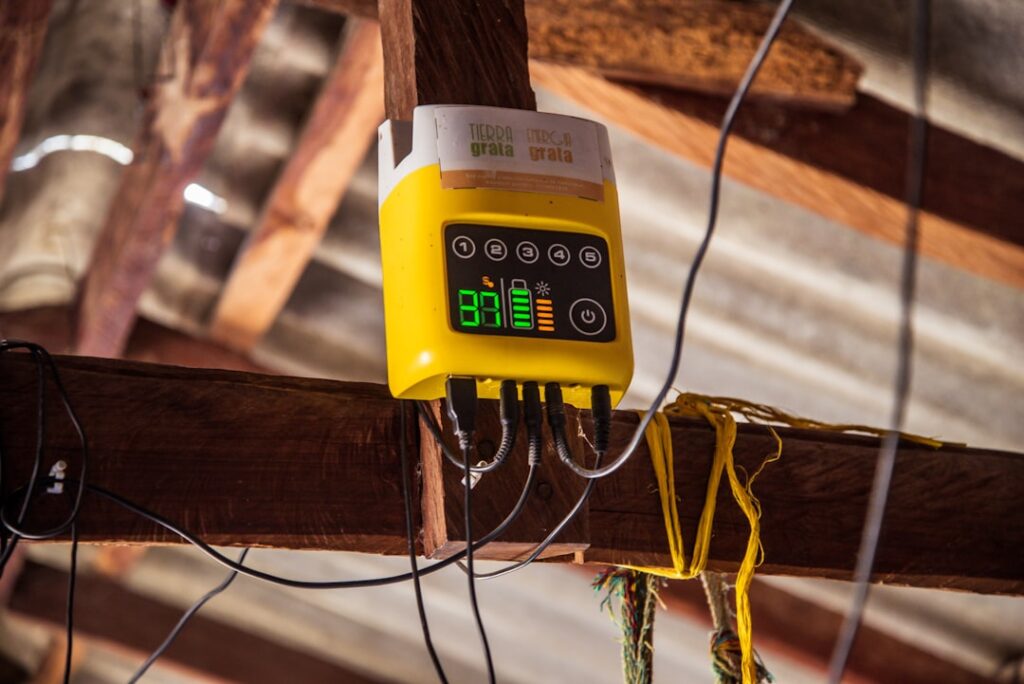
The phrase “house mold detector” sounds like it should describe a device you plug in to get a real-time mold reading the same way a smoke detector gives a real-time smoke reading. No such device exists for consumers in 2026. Every product sold under the “mold detector” label is either an indoor air quality monitor that tracks humidity and VOCs, a continuous particulate counter, or a kit that requires lab analysis to produce a real result. This guide explains what each product category actually measures, what marketing language to ignore, and which device makes sense for the situation. The content summarizes EPA, CDC, and InterNACHI guidance current as of 2026 and is not a substitute for medical advice or a certified inspector’s report.
Part of our Home Inspection Tools guide — start there for the full picture →
Is this mold, asbestos, or water damage? Get a free instant screen
Upload a clear photo of the suspect area. You'll get an instant AI screening opinion and what to do next. This is screening guidance, not a professional determination.
Screening guidance only. AI can be wrong. Confirm asbestos, mold type, or lead with lab testing or a licensed professional before acting.
House mold detector: the truth about the product category
No consumer device measures live airborne mold concentration in real time. Mold detection requires capturing spores on a slide or in a culture medium and then identifying them via microscopy or DNA analysis — a step that takes days, not seconds. Devices marketed as “mold detectors” do one of three things: track humidity (which correlates with mold-supporting conditions), measure volatile organic compounds and particulates (which can rise with active fungal metabolism), or store a culture plate that requires user observation after incubation. None of these is equivalent to a smoke or carbon-monoxide alarm.
Product category 1: continuous indoor air quality monitors
Devices like Airthings View Plus, Awair Element, and uHoo measure temperature, humidity, VOCs, PM2.5, and CO2. Several units add an inferred “mold risk” score based on sustained humidity above 60 percent or VOC patterns. These devices are useful for moisture surveillance and trend tracking — sustained high humidity is the prerequisite for indoor mold growth — but they do not measure mold itself.
Cost runs $150 to $400 for the device. App subscriptions sometimes add monthly fees. The best use case is long-term humidity tracking in basements and bathrooms to confirm whether dehumidifier or ventilation interventions are working.
Product category 2: VOC and particulate sensors
Standalone VOC meters (like the Temtop M2000) and particulate counters measure airborne chemistry and dust, but neither is mold-specific. VOCs come from cleaning products, paint, furniture off-gassing, cooking, and many other sources besides mold. Particulates include dust, pollen, and combustion residue alongside spores. A spike in either metric does not confirm mold; it just narrows the list of possibilities.
Product category 3: culture-plate kits sold as “detectors”
Some products bundle several settle plates with a digital app or basic incubator and market the package as a “mold detector.” The plates work the way any settle plate does — open the dish for one hour, incubate three to seven days, observe colony growth. The user is the detector. The product just packages the workflow.
These bundles cost $30 to $80 and provide visual confirmation of mold presence after several days. They do not identify species without mail-in lab analysis.
What marketing language to ignore
Several phrases recur in product listings that mean less than they imply. “AI-powered mold detection” usually means an algorithm interpreting humidity and VOC trends, not actual spore measurement. “Real-time mold alerts” usually trigger on humidity thresholds, not mold concentration. “Laboratory-grade sensor” usually refers to PM2.5 sensors that detect dust without distinguishing mold spores from other particulates. “Indoor air quality with mold detection” usually means a composite IAQ score that drops when humidity rises.
None of these are scams — the underlying measurements are real and useful — but the “mold detector” label oversells what the device delivers. Treat marketing claims as proxies for moisture risk, not as actual mold detection. Background on related kit categories is in Home Depot mold detector explained and the mold inspection and testing hub.
What a continuous monitor is good for
Three use cases justify a continuous IAQ monitor with mold-risk flagging. Long-term humidity tracking in basements verifies dehumidifier sizing and ventilation strategy. Symptom-correlation tracking helps occupants identify environmental patterns (does humidity spike on days symptoms worsen). Post-remediation surveillance confirms that conditions remain unfavorable for regrowth.
None of these requires the monitor to actually detect mold. The humidity reading alone delivers the value. A $30 stand-alone hygrometer accomplishes the core task at a fraction of the cost — but loses the trend graphs, alerts, and VOC supplementation.
What actually detects mold
Five methods reliably detect indoor mold. Visual inspection identifies visible growth. Tape-lift sampling captures spores from suspect surfaces for lab identification. Bulk sampling extracts substrate for microscopy. Air-pump spore-trap cassettes pull a known air volume through a sticky slide for spore-per-cubic-meter quantification. Professional cavity sampling reaches growth inside walls. All of these involve a lab step or visual confirmation, not a real-time sensor reading. Cluster context is in how can you detect mold.
When a “house mold detector” still makes sense to buy
A continuous IAQ monitor is worth the money in two situations. First, the household has a recurring moisture problem (basement seepage, repeated bathroom condensation, unreliable HVAC) and needs to track whether interventions are working. Second, an occupant has unexplained symptoms and wants environmental data to correlate with health complaints. In both cases, the monitor’s actual value is humidity and VOC trending — not mold detection.
Buyers who want actual mold detection should plan on a separate kit (tape-lift, bulk, or air-pump cassette) when growth is suspected. The two tools serve different purposes.
When DIY tools are not enough
Hire a certified mold inspector when continuous monitors flag persistent issues that no DIY follow-up resolves, when occupants have respiratory symptoms or asthma, when visible growth exceeds ten square feet, or when the situation involves a real-estate transaction or insurance claim. EPA recommends professional assessment for large or symptomatic situations. Professional inspectors carry instruments and sampling methods that find growth no consumer device can reach.
How to take action on monitor data
If a continuous monitor reports sustained humidity above 60 percent, address the moisture source. Run a dehumidifier sized for the space. Check ventilation in bathrooms and kitchens. Inspect basement perimeter and foundation. If the monitor shows VOC spikes correlated with musty smells, sample the affected room with a tape-lift or air-pump kit. If the monitor shows high PM2.5 indoors that does not correlate with cooking or outdoor air quality, investigate filtration and HVAC system contamination.
Building a testing plan before you buy a kit
Most kits get purchased before the homeowner has clearly defined what question the test should answer, which is why so many results feel uninformative once they return. A simple four-step framework — purpose, method, location, interpretation — clarifies the buy decision. Purpose specifies whether the test exists to support an insurance claim, to confirm a suspected source, to clear a remediated space, or to satisfy a buyer or seller during a real estate transaction. Method follows from purpose: surface sampling for visible patches, airborne sampling for symptom-driven concerns, ERMI for long-term exposure assessment, and bulk sampling for cavity material.
Location specifies which rooms or surfaces will be sampled and why those were chosen over others. Interpretation specifies in advance what result would trigger which next action, so the homeowner is not making decisions emotionally after the lab report arrives. Writing this plan down on a single page before ordering the kit usually saves $50 to $200 in unnecessary or redundant testing.
How homeowner insurance treats mold testing results
Most standard homeowner policies cover mold remediation only when the underlying cause is a covered peril — a burst pipe, a sudden roof leak, an appliance line failure. Chronic conditions such as a slow leak ignored for years, basement seepage from poor drainage, or humidity-driven growth in a bathroom without exhaust ventilation are typically excluded as maintenance issues. The test result itself does not determine coverage; the moisture source documented alongside it does. A positive Stachybotrys result from a pipe leak discovered two days ago is covered. The same result from a leak documented in inspection reports three years ago likely is not.
Timing matters for claim eligibility too. Many policies require notification within 14 days of discovery, and the test report becomes the discovery-date anchor. Delaying a test after suspicion arises can compromise the claim window. Homeowners on the fence about testing after a suspected leak should test first and decide on remediation second; the documentation cost is low compared with the value of preserving claim eligibility.
When the test is wrong: false positives and false negatives
Consumer settle-plate kits return false positives at meaningful rates because ambient outdoor air seeded with normal background Cladosporium and Penicillium grows colonies on any agar plate left open in a normally ventilated home. A returned plate showing “elevated growth” frequently reflects outdoor air infiltration rather than an indoor source. False negatives also occur — surface-only sampling misses hidden cavity mold, dead colonies behind sealed paint return clean swab results, and air cassettes taken during dry weather can underestimate average exposure in homes with seasonal moisture cycles.
The strongest defense against either failure mode is methodological. Pair an indoor sample with an outdoor control taken simultaneously. Combine air sampling with moisture-meter scanning so the airborne data is interpreted against a moisture map. Sample more than once for symptoms-driven concerns rather than relying on a single snapshot. And distrust any kit format that returns a binary “mold present” or “no mold” verdict without quantification, since that level of summarization throws away the comparative data that makes results interpretable in the first place.
Cost versus confidence: choosing a testing tier
Testing budgets break into three rough tiers, each answering a different question. Tier one runs $10 to $40 for settle plates or basic surface swabs and answers “is there visible activity in this specific spot.” This tier is appropriate for low-stakes confirmation of a patch the homeowner has already decided to clean. Tier two runs $80 to $250 for paired air cassettes processed by a participating lab and answers “is the airborne load elevated relative to outdoors.” This tier supports symptom investigation, pre-purchase due diligence, and post-cleanup verification for minor work.
Tier three runs $300 to $700 for ERMI dust analysis or Andersen impactor sampling through an independent industrial hygienist and answers species-level questions about long-term exposure, including identification of dormant or sealed-off colonies. The upgrade decision usually correlates with stakes: an owner-occupant cleaning a bathroom corner sits comfortably in tier one, while a homeowner pursuing an insurance claim or evaluating a property with persistent symptoms benefits from tier three. Spending more than the next tier requires rarely improves the decision-quality.
Sampling missteps that quietly skew mold results
The most common reason a home test returns confusing numbers is the moment of collection rather than the lab work that follows. Disturbing a surface — wiping it, vacuuming nearby, even fanning air across it — lofts settled spores and produces an artificially high air count. Sampling during active renovation is similarly compromised because demolition dust carries embedded mycelium fragments that lab counts cannot separate from active growth. Skipping the outdoor control cassette is another silent failure mode; without that paired reading, the indoor number is just a value with no comparator. Homeowners who collect on a windy day with windows cracked end up with indoor readings that essentially mirror outdoor air, washing out any signal from a true indoor source.
The fix is procedural rather than expensive. Close the home for at least two hours before air sampling, leave HVAC running on circulation but not heat or cool, refrain from cleaning or walking around the sample point, and run the outdoor cassette simultaneously about ten feet from the house exterior on the leeward side. Documented technique matters as much as the kit brand printed on the box.
References
- A Brief Guide to Mold, Moisture, and Your Home — U.S. Environmental Protection Agency
- About Mold and Health — Centers for Disease Control and Prevention
- Mold Inspection Standards of Practice — InterNACHI
- Introduction to Indoor Air Quality — U.S. EPA
Frequently asked questions
Is there a real mold detector for homes?
No consumer device measures live airborne mold in real time. Products labeled 'mold detectors' track humidity, VOCs, or particulates as proxies for mold-supporting conditions. Lab-confirmed sampling remains the only reliable confirmation method.
What does a house mold detector actually measure?
Most measure temperature, relative humidity, VOCs, PM2.5, and CO2. Some derive an inferred 'mold risk' score from sustained humidity above 60 percent. None measure mold spore concentration directly.
Should you buy a mold detector?
A continuous indoor air quality monitor is useful for long-term humidity surveillance, especially in basements and bathrooms. It is not a substitute for sampling when growth is suspected. Treat it as moisture-risk monitoring.
What's the cheapest way to monitor for mold conditions?
A $20 to $30 hygrometer placed in basements and bathrooms tracks humidity reliably. EPA recommends keeping indoor humidity between 30 and 50 percent. Sustained readings above 60 percent indicate mold-supporting conditions.
If monitor data has flagged persistent moisture issues or symptoms continue, reach a vetted Front Range mold inspector through our contact page for sampling and source identification.