Mold Detectors: What Homeowners Need to Know
Shopping for mold detectors quickly reveals a confusing market: gadgets that promise to “detect mold” range from $20 humidity meters to lab-based air sampling, and they measure very different things. There is no consumer device that simply beeps when mold is present the way a smoke alarm detects fire. Understanding what each tool actually senses keeps you from spending money on the wrong one. This guide summarizes EPA and CDC guidance current as of 2026 and standard inspection practice; consult a physician for health symptoms and a certified professional for testing decisions on significant growth.
Is this mold, asbestos, or water damage? Get a free instant screen
Upload a clear photo of the suspect area. You'll get an instant AI screening opinion and what to do next. This is screening guidance, not a professional determination.
Screening guidance only. AI can be wrong. Confirm asbestos, mold type, or lead with lab testing or a licensed professional before acting.
What do mold detectors actually detect?
The honest framing matters: most “mold detectors” detect the conditions that allow mold, not mold itself. The EPA’s guiding principle is that mold needs moisture, so the most useful “detector” for prevention is one that tracks the moisture and humidity feeding growth. True mold identification requires capturing a physical sample — spores, surface growth — and analyzing it.
The category breaks into three groups: condition monitors (humidity and moisture meters), sampling kits (air and surface tests you send to a lab), and professional assessment. Each answers a different question. A humidity monitor asks “are conditions right for mold?” A test kit asks “is this fungal?” A professional asks “where is it, how bad, and why?” Matching the tool to your question is the whole game. For the broader process, our hub on mold inspection and testing ties these together.
Humidity and moisture monitors
These are the most practical everyday tools because they catch the problem before mold appears.
Hygrometers and indoor air monitors
A simple digital hygrometer ($10–$30) reads indoor relative humidity. Keeping it below about 50 percent, as the EPA recommends, is the single best way to discourage mold. Smarter indoor air-quality monitors ($60–$200) log humidity and temperature over time and alert your phone when humidity spikes, which helps you spot the conditions that breed mold in basements and bathrooms.
Moisture meters
A moisture meter measures water content in building materials. Pressed against drywall or wood near a suspect area, it reveals whether the material is actively wet — readings above roughly 16–20 percent moisture content in wood signal a problem. Meters cost $25 to $200 in pin and pinless styles. They are far more diagnostic than humidity alone because they pinpoint a damp wall behind which mold may be growing. These tools live under our home inspection tools coverage if you want the technical buyer’s detail.
DIY mold test kits
Test kits are what most people picture when they hear “mold detector,” but their value is limited and often misunderstood.
Settling-plate kits
These petri-dish kits ($10–$25) sit open in a room to catch settling spores, which then grow over days. The EPA’s caution is decisive here: because mold spores are present in essentially all indoor air, these plates almost always grow something. A positive result rarely tells you whether you have an actual problem or just normal background spores, and most lack an outdoor comparison.
Tape-lift and swab kits
Surface kits ($20–$45 including lab fee) let you sample a visible patch and mail it for analysis to confirm whether it is fungal and sometimes the genus. These are more useful than settling plates for answering “is this dark patch actually mold,” though they still cannot judge how widespread or hazardous the situation is.
For most clear cases — visible, musty, recurring growth in a damp area — the EPA notes testing is unnecessary because the response is the same regardless: remove the mold and fix the moisture. If you simply need to know whether a smudge is mold, our comparison of mold versus dust often resolves it without a kit.
What air sampling does and does not tell you
Air sampling is the test most associated with “detecting mold,” and it deserves a clear-eyed explanation because it is widely misunderstood. An air sample pulls a measured volume of air across a collection medium that traps spores, which a lab then counts and identifies. The headline number is a spore count, often compared between indoors and outdoors.
The critical context the EPA emphasizes is that there are no established health-based numerical standards for acceptable indoor mold spore counts. There is no threshold below which a home is certified “safe.” What air sampling can do is compare an indoor count against the outdoor baseline taken the same day: indoor counts substantially higher than outdoors, or the indoor presence of species not found outdoors, suggests an indoor source. A single indoor sample with no outdoor comparison means very little, because spores are always present in air. This is why a do-it-yourself settling plate or a lone air grab is so often misleading — without the baseline and the trained interpretation, the result is just a number with no reference point.
Air sampling also misses hidden growth that is not currently releasing spores into the sampled air, and it can be skewed by recent cleaning, open windows, or HVAC operation. It is a useful instrument in trained hands as one input among several, not a standalone verdict on whether a home has a mold problem. For most homeowners, the EPA’s guidance holds: if you can see or smell mold, you have what you need to act, and sampling adds cost without changing the response.
Professional mold assessment
When the stakes are higher, a certified mold assessor brings tools and judgment no consumer device matches:
- Calibrated moisture meters to map damp materials.
- Thermal imaging cameras to find hidden moisture behind walls and ceilings without demolition.
- Air sampling pumps that collect spore counts indoors and outdoors for a meaningful baseline comparison.
- Borescopes to inspect wall cavities and other concealed spaces.
Professional assessment makes sense for real-estate transactions, hidden or recurring growth, suspected contamination behind walls, or when a medically sensitive occupant needs certainty. The combination of instruments plus a trained interpretation is what separates an assessment from a $20 kit. Air sampling in particular only means something when an expert compares indoor counts against the outdoor baseline and the building’s context.
What “mold detector” tool should you buy?
Match the device to your goal:
- Prevention and early warning: a hygrometer or smart air monitor to keep humidity below 50 percent. Cheapest and most useful for most homeowners.
- Investigating a damp wall or stain: a moisture meter to confirm active wetness behind a surface.
- Confirming a visible patch is fungal: a tape-lift kit with lab analysis.
- Transaction, hidden source, or sensitive occupant: a professional assessment.
Avoid relying on a settling-plate kit to decide whether your home is “safe” — its near-guaranteed positive result is misleading. And no consumer gadget replaces simply looking for and smelling mold: visible growth and a musty odor are the most reliable indicators most homeowners ever need. Pair any detection with moisture control, since a dehumidifier sized for the space addresses the root condition these tools are measuring.
Smart-home and continuous monitoring options
A newer category sits between a basic hygrometer and a professional assessment: connected indoor air-quality monitors that log conditions continuously and alert your phone. Devices in the $60–$300 range track relative humidity and temperature, and some add particulate, VOC, and other readings. For mold prevention specifically, the humidity trend over time is the valuable data point, because mold problems develop where humidity stays elevated for days, not where it spikes briefly.
These monitors do not detect mold, and buyers should not expect them to. Their value is early warning: a basement that consistently logs 60 percent humidity is a basement at risk, and the alert lets you run a dehumidifier or improve ventilation before growth starts. Placed in known trouble spots — a finished basement, a windowless bathroom, a crawlspace access — they turn an invisible, slow-building risk into a visible number you can act on. For a homeowner who has already had one mold problem, continuous humidity monitoring is a sensible, low-cost insurance against the next one.
Where to place a monitor
Position matters. Put a monitor where humidity is highest and air moves least: the lowest level of the home, near a sump or foundation wall, in a closet on an exterior wall, or in a bathroom that lacks a window. Avoid placing it directly next to a shower or a humidifier, which gives a misleadingly high local reading. The goal is to capture the ambient condition of the space at risk, then keep that reading below the roughly 50 percent the EPA recommends.
What about “mold sniffer” and electronic gadgets?
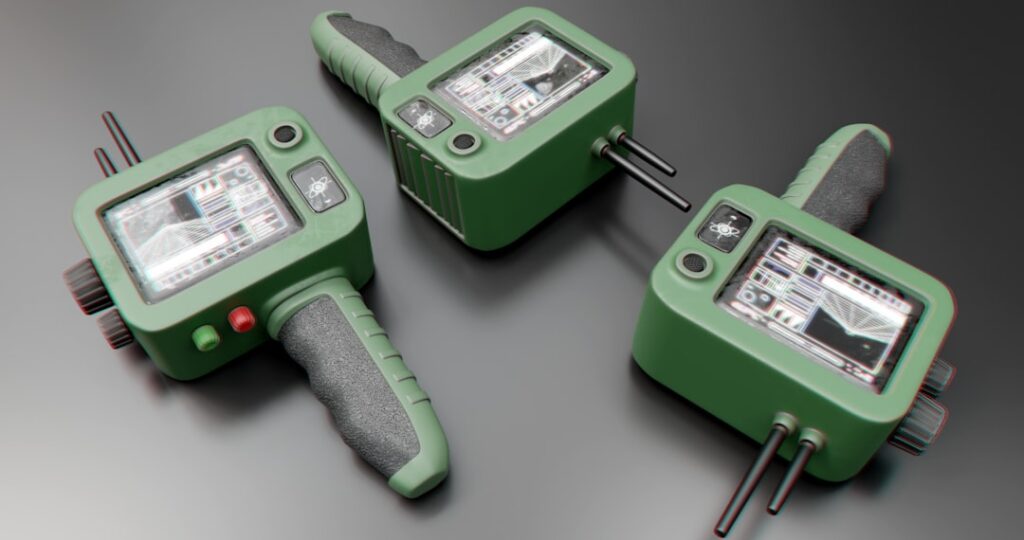
Online marketplaces sell handheld “mold detectors” and “mold sniffers” promising to alert you to mold electronically. Treat these with skepticism. Many are simply repackaged VOC or humidity sensors that respond to many household compounds, not mold specifically, and a reading tells you little about whether mold is present or where. None can confirm mold the way a lab analysis of a physical sample can. A homeowner is far better served spending on a reliable hygrometer or moisture meter — tools that measure something concrete and actionable — than on a gadget that claims to “detect mold” through the air. The most dependable detectors a homeowner owns remain their own eyes for visible growth and their nose for the musty odor that signals hidden moisture.
When to call a professional
Move past consumer detectors and call a certified assessor or remediation contractor when you suspect hidden growth behind walls, when there is a strong musty odor with no visible source, when mold covers more than about 10 square feet, when growth recurs after cleaning, or when a household member has asthma, allergies, or a weakened immune system. The right “detector” in those cases is a trained professional with calibrated instruments, not a kit from a hardware aisle. For everyday peace of mind and prevention, though, a simple humidity monitor and your own eyes and nose do most of the work.
Using your senses as the first detector
Before any device, the most reliable mold detectors a homeowner has are sight and smell, and they cost nothing. Visible growth is unambiguous evidence — fuzzy, speckled, or slimy patches in damp-prone areas. A persistent musty, earthy odor, especially one that strengthens in humid weather, signals mold even when nothing is visible, often pointing to growth hidden behind a wall, under flooring, or in a cavity. The EPA explicitly treats a musty smell as a reason to investigate.
A routine sensory check of the high-risk areas catches most problems early: look and smell around bathrooms, under sinks, behind the toilet, along basement walls and the base of exterior walls, around windows, near any past leak, and in the attic. Pay attention to the spaces that stay damp or poorly ventilated. This costs nothing and is more reliable for finding actual mold than most gadgets, which detect conditions rather than mold itself. When your senses flag something — visible growth or a musty smell with no obvious source — that is the point at which the measuring tools and, for hidden or large problems, a professional add value. The sequence is sensible: senses to find it, a moisture meter to confirm the conditions, and an assessor when the situation is hidden, large, or tied to a transaction or a sensitive occupant.
References
- Mold Testing or Sampling — U.S. Environmental Protection Agency
- Mold Cleanup in Your Home — U.S. Environmental Protection Agency
- About Mold and Your Health — Centers for Disease Control and Prevention
Front Range homeowners who suspect hidden mold and want calibrated detection rather than a guesswork kit can reach out through our contact page for a referral to a vetted local assessor.