Home Inspector Test: 2026 Practice and Study Strategy Guide
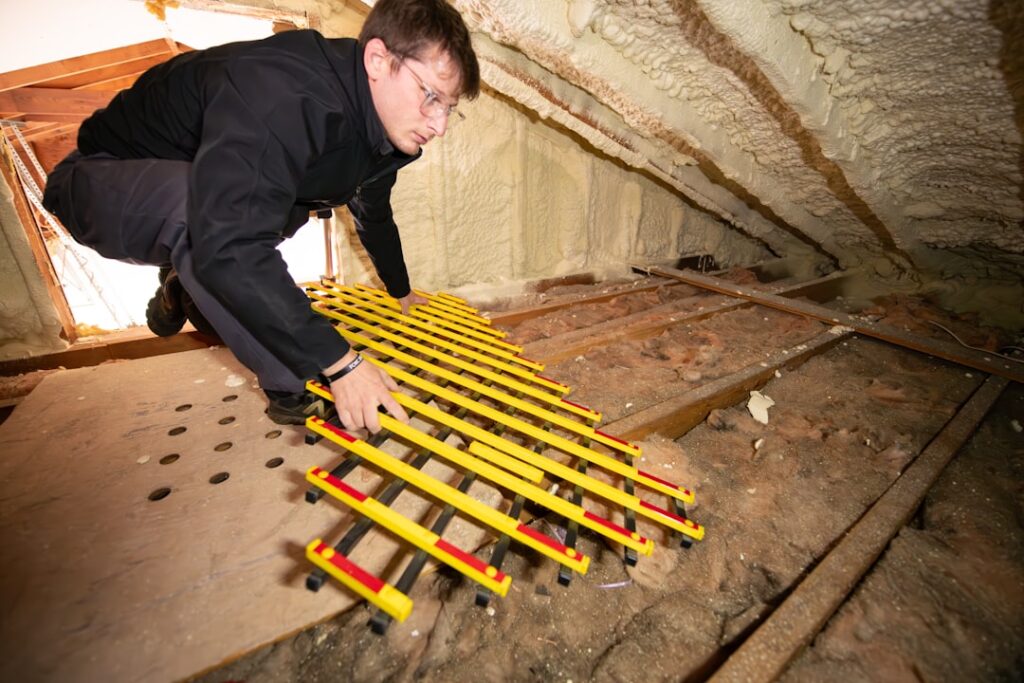
The home inspector test is the licensing or certification exam that aspiring home inspectors take before they can practice professionally. In most states this exam is the National Home Inspector Examination, often called the NHIE. Some states layer their own state-specific exam on top of the NHIE; a few use a state exam in place of the national one. This guide focuses on the practical question candidates actually have: how to prepare for whichever test sits in front of them, what practice resources work, and what timeline to expect from study start to passing score.
What candidates are actually preparing for
The NHIE covers building systems, inspection methodology, professional ethics, and the standard of practice that frames an inspector’s deliverables. The exam runs roughly two hundred multiple-choice questions across a four-hour testing window. Pass thresholds vary by state but cluster around seventy percent of correct responses. Questions are scenario-based — they describe a building condition and ask the candidate to identify the appropriate inspection action or reportable finding — rather than purely factual recall.
State-specific exams cover the same content domains plus state-law topics such as licensing rules, complaint procedures, and any state-mandated standard of practice. A candidate preparing for both exams typically studies the NHIE first, then layers state-specific material on top during the final preparation weeks. The parent hiring a home inspector guide covers the bigger career-path picture; this guide focuses tightly on the test itself.
Practice-test resources that actually help
InterNACHI and ASHI both publish practice questions that mirror the format and difficulty of the actual exam. The InterNACHI practice library includes thousands of questions organized by topic, which lets candidates target weak areas rather than studying broadly. ASHI’s continuing-education materials also cover the same content domains in a format candidates can use for review. Most candidates work through multiple practice sources rather than relying on one, since each provider’s question style differs slightly from the actual exam’s.
Beyond multiple-choice practice, hands-on study materials matter. Inspectors who memorize answers without understanding why an answer is correct tend to fail on the scenario-based questions that dominate the actual exam. Working through a structured course — InterNACHI’s free online curriculum, for instance — builds the conceptual foundation that scenario questions test against. Sibling guides such as the candidate journey guide and the NHIE plus state variations guide walk through the broader exam landscape.
How long the preparation usually takes
The total preparation timeline depends on the candidate’s starting point. A candidate who comes in with a construction background — a former contractor, a building-trades graduate, a real-estate professional with construction exposure — usually needs two to four months of focused study. A candidate with no construction background usually needs six to twelve months because they have to learn the underlying building-systems content before they can answer scenario questions accurately.
Most candidates spend ten to fifteen hours per week on study during the active preparation period. That works out to two to three hundred hours of total preparation time. Candidates who try to compress the timeline into a few weeks of cramming generally fail on the first attempt, then retake the exam after extending preparation by several months. The pass rate on first attempts after adequate preparation runs well above the rate for compressed cramming.
Strategies that move pass rates higher
Three study strategies show up consistently among candidates who pass on the first attempt. The first is taking timed practice exams under conditions that mirror the real test. Sitting through a four-hour timed exam at home builds the stamina the real exam demands. Candidates who skip the timed practice often run out of mental energy partway through the actual exam and lose accuracy on later questions even when they know the material.
The second is studying with the standard of practice document open. Both NHIE-state and state-specific exams test the candidate’s familiarity with the standard of practice — what an inspector is required to do, what falls outside the scope, what the deliverable looks like. Candidates who can quote the standard rather than guessing tend to answer the trickier scenario questions correctly.
The third is reviewing wrong answers in detail rather than just retaking quizzes until scores improve. Each wrong answer reveals a knowledge gap that will likely show up on the real exam. Candidates who write a short note for every wrong practice answer — what the right answer was, why their answer was wrong, what concept they missed — build a personalized review document that targets exactly the weak spots that need the most attention.
Content domains that consistently trip up candidates
Three content domains tend to produce the most missed practice questions for candidates without strong construction backgrounds. The first is electrical systems. Service entrance configurations, grounding versus bonding, panel and breaker conventions, and the older wiring practices that show up in pre-1990 homes all generate scenario questions that require both code knowledge and recognition of older non-code practices that may still be present.
The second is HVAC. Heating-system types, refrigerant cycles, combustion-air requirements, venting configurations, and the integration of HVAC systems with the building envelope produce dense scenario questions. ASHRAE technical materials provide the underlying content; the exam expects candidates to apply that content to specific inspection situations.
The third is roofing. Roof-system materials, ventilation requirements, flashing details, drainage patterns, and the visual identifiers for common defects all generate questions. Candidates who have never been on a roof or watched a roof installation tend to struggle here regardless of how much textbook study they do; on-site exposure helps the concepts stick.
Sample-question format and how to read it
NHIE-style questions generally follow a four-part structure. The question stem describes a building condition: “During an inspection of a 1965 single-family home, the inspector observes that the main service panel uses a Federal Pacific Stab-Lok design with breakers that appear to seat loosely in their bus connections.” The four answer options then describe different inspection actions or reportable findings. One option is clearly wrong, one is partially correct but incomplete, one is a distractor that sounds plausible but addresses the wrong concern, and one is the correct response.
Candidates learn to read the question stem twice, identify the specific condition being described, and eliminate the obviously-wrong option before comparing the remaining three. The exam rewards careful reading; speed-reading the stem and jumping to a familiar-looking answer is a reliable way to lose points.
Test-day logistics
The NHIE is administered at Pearson Vue testing centers in most states. Candidates schedule the exam through the exam’s official registration portal, pay the exam fee (typically around two hundred fifty dollars), and choose a date that fits the candidate’s preparation timeline. Identification requirements, allowed materials, and break rules vary slightly by testing center; candidates should review the official policies before exam day.
State-specific exams may be administered through the state licensing board’s own testing partner. Candidates preparing for both exams should confirm the registration channels separately because they are not always linked. Some candidates schedule the two exams a few weeks apart so they can focus their final preparation on each test individually rather than splitting attention across both at once.
What happens after passing
Passing the exam is one step in the licensing process. Most states require additional steps before the candidate can legally practice as a home inspector: a specified number of supervised inspections, proof of errors-and-omissions insurance, application fees, background checks, and continuing-education commitments going forward. A candidate who passes the exam without completing the other steps cannot yet hold themselves out as a licensed home inspector.
The continuing-education commitment is ongoing. Most states require twenty to forty hours per year of approved continuing education to maintain the license. ASHI and InterNACHI both offer extensive continuing-education libraries that satisfy state requirements. Inspectors who let their continuing education lapse risk losing their license at renewal time, which is a costly mistake to recover from.
Front Range candidate notes
Colorado does not currently require statewide licensing of home inspectors, which means Colorado candidates can practice without passing a state-administered exam. Most working Colorado inspectors still pursue InterNACHI or ASHI certification, which involves passing the same NHIE-equivalent exams and completing the continuing-education requirements voluntarily. Buyers across the Front Range — Denver, Boulder, Jefferson, El Paso, Adams counties — almost always prefer to hire a certified inspector regardless of the absence of state licensing.
Candidates planning to work across state lines (Colorado plus Wyoming, Colorado plus Kansas) need to research each state’s licensing requirements separately. State requirements vary widely; a candidate licensed in Texas cannot necessarily practice in Florida without additional examination, and vice versa.
Common myths candidates encounter
Two myths circulate widely among aspiring inspectors. The first is that the exam tests primarily on code knowledge. It does not. The exam tests on inspection methodology, the standard of practice, and recognition of common building conditions; code knowledge is useful background but not the primary content. Candidates who spend their preparation memorizing electrical code or building code chapters often score poorly on the actual exam.
The second myth is that working as a contractor automatically prepares someone for the home inspector exam. Construction experience helps with the underlying building-systems content but does not cover the inspection methodology or standard of practice. Ex-contractors who skip the methodology study often fail because the exam tests how an inspector reports findings, not how a contractor would fix them.
Study groups and mentorship
Candidates who study in groups or with mentors tend to outperform candidates who study purely alone. Group study forces verbal articulation of concepts, which catches misunderstandings that silent reading does not. A study partner who asks “why is that the right answer?” pushes the candidate past memorization into actual understanding. Local InterNACHI and ASHI chapters often facilitate study groups for upcoming exam dates; new candidates benefit from joining one early in their preparation timeline.
Mentorship from a working inspector helps with the practical side. A mentor can take a candidate along on real inspections, point out the building conditions described in exam scenarios, and demonstrate how a working inspector reports those conditions in writing. That field exposure makes the abstract scenario questions concrete. Candidates without a mentor can replicate some of the benefit by watching the videos that accompany InterNACHI’s free training curriculum, which include real-inspection footage with narrated commentary.
What to bring on exam day
Testing centers allow only a limited set of items into the exam room. Candidates should bring two forms of identification, one of which must be government-issued with a photograph. Personal calculators are usually prohibited because the testing platform includes an on-screen calculator for math-based questions. Phones, smartwatches, and other electronic devices must be stored in lockers outside the exam room. Candidates who arrive without the required identification are turned away and lose their exam fee, so reviewing the official policy in advance is worth the small time investment.
- InterNACHI examination resources — International Association of Certified Home Inspectors
- ASHI standard of practice — American Society of Home Inspectors
- FTC consumer guidance on home inspectors — Federal Trade Commission