Home Inspector Colorado: Finding a 2026 Qualified Hire
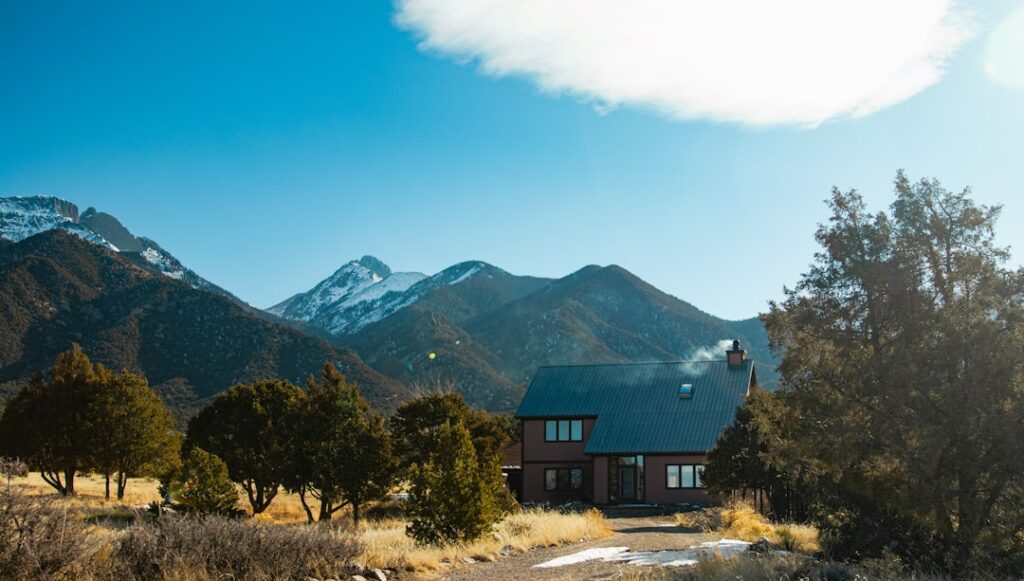
Colorado is one of a small number of states without a formal home inspector license, which changes the math when buyers shop for an inspector. There is no state regulatory database to consult, no required exam to confirm, no licensing board to file a complaint with. The flip side is that the trade-association credentials — ASHI Certified Inspector, InterNACHI Certified Professional Inspector, NRPP radon specialty — carry more practical weight in Colorado than they do in states where a license alone settles the question. This guide walks through how to find a qualified Colorado home inspector in 2026, with emphasis on the Front Range and the mountain counties.
Part of our Home Inspections Explained guide — start there for the full picture →
Colorado’s credentialing landscape in 2026
Colorado has not licensed home inspectors at any time. Several legislative attempts to create a license have been introduced and have failed to pass over the years. The current de facto credentialing system relies on trade-association certifications, voluntary continuing education, and individual inspector reputation in the market.
The credentials Colorado buyers should look for fall in three categories. Primary certifications — ASHI Certified Inspector or InterNACHI Certified Professional Inspector — confirm the inspector has met that association’s training and exam requirements. Radon credentials — National Radon Proficiency Program (NRPP) Measurement Specialist or National Radon Safety Board (NRSB) measurement provider — confirm competence in radon testing, which matters in Colorado because CDPHE classifies the entire state as Zone 1 elevated radon risk. Voluntary national exam passage — National Home Inspector Examination (NHIE) — is not required in Colorado but is a positive signal of professional commitment.
The absence of a state license also means there is no formal continuing education requirement or disciplinary process. Both major trade associations require their members to maintain CE hours and adhere to codes of ethics, so credentialed members are still held to professional standards. Uncredentialed inspectors operating in Colorado face no formal oversight, which is why the credentialing question matters more than it would in a licensed state.
Front Range geography and what it means for inspectors
The Front Range — Denver, Boulder, Douglas, Jefferson, Arapahoe, Adams, Larimer, Weld, Broomfield, and El Paso counties — contains the majority of Colorado’s housing stock and the majority of working home inspectors. The geography is reasonably uniform: high-altitude semi-arid climate, predominantly stick-built single-family homes from the 1960s through new construction, with significant pre-1978 housing in established neighborhoods of Denver, Boulder, and Colorado Springs.
Front Range-specific inspection considerations include radon (essentially universal testing recommendation per CDPHE), expansive clay soil foundation issues (particularly in Aurora, Highlands Ranch, and parts of Douglas County), wildfire-zone home hardening for foothills properties, snow-load roof considerations on lower-elevation properties, and the unique window and skylight stress patterns that come from extreme daily temperature swings at altitude. An inspector working on Front Range properties should know these issues well, and most established local inspectors do. The hiring process pillar guide covers the regional inspection landscape.
Mountain and Western Slope geography
Properties west of the Front Range — Summit, Eagle, Pitkin, Gunnison, Routt, La Plata, Mesa, and other mountain and Western Slope counties — present a different inspection picture. Construction often includes log structures, post-and-beam framing, propane heating (replacing or supplementing natural gas), well water (replacing municipal supply), septic systems, snow-load roofs designed for several feet of accumulation, and altitude-specific HVAC sizing.
Inspectors who work mountain properties regularly understand these systems and the failure patterns specific to them. Front Range inspectors who occasionally drive over the divide for mountain work may handle individual systems competently but lack the pattern-recognition that comes from inspecting dozens of similar mountain properties per year. Buyers shopping for a mountain home should prefer inspectors based in or near the mountain market they are buying into.
Resort markets (Aspen, Vail, Breckenridge, Steamboat, Telluride) have additional considerations around vacation-rental code requirements, ski-storage building components, and luxury-home complexity. Inspectors in these markets often specialize and charge premium fees commensurate with the property values and complexity. Expect $600 to $1,500 inspection fees in these resort markets compared to $450 to $650 on the Front Range.
ICC code knowledge for Boulder and Denver counties
Several Colorado jurisdictions have adopted local amendments to the International Residential Code that affect inspection findings. Boulder County and the City of Boulder maintain energy-efficiency requirements (BuildSmart program) and structural seismic considerations that exceed the base IRC. Denver County requires specific egress and fire-safety provisions for finished basements that come up regularly in inspection findings. Some mountain counties have wildfire-defensible-space requirements affecting exterior siding, roof materials, and vegetation around structures.
Inspectors who work in these jurisdictions regularly know the local amendments and reference them in findings. Inspectors driving in from outside the jurisdiction may miss locally significant items because they apply the base IRC standard. Buyers should ask candidate inspectors about their familiarity with the specific jurisdiction. ICC’s published code references are useful but the local amendments are what matter for jurisdiction-specific findings.
Altitude considerations that surface during inspection
Mountain altitude — anywhere above about 7,000 feet — affects several home systems in ways that flatland inspectors may not notice. Natural-draft combustion appliances (water heaters, furnaces, fireplaces) burn less efficiently at altitude due to reduced atmospheric oxygen, and require properly sized venting and air supply. Indoor air quality issues can be more pronounced because of tighter construction patterns and lower air exchange in winter.
Window glazing seals tend to fail faster at altitude due to UV exposure and pressure differentials between indoor and outdoor air. Skylight installations are particularly prone to flashing issues from snow accumulation cycles. Plumbing systems can experience pressure variations that flatland systems do not, and water heater expansion tank sizing matters more.
An inspector who only works on Front Range properties at 5,000 to 6,000 feet may not catch these mountain-specific patterns. An inspector experienced at 8,000 to 10,000 feet generally does. This is a real distinction worth asking about when hiring for mountain property inspection.
How to actually find a Colorado inspector
Four practical steps lead to a qualified Colorado home inspector hire.
Search ASHI and InterNACHI directories by zip code
Both ASHI and InterNACHI maintain searchable national directories. Filter by Colorado zip code or city. Each listing shows credentials, years of experience, and contact information. This is the starting point and rules out uncredentialed operators.
Verify radon credentials separately
For any Front Range or radon-zone property, confirm the inspector holds a current NRPP measurement specialist credential or NRSB equivalent. The credential bodies maintain separate directories. Colorado essentially never has a real-estate transaction where radon should not be tested, so this credential is functionally required for buyer-side inspection work.
Confirm insurance coverage
Ask for proof of errors-and-omissions insurance with current policy dates. A reputable Colorado inspector will provide a certificate of insurance without hesitation. Coverage in the $250,000 to $1,000,000 per occurrence range is typical.
Ask for a sample report and local reference
Request a sample report (with prior client details redacted) to evaluate the inspector’s documentation quality. Also ask for two or three local realtor or client references — established Colorado inspectors with a year or more of local work can readily provide them.
How Colorado differs from previous regional guides
Several other batch articles have covered Colorado credentialing from different angles — the licensing landscape, the certification options, and the broader Front Range cost picture. This article focuses specifically on the buyer’s hiring process for a Colorado inspector, which is the question most actively searched by readers shopping right now.
The decision factors that matter most: trade-association credential (ASHI CPI or InterNACHI CPI), radon credential (NRPP or NRSB), local experience in the target jurisdiction (Front Range versus mountain versus Western Slope), insurance coverage, and reporting quality. Price comes after these factors, not before. The $50 to $100 difference between inspectors in similar markets rarely matters compared to the difference in inspection thoroughness and reporting quality. The Colorado credentialing reality guide covers the licensing landscape from a different angle.
Red flags to avoid when hiring
Three patterns repeatedly emerge in problematic Colorado inspector hires. The first is the unfamiliar uncredentialed operator — someone with no ASHI, InterNACHI, or NRPP credentials, no insurance proof, and no local references. In an unlicensed state, this person has no formal accountability and should be avoided regardless of price.
The second is the exclusive realtor referral with no independent verification path. Realtor referrals are usually fine, but when the buyer cannot verify the inspector independently through credential directories, the referral is a closed loop that can mask quality issues. Independent verification is the corrective.
The third is the unusually low price. Colorado base inspections in 2026 should run $400 to $650 on the Front Range and higher in mountain markets. Inspectors quoting $250 or $300 are usually cutting corners on time, report quality, equipment, or insurance. The FTC consumer guidance on professional services emphasizes the bargain-rate warning sign across service categories.
How seasonality affects Colorado inspection scheduling
Colorado’s real-estate market follows a fairly predictable seasonal pattern, with peak activity from April through September and slower volume from November through February. Inspectors book up two to five days in advance during peak season and may have same-day availability in slow periods. Buyers in active contingency windows during spring and summer should schedule inspections within twenty-four hours of contract acceptance to ensure availability before the contingency expires.
Winter inspections in Colorado present specific challenges. Snow-covered roofs cannot be walked safely and must be evaluated from the ground using binoculars or drones. Frozen ground prevents foundation grading evaluation in detail. Some HVAC systems cannot be tested in cooling mode during winter because outdoor temperatures are below safe operating ranges. Inspectors document these limitations in winter reports, but buyers should understand that a January inspection produces a less complete picture than the same inspection in July.
The seasonal pattern also affects radon testing. Colorado homes typically test higher in winter because closed windows and reduced ventilation concentrate radon indoors. Spring and summer tests may show lower numbers than the same home tests in winter — both readings are valid, but they reflect different ventilation conditions. CDPHE guidance on radon testing covers seasonal interpretation in detail.
Front Range county-specific inspection notes
Specific Front Range counties present their own inspection patterns that experienced local inspectors recognize quickly.
Boulder County and the City of Boulder require BuildSmart energy-efficiency standards on new construction and major renovations. Inspectors familiar with the local amendments catch energy-related findings that out-of-county inspectors may miss. Boulder also has older Victorian and craftsman housing stock that requires older-home inspection expertise.
Douglas County and the Highlands Ranch area have substantial expansive-clay soil regions where foundation movement is a recurring issue. Inspectors with local experience know to look closely at foundation cracks, exterior grading away from foundations, and interior signs of structural settlement.
Jefferson County extends from urban Lakewood into foothills towns like Evergreen and Conifer. Inspections in the foothills towns require attention to wildfire-zone hardening, propane fuel systems (rather than natural gas), well water and septic systems, and snow-load roof considerations that flatland Jefferson County inspectors may handle less confidently.
Adams and Arapahoe counties have extensive 1960s-1990s suburban housing stock with relatively consistent construction patterns. Inspections here are often straightforward for inspectors familiar with the era and the typical defect patterns (aging roof systems reaching end of life, original water heaters reaching end of life, electrical panels showing wear).
El Paso County (Colorado Springs) has significant military housing stock and a wide range of construction eras from 1880s downtown housing to brand-new construction north of the city. Inspectors here often specialize by neighborhood or era. The Colorado credentialing reality guide covers the regional landscape.
How to evaluate a Colorado inspector’s report
Once the inspection is complete and the report is delivered, the buyer should evaluate the report quality alongside the property findings. Several markers of a quality Colorado inspection report stand out.
Radon test results are included or referenced with a scheduling note for a separate test (Colorado inspections without radon mention are typically inadequate). Photos accompany every significant finding, taken at multiple angles where relevant. Severity ratings (informational, monitor, repair, immediate safety) are applied consistently and explained. Front Range-specific concerns (foundation movement on clay soils, wildfire-zone considerations in foothills, altitude HVAC sizing) are addressed when relevant to the property. The executive summary identifies the top three to five findings clearly without burying them in routine maintenance items.
Reports lacking these markers warrant scrutiny. A Colorado report without radon mention, with sparse photos, or without front-range-specific awareness probably came from an inspector who is not the right hire for Colorado work. Buyers who receive subpar reports should request explanations from the inspector and, if necessary, consider a second inspection by a more qualified provider before the contingency expires.
More Questions About Colorado Home Inspectors
How long does a home inspection take in Colorado?
A home inspection in Colorado typically takes two to four hours for an average single-family home on the Front Range, with larger homes, older homes, and mountain properties often taking longer. Condos and townhomes usually take less time because the inspector covers less exterior and structure.
Add-on services extend the timeline. Radon testing requires a device left in place for at least 48 hours under closed-house conditions, and sewer scopes, well and septic evaluations, and snow-covered roofs can add time or require a return visit. Most Colorado inspectors deliver the written report within one business day of the inspection.
Should Colorado buyers add a sewer scope to the home inspection?
Yes, a sewer scope is a common and worthwhile add-on for Colorado buyers, especially for homes more than about 20 years old or with mature trees near the sewer line. The camera inspection shows root intrusion, offsets, bellies, and cracks in the line from the house to the municipal connection.
Sewer line repairs can run into thousands of dollars, and the homeowner is typically responsible for the line on their property. Because the main home inspection does not include the underground sewer line, the scope fills a meaningful gap. Findings can support repair requests or credits during the inspection objection period.
Can you inspect a Colorado home in winter with snow on the roof?
Yes, Colorado home inspections happen year-round, but snow cover limits what the inspector can evaluate on the roof and around the foundation. The inspector will note that the roof surface could not be fully inspected and may recommend a follow-up once conditions allow.
Winter does offer some advantages, such as observing heating systems under load and spotting ice dams that suggest insulation or ventilation problems. Buyers can negotiate extra time in the contract for a roof re-check, use drone imaging where possible, or ask the seller for roof age and repair records to fill the gap.
Are mountain home inspections in Colorado different from Front Range ones?
Yes, mountain home inspections in Colorado usually involve more specialized concerns than Front Range ones. Mountain properties more often rely on private wells and septic systems, wood-burning stoves, propane, and heavy snow loads, and may face wildfire exposure.
Inspectors in mountain areas pay close attention to roof structure, ice dam damage, chimney and stove installations, crawlspace moisture, and access driveways. Buyers often add water quality testing, septic inspections, and wildfire mitigation assessments. Travel time and complexity typically make mountain inspections more expensive, so hiring an inspector with high-altitude experience is especially valuable.
References
- CDPHE radon and indoor air program — Colorado Department of Public Health and Environment
- ASHI Certified Inspector directory — American Society of Home Inspectors
- InterNACHI Certified Professional Inspector directory — InterNACHI
- ICC International Residential Code and Colorado adoptions — International Code Council
Frequently asked questions
Does Colorado require home inspectors to be licensed?
No. Colorado has no state license for home inspectors. Buyers rely on trade-association credentials like ASHI Certified Inspector or InterNACHI CPI to verify a candidate's qualifications, along with separate credentials for radon testing and other specialty services.
Should I get radon testing in Colorado?
Almost always, yes. CDPHE classifies all Colorado counties as Zone 1 elevated radon risk. Most real-estate transactions in the state include radon testing as part of the inspection or as a paired separate service, and the EPA estimates roughly half of Colorado homes test above 4 pCi/L.
What does a Colorado home inspection cost in 2026?
Base inspections run $400 to $650 on the Front Range and $500 to $1,000 in mountain and resort markets. Radon testing typically adds $150 to $250, sewer scope $150 to $300, and other specialty services proportionally. Total inspection cost commonly lands in the $600 to $1,000 range with add-ons.
How do I verify a Colorado home inspector is qualified?
Search the ASHI and InterNACHI directories by zip code, confirm any radon credentials through NRPP or NRSB, ask for proof of errors-and-omissions insurance, request a sample report to evaluate documentation quality, and check two or three local references.
What is the inspection objection deadline in Colorado?
The inspection objection deadline in Colorado is a date set in the purchase contract by which the buyer must deliver any inspection objections to the seller. It is negotiated for each deal rather than fixed by law. Buyers should schedule the inspection early so findings and specialist follow-ups arrive before that deadline.
Do Colorado home inspectors check for expansive soils?
Colorado home inspectors look for visible signs related to expansive soils, such as foundation cracks, sloping floors, sticking doors, and heaved basement slabs or flatwork. A general inspector cannot test the soil itself. When signs appear, a structural engineer can assess whether movement is active and recommend repairs or monitoring.
Should Colorado buyers test for radon even in a newer home?
Yes, Colorado buyers should test for radon in newer homes too, because construction age does not reliably predict radon levels. Even homes with passive radon systems can test high. The EPA recommends mitigation at or above 4 pCi/L, and a short-term test during the inspection period is the usual first step.