Home Inspector Certification NY: 2026 Overview
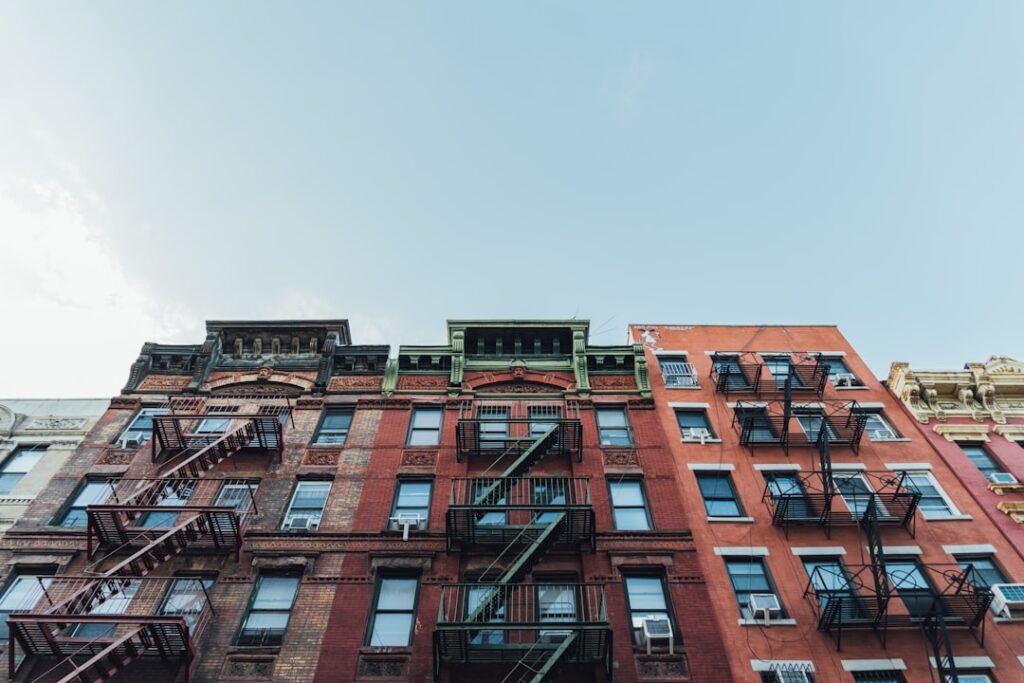
New York is one of the strictest states in the country for home inspector qualifications. Unlike Colorado, where the profession runs on voluntary credentials, New York operates a true state-license model administered by the Department of State. That distinction matters because it changes how a candidate earns the right to practice, what insurance they must carry, and how buyers can verify someone before signing a contract. The phrase home inspector certification NY often blurs two separate ideas: a state-issued license, and the trade-association credentials that sit beneath it. This guide separates them and explains what each one actually requires for residents, candidates, and buyers across New York City, Long Island, the Hudson Valley, and upstate metros.
Part of our How to Become a Home Inspector guide — start there for the full picture →
What Home Inspector Certification NY Really Means
In New York, you cannot legally perform home inspections for compensation without holding a license issued by the New York State Department of State, Division of Licensing Services. That license is governed by New York Real Property Law Article 12-B and the implementing regulations at 19 NYCRR Part 197. So when buyers or candidates search for home inspector certification NY, what they almost always need is the state license itself, not a private trade-association certification. The terminology is confusing because the inspection industry uses certification, credential, and license interchangeably in casual speech, even though state regulators treat them as different categories with different legal weight.
The trade-association credentials from ASHI and InterNACHI remain relevant in New York. They provide standards of practice, codes of ethics, continuing education catalogs, and peer review forums. Many New York inspectors carry one or both alongside the state license because clients recognize the logos and association membership signals continued engagement with the profession. But the credential alone does not let anyone operate in New York. The state license is the gate, and operating without it exposes the practitioner to civil and criminal penalties under New York law.
The 140-Hour Pre-License Education Requirement
Before sitting for the New York home inspector exam, a candidate must complete 140 hours of approved pre-license education. This breaks down into two parts: 100 classroom hours and 40 hours of unpaid field training under a licensed inspector. The classroom portion covers building science, structural systems, roofing assemblies, plumbing systems, electrical service and distribution, HVAC, exterior and interior components, insulation and ventilation, and report writing. Approved schools publish their curricula and submit them to the Department of State for review.
The 40 field-training hours are not a formality. Candidates shadow a licensed inspector through real inspections and document their participation with sign-offs from the supervising inspector. This is one of the higher hour requirements among state-license states and is meaningfully more demanding than the credential-only path that exists in places like Colorado. Front Range candidates considering a move to New York should plan for several months of training time before they can apply for the exam, and they should budget for the unpaid nature of the field component, which usually delays a candidate’s first paid inspection by at least a quarter.
The New York Home Inspector Exam
Once education is complete, candidates take the New York home inspector exam. The exam is administered through the Department of State and tests both general inspection knowledge and New York-specific regulatory content. Topics include the Standards of Practice under 19 NYCRR Part 197, the components of a residential dwelling, defect recognition, ethics, and the report-content requirements that licensed inspectors must follow on every inspection. The exam is closed-book and time-limited, with a passing threshold set by the Department of State.
Most candidates who completed an approved 140-hour course pass on the first attempt, but the exam is not trivial. Study guides from InterNACHI training resources are widely used as supplementary prep, especially the inspection-report and ethics sections that overlap with New York content. Once the exam is passed, the candidate submits the license application, the fee, and proof of insurance to the Division of Licensing Services. Processing usually takes three to six weeks before the license number is issued and the inspector can legally begin work.
Fees, Insurance, and License Issuance
The New York home inspector license fee is $250 for a two-year term. Insurance is mandatory: every licensed inspector must carry errors and omissions (E&O) coverage and general liability coverage. The minimum E&O limit is $150,000 per occurrence and $500,000 aggregate, with general liability at $150,000 per occurrence. Insurance must be on file with the state before the license becomes active, and any lapse in coverage triggers an automatic suspension of the license until reinstatement.
This insurance requirement is one of the clearer differences from credential-only states. In Colorado, an inspector can legally operate without E&O, though many carry it voluntarily for liability protection. New York removes that choice. The result is that consumers buying inspection services in New York know every licensed inspector is insured, which lowers the risk profile of the transaction. From a candidate’s perspective, the annual insurance premium often runs $1,200 to $2,500 depending on report volume, claims history, and the size of the territory served.
Biennial Renewal and Continuing Education
The New York home inspector license is renewed every two years. Renewal requires 24 hours of approved continuing education during each biennial cycle, plus payment of the renewal fee. CE topics must come from approved course providers and must cover content directly tied to inspection practice: building codes, defect recognition, standards updates, ethics, safety, and emerging issues such as radon mitigation, mold remediation, and electrical panel hazards. The Department of State publishes the list of approved providers and updates it periodically.
Many licensees blend their CE with credential requirements from ASHI or InterNACHI, which keeps administrative overhead low. Some take CE courses jointly approved by both the New York Department of State and one of the trade associations so each course hour counts toward two reporting buckets. The 24-hour biennial requirement is in line with national norms for state-license states. Inspectors who let their CE lapse cannot renew until the deficit is cured, which means an unplanned gap in revenue and the cost of expedited course completion.
How New York Differs From Credential-Only States
Colorado, where InspectandTest is based, has no state license for home inspectors. A person can begin operating after taking a private course and joining ASHI or InterNACHI. There is no state-administered exam, no mandatory CE hours enforced by a regulator, and no required insurance. The market polices quality through peer credentials and reputation. Our overview of the home inspector hiring process walks through how buyers should screen credential-only inspectors on the Front Range, including what questions to ask and what documentation to request.
New York sits at the other end of the spectrum. The state defines the standards of practice in regulation, requires the 140-hour education, runs the exam, sets the insurance minimums, and enforces CE renewal. A buyer in New York can verify any licensed inspector through the Division of Licensing Services online lookup, which returns the license number, status, and any disciplinary record. Each model carries tradeoffs. Credential-only is cheaper to enter and more flexible for part-time or seasonal practitioners, while state-license is more consistent for buyers and harder to enter casually, which limits the pool of inspectors and tends to keep average fees higher.
What This Means for Buyers Hiring an Inspector
If you are buying a home anywhere in New York, every inspector you interview should be able to show a current Department of State license number on request. Cross-check it against the state lookup before you sign a contract. Confirm insurance is in force during the period your inspection will be performed. Ask about ASHI or InterNACHI membership as a secondary signal of professional engagement, but never accept those credentials in place of the license itself. A practitioner who only carries an InterNACHI certification but no state license is operating outside the law.
You can compare general fee structure context in our average cost home inspection breakdown, which references national medians and Front Range pricing. New York fees often run slightly higher than the national median because licensed-state overhead — exam costs, mandatory insurance, CE fees, and license renewal — feeds into the inspector’s rate card. Buyers in expensive metros like New York City and Long Island typically pay $450 to $750 for a single-family inspection of a 1,500 to 2,500 square-foot property, with ancillary scopes like radon, termite, and oil-tank inspection adding $150 to $300 each.
Career Path Considerations
For someone considering a home inspector career, New York is a higher-barrier-to-entry state than most. The 140-hour education usually costs $1,500 to $3,500 depending on the provider and whether the field-training portion is bundled. The exam fee, the license fee, the insurance premium, and CE costs add up before the first paid inspection. Total first-year out-of-pocket entry cost is commonly $5,000 to $8,000 once you add tools, software, transportation, and marketing. That barrier is intentional. The state is signaling that the profession requires both knowledge and capital commitment.
The flip side is that licensed-state inspectors often command higher fees than their credential-only peers, partly because of the regulatory floor and partly because consumers trust the license. Long-running New York inspectors with strong referral pipelines from real-estate agents, attorneys, and prior clients can build full-time careers with annual gross revenue in the $80,000 to $150,000 range, though net income after expenses, insurance, taxes, and self-employment overhead is lower. Industry data from ASHI member surveys and InterNACHI compensation reports shows licensed-state inspectors generally earn more per inspection than credential-only peers, even after accounting for cost-of-living differences between markets like New York City and the Front Range.
Verifying a License Before You Hire
The Division of Licensing Services maintains an online verification system. Plug in the inspector’s name or license number and the system returns the current status, any disciplinary actions, and the expiration date. If a candidate inspector cannot or will not provide their license number, treat that as a hard stop. Reputable New York inspectors print the license number on their contract, their report cover page, and their email signature. The license is a marketing asset for them as much as a regulatory requirement.
For buyers relocating into New York from a credential-only state like Colorado, the verification step often feels redundant compared to relying on ASHI or InterNACHI logos. But the state lookup is the only authoritative source for whether a person can legally inspect a property in New York today. Insurance status, disciplinary history, and expiration dates all surface in that single record. Taking ten minutes to verify before signing the inspection contract is the single highest-value diligence step a New York homebuyer can perform.
Brokers, attorneys, and lenders involved in New York real estate transactions also check the licensed-inspector list as part of their own intake. If your inspector is unknown to your closing attorney, ask why before you proceed. A respected local inspector with a clean license record will be recognized by professionals who close transactions in the area every week.
References
- ASHI Home Inspector Standards and Resources — American Society of Home Inspectors
- InterNACHI Home Inspector Certification — International Association of Certified Home Inspectors
- HUD Inspector Information — U.S. Department of Housing and Urban Development
- ICC Building Code Standards — International Code Council
Home inspector exam prep & study picks
Studying for the National Home Inspector Examination (NHIE) or a state licensing exam? These are the study guides and field references aspiring inspectors rely on.
| Product | Why | Buy |
|---|---|---|
 NHIE Exam Prep Study Guide NHIE Exam Prep Study Guide | Practice questions + content review for the national exam. | Amazon — $11.99 |
 Principles of Home Inspection (Carson Dunlop) Principles of Home Inspection (Carson Dunlop) | Widely used training reference series. | Amazon — $159.00 |
 Code Check Complete Code Check Complete | Illustrated building-code field guide inspectors carry. | Amazon — $55.99 |
 Home Inspector Starter Tool Kit Home Inspector Starter Tool Kit | Flashlight, outlet tester, and basics to get started. | Amazon — $54.99 |