GoPro Thermal Camera: Why It Does Not Exist and Alternatives
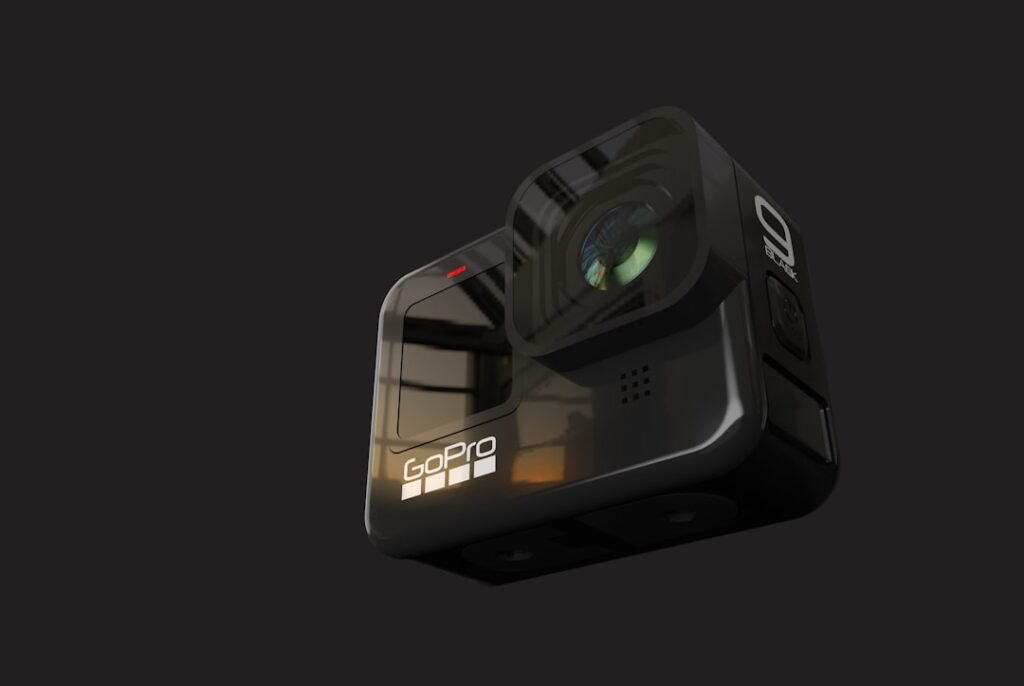
Searches for a “GoPro thermal camera” are common, but as of 2026 GoPro has never released a thermal imaging product. The company’s entire lineup — Hero series, Max, and the Mini variants — are visible-light cameras with rugged housings. The thermal sensor required for true infrared imaging is a fundamentally different piece of hardware, and the supply chain and pricing reality of small thermal detectors does not yet line up with GoPro’s consumer price point. This guide explains why the query keeps coming up, what people are usually looking for, and what actual thermal options exist for adventure, hunting, drone, and outdoor work.
Part of our Thermal Imaging for Homes guide — start there for the full picture →
Does GoPro make a thermal camera
No. GoPro’s product line through 2026 covers visible-light action cameras, 360-degree cameras (Max), and short-form pocket models (Hero Mini, formerly Session). Every GoPro sensor is a CMOS visible-light chip, not a microbolometer infrared array. The GoPro app supports filters and color grading that can mimic a “heat map” look, but those are post-processing effects on a visible image and do not measure surface temperature.
The closest GoPro has come to infrared is the night-mode and low-light processing on recent Hero bodies, which is image stacking and noise reduction on the visible spectrum, not actual thermal imaging. The wider category of true thermal imaging is covered at the home inspection tools hub.
Why thermal in a GoPro form factor is hard
Three engineering constraints keep small thermal sensors out of consumer action cameras. First, thermal lenses are germanium or chalcogenide, not glass — these materials are dense, expensive, and difficult to manufacture in small form factors. Second, the focal plane array (microbolometer) has a much lower pixel density than a CMOS visible sensor; a 640×480 thermal detector is at the top of the consumer market, where a $300 phone has a 12 megapixel visible sensor. Third, radiometric thermal imaging requires temperature-stable electronics, which adds cost and limits the operating envelope.
A consumer action camera that needs to ship below $500 and survive a 6-meter drop into salt water has no room in the bill of materials for a $200 detector and a $80 germanium lens. The pricing math is covered in the thermal camera cost guide.
What people are usually looking for when they search “GoPro thermal camera”
Three use cases dominate the query in user research:
Hunting and wildlife observation
Many hunters know GoPro from helmet-cam and bow-cam content and assume the same brand should offer a thermal version for tracking game in low light. The actual market for hunting thermal is dominated by specialized brands — Pulsar, ATN, Burris, AGM, and InfiRay — that build thermal monoculars, weapon scopes, and rifle-mounted units in the $1,500 to $6,000 range.
Action sports and adventure
Cyclists, climbers, and motorcyclists sometimes want a helmet-mounted thermal view for night riding or post-ride debrief. There is currently no helmet-mount native thermal camera, but small phone-attachment thermal cameras (FLIR One, Topdon TC001) clip onto a phone strapped to a helmet or chest mount and produce serviceable footage. Resolution is limited to 256×192 or 320×240 at this price.
Search and rescue and outdoor safety
SAR teams use real thermal monoculars and aerial drone thermal payloads, not action cameras. Consumer-grade alternatives in the $500 to $1,500 range from FLIR, Seek, and AGM cover personal use cases.
The actual thermal alternatives for adventure use
Phone-attachment thermal cameras ($250 to $500)
FLIR One Pro, Hikmicro Mini2, Topdon TC001, and Seek Compact Pro all clip onto a phone via USB-C or Lightning. Resolution sits at 160×120 to 320×240. For adventure use, the workflow is: phone in a chest harness or armband, thermal attachment plugged in, record into the manufacturer’s app, and review on a larger screen later. The complete form-factor breakdown is in the handheld thermal camera guide.
Limits in adventure use: phone attachments are not weatherized, the USB-C connection can fail in rain or sweat, and battery life depends on phone state. These are not action-camera replacements; they are diagnostic tools that happen to fit on a phone.
Standalone thermal monoculars ($500 to $1,800)
Hikmicro Lynx, AGM Asp, Pulsar Axion XQ, and similar handheld monoculars are the real adventure-thermal category. Rugged housings, dedicated batteries, on-board recording, and Wi-Fi to phone. Detector resolution sits at 256×192 to 384×288. Best fit for hunting, wildlife observation, and night hiking.
Thermal weapon optics ($1,500 to $6,000)
Pulsar Thermion, ATN ThOR, Trijicon REAP-IR, and similar are recoil-rated weapon scopes for legal hunting. These are regulated under ITAR/EAR export rules in the US and require careful purchase compliance.
Drone thermal payloads ($1,000 to $15,000)
For aerial adventure thermography — search and rescue volunteers, roof inspectors who fly, wildlife mapping — DJI Mavic 3T, DJI M30T, Autel EVO II Dual, and similar offer thermal-plus-visible payloads on the same airframe. These are not GoPro-class cameras but solve the same “thermal video from a small aerial platform” problem.
Will GoPro ever make a thermal camera?
There is no public roadmap indicating GoPro will enter the thermal market. The company’s investment focus has stayed on visible-light image quality, in-camera processing, and software ecosystem. A thermal Hero-style body would require either a dedicated detector partnership (FLIR, Lynred, or similar OEM thermal cores) or an in-house silicon program, neither of which fits the company’s current product strategy.
If a future GoPro thermal product appears, expect it to land in the $700 to $1,200 range with a 256×192 detector — comparable to current phone attachments but with a weatherized standalone body. That is speculative and not a current product.
What to buy instead for action-camera-style thermal video
The closest currently-shipping product to “GoPro thermal” is the FLIR One Edge Pro, a wireless thermal camera the size of a deck of cards that pairs to a phone over Wi-Fi. The camera itself can be mounted on a chest strap or helmet, with the phone tucked safely in a pocket. Resolution is 160×120 at around 70 mK NETD. Pricing in 2026 sits around $500. The Edge form factor solves the action-camera mounting problem without putting the phone in the line of fire.
For hunters and wildlife observers, a dedicated thermal monocular outperforms any action-camera setup. The Hikmicro Lynx LH19 at around $700 to $900 covers night observation with full standalone operation, on-body recording, and a real eyepiece for dawn-and-dusk use.
Limitations of all thermal cameras (regardless of brand)
Thermal imaging in adventure conditions runs into the same physics as building thermography. Reflective surfaces (wet rocks, ice, glass) bounce the camera’s view of itself instead of showing real surface temperature. Direct sunlight loads terrain for hours; mid-day thermography in summer often produces weaker contrast than night work. Rain and fog absorb thermal radiation across the working spectrum and reduce effective range.
Distance halving roughly doubles the spatial resolution on target. A 256×192 monocular at 100 yards from a deer shows roughly the same detail as a 640×480 monocular at 250 yards. Working closer with cheaper gear often beats working farther with expensive gear.
Bottom line: there is no GoPro thermal camera
The query reflects a real user need — a small, rugged, action-camera-format thermal device. That product does not exist from GoPro and is unlikely in the near term. The market has filled the gap with phone-attachment thermals, standalone monoculars, and drone-mounted thermal payloads. Cost decomposition for each tier is in the thermal camera price guide.
Mounting thermal cameras on existing action-camera rigs
For users committed to a helmet, chest, or bar mount, a workable hybrid setup pairs an existing GoPro for visible-light video with a phone-attachment thermal recording separately to the phone. The two recordings can be synchronized in post-processing using software like DaVinci Resolve or Adobe Premiere. This is more complex than a single integrated camera but produces both visible and thermal views from the same vantage point.
Several third-party rigs solve the mounting problem specifically for thermal. RAM Mounts, PolarPro, and Ulanzi all sell smartphone mounts that fit GoPro-compatible accessory tracks. A phone running the FLIR One or Hikmicro app, mounted on a chest harness next to a GoPro Hero, gives the user simultaneous visible and thermal capture without buying a non-existent integrated product. The phone needs to be reasonably weatherized for outdoor use; rain-rated phone cases like the Catalyst series help.
The cost difference between fake-thermal and real-thermal
A real concern in this category is the proliferation of “thermal” products on Amazon and AliExpress that turn out to be visible-light cameras with infrared illuminators or simple color-filter effects. Telltale signs: prices under $100, specs that mention “infrared LEDs” rather than detector resolution and NETD, lack of any reference to radiometric capture, and product photos that look like color-filtered visible images rather than the iron-palette or grayscale palette of true thermal.
True thermal imaging starts around $250 for a basic phone attachment with a 160×120 microbolometer detector. Anything claiming thermal imaging significantly below that price is almost always misrepresenting itself. The HD tier that delivers true 640×480 thermal imaging requires sub-30 mK NETD and lives at $4,500 and up — covered in the high definition thermal imager guide.
References
- ENERGY STAR: Seal and Insulate — U.S. Environmental Protection Agency (ENERGY STAR)
- Infrared Thermography Inspections — InterNACHI
- Inspector Tools and Standards — American Society of Home Inspectors
- Inspection Tool Standards — International Code Council
Frequently asked questions
Does GoPro make a thermal camera?
No. As of 2026 GoPro produces only visible-light action cameras. There is no thermal Hero, Max, or Mini product, and no public roadmap indicating one is planned.
What is the closest thing to a GoPro thermal camera?
The FLIR One Edge Pro is the closest currently-shipping product. It is a wireless thermal camera the size of a deck of cards that pairs to a phone over Wi-Fi and can be mounted on a chest strap or helmet.
Can I add thermal to a GoPro?
Not in a meaningful way. GoPro accessories are limited to visible-light filters, mounts, and audio adapters. There is no aftermarket thermal sensor that integrates with a GoPro body.
What thermal camera should hunters use?
Dedicated thermal monoculars from Pulsar, AGM, Hikmicro, or ATN in the $500 to $1,800 range outperform any phone-attachment or action-camera workaround for hunting and wildlife observation. Weapon-mounted thermal scopes are a separate regulated category.
Thermal imaging cameras
Infrared cameras reveal hidden moisture, missing insulation, and air leaks. Phone-attachment models are the budget entry point; standalone units have higher resolution.
| Product | Why | Buy |
|---|---|---|
 FLIR ONE Pro (phone) FLIR ONE Pro (phone) | Plugs into iPhone/Android; inspector favorite. | Amazon — $349.00 |
 Topdon TC001 Topdon TC001 | High-res phone module at a low price. | Amazon — $249.00 |
 FLIR C5 Compact FLIR C5 Compact | Standalone pocket camera with Wi-Fi. | Amazon — $611.50 |