Companies That Remove Mold Near Me: Scope of Work Guide
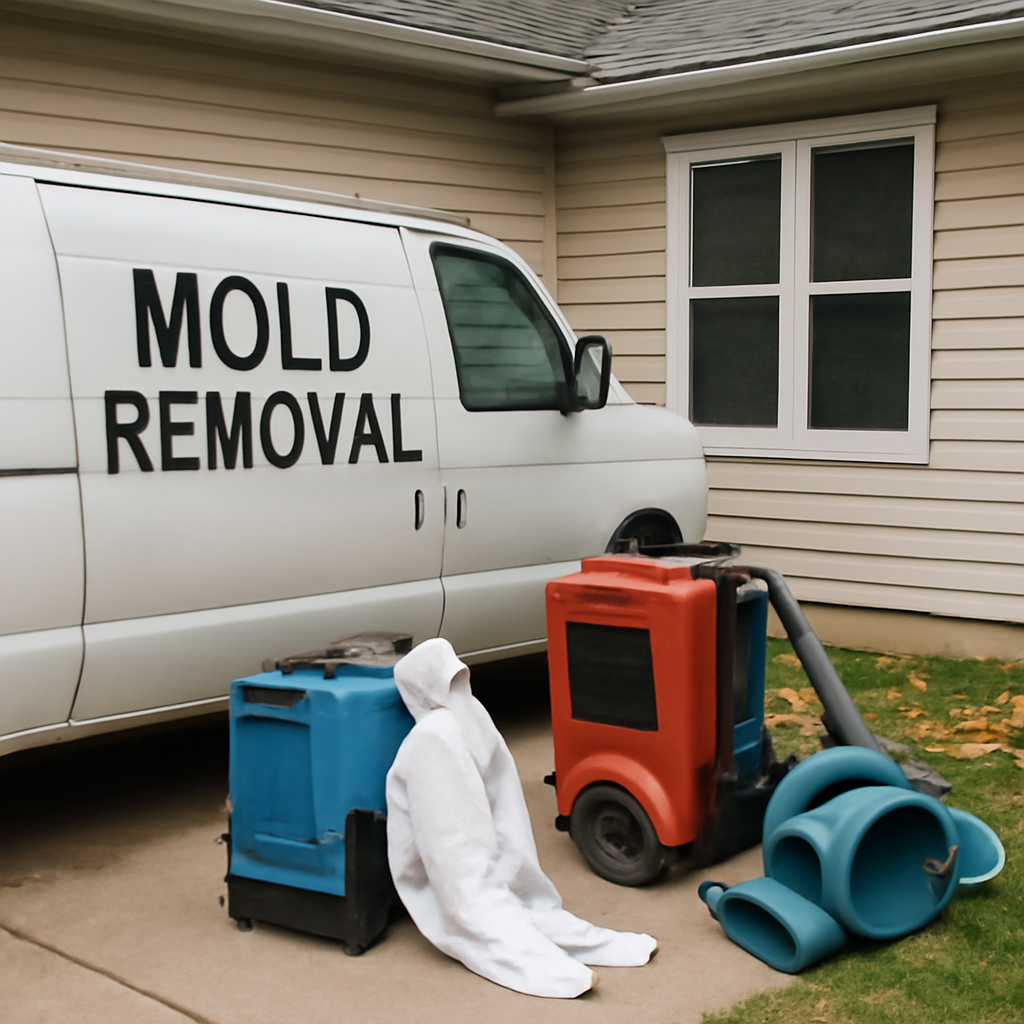
When homeowners shortlist “companies that remove mold near me,” the scope of work document is the artifact that distinguishes a professional firm from a glorified pressure-washing crew. The bid sheet is where vague language hides corner-cutting and where specific language proves the firm understands IICRC S520. This guide explains what a real scope of work should contain, how to read each line item with a skeptical eye, and what specific phrases should make a homeowner ask follow-up questions before signing. EPA, CDC, and IICRC sources current as of 2026 inform this guide; for medical symptoms see your physician.
Part of our Mold Removal & Remediation guide — start there for the full picture →
Is this mold, asbestos, or water damage? Get a free instant screen
Upload a clear photo of the suspect area. You'll get an instant AI screening opinion and what to do next. This is screening guidance, not a professional determination.
Screening guidance only. AI can be wrong. Confirm asbestos, mold type, or lead with lab testing or a licensed professional before acting.
What companies that remove mold near me should put in writing
A complete scope of work covers six categories: assessment baseline, containment, demolition, cleaning, drying, and clearance. Each category has line items that should appear in plain measurable language. “Treat affected wall” is not a line item; “demolition of 28 square feet of gypsum board in the north basement wall to a height of 24 inches above finished floor, with HEPA-vacuum and damp-wipe of exposed framing” is a line item. The difference is whether the homeowner can verify the work happened by reading the document.
Assessment baseline — the starting condition
The scope should reference the pre-remediation inspection report by date and author. It should restate the square footage of visible growth, the suspected moisture source, the species identified in air or surface sampling, and the indoor versus outdoor spore-count comparison. This baseline is what the clearance test will be compared against. A scope that ignores the pre-inspection report and starts fresh is a scope that has no objective success criteria.
Containment specifications
The scope should name the IICRC containment level (1, 2, or 3), specify the polyethylene mil thickness (typically 6-mil), identify the negative-air-machine model and CFM rating, state the HEPA filter change schedule, and describe any decontamination chambers. For Level 3 work, the scope should specify the airlock construction and entry-exit protocols. Vague language like “use containment as appropriate” is not specification. Insurance carriers reading the scope after the fact want the model numbers and CFM ratings, not the rhetoric.
Demolition scope — what gets removed
The scope must list every porous material being removed: drywall by square footage and height, insulation by type and square footage, carpet and pad by square footage, wood subfloor by linear feet, ceiling tiles by count, baseboards by linear feet. The scope should also identify materials being preserved (framing lumber, concrete, tile substrate) and the cleaning method for each. EPA’s mold cleanup document specifies that porous materials with visible growth must be removed; non-porous materials can typically be cleaned. A contractor proposing to “clean” drywall with visible growth is proposing something other than EPA-compliant remediation.
HEPA vacuuming and detail cleaning
After demolition, all exposed surfaces in the containment zone get HEPA-vacuumed, followed by damp-wipe cleaning with an EPA-registered antimicrobial. The scope should name the antimicrobial product and registration number, list the dwell time required, and identify which surfaces receive the treatment. Detail cleaning typically extends 4 to 6 feet beyond the visible-growth boundary to capture spore settling. Scopes that skip detail cleaning are scopes that count on clearance air sampling to forgive incomplete work.
Structural drying — the part everyone underbids
If the moisture source involved water saturation of structural materials, the scope must include drying with dehumidifiers and air movers sized to the affected square footage. Industry standards call for one air mover per 150 square feet at minimum and dehumidifier capacity sized to remove the calculated grain depression. Drying typically runs 3 to 7 days. The scope should specify equipment count, runtime, daily moisture readings, and the moisture content target for each material type. Skipping drying or shorting equipment count is the single most common scope deficiency in low-bid quotes.
HVAC isolation and post-cleaning
If the affected area is served by HVAC, the supply and return registers in the containment zone must be sealed during work. After work concludes, the registers, plenum, and supply branches serving the area should be inspected and cleaned. Whole-system duct cleaning is sometimes warranted, sometimes not — the scope should justify which path applies. Adding duct cleaning unnecessarily inflates the invoice; omitting it when HVAC was implicated misses spore reservoirs. The IICRC and the mold inspection process literature both address this question directly.
Post-remediation verification — the clearance step
The scope should explicitly name the post-remediation verification protocol. PRV typically includes visual inspection by an independent third party, moisture meter readings confirming materials are dry, and air sampling that compares the work area to a same-day outdoor control. Pass criteria should be specifically stated: typically “no visible growth, no remaining moisture, indoor airborne spore counts equal to or below outdoor counts in the relevant species categories.” A scope that lets the remediator self-clear without third-party verification is a scope that protects the remediator, not the homeowner.
Schedule, milestones, and disruption windows
The scope should list start date, expected duration, daily work hours, and homeowner access points (which rooms remain usable during work, which do not). A 2-day project might condense into a single shift; a 10-day project will have day-by-day milestones. Larger projects should include a Gantt-style schedule. Scopes with no schedule signal that the contractor is unsure of resource allocation — that uncertainty becomes the homeowner’s problem when the project slips.
Payment terms and change order procedures
Standard payment is roughly one-third at contract signing, one-third at midpoint, and one-third at clearance pass. Payment in full upfront is a red flag. Change orders for scope expansion should require written approval with photos and measurements documenting the new finding. Verbal change orders are not enforceable and almost always benefit the contractor over the homeowner. Refuse them on principle.
Warranty and post-completion follow-up
Most reputable remediation firms warranty the work for 12 months. The warranty should be in writing and should specify exactly what it covers — typically regrowth in the treated area absent a new moisture event. Warranties that exclude “regrowth” are not warranties of remediation; they are warranties of cleanup. Read the document. Companies that decline to warranty in writing are companies that do not stand behind their work.
Front Range-specific scope considerations
Colorado homes commonly involve crawl spaces with vapor barriers, basements with concrete slabs at or below grade, and attics with significant temperature swings. Each environment changes the scope. Crawl-space work often includes vapor-barrier replacement and dehumidifier installation as part of the moisture source control. Basement work often includes interior drain-tile evaluation. Attic work typically includes ventilation review. A scope that ignores these Front Range structural realities is being written by someone unfamiliar with the local housing stock.
What a $5,000 versus $15,000 scope looks like
A $5,000 scope typically covers 20 to 40 square feet of demolition, Level 2 containment, 3 days of drying, and clearance testing at the back end. A $15,000 scope typically covers 100+ square feet, Level 3 containment, HVAC isolation and post-cleaning, 7+ days of drying, and a longer warranty. The difference is not markup; it is genuinely more work. When two bids for the same project show a 3x spread, the question is which company misread the scope, not which one is greedier.
How insurance language changes the scope
Insurance-claim scopes get written in the carrier’s preferred software (typically Xactimate) with line-item pricing tied to ZIP-code averages. The advantage: standardization across vendors and easy adjuster review. The disadvantage: the Xactimate pricing sometimes lags real local labor costs by 6 to 18 months, which creates friction when contractors decline to work at carrier rates. Homeowners caught between carrier rates and market rates may need to pay the gap out of pocket.
Reading scope language for evasion
Specific phrases worth questioning: “as needed,” “where appropriate,” “to industry standard,” “approximate quantities to be determined on site.” Each of these phrases shifts decision authority from the document to the field crew, where the homeowner cannot verify what was actually done. A specific scope says “removal of 24 square feet”; an evasive scope says “removal of affected material as needed.” Replace evasive language with specific language before signing.
When to call a professional rather than wait
Any project exceeding the EPA 10-square-foot threshold should engage professional companies that remove mold. Projects under that threshold can often be DIY with appropriate PPE if the moisture source has been corrected. Households with health-sensitive occupants should engage professionals at lower thresholds. The scope of work then becomes the contract that defines what the homeowner is paying for and the criteria by which success is measured.
How long the scope of work document should be
A complete scope for a small project (one room, single moisture source) typically runs 4 to 8 pages. Mid-size projects (multiple rooms, structural drying) commonly produce 8 to 15 page documents. Large projects exceeding $20,000 in remediation cost often produce 20-plus page scopes with project schedules, Gantt charts, and equipment specifications. A scope shorter than 4 pages on anything beyond a trivial cleaning is typically undercooked. A scope padded beyond 30 pages on a routine project is typically marketing material masquerading as specification. Focus on whether the scope answers the relevant operational questions, not on its length.
How to verify the scope was followed during work
The homeowner does not need to supervise full-time but should make targeted visits during the work. Check on day one for containment installation matching the scope (correct mil polyethylene, correct decontamination chamber, correct negative-air-machine count). Check during mid-project for demolition matching scope (correct square footage removed, correct materials disposed). Photograph each check for the project file. Discrepancies surfaced during the work allow correction in real time; discrepancies surfaced after the work is closed become disputes that favor the contractor.
Negotiating scope additions before signing
The first written scope is rarely the final scope — both sides typically negotiate. Reasonable additions the homeowner should request: explicit photo documentation requirement at each phase, daily moisture-reading logs, post-remediation verification budget line item, and a defined dispute-resolution process. Reasonable removals the homeowner can request: redundant antimicrobial fogging where physical cleaning already addresses the surface, padded “general conditions” markups, and scope expansion authority granted to the contractor without homeowner approval. Negotiation is normal and signals operational maturity on both sides.
How scope language affects warranty claims
The scope of work determines what the warranty covers. A warranty against “regrowth in treated areas” is meaningful only if the scope specified what areas were treated. A vague scope produces a vague warranty that the contractor can dispute when regrowth appears. Specific scope language with measured square footage and identified treatment methods produces a warranty the homeowner can actually enforce. Read both documents together before signing — the warranty paragraph in the contract is operationally meaningless without the scope document it references.
References
- EPA — Mold Remediation Reference Guide — U.S. Environmental Protection Agency
- EPA — Mold Cleanup in Your Home — U.S. Environmental Protection Agency
- CDC — Mold Health Information — Centers for Disease Control and Prevention
- CDPHE — Colorado Mold Guidance — Colorado Department of Public Health and Environment
Frequently asked questions
What should a mold removal scope of work contain?
Assessment baseline, containment specifications, demolition measurements, cleaning methods, structural drying details, and post-remediation verification protocol. Each section should use measurable language with square footage, equipment models, and material quantities, not vague terms like 'treat affected area.'
What is the difference between a $5,000 and $15,000 mold removal bid?
The dollar difference usually reflects demolition square footage, containment level, HVAC involvement, drying days, and warranty length. A 3x spread between bids on the same project typically means one or both companies misread the actual scope requirement.
Should I trust a mold company that says it will clean drywall with visible growth?
No. EPA guidance specifies that porous materials with visible growth must be removed, not cleaned. Drywall is porous. A contractor proposing to clean rather than remove is proposing something other than IICRC-compliant remediation.
How long should mold remediation take?
Small projects 2 to 4 days, mid-size 5 to 10 days, large projects 2 to 4 weeks. Time depends on demolition extent and drying requirements. Faster timelines on a large project usually mean drying was shorted.
Homeowners along the Colorado Front Range looking to vet a remediation firm before signing can connect with us for an independent referral.
Mold removal & cleanup picks
For a small, contained patch (under ~10 sq ft) these EPA-friendly removers handle surface mold. Larger or recurring growth warrants a professional assessment first.
| Product | Why | Buy |
|---|---|---|
 RMR-86 Instant Mold Stain Remover RMR-86 Instant Mold Stain Remover | Fast-acting on stains; ventilate and wear PPE. | Amazon — $29.99 |
 Concrobium Mold Control Concrobium Mold Control | No-bleach formula that also helps prevent regrowth. | Amazon — $34.27 |
 Mold Armor Mold & Mildew Remover Mold Armor Mold & Mildew Remover | Widely stocked bathroom/surface remover. | Amazon — $22.98 |