Asbestos Testing in Douglas County, Colorado
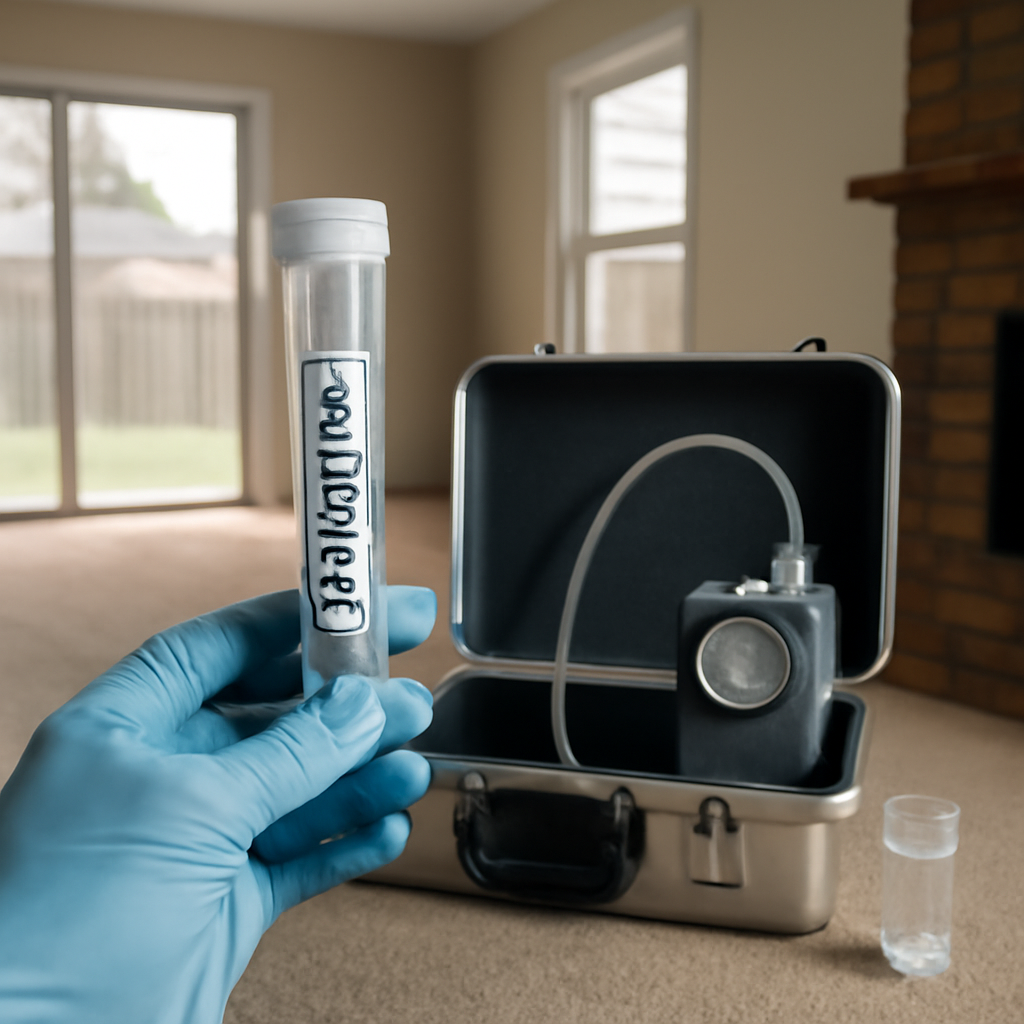
Asbestos testing douglas county homeowners ask about is mostly a question of age. Douglas County’s housing is overwhelmingly post-1980, so widespread asbestos is far less common here than in Denver’s older neighborhoods, but the small older cores of Castle Rock, Sedalia, Larkspur, and Parker still hold pre-1980 buildings where asbestos materials are likely. This county hub explains where the risk actually concentrates, what a lab tests, the Colorado regulations that govern sampling, local costs, and links to city pages. This summary reflects EPA and CDC guidance current as of 2026; consult a certified inspector before disturbing any suspect material and never sample friable material yourself.
Part of our Asbestos in the Home guide — start there for the full picture →
Is this mold, asbestos, or water damage? Get a free instant screen
Upload a clear photo of the suspect area. You'll get an instant AI screening opinion and what to do next. This is screening guidance, not a professional determination.
Screening guidance only. AI can be wrong. Confirm asbestos, mold type, or lead with lab testing or a licensed professional before acting.
Asbestos testing in Douglas County: what to know
Asbestos testing identifies whether a building material contains asbestos fibers by sending a small collected sample to an accredited laboratory for analysis under polarized-light microscopy. The materials of concern, popcorn ceilings, vinyl floor tile and the mastic under it, pipe and duct insulation, and certain wall textures and siding, were common in construction before the 1980s and largely phased out after.
That timeline is why Douglas County is a special case. The county grew after 1980, so the bulk of Highlands Ranch, Lone Tree, and newer Castle Rock and Parker subdivisions predate the asbestos era and rarely contain it. The risk is concentrated in the older town cores, original downtown Castle Rock, the historic parcels of Sedalia and Larkspur, and Parker’s older sections, where homes and outbuildings from before 1980 still stand.
For how asbestos materials are identified and managed, our guide to asbestos and lead in pre-1978 housing covers the fundamentals. This page focuses on where the county-level risk actually lives.
Why some Douglas County homes need asbestos testing
Construction date is the deciding factor. A home built in 1995 in Highlands Ranch almost certainly contains no asbestos, while a 1955 farmhouse near Sedalia or a pre-war structure in old Castle Rock is a different matter. Testing is warranted whenever a pre-1980 home or outbuilding is being renovated, because that is when suspect materials get disturbed and fibers become airborne.
Renovation is the trigger. Douglas County’s older cores see steady remodeling as buyers update historic homes, and tearing out a popcorn ceiling, pulling old floor tile, or removing pipe wrap in a pre-1980 Larkspur house can release fibers if the material contains asbestos and is not tested first. Intact, undisturbed asbestos material generally poses little risk; the hazard arises when it is cut, scraped, or demolished.
The rural older stock adds outbuildings to the picture. Around Sedalia and Larkspur, pre-1980 barns, sheds, and farmhouses may contain asbestos cement siding, transite pipe, or insulation that a renovation or demolition would disturb. Testing before that work, rather than after, is the order that keeps fibers out of the air.
What Douglas County asbestos testing covers
Testing centers on careful sampling of suspect materials by a trained inspector who wets the material, cuts a small piece, and seals it for the lab, all to avoid releasing fibers during collection.
Bulk sampling and lab analysis
The inspector collects bulk samples from each suspect material, popcorn ceiling, floor tile and mastic, pipe insulation, and submits them to an accredited lab. Because asbestos use varied by material and year, a pre-1980 Castle Rock home often needs several samples to clear the materials a renovation will touch. The lab reports the percentage and type of asbestos in each.
Friable versus non-friable materials
Friable materials crumble by hand and release fibers easily, insulation and damaged ceiling texture, and demand the most caution. Non-friable materials like intact floor tile bind fibers unless cut or sanded. An inspector identifies which category each material falls into, since that determines both the sampling method and how any positive result must be handled.
Asbestos testing cost in Douglas County
Asbestos testing in the Douglas County market typically runs about $250 to $600 for an inspection with several lab-analyzed samples, with each additional sample adding roughly $30 to $75. A focused single-material test, clearing one popcorn ceiling before removal, sits at the lower end. Pre-renovation surveys of larger pre-1980 homes in the older cores cost more because more materials must be cleared.
The cost is small against the alternative. Disturbing asbestos without testing can require professional decontamination and creates liability, so testing a pre-1980 Sedalia or Castle Rock home before remodeling is far cheaper than mishandling an unknown material. For post-1980 homes, which is most of the county, testing is rarely necessary at all.
Colorado regulations and disclosure
Colorado regulates asbestos through CDPHE, which requires that sampling and abatement in regulated quantities be performed by state-certified individuals. For homeowners, disturbing more than a trigger amount of asbestos-containing material, even in your own home, brings state rules into play, so testing first establishes whether those rules apply.
In a real-estate transaction, Colorado’s Seller’s Property Disclosure asks about known asbestos. Because Douglas County’s older cores hold the pre-1980 stock, a documented test on one of those homes supports honest disclosure, while a buyer of a 1990s Highlands Ranch home generally has little asbestos concern to address. Always use a CDPHE-certified inspector for sampling friable material rather than collecting it yourself.
Communities and areas served across Douglas County
Asbestos relevance maps directly onto building age. Original downtown Castle Rock holds the county seat’s oldest housing, where pre-1980 materials are most likely; our asbestos testing in Castle Rock page covers the city detail. Older sections of Parker carry the same consideration, detailed on our asbestos testing in Parker page. The historic parcels of Sedalia and Larkspur add rural pre-1980 homes and outbuildings.
By contrast, the post-1980 master-planned communities, Highlands Ranch, most of Lone Tree, Castle Pines, and the newer Castle Rock and Parker subdivisions, rarely warrant asbestos testing because they were built after the materials were phased out. Knowing your home’s construction date is the fastest way to gauge whether testing is even relevant in Douglas County.
Common asbestos materials in older Douglas County buildings
For the pre-1980 buildings in Douglas County’s older cores, certain materials come up repeatedly. Popcorn or textured ceilings applied before the early 1980s are among the most common, and they are also among the most likely to be disturbed during a remodel, since removing dated ceiling texture is a popular update in older downtown Castle Rock homes. Vinyl floor tile, particularly nine-inch tiles, and the black mastic adhesive beneath them frequently contain asbestos and turn up when an old kitchen or bathroom floor is pulled up.
Mechanical materials are another category. Insulation wrapped around old furnace ducts, boiler pipes, and water lines in a pre-1980 Sedalia farmhouse or Larkspur home may be asbestos-containing, and it is friable, meaning it crumbles and releases fibers easily when disturbed. Older sheet flooring, certain wall and ceiling joint compounds, and window glazing can also contain asbestos. Exterior materials matter on rural properties: asbestos cement siding and transite pipe were common on outbuildings and farm structures from the era.
The practical lesson is that a single pre-1980 home can hold asbestos in several unrelated materials, which is why a pre-renovation survey often collects multiple samples rather than testing just one suspect spot. A homeowner planning to gut-renovate a 1955 home in old Castle Rock needs each material the project will disturb cleared independently, since the ceiling texture, the floor tile, and the duct wrap could each return a different result.
What happens after a positive asbestos result
A positive lab result does not automatically mean a costly emergency. Whether action is needed depends on the material’s condition and whether the planned work will disturb it. Intact, non-friable asbestos that will be left undisturbed, an unbroken floor tile under new flooring, for example, can often be managed in place or encapsulated rather than removed, since the hazard comes from airborne fibers and undisturbed material releases few.
When the planned renovation will disturb the material, abatement comes into play, and in Colorado that brings CDPHE regulations to bear. Disturbing more than a trigger quantity of asbestos-containing material requires a state-certified abatement contractor following containment and disposal protocols, even in a private home in old Castle Rock or Sedalia. A certified contractor sets up containment, removes the material under controlled conditions, and disposes of it as regulated waste, then a clearance check confirms the area is safe to reoccupy.
The testing step is what makes all of this possible to plan for. Knowing before a renovation begins which materials are asbestos-containing lets a Douglas County homeowner budget for abatement where it is genuinely required and proceed normally everywhere else. Discovering asbestos mid-demolition, after fibers have already been released, is the expensive and hazardous scenario that pre-renovation testing exists to prevent.
What affects asbestos testing cost in Douglas County
Sample count is the main variable, and it follows the scope of the planned work rather than the size of the home. Clearing a single popcorn ceiling before removal in an older downtown Castle Rock house may need just one or two bulk samples, landing at the low end. A full pre-renovation survey of a 1955 farmhouse near Sedalia, where the project will disturb ceiling texture, floor tile and mastic, duct wrap, and joint compound, can require six or more samples, since each distinct material must be cleared independently. The per-sample lab fee accumulates with each additional material the renovation will touch.
Friability and access also influence cost. Sampling friable material like crumbling duct insulation demands more careful containment during collection than lifting an intact floor tile, and material in a tight crawlspace or behind finished surfaces takes longer to reach. Rural Larkspur and Sedalia outbuildings with asbestos cement siding or transite pipe add exterior materials that may need their own samples if a demolition will disturb them.
The decisive factor, though, is whether testing is needed at all. For the post-1980 majority of Douglas County homes, an honest provider will often tell a Highlands Ranch or Lone Tree owner that no test is warranted, which is the lowest cost of all. The expense is concentrated on the older-core homes where a renovation will disturb genuinely suspect pre-1980 materials, and there it is far cheaper than the decontamination that follows mishandling an untested material.
How to choose a Douglas County asbestos testing provider
Confirm the inspector is CDPHE-certified for asbestos and sends samples to an accredited laboratory. A provider who first asks the home’s age, and who tells a 1990s Highlands Ranch owner they likely do not need testing, is giving honest guidance rather than selling unnecessary work. For pre-1980 homes, look for a pre-renovation survey that clears every material the project will disturb.
Never let anyone hand you a kit to sample friable material yourself, and avoid providers who skip the certification question. On Douglas County’s older-core homes, proper sampling and an accredited lab report are what keep a renovation legal and safe; on the county’s newer stock, the right answer is often that no test is needed at all.
References
- Asbestos in homes and buildings — U.S. Environmental Protection Agency
- Colorado asbestos regulations and certification — Colorado Department of Public Health and Environment
- Asbestos health effects — Centers for Disease Control and Prevention
Frequently asked questions
Do most Douglas County homes contain asbestos?
No. The county's housing is overwhelmingly post-1980, after asbestos was phased out. The risk concentrates in older cores like downtown Castle Rock, Sedalia, Larkspur, and older Parker, not in newer master-planned communities.
When should I test for asbestos in Douglas County?
Test before renovating any pre-1980 home or outbuilding, since cutting or removing popcorn ceilings, floor tile, or pipe insulation can release fibers if the material contains asbestos and wasn't tested first.
How much does asbestos testing cost in Douglas County?
Expect about $250 to $600 for an inspection with several lab samples, plus roughly $30 to $75 per additional sample. A single-material test before one removal sits at the lower end.
Can I collect asbestos samples myself?
You should not sample friable material yourself, and Colorado regulates sampling and abatement through CDPHE-certified individuals. Always use a certified inspector to collect suspect material safely.
Why does a pre-renovation asbestos survey cost more than a single test?
A single popcorn ceiling may need one or two samples, but a full gut-renovation of a pre-1980 Sedalia or Castle Rock home can require six or more, since ceiling texture, floor tile, duct wrap, and joint compound each must be cleared independently.
If you’re renovating a pre-1980 home in old Castle Rock, Sedalia, Larkspur, or older Parker, test before you cut into anything. To connect with a CDPHE-certified local inspector, get in touch through our contact page.