Why Is Black Mold So Bad: Structural, Health, Marketability
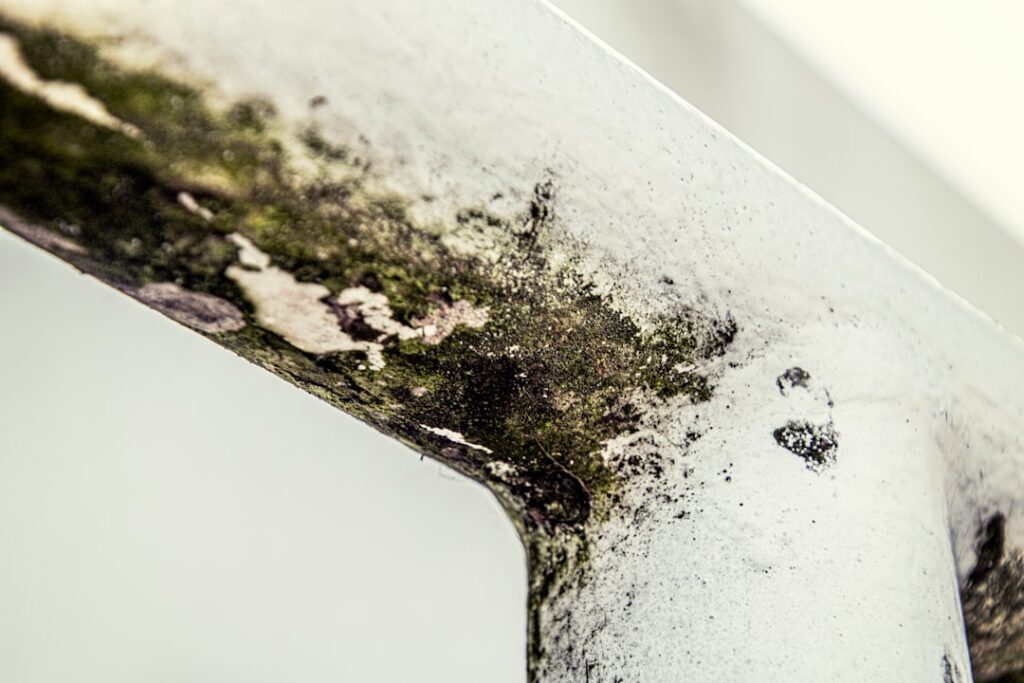
Why is black mold so bad gets asked most often by homeowners who have just discovered staining behind drywall and want a calibrated picture before deciding what to do next. The honest answer combines three things: structural damage that compounds with time, occupant health risk that ranges from mild allergic response to serious outcomes in vulnerable people, and resale impact that follows a property for years if not documented properly. This guide summarizes EPA, CDC, and NIEHS guidance for homeowners. It is not medical advice. If anyone in the household has symptoms they believe relate to mold exposure, consult a physician — diagnosis and treatment of mold-related illness require professional medical evaluation. We walk through the three reasons black mold earns its bad reputation and what each implies for action.
Part of our Black Mold & Your Health guide — start there for the full picture →
Is this mold, asbestos, or water damage? Get a free instant screen
Upload a clear photo of the suspect area. You'll get an instant AI screening opinion and what to do next. This is screening guidance, not a professional determination.
Screening guidance only. AI can be wrong. Confirm asbestos, mold type, or lead with lab testing or a licensed professional before acting.
Reason 1: it eats your house
Black mold, in popular usage, refers to Stachybotrys chartarum and several visually similar genera (notably Chaetomium) that colonize wet cellulose. Cellulose is the primary structural carbohydrate of residential construction materials: paper-faced drywall, OSB and plywood sheathing, dimensional framing lumber, cellulose insulation, paper-backed batt insulation, and many subfloor products. When a colony establishes on these substrates, it does what decomposer organisms exist to do — it eats the substrate.
The damage progression follows a predictable arc. In the first month, surface paper discolors and the smell appears, but mechanical integrity remains intact. Over 6 to 12 months of continuous moisture, the paper face of drywall delaminates from the gypsum core, adjacent insulation discolors and compresses, and the cavity humidity stays elevated. By 18 to 36 months, wood framing exposed to ≥20% moisture content shows decay-fungus involvement (brown rot or white rot, both of which often accompany Stachybotrys), and structural members can lose meaningful load-carrying capacity. A 5-year unremediated chronic-leak scenario can require framing replacement.
The financial implication is steep. A small-tier remediation caught at the staining stage might run $500–$1,500. A medium-tier job involving multiple wall sections, baseboard, partial flooring, and insulation replacement typically runs $2,500–$7,500. Large-tier remediation including framing repair and HVAC involvement can exceed $20,000. The gap between catching a colony at month three versus year three is often an order of magnitude. A structural-damage breakdown details what each progression stage looks like.
Reason 2: it affects the people living with it
Occupant impact is the reason black mold dominates public attention. Documented outcomes across CDC, EPA, and NIEHS literature include allergic rhinitis, chronic sinusitis, cough, asthma exacerbation in existing asthmatics, new-onset asthma in children growing up in damp homes, and hypersensitivity pneumonitis in susceptible individuals. These outcomes are not unique to Stachybotrys — the broader indoor-mold community (Aspergillus, Penicillium, Cladosporium, Alternaria) drives much of the documented impact — but Stachybotrys is part of the picture in any chronically wet home where it has established.
The vulnerability gradient
Health impact is not uniform. Healthy adults face primarily allergic and irritant responses that resolve with source removal. Immunocompromised occupants face higher invasive-infection risk, principally from Aspergillus rather than Stachybotrys. Severe asthmatics face exacerbation risk. Infants and young children face higher probability of lifelong sensitization. Elderly with reduced pulmonary reserve tolerate exacerbations less well. This gradient is why public-health guidance asks homeowners to consider who lives in the home when scoping the urgency of response, not only the visible square footage.
The sensitization mechanism
Repeated exposure produces immune sensitization in a meaningful fraction of occupants. Once sensitized, the occupant reacts to mold-containing environments outside the original home and typically retains that reactivity for years. Pediatric sensitization is particularly persistent and is one of the strongest arguments for early remediation. A child who develops mold allergy at age 6 carries that allergy through adulthood. A respiratory-focused long-term-effects walkthrough develops the sensitization story.
What the agencies do and don’t say
CDC and EPA materials support the respiratory and allergic findings above with appropriate strength. They are more cautious about claims of distant systemic illness, cognitive symptoms, or autoimmune effects from typical residential exposure, because the evidence base is thinner. This calibration matters: homeowners reading sensational online material may overestimate certain risks and underestimate the basic respiratory burden that is, in fact, well documented.
Reason 3: it follows the property through resale
The third reason black mold earns its reputation is transactional. Disclosure law in most jurisdictions requires sellers to inform buyers of known material defects, and a history of black mold and water damage typically qualifies. A house with undisclosed past mold work that a buyer’s inspector later discovers becomes a litigation risk. A house with documented professional remediation, post-clearance testing, and source-resolution paperwork sells with significantly less friction.
Buyer behavior reinforces this. Front Range buyers in Denver, Boulder, Colorado Springs, and surrounding counties increasingly ask mold-history questions during due diligence, and ASHI-standard home inspectors flag suspected microbial growth in writing. The market premium for “no mold history” homes is real, and the negotiation discount on homes with unresolved or undocumented mold issues is sometimes 5%–15% of purchase price depending on extent. Mortgage underwriting can also flag mold disclosures depending on lender policy.
Why the popular reputation overshoots the evidence in places
Three patterns inflate perceived black-mold danger beyond what the data supports. First, “toxic black mold” rhetoric anchors public conversation. Toxicity, in scientific use, refers to mycotoxin production; Stachybotrys does produce trichothecene mycotoxins in vitro, but whether residential occupants inhale meaningful doses in typical exposures remains an active research question rather than a settled fact. Second, dramatic litigation in the 1990s–2000s produced settlement narratives that hardened public perception. Third, the visual signature of black-stained drywall reads as more dangerous than equivalently impactful Aspergillus or Penicillium colonies that produce less striking visuals.
The corrective is not to dismiss black mold concern. It is to calibrate the response: the same EPA-recommended steps (identify source, contain, remove affected materials, verify dryness, document) work for visible mold of any color, and the danger gradient is more about extent-occupant-duration than about species identity. A separate calibration-focused walkthrough covers the same ground from a different angle.
How the three reasons compound
The structural, health, and marketability dimensions interact in ways that amplify each other. A chronic leak that produces structural damage also produces sustained occupant exposure also produces a future disclosure obligation. Early intervention addresses all three simultaneously. Delayed intervention worsens all three simultaneously. This is why public-health and home-inspection guidance treat moisture-source resolution as the single most important homeowner habit — the same habit that prevents structural damage also prevents occupant exposure and preserves resale value.
The home-side response that addresses why it’s so bad
The same response covers all three concerns:
- Identify and stop the water source. Without this, remediation fails and the colony returns.
- Match remediation tier to extent — DIY for small (≤10 sq ft) with proper PPE and containment; professional for medium (10–100 sq ft) and large (>100 sq ft or HVAC).
- Physically remove affected porous materials. Surface biocide alone is inadequate.
- Run post-remediation verification testing for medium and large tiers.
- Document the work, including source-resolution photos, contractor licensing, moisture readings, clearance results, and final invoices.
- Keep this documentation for the life of your ownership and pass it to the next buyer.
The mold inspection hub connects each step to homeowner-facing workflows and timeline expectations.
Front Range realities
Colorado’s semi-arid climate produces lower baseline mold pressure than humid coastal regions, but the failure modes that drive chronic indoor mold are common. Basements with chronic seepage during spring snowmelt, foothill homes with ice-dam intrusion, washing-machine and refrigerator supply-line failures, evaporative-cooler overflow, and bathroom exhaust fans terminating in attics all produce localized chronic-wet conditions. The same Stachybotrys biology that drives outcomes in Florida apartments drives outcomes in Front Range basements. Climate averages do not protect specific failure points.
Maintenance habits that prevent the three problems at once
Annual or semi-annual attention to a few specific locations catches most slow leaks before they generate medium- or large-tier mold problems:
- Shower-pan perimeter and grout integrity check.
- Washing-machine supply-hose inspection (replace braided stainless every 5–7 years).
- Refrigerator ice-maker line inspection.
- Dishwasher supply and drain hose inspection.
- Water-heater pan and drain-line inspection.
- Basement floor-wall joint visual inspection after snowmelt.
- HVAC condensate pan and drain clearing at every filter change.
- Bathroom exhaust fan duct verification — ensure it terminates outside the building, not in the attic.
How professionals approach a black mold discovery
A qualified mold assessor approaches a discovery with a defined sequence. First, identify the moisture source through visual inspection, moisture-meter survey of adjacent surfaces, and review of building plans and recent service history. Second, characterize the extent — surface area, materials involved, HVAC implication. Third, recommend a remediation scope appropriate to the extent (EPA tier-matched). Fourth, after the remediation contractor completes work, perform clearance assessment including visual verification and often post-remediation air or surface sampling. The whole sequence produces documentation that satisfies disclosure, insurance, and future-buyer due-diligence requirements simultaneously. Homeowners attempting the sequence informally sometimes get the technical execution right but miss the documentation step that preserves the broader value.
What the data does and doesn’t support about black mold danger
The cumulative evidence base supports treating residential black mold as a real concern warranting prompt response without supporting the most dramatic claims in popular media. Documented outcomes include allergic and irritant respiratory effects, asthma exacerbation, sensitization, hypersensitivity pneumonitis in susceptible individuals, and structural damage to building materials. Less well-supported in the residential exposure literature are claims of cognitive impairment, autoimmune effects, and distant systemic illness — patients with these symptoms deserve clinical workup, but the agency framing remains cautious about attributing them directly to typical residential exposures. This calibration is reflected in how the EPA, CDC, and NIEHS write about mold for homeowner audiences.
The cost-of-action curve over time
Time-to-action is the single most controllable variable in the long-term cost picture. A homeowner who catches a 1-square-foot patch at the staining stage spends $500–$1,500 and avoids structural involvement entirely. The same colony at 18 months can become a $5,000–$10,000 medium-tier job. At 36 months with framing involvement and HVAC contamination it can exceed $25,000. The biological progression that produces this cost curve is predictable and well-documented; the homeowner’s leverage point is purely the speed of response, which is why public-health guidance returns repeatedly to the recommendation to act promptly.
References
- EPA Mold Resources — U.S. Environmental Protection Agency
- CDC About Mold — Centers for Disease Control and Prevention
- NIEHS Mold Health Topic — National Institute of Environmental Health Sciences
- HUD Healthy Homes Mold — U.S. Department of Housing and Urban Development
Frequently asked questions
Why is black mold considered worse than other molds?
Visual prominence and historical litigation amplify the reputation more than species-specific toxicity. The actual long-term occupant impact in U.S. homes is often driven more by Aspergillus and Penicillium burden than by Stachybotrys specifically.
What is the biggest practical danger of black mold for homeowners?
Structural damage progression and cumulative cleanup cost. A small remediation at month three is an order of magnitude cheaper than the large remediation the same colony forces by year three.
Can black mold reduce my home value?
Yes. Undisclosed or undocumented mold history is a known negotiation discount, sometimes 5 to 15 percent of purchase price. Documented professional remediation preserves resale value far better than unreported informal cleanup.
Does Front Range climate prevent black mold?
No. Colorado's dry baseline does not prevent localized chronic-wet conditions from plumbing leaks, snowmelt seepage, ice-dam intrusion, and HVAC failures. Specific failure points drive outcomes regardless of regional climate averages.
Front Range homeowners weighing how seriously to take a black mold discovery can reach out through our contact page for a connection to a vetted local inspector before scoping remediation.