Wall Non Toxic Black Mold: A Plain-Language Guide
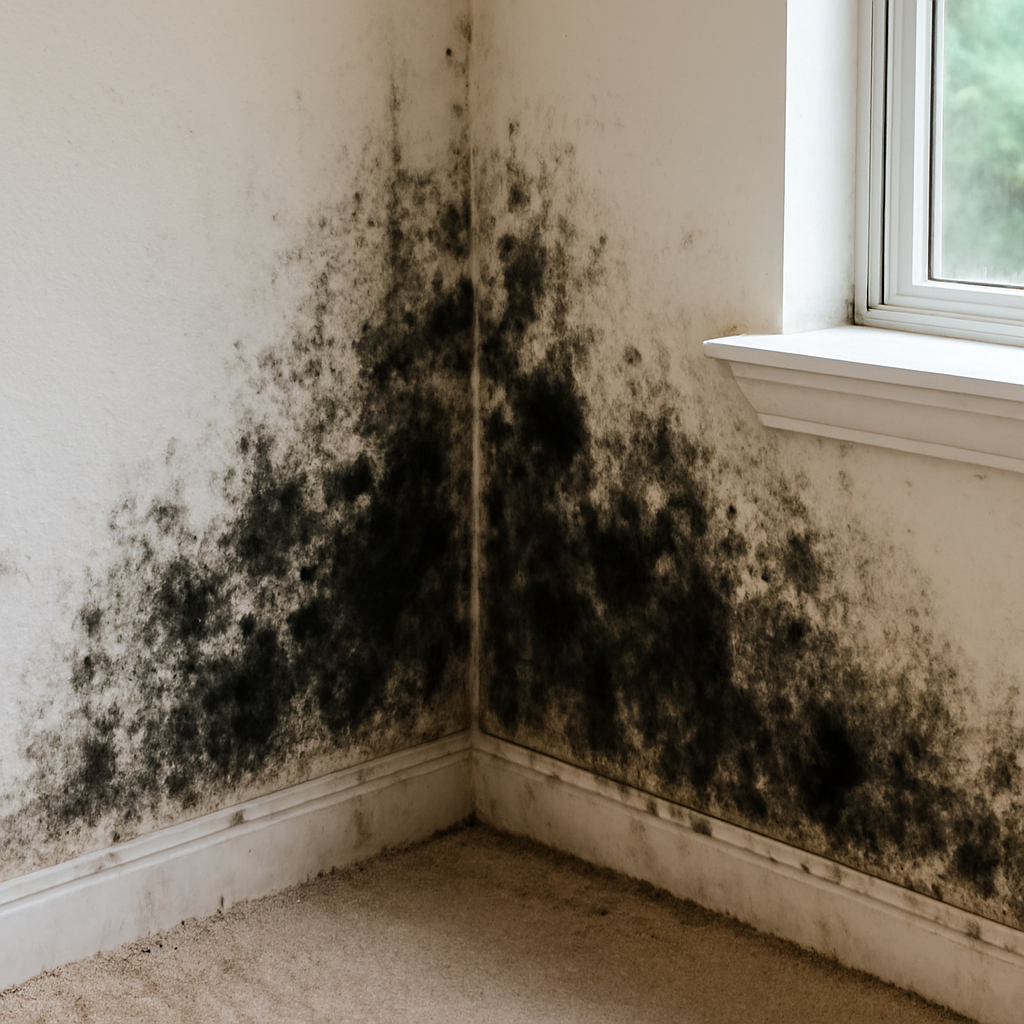
Homeowners search wall non toxic black mold after they spot dark growth on a painted wall and a search result told them it might not be the dangerous species. The honest framing is that non-toxic is the wrong word — many residential mold species produce mycotoxins under certain conditions, and any visible indoor mold is an indoor air quality issue regardless of species label. This guide summarizes EPA and CDC guidance current as of 2026 and walks through which species typically appear on residential walls, what response is appropriate, and where the toxic-versus-non-toxic distinction actually matters. Consult your physician for symptoms and a certified professional for testing decisions.
Part of our Black Mold & Your Health guide — start there for the full picture →
Is this mold, asbestos, or water damage? Get a free instant screen
Upload a clear photo of the suspect area. You'll get an instant AI screening opinion and what to do next. This is screening guidance, not a professional determination.
Screening guidance only. AI can be wrong. Confirm asbestos, mold type, or lead with lab testing or a licensed professional before acting.
Is non-toxic black mold a real category?
Not really. The phrase emerged because the public conversation around mold often focuses on Stachybotrys chartarum, the species commonly labeled toxic black mold. By contrast, the more common indoor genera — Cladosporium, Aspergillus, Penicillium, Alternaria — sometimes get described as non-toxic. The Centers for Disease Control and Prevention is more cautious in its framing. All molds can cause respiratory irritation, allergic reactions, and asthma exacerbation in sensitive individuals. Some species under some conditions produce mycotoxins. The simple toxic-non-toxic binary does not match what indoor microbiology actually shows.
That said, when people talk about non-toxic black mold on walls, they usually mean dark-colored Cladosporium or similar genera that appear in residential settings far more often than Stachybotrys. Recognizing the difference helps homeowners decide what level of response a dark patch deserves.
What kind of black mold typically grows on walls?
Cladosporium is the most common indoor mold in the United States and a frequent wall colonizer. It can appear olive-green to dark brown to black, and it tolerates a wide range of moisture conditions. Painted walls in poorly ventilated rooms, walls behind furniture against cold exterior surfaces, walls near windows where condensation collects — all are common Cladosporium habitats.
Aspergillus and Penicillium also appear on walls, often as powdery patches that can darken with age. Stachybotrys is less common on painted walls because painted surfaces are not ideal cellulose substrates. It tends to appear on the back side of drywall, on the paper face inside cavities, or where chronic moisture has degraded a painted surface enough to expose the paper underneath.
Where is each species most likely?
Painted wall surfaces — Cladosporium most likely. Behind drywall after a slow leak — Stachybotrys more likely. Inside HVAC return cavities — Aspergillus or Penicillium typical. On vinyl wallpaper backing — Stachybotrys possible if chronic moisture is present. Our overview of the difference between mold and black mold details the typical species-to-location patterns.
Does the non-toxic label change the cleanup approach?
The EPA’s residential mold guidance does not split cleanup by species. The defining variables are area size and surface porosity. Patches under about 10 square feet on hard or semi-porous surfaces can be cleaned by a homeowner using detergent and water, with N95 mask, gloves, and goggles. Larger patches, growth tied to structural moisture, repeated regrowth, or growth on structural framing call for professional remediation.
That said, when Stachybotrys is specifically suspected, some assessors prefer containment for any visible growth regardless of size because of spore dispersal during cleanup. The difference is procedural, not chemical. Detergent removes biomass on both Cladosporium and Stachybotrys. The question is whether plastic-sheeted containment is set up before scrubbing begins.
Are health risks really lower from non-toxic species?
The Centers for Disease Control and Prevention is consistent in framing. Mold of any species can cause respiratory irritation, allergic reactions, asthma exacerbation, and infections in immunocompromised individuals. Cladosporium, Aspergillus, and Penicillium are all common allergens. Some Aspergillus species can cause invasive infections in immunocompromised people. The non-toxic label oversimplifies a more graduated risk picture.
For sensitive populations — children with asthma, people with weakened immune systems, individuals with chronic respiratory conditions — any indoor mold is worth removing promptly. For otherwise healthy adults, the immediate health risk from a small Cladosporium patch is typically lower than from a large Stachybotrys colony, but the response — find the moisture source, clean the visible growth, dry the area — is the same.
How can a homeowner tell wall mold species apart?
The honest answer is that you cannot reliably tell species apart by sight. The Environmental Protection Agency states that visual identification cannot determine a mold species. Color, texture, and growth pattern provide probability cues, but lab analysis of a surface or air sample is the only definitive way to confirm. For most residential wall growth, that level of confirmation is not necessary — cleanup is the same response.
If species identification is needed — for real estate documentation, occupant health concerns, or post-remediation clearance — a certified mold assessor will take targeted samples. Tape lifts on visible growth, swabs in suspect areas, and air samples paired with outdoor reference samples taken the same day. The outdoor baseline is what makes an indoor air sample interpretable.
What moisture conditions support wall mold?
The EPA lists the most common residential moisture sources as plumbing leaks, condensation on cold surfaces, roof leaks, ground water intrusion, and chronically high indoor humidity above about 60 percent relative humidity. Walls accumulate moisture in several specific patterns. Cold exterior walls behind furniture collect condensation when warm humid air meets the cool surface. North-facing walls in older homes with poor insulation experience more sustained moisture in winter. Walls adjacent to bathrooms and laundry rooms receive humid air migration through gaps.
In Colorado, swamp coolers push interior humidity into the danger zone during summer, and finished basements with foundation seepage face wall moisture from below. Front Range homeowners often discover Cladosporium on north-facing exterior walls behind couches and bookshelves where condensation has collected unnoticed.
What should homeowners do about wall mold?
Identify and correct the moisture source first. Document the patch with photographs. Decide whether the patch is in DIY territory or warrants professional assessment. EPA guidance permits homeowner cleanup for patches under about 10 square feet on hard or semi-porous surfaces, using detergent, water, N95 mask, gloves, and goggles.
Bleach is the wrong tool on porous surfaces — it bleaches color without killing embedded hyphae, and the chlorine evaporates before reaching deeper layers. Detergent and mechanical scrubbing remove biomass more effectively. After cleaning, the surface should dry below about 16 percent moisture content on a pin or pinless meter before painting or sealing. Our mold inspection hub covers when to bring in a professional for a wall growth scope.
What about painting over wall mold?
Painting over visible mold without removing it traps the colony, which often pushes through the new paint within months. The EPA recommends removal before any repainting. Mold-resistant primers help prevent future growth on a dried, cleaned surface but do not kill an active colony underneath. Sequence matters — remove, dry, prime, paint.
How can homeowners prevent wall mold of any species?
Prevention reduces the chance that any dark mold takes hold on a residential wall. The EPA recommends keeping indoor relative humidity below about 60 percent year-round, with ideal levels between 30 and 50 percent. Mechanical ventilation — bath fans vented to exterior, kitchen range hoods vented to exterior, balanced whole-house ventilation — removes humid air before it condenses on cold surfaces. Front Range homes with swamp coolers face specific humidity-control challenges during summer.
Building envelope improvements help too. Adding exterior insulation to north-facing walls reduces condensation potential. Sealing foundation cracks limits ground water intrusion. Replacing failed window seals prevents condensation pooling at sill plates. Each of those reduces the moisture conditions that support any wall mold species, toxic or otherwise.
How does wall mold affect indoor air quality measurements?
Active mold colonies on walls can elevate indoor spore counts above outdoor reference levels. The National Institute of Environmental Health Sciences notes that elevated indoor spore counts of common indoor genera — Cladosporium, Aspergillus, Penicillium — can affect occupants with allergies, asthma, or immune compromise. The relationship between wall mold and air quality is direct in poorly ventilated rooms and weaker in well-ventilated ones.
For occupants who suspect indoor air problems, a baseline air sample by a certified assessor — paired with outdoor reference samples taken the same day — produces interpretable data. Random homeowner air pumps without outdoor reference samples often produce numbers that cannot be evaluated in context. The outdoor baseline is what makes the indoor result meaningful.
When to call a professional
Engage a certified mold assessor when the visible patch exceeds 10 square feet, when occupants have asthma or immune compromise, when growth keeps returning after cleaning, when a real estate transaction needs documentation, or when there is suspected cavity growth behind the wall. Use the InterNACHI mold standard of practice as a vetting baseline. Prefer assessors who do not also sell remediation for the same job.
The Colorado Department of Public Health and Environment publishes general guidance on indoor air quality and on choosing qualified contractors. Wall growth in older Front Range homes often reflects insulation and ventilation issues that go beyond a single cleanup event — a comprehensive scope may include building science fixes alongside remediation.
References
- Mold cleanup in your home — U.S. Environmental Protection Agency
- Basic facts about mold and dampness — Centers for Disease Control and Prevention
- Mold inspection standards of practice — InterNACHI
- Mold and indoor air quality — National Institute of Environmental Health Sciences
Frequently asked questions
Is non-toxic black mold a real category?
The toxic-non-toxic binary oversimplifies indoor microbiology. The Centers for Disease Control and Prevention states that all molds can cause respiratory irritation, allergic reactions, and asthma exacerbation. Some species produce mycotoxins under certain conditions. Any visible indoor mold is an air quality issue.
What black mold typically grows on walls?
Cladosporium is the most common wall colonizer and can appear olive-green to dark brown to black. Aspergillus and Penicillium also appear on walls. Stachybotrys is less common on painted walls because painted surfaces are not ideal cellulose substrates, though it appears on the back of drywall after chronic moisture.
Can I paint over wall mold?
No. Painting over visible mold traps the colony, which often pushes through the new paint within months. The EPA recommends removing visible mold and drying the surface below about 16 percent moisture content before any repainting.
Should I always test wall mold before cleaning?
In most residential cases, no. The EPA and CDC recommend visible cleanup over species testing for typical patches. Testing makes sense for real estate documentation, occupant health concerns, or post-remediation clearance verification by an independent assessor.
Front Range homeowners trying to figure out what kind of wall mold they are dealing with can reach a vetted local inspector through our contact page for an independent assessor visit and sampling discussion.