Ridgid Sewer Camera: What Homeowners Need to Know
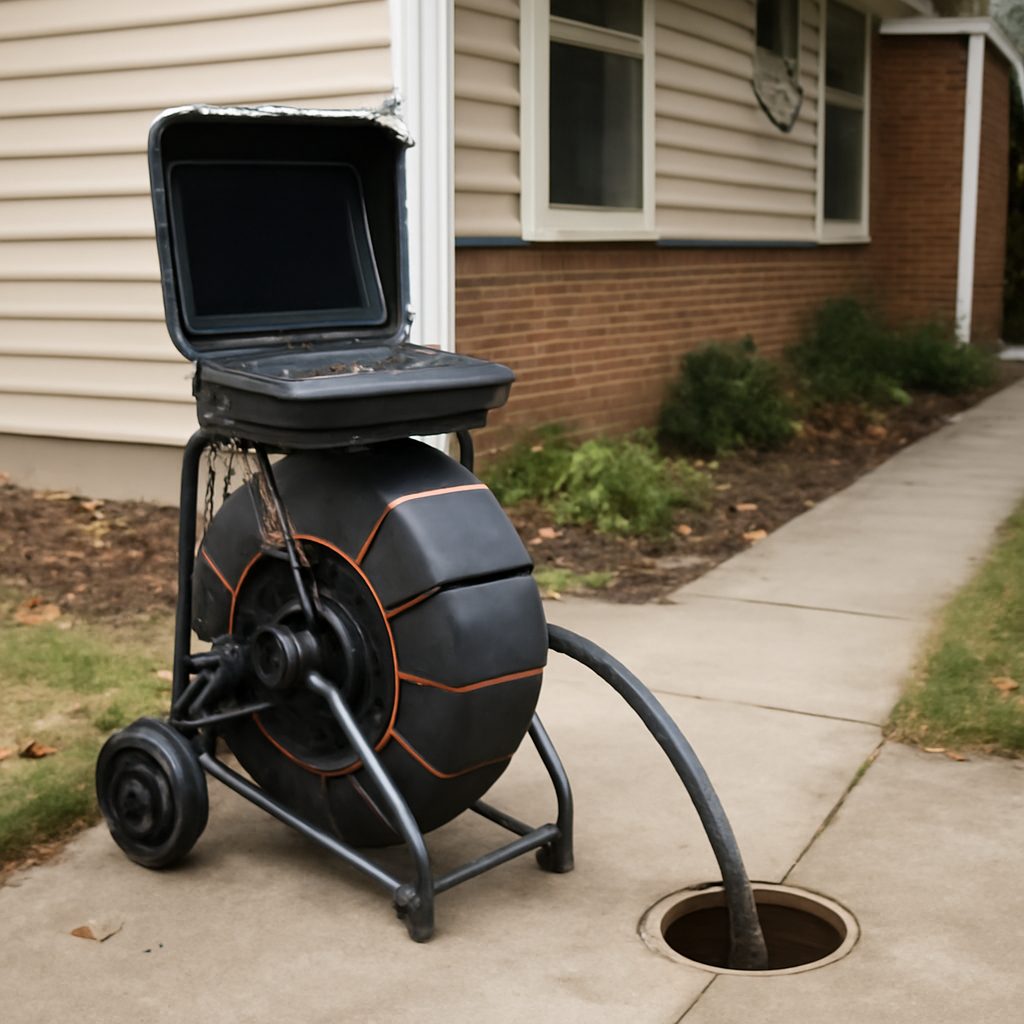
A Ridgid sewer camera is one of the most recognized tools in the drain-inspection world, carried by plumbers and inspectors across the country. Ridgid’s SeeSnake line of push cameras feeds a waterproof camera head through a pipe so the operator can see roots, cracks, blockages, and pipe condition on a monitor. For Front Range homeowners trying to understand a recurring backup, or deciding whether to buy versus rent versus hire, knowing how these cameras work and what the lineup offers clears up the choices. This guide explains the technology, the common models, what the gear costs, and when a professional with a SeeSnake earns the call instead of a DIY rental.
Part of our Home Inspection Tools guide — start there for the full picture →
What Is a Ridgid Sewer Camera?
Ridgid is a long-established tool brand, and its SeeSnake family is the camera system most professionals associate with pipe inspection. A SeeSnake consists of a durable camera head, a coiled push cable on a reel, and a monitor that displays the live video. The operator feeds the cable into a drain or cleanout, and the camera sends back a real-time picture of the pipe interior, lit by LEDs around the camera lens.
These systems range from compact units built for smaller drain lines up to heavy-duty rigs designed for long municipal-grade sewer laterals. Many include an onboard distance counter so the operator knows how far down the line a feature appears, and higher-end versions add a sonde transmitter that pairs with a locator to mark the camera’s position from above ground. The technology is the professional-grade version of what is covered more generally in our guides to the pipe inspection camera and the sewer camera with locator.
How Does a Ridgid SeeSnake Work?
The system works on the same principle as any push-cable inspection camera, refined for durability and image quality. The camera head sits at the end of a semi-rigid push rod wound onto a reel. The rod is stiff enough to push through bends but flexible enough to follow the pipe’s path. As the operator feeds it in, the self-leveling camera (on models that have that feature) keeps the image upright, and the LED ring lights the dark interior.
Video travels back up the cable to the monitor, where the operator watches and often records the run. Distance counters track footage fed into the line, tying any finding to a location. On models with a sonde, a separate handheld locator picks up the transmitter’s signal through the ground, letting a technician mark on the surface exactly where, and how deep, a defect sits. That locating capability is what makes the professional rigs so valuable for planning a dig or a spot repair, a step a basic rental rarely matches.
Self-Leveling and Image Quality
Higher-end SeeSnake heads self-level, keeping the picture oriented correctly even as the cable twists, which makes interpreting the footage far easier. Better optics and brighter LEDs also matter in a dark, wet pipe, where a poor image can hide a hairline crack or a thin mat of roots. These quality differences explain part of the price gap between a professional system and a budget consumer camera, and they affect how confidently a finding can be diagnosed.
What Does a Ridgid Sewer Camera Cost?
Professional SeeSnake systems are a serious investment, often running well into the thousands of dollars for a complete rig with monitor, reel, and locating capability. That price reflects the durability and features plumbers need for daily commercial use; it rarely makes sense for a one-time homeowner concern. Ridgid and other brands also offer smaller, lower-cost inspection cameras aimed at lighter-duty work, which sit far below the full sewer-grade systems in price.
For a homeowner with a single question about a sewer line, the economics usually favor renting a camera for a day or hiring a professional rather than buying a SeeSnake. A rental answers a curiosity-level question cheaply, while a professional inspection delivers an expert interpretation and a documented report. Our guide to drain camera inspection walks through those rent-versus-hire trade-offs in more detail. Buying a professional rig is generally worthwhile only for plumbers, property managers with many units, or serious DIYers who expect to use it repeatedly.
What a Sewer Camera Reveals
Whatever the brand, a sewer camera shows the same family of problems. Tree-root intrusion appears as fine strands invading a joint, sometimes filling much of the pipe; it is the most common Front Range finding thanks to thirsty cottonwoods, elms, and silver maples. Cracks and collapses show as breaks or gaps in the pipe wall. Bellies, low spots where waste and water pool, appear as standing water the camera must push through. Grease, scale, and mineral buildup show as a narrowed, coated interior.
The camera also reveals the pipe material, which guides any repair decision. Old clay laterals crack at the joints, cast iron corrodes and scales, and the mid-century product Orangeburg deforms and collapses with age. A skilled operator narrates these findings and, crucially, distinguishes a minor, monitorable issue from a structural failure that demands prompt repair. That interpretive judgment is where professional experience pays off; the picture on the screen is only as useful as the reading of it.
Ridgid Camera Versus Hiring a Professional
The decision tree is straightforward. For a homeowner who wants an objective diagnosis tied to a real-estate transaction, an insurance claim, or a major repair decision, hiring a professional, who likely runs a SeeSnake or comparable system, makes the most sense. The pro brings the locating equipment, the trained eye, and a documented report that carries weight in negotiations.
For a hands-on homeowner who simply wants to look at an accessible cleanout, a rental of a basic camera is the economical route. Buying a full Ridgid system is rarely justified for a single household. The middle path many people take is to rent or do a quick look first, then bring in a licensed plumber if anything beyond a simple clog appears. Understanding where this gear fits in the larger picture is part of our overview of home inspection tools, which places the sewer camera among the other diagnostics a thorough evaluation may use.
The SeeSnake Lineup at a Glance
Ridgid’s SeeSnake family spans a range of configurations built for different jobs, and understanding the tiers clarifies what the brand offers. At the lighter end sit compact systems designed for smaller-diameter lines such as kitchen, bathroom, and laundry drains; these use a slimmer cable and a smaller camera head that can navigate tight bends in two- and three-inch pipe. They are not meant for long sewer laterals, but they excel at the fixture-drain work that makes up much of a plumber’s daily routine.
Mid-range and heavy-duty SeeSnake systems carry longer, stiffer cables and larger, often self-leveling camera heads suited to four-inch and larger sewer mains. These are the rigs used to scope a full lateral from the house to the street. Ridgid pairs cameras with separate monitor units, some recording to USB or pairing with a tablet, and with locating equipment that reads the camera head’s sonde from above ground. A homeowner does not need to memorize model numbers; the useful takeaway is that the right rig for a job is defined by cable length, head size, and whether locating is included. A short fixture camera and a long sewer rig are different tools even though both wear the SeeSnake name, and a provider scoping a main line should be using the longer, locating-capable equipment rather than a fixture camera that cannot reach the street.
Maintenance and Why Professional Rigs Hold Up
Part of what justifies the price of a professional SeeSnake is durability, and that durability depends on care. The camera head endures constant abrasion against pipe walls, grit, and standing wastewater, so the lens and the LED ring are sealed against water intrusion and built to take repeated impacts. After each use, operators clean the head and cable to remove grease and debris that would otherwise degrade the optics or work into the cable reel. A camera head that is left caked in sludge soon delivers a murky image that can hide a hairline crack or a thin root mat.
The push cable is the other wear point. It must stay flexible enough to follow bends yet stiff enough to advance through a long line, and kinking it, by forcing the head past an obstruction, can permanently damage the rod and ruin the picture. Professionals advance the cable smoothly and back off when they meet resistance, which preserves both the equipment and the quality of the inspection. This is one practical reason a hands-on homeowner with a rental can struggle: without the habit of gentle, patient feeding, a borrowed camera is easier to jam and harder to steer than the daily-use rig a professional handles with practiced ease. The result is that a pro often gets a cleaner, more complete run from the same access point than a first-time operator would.
Front Range Considerations
Colorado’s older neighborhoods, in Denver, Englewood, Littleton, and similar communities, still have clay and cast-iron laterals decades past their prime, making root intrusion and joint failure common findings. The region’s expansive clay soils shift with moisture, stressing rigid pipe and opening joints over time, and freeze-thaw cycles at altitude add to the strain. A camera run on an older Front Range home frequently turns up roots or a cracked joint that explains a recurring backup.
Newer developments in Douglas, Elbert, and parts of El Paso County more often have PVC, which holds up better but can still show bellies from improper bedding during construction. Because of these regional patterns, a sewer-line camera inspection, whether run on a Ridgid SeeSnake by a pro or on a rental by a homeowner, is a popular and worthwhile step before buying an older home or when drains keep backing up. Seeing inside the pipe beats guessing, and the recorded footage gives a baseline to compare against in future years.
What the Locating Feature Adds
One capability that sets professional SeeSnake systems apart from basic rentals is locating, and it is worth understanding because it changes what a homeowner can do with the findings. The camera head on a locating-capable system contains a sonde, a small transmitter that broadcasts a signal. A separate handheld locator, used above ground by a second person or the same operator, picks up that signal and pinpoints the camera’s position on the surface, along with an estimate of its depth. When the camera reaches a defect, the operator marks that exact spot on the lawn, driveway, or floor.
This matters enormously for repairs. Without locating, a crew facing a cracked lateral might excavate a long, exploratory trench to find the defect, a costly and disruptive guess. With a marked location and depth, the dig can target the precise spot, dramatically reducing excavation and cost. For trenchless repairs like spot liners, knowing the exact location is essential to position the patch correctly. A homeowner whose inspection includes locating walks away not just knowing a problem exists but knowing where it is and how deep, which transforms a vague worry into an actionable, biddable repair. This is a large part of why hiring a professional with a locating-equipped SeeSnake often delivers more value than a basic rental that shows the problem but cannot tell you where in the yard to dig. The footage proves the defect; the locating tells the excavator exactly where to go.
For a homeowner weighing the SeeSnake name against cheaper cameras, the locating capability is often the deciding factor in whether a DIY look is enough. A budget rental may show that roots or a crack exist, but without a sonde and locator it cannot tell you where in the yard the problem sits or how deep to dig. That gap is exactly why a serious finding usually still routes back to a professional. The brand recognition of Ridgid is less important than the feature set: a long enough cable to reach the street, a clear self-leveling image, a reliable distance counter, and locating. A homeowner who understands those four capabilities can judge any provider’s equipment, regardless of the badge on it, and know whether the rig is suited to the job at hand.
References
- How sewer and septic systems work — U.S. EPA
- Home inspection standards of practice — InterNACHI
- Inspection standards and resources — ASHI
Frequently asked questions
How much does a Ridgid sewer camera cost?
A full professional SeeSnake system with monitor, reel, and locating capability often runs well into the thousands of dollars. Smaller light-duty inspection cameras cost far less. For a one-time homeowner concern, renting a camera or hiring a pro usually makes more financial sense than buying.
What does a Ridgid sewer camera show?
It reveals root intrusion, cracks, collapses, bellies where water pools, grease and scale buildup, and the pipe material itself. A skilled operator distinguishes a minor, monitorable issue from a structural failure that needs prompt repair, which is where professional experience matters.
Should I buy a Ridgid camera or hire a pro?
Buying a full system rarely makes sense for a single household. Hire a professional for a diagnosis tied to a sale, insurance claim, or major repair, since pros bring locating gear and a documented report. Rent a basic camera if you just want to look at an accessible cleanout.