NIR Camera: What Homeowners Need to Know
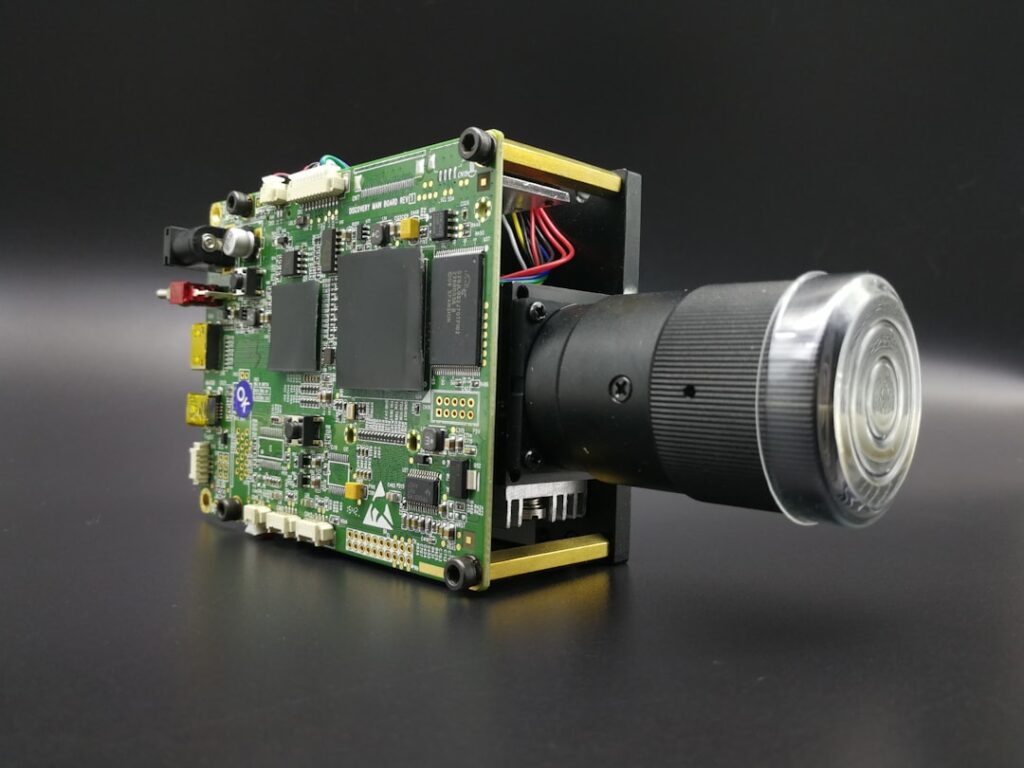
An NIR camera captures near-infrared light — a band of the spectrum just beyond what the human eye can see, but still close to visible light. It is easy to confuse with a thermal camera, yet the two work on entirely different principles: an NIR camera senses reflected near-infrared light, while a thermal camera senses emitted heat. That difference shapes everything about what each tool can do. This guide explains what near-infrared imaging is, how it differs from thermal imaging, where it is used, and what it costs, drawing on standards-body and energy-agency guidance rather than vendor claims.
Part of our Home Inspection Tools guide — start there for the full picture →
What is an NIR camera?
Near-infrared (NIR) refers to the part of the electromagnetic spectrum roughly between visible red light and the longer-wavelength infrared that thermal cameras use — generally cited around 700 to 1,400 nanometers. An NIR camera detects light in this band the same way a regular camera detects visible light: it captures radiation reflected off surfaces. Because near-infrared behaves much like visible light, an NIR camera produces image-like pictures of scenes, often in grayscale or false color, showing how materials reflect or absorb near-infrared.
This is fundamentally different from thermal imaging. A thermal camera builds its picture from heat that objects emit on their own, requiring no external light. An NIR camera needs near-infrared light to be present or supplied — which is why many NIR systems pair with NIR illuminators (the technology behind security cameras that “see in the dark” with invisible infrared LEDs). Understanding that an NIR camera images reflected light, not heat, prevents the most common misconception about the tool, and it places NIR in a different category from the thermal devices in our home inspection tools hub.
A helpful way to anchor the difference is the security camera most people have encountered. A nighttime security camera that produces a clear grayscale image in a dark yard is using near-infrared: a ring of invisible infrared LEDs floods the scene with NIR light, and the camera captures the reflection, just as a normal camera captures reflected visible light during the day. Turn off those LEDs in true darkness and the NIR camera goes blind, because it has no light to work with. A thermal camera in the same dark yard would still show every warm object glowing, because it never needed light in the first place. That contrast captures the whole distinction in one familiar example.
The wavelengths involved explain the behavior. Near-infrared sits just past visible red, close enough to visible light that it reflects, transmits, and absorbs in similar ways and can use sensors related to ordinary camera sensors. The long-wave infrared a thermal camera reads is much farther out, emitted as heat by objects at everyday temperatures, and requires a specialized detector. The two bands are both called “infrared,” which is the root of the confusion, but they carry completely different information.
How NIR cameras differ from thermal cameras
The distinction is worth spelling out because the two are constantly conflated:
- Source of the image — NIR images reflected near-infrared light; thermal images emitted heat (long-wave infrared).
- Light requirement — NIR usually needs ambient or supplied near-infrared illumination; thermal works in total darkness with no light at all.
- What it reveals — NIR shows reflectance and material differences invisible to the eye; thermal shows surface temperature differences.
- Detector — NIR sensors are closer to silicon-based camera sensors (sometimes specialized like InGaAs); thermal uses a microbolometer tuned to far longer wavelengths.
- Typical cost — basic NIR capability can be inexpensive; calibrated thermal cameras are generally pricier for comparable build quality.
For home inspection specifically, the thermal camera is the relevant tool — it is what finds moisture, insulation gaps, and electrical hot spots. NIR imaging has its own uses but is not the standard building-diagnostic instrument. Homeowners researching infrared options for inspection are usually better served by the thermal devices covered in our handheld thermal imaging camera guide.
The cost difference also follows from the detector. Because NIR can often use silicon-based sensors close to those in ordinary cameras, basic NIR capability can be inexpensive, which is why night-vision security cameras are cheap and ubiquitous. The longer-wave portion of NIR used in some scientific work requires InGaAs sensors that are expensive to manufacture, so specialized NIR instruments cost far more. Thermal cameras occupy their own band of pricing dictated by the microbolometer. None of these price points map onto one another neatly, which is one more reason to be precise about which kind of “infrared camera” a given product actually is before buying.
Where NIR cameras are used
Near-infrared imaging shows up across a wide set of fields, which explains why the term appears in so many contexts:
- Security and surveillance — night-vision cameras using invisible NIR illuminators to see in darkness.
- Agriculture — assessing plant health, since healthy vegetation reflects near-infrared strongly (the basis of NDVI vegetation indices).
- Art and document authentication — revealing underdrawings, alterations, and hidden text by how materials reflect NIR.
- Machine vision and sorting — distinguishing materials that look identical in visible light.
- Medical and scientific imaging — certain tissue and chemical analyses.
- Astronomy and remote sensing — capturing detail outside the visible band.
The home-inspection overlap is limited. NIR-based security cameras are the most likely device a homeowner encounters, and they are about seeing in the dark, not diagnosing the building envelope. For energy and moisture work, the Department of Energy and inspection-standards bodies point to thermal (long-wave infrared) scanning, not NIR.
The agricultural use is a good illustration of what NIR uniquely offers, because it has no thermal equivalent. Healthy, actively photosynthesizing vegetation reflects near-infrared light strongly, while stressed or dying plants reflect less. By comparing NIR reflectance to visible-light reflectance, growers compute vegetation indices that reveal crop health invisible to the eye and unrelated to temperature. A thermal camera cannot do this; it would only show how warm the field is. That is the kind of reflectance-based information NIR is built to capture, and it is fundamentally different from the heat-based picture an inspection camera provides.
Art authentication works on the same reflectance principle. Different pigments, inks, and underdrawing materials reflect and absorb near-infrared differently from how they handle visible light, so an NIR image can reveal a sketch beneath a painting or an alteration to a document that the eye cannot see. Again, this is about how materials interact with near-infrared light, not about their temperature, reinforcing that NIR answers a completely different question than thermal imaging.
What NIR cameras cost
Pricing spans an enormous range because “NIR camera” covers everything from a cheap security camera to a laboratory instrument. Consumer NIR-enabled security cameras can cost well under $100. Modified or NIR-capable photography cameras and modules run from the low hundreds. Specialized scientific NIR cameras using InGaAs sensors for the longer near-infrared wavelengths cost thousands, because those sensors are expensive to manufacture.
This wide spread reflects the fact that the underlying capability varies enormously. A homeowner is unlikely to need a true scientific NIR camera; the inexpensive end of the range covers the realistic consumer uses. By contrast, a useful thermal inspection camera occupies its own price band — smartphone attachments from around $200, standalone units from a few hundred dollars up — because it relies on a different and costlier detector technology.
Limitations and the bottom line for homeowners
The defining limitation of an NIR camera, from a home-diagnostic standpoint, is that it does not measure temperature. It cannot find a cool damp patch behind drywall or a hot electrical connection the way a thermal camera does, because it images reflected light rather than emitted heat. It also generally needs near-infrared illumination to work, so it is not a passive heat-sensing device. For the moisture, insulation, and electrical screening that define a building inspection, an NIR camera is simply the wrong instrument.
Where NIR earns its keep is in tasks built around reflectance: night vision, vegetation assessment, material discrimination, and authentication. If a homeowner’s goal is to inspect a house, the practical takeaway is to choose a thermal camera and treat NIR as a separate technology for separate jobs. Care for any NIR device follows normal camera practice — keep the lens clean, protect the sensor, and for illuminated systems ensure the NIR light source functions. Knowing which tool matches which job is the single most useful thing to take away: thermal for buildings, NIR for reflectance-based applications.
Could NIR ever help with a home?
It is fair to ask whether near-infrared has any role around a house at all, and the honest answer is a narrow one. The most common NIR device a homeowner owns is a night-vision security camera, which is genuinely useful for monitoring a property after dark — but that is surveillance, not building diagnostics. Some specialized research applications use NIR to study moisture content in materials, but these are laboratory techniques, not the kind of point-and-scan capability a homeowner could use to check a wall. For the everyday tasks that define home inspection — finding hidden moisture, missing insulation, drafts, and electrical hot spots — NIR offers nothing that thermal imaging does not do better.
The reason comes back to the physics. Those building problems reveal themselves through temperature differences, and only a thermal camera reads temperature. An NIR camera reads reflected near-infrared light, which does not reliably correspond to a wet wall or a cool insulation gap. So while NIR is a powerful technology in its own domains, it is simply aimed at a different kind of question than the one a homeowner inspecting a house is asking.
Choosing the right infrared tool
The clearest guidance is to start from the job and work backward to the technology. Want to see intruders in a dark yard? An NIR security camera is the right and inexpensive choice. Want to assess crop health, authenticate a document, or sort materials that look alike? NIR again. Want to find moisture, insulation gaps, or electrical hot spots in a building? A thermal camera, full stop. When a product is marketed simply as an “infrared camera,” ask which band it actually images before buying, because the word covers two technologies that answer entirely different questions. Getting that one distinction right saves money and prevents the disappointment of buying a tool that cannot do what you needed.
The confusion between NIR and thermal is understandable, since both are invisible to the eye and both get marketed with the word “infrared,” but the consequences of mixing them up are real. A buyer who purchases an NIR security camera hoping to find a hidden leak will see a perfectly clear nighttime picture of a wall that tells them nothing about moisture. A buyer who purchases a thermal camera expecting to read documents or assess plant health will be equally disappointed. Each technology is excellent at its own task and useless at the other’s. For the homeowner whose question is about a building, the answer is consistently the same: reach for a thermal camera, confirm its findings with a moisture meter or a closer look, and leave near-infrared to the security, agricultural, and authentication work it was built for.
References
- ENERGY STAR: Seal and Insulate — U.S. Environmental Protection Agency (ENERGY STAR)
- Infrared Thermal Imaging in Home Inspections — InterNACHI
- Standard of Practice — American Society of Home Inspectors
Frequently asked questions
What is the difference between an NIR camera and a thermal camera?
An NIR camera images reflected near-infrared light and usually needs that light present, similar to a regular camera. A thermal camera images emitted heat and works in total darkness. NIR shows reflectance differences; thermal shows surface temperature differences.
Can I use an NIR camera for home inspection?
Not effectively. An NIR camera does not measure temperature, so it cannot find damp patches or electrical hot spots the way a thermal camera does. For moisture, insulation, and electrical screening, a thermal (long-wave infrared) camera is the correct tool.
Where are NIR cameras used?
In night-vision security cameras, agriculture (assessing plant health), art and document authentication, machine vision and material sorting, and certain scientific and medical imaging. These applications rely on how materials reflect near-infrared light.
How much does an NIR camera cost?
It ranges widely. Consumer NIR security cameras can cost under $100, NIR-capable photography modules run into the low hundreds, and specialized scientific NIR cameras with InGaAs sensors cost thousands, reflecting very different capabilities.