Mold Removal Contractors: Licensing and Regulatory Requirements
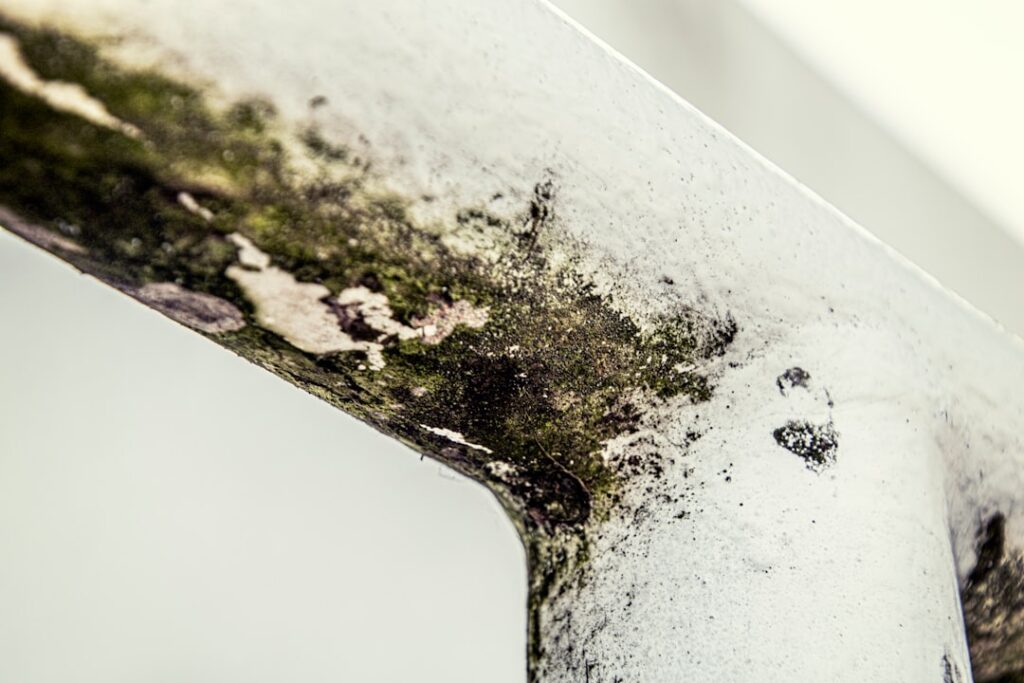
Mold removal contractor regulation in the United States is uneven, fragmented, and frequently misunderstood by homeowners. Some states license mold remediators directly. Some require general contractor licensing for any structural demolition above defined dollar thresholds. Some require IICRC certification for commercial work but not residential. Colorado falls into the lightly regulated category for residential work, but more requirements activate for commercial buildings or specific industries. This guide walks Front Range homeowners through the state-by-state regulatory landscape and the specific Colorado picture, so you can verify a contractor’s standing before signing. The information here summarizes regulatory frameworks current as of 2026; consult an attorney for binding legal interpretation of your specific situation.
Part of our Mold Removal & Remediation guide — start there for the full picture →
Is this mold, asbestos, or water damage? Get a free instant screen
Upload a clear photo of the suspect area. You'll get an instant AI screening opinion and what to do next. This is screening guidance, not a professional determination.
Screening guidance only. AI can be wrong. Confirm asbestos, mold type, or lead with lab testing or a licensed professional before acting.
What licensing does a mold removal contractor need?
There is no federal license for mold remediation. Five states (Florida, Louisiana, Maryland, New York, Texas) license mold remediators directly at the state level. A handful more (Connecticut, New Hampshire, others) license related trades. Most states, including Colorado, do not have a mold-specific contractor license at the state level. Local jurisdictions sometimes add requirements; check your municipality.
In the absence of a state mold license, the relevant credentials are IICRC certification (voluntary trade-association credential), general contractor licensing (required in some states for any structural demolition), and business licensing (required in nearly all jurisdictions for any company doing commerce). Colorado contractors performing residential mold work are typically operating under a combination of business registration, voluntary IICRC certification, and general liability insurance, with no state-level mold credential.
Colorado specifics
Colorado does not require a state-level mold remediation license for residential work. Residential mold remediation contractors must register their business with the Colorado Secretary of State and carry appropriate insurance, but no state board credentials remediators directly. Local municipalities may add requirements: Denver, for example, requires general contractor registration for any structural work, which includes mold remediation that involves demolition.
For commercial work, Colorado’s regulatory picture is more involved. The Colorado Department of Public Health and Environment (CDPHE) regulates asbestos abatement, and any mold remediation that involves disturbing potentially asbestos-containing materials in a commercial building falls under those rules. IICRC certification is not legally required for commercial mold work in Colorado, but property managers and commercial insurers frequently require it as a contracting condition.
Front Range county and municipal variation
Within the Front Range, contractor licensing requirements vary by county and municipality. Denver, Aurora, Lakewood, and Colorado Springs have municipal contractor registration programs that apply to any contractor doing work in their jurisdiction. Boulder, Longmont, and Fort Collins have separate programs. A contractor based in Denver doing work in Aurora needs to be registered in both. Ask your contractor which municipality your home is in and whether they hold the required local registration. Comparing remediation companies by jurisdiction can save trouble when contractors operate across county lines.
What licensing actually verifies
A state license, where it exists, verifies that the contractor passed an exam covering the subject matter, carries minimum required insurance, and is subject to a complaint and disciplinary process administered by a state board. The license itself does not guarantee quality of work; it establishes a floor.
Business registration verifies that the entity exists legally and has filed required paperwork. It does not verify competence. Insurance verifies that financial recovery is available if work fails, but only within policy limits and only for covered perils. IICRC certification verifies training but not field experience or business stability. Each layer of verification covers a different gap, and none individually is sufficient.
Homeowners often assume “licensed and insured” on marketing material covers the relevant verification. Read the specifics. A contractor licensed as a general contractor in Colorado is not necessarily certified for mold-specific work. A contractor carrying $1 million general liability may have mold excluded by policy endorsement, leaving you uncovered for the actual work being done. The verification you want is contractor’s pollution liability or a mold-specific endorsement on the CGL, plus the IICRC AMRT credential for the crew supervisor.
The five mold-licensing states
Florida, Louisiana, Maryland, New York, and Texas license mold remediators directly. The programs differ in detail. Florida requires either a state-issued mold assessor license (for inspection) or a mold remediator license (for the physical work), with separate exams, fees, and insurance requirements for each. Texas operates under the Texas Department of Licensing and Regulation with a Mold Assessment Consultant credential and a Mold Remediation Contractor credential.
For homeowners in these states, the verification process is straightforward: check the state board’s public registry, confirm the license is active, and check for any disciplinary actions. For homeowners in Colorado and most other states, the equivalent verification is harder because there is no state board. Falling back to IICRC, business registration, and insurance verification is the practical alternative.
General contractor requirements in Colorado
Colorado does not have a state-level general contractor license. Licensing is administered at the municipal level. Denver, for example, issues Class A through Class D contractor licenses by project value and scope. Mold remediation that involves structural demolition typically falls under a Class C or D contractor license in Denver, depending on dollar amount. Other municipalities have similar tiered structures.
The practical implication is that homeowners should ask their remediator about the contractor license held in the specific municipality of the property. A remediator licensed in Denver but not in Boulder cannot legally perform structural demolition in a Boulder property. The fix is either to choose a contractor licensed in your municipality or to confirm the remediator can subcontract the structural work to a properly licensed local contractor.
Verifying insurance properly
Standard commercial general liability policies exclude mold and other pollutants by default. A mold contractor working only under a standard CGL is uninsured for the actual work they are performing. The verification you need is either a contractor’s pollution liability (CPL) policy or a CGL with a mold endorsement explicitly buying back the pollution exclusion for mold.
Ask for a certificate of insurance (COI) naming your address as an additional insured for the project duration. Read the COI for policy types, limits, and endorsements. Call the issuing agent listed on the COI to verify the certificate is current. Counterfeit COIs are not unheard of in lightly regulated trades; the agent-call verification takes 5 minutes and catches the rare fraud. Workers compensation coverage is also relevant: if a worker is injured on your property and the contractor lacks workers comp, you may face personal liability under premises law. Integrating insurance verification into your remediation hiring process is a standard part of professional vetting.
What to do when the contractor is unlicensed
Many competent mold remediators in Colorado operate without state-level credentials because no state-level mold credentials exist. This is normal. The fallback verification is IICRC AMRT for the supervisor, registered business entity with the Colorado SOS, appropriate insurance with mold endorsement, and verifiable references on comparable jobs in the past 12 months.
An “unlicensed” contractor in this sense is not the same as a fly-by-night operation. The actual flags are absence of business registration, refusal to provide a COI, no verifiable IICRC certification, and a phone number that is not associated with a business. Any one of these is reason to look elsewhere. All four together is a clear pass.
Documentation to demand at contract signing
A complete contractor file before signing should contain: Colorado SOS registration printout, municipality contractor license if applicable, COI with mold endorsement or CPL policy, IICRC AMRT certification verification screenshot, three reference letters or contact details on comparable recent jobs, and the written work plan referencing IICRC S520. The package takes the contractor 10 minutes to assemble if everything is in order. A contractor who balks at producing this package before signing is signaling that something is not in order.
Bonding requirements where they exist
Some jurisdictions and some specific job types require contractors to be bonded in addition to insured. A bond is a guarantee posted with the state or municipality that pays out to consumers if the contractor fails to perform or violates regulations. Bonds are most common for general contractors and home improvement contractors at the state level. Mold remediation specifically rarely requires bonding, but a contractor who carries a general home improvement bond brings that backstop to all the work they perform.
Colorado does not require statewide bonding for residential mold remediation. Some municipalities (notably Denver) require bonding for general contractors above certain dollar thresholds, and those bonds apply to remediation work performed under the contractor’s license. Confirming bond status takes about 30 seconds: ask for the bond number and confirm with the issuing surety. Bonded contractors are not necessarily higher quality, but the bond provides a defined claim path if work goes wrong.
Subcontracted work and licensing chain
Many mold remediation firms subcontract specialty work like HVAC duct cleaning, asbestos abatement on legacy materials, or major reconstruction. Each subcontractor needs to be appropriately licensed and insured for the work they perform. The prime contractor is generally responsible for verifying their subs, but homeowners benefit from auditing the subcontractor chain themselves on larger jobs.
Ask the prime contractor: who will perform any HVAC duct cleaning required, and what is their NADCA certification number? Who will handle any asbestos work, and what is their state asbestos abatement certification? Who will perform the reconstruction, and what is their general contractor license? Each name should resolve to a verifiable credential. If the prime contractor cannot answer these questions confidently, they are operating without firm sub relationships and the work quality will be inconsistent.
The licensing chain matters because asbestos work specifically has its own regulatory framework. In Colorado, CDPHE certifies asbestos abatement contractors and any disturbance of asbestos-containing material in a regulated quantity must be performed by a certified contractor. A mold remediator who plows through pre-1978 demolition without testing for asbestos creates a regulatory exposure for both themselves and the homeowner.
Document retention and records
Professional contractors retain project documentation for years after project completion. Industry practice and some state regulations require retention of safety records, project files, and customer records for 3 to 10 years depending on jurisdiction and document type. A contractor who can produce records of a job they did three years ago is operating with professional record-keeping discipline; a contractor who cannot is operating with thin records.
For Front Range homeowners, this matters when issues arise long after the original job. A warranty claim two years post-completion goes more smoothly when the contractor still has the project file. A future home sale where the buyer asks about prior mold work is easier to document when the original contractor can produce the assessment and clearance reports. Ask about record retention policy as part of the pre-contract vetting.
When to escalate to a regulator
If a contractor has performed substandard work and refuses to remedy it, escalation options vary by jurisdiction. In Colorado, the Better Business Bureau and the Colorado Attorney General’s Consumer Protection Section accept complaints. Municipal licensing boards accept complaints against contractors holding their licenses. For insurance-related disputes, the Colorado Division of Insurance handles complaints against carriers. None of these are fast, but documentation of the complaint sometimes resolves disputes that direct communication did not.
DIY threshold
EPA recommends professional remediation above 10 square feet of visible contamination. Below it, homeowner cleanup with appropriate PPE is acceptable. The contractor-licensing discussion is largely moot for DIY because no licensing applies to homeowners working on their own property. The PPE and methodology, however, still matter. P100 respirator minimum, taped Tyvek suit, HEPA vacuum, and an antimicrobial appropriate to the substrate.
References
- EPA Mold Cleanup in Your Home — U.S. Environmental Protection Agency
- CDC Mold Cleanup and Remediation — Centers for Disease Control and Prevention
- CDPHE Indoor Air Quality — Colorado Department of Public Health and Environment
- InterNACHI Mold Inspection — International Association of Certified Home Inspectors
Frequently asked questions
Does Colorado require a mold remediation license?
No, Colorado does not have a state-level mold remediation license for residential work. The relevant credentials are IICRC AMRT (voluntary), business registration with the Colorado Secretary of State, and appropriate insurance. Some Colorado municipalities require general contractor registration for any structural demolition.
What insurance should a mold contractor carry?
Standard CGL excludes mold by default. A mold contractor needs either a contractor's pollution liability policy or a CGL with a mold endorsement. Also verify workers compensation and auto coverage. Ask for a certificate of insurance naming your address and call the agent to verify.
Which states license mold remediators?
Florida, Louisiana, Maryland, New York, and Texas license mold remediators directly. Each state has its own credentialing program and public registry. Homeowners in these states can verify a contractor's license on the state board's website. Colorado and most other states do not have equivalent state-level credentials.
How do I verify a Colorado mold contractor?
Check the Colorado Secretary of State business registry, verify the IICRC AMRT certification on the IICRC registry, request a certificate of insurance with mold endorsement, confirm any required municipal contractor license, and get three references on comparable recent jobs.
Front Range homeowners verifying a mold contractor can reach a vetted independent inspector through our contact page for help auditing the contractor file before signing.
Mold removal & cleanup picks
For a small, contained patch (under ~10 sq ft) these EPA-friendly removers handle surface mold. Larger or recurring growth warrants a professional assessment first.
| Product | Why | Buy |
|---|---|---|
 RMR-86 Instant Mold Stain Remover RMR-86 Instant Mold Stain Remover | Fast-acting on stains; ventilate and wear PPE. | Amazon — $29.99 |
 Concrobium Mold Control Concrobium Mold Control | No-bleach formula that also helps prevent regrowth. | Amazon — $11.26 |
 Mold Armor Mold & Mildew Remover Mold Armor Mold & Mildew Remover | Widely stocked bathroom/surface remover. | Amazon — $22.98 |