Lead Paint Brochure: Who Must Deliver It and When in 2026
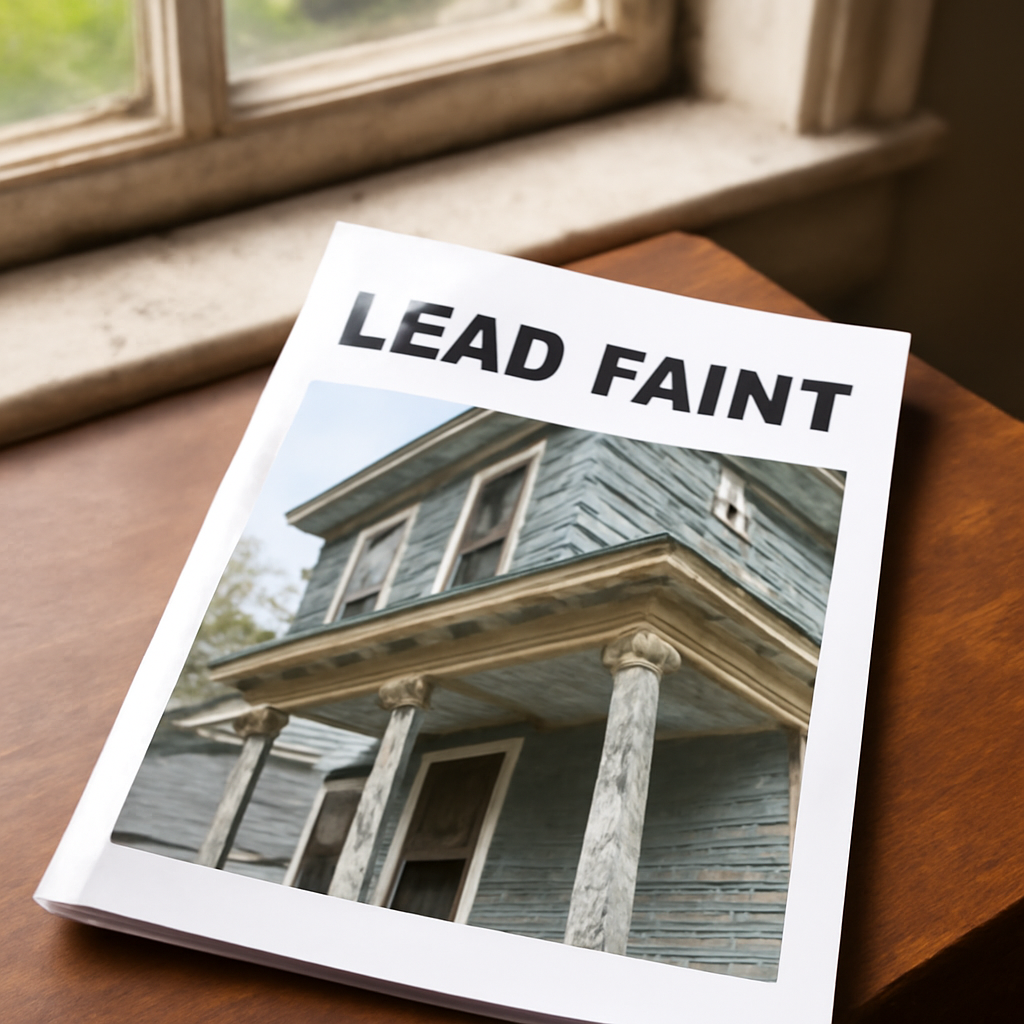
The lead paint brochure most often referenced in U.S. residential transactions is the EPA’s “Protect Your Family From Lead in Your Home” pamphlet. This guide summarizes EPA, HUD, and CDC lead-safety guidance current as of 2026 — consult a certified lead inspector for testing and your physician for blood-lead screening for children. The core questions readers most often have are who is required to deliver the brochure, when delivery must happen, what records must accompany the brochure, and what happens if the delivery requirements are not met. The answers depend on whether the transaction is a sale, a rental, or a renovation, and on whether the housing was built before or after 1978.
Part of our Lead Paint & Lead Testing guide — start there for the full picture →
Is this mold, asbestos, or water damage? Get a free instant screen
Upload a clear photo of the suspect area. You'll get an instant AI screening opinion and what to do next. This is screening guidance, not a professional determination.
Screening guidance only. AI can be wrong. Confirm asbestos, mold type, or lead with lab testing or a licensed professional before acting.
Who must deliver the lead paint brochure?
Three categories of parties have a federal obligation to deliver the EPA lead-paint brochure: sellers of pre-1978 residential property, landlords renting pre-1978 residential property, and contractors performing renovation work on pre-1978 residential property. The obligation falls on the party initiating the transaction or the work, not on the recipient. A tenant moving into a pre-1978 rental does not have to ask for the pamphlet; the landlord is required to provide it whether or not the tenant asks.
The obligation does not apply uniformly to all pre-1978 housing. A narrow set of exceptions excludes housing for the elderly (where no children under six are expected to reside), zero-bedroom dwellings (studios and lofts), housing certified as free of lead-based paint by a certified inspector, short-term rentals of one hundred days or less, and certain other narrow categories. Most ordinary single-family and multi-family pre-1978 housing falls within the obligation rather than the exception. The asbestos and lead hub covers the broader regulatory landscape.
Sellers of pre-1978 residential property
Sellers of pre-1978 residential property must deliver three items to the prospective buyer before the buyer signs the purchase contract. First, the EPA-approved lead-paint pamphlet. Second, a written lead-based-paint disclosure form acknowledging what the seller knows about lead-based paint or lead hazards at the property. Third, any available reports or records related to lead testing or remediation at the property. The buyer is also given a ten-day window (which can be shortened by mutual written agreement) to commission a paint inspection or risk assessment if they choose.
The seller’s obligation is for knowledge the seller actually has, not for a duty to test. A seller who has never tested for lead-based paint and has no records is not required to test before listing the property; they are required to disclose that they have no knowledge and no records, which is a valid disclosure even if it is uninformative. When the seller knows about lead-based paint or hazards from any source — prior tenant complaints, a HUD-funded renovation that required testing, a previous lead-paint abatement project, or any other source — the knowledge must be disclosed. Failure to disclose known information is the most serious form of Title X violation.
Landlords of pre-1978 residential property
Landlords of pre-1978 residential property must deliver the same three items as sellers: the pamphlet, a written disclosure of known lead-based paint or hazards, and any available reports or records. The disclosure must be made before any lease is signed or renewed. The disclosure form is signed and dated by both parties, and both parties retain a copy for the duration of the lease plus three years.
The lease-renewal trigger is worth flagging. The Title X disclosure obligation attaches to the formation of a new lease, not to month-to-month continuations of an existing tenancy. Landlords who restructure month-to-month tenancies as new annual leases trigger the disclosure obligation each time the lease is renewed. Landlords managing month-to-month tenancies that continue without new lease signings do not trigger the obligation repeatedly. The EPA lead paint pamphlet for tenants guide covers the tenant-side view of the obligation in additional detail.
Contractors performing renovation work
Contractors performing renovation work on pre-1978 residential property are required by the EPA Renovation, Repair, and Painting (RRP) Rule to deliver a different but related pamphlet — the EPA’s “Renovate Right” brochure — to the property owner or tenant before work begins. The RRP Rule applies when the renovation work disturbs more than six square feet of paint per interior room or more than twenty square feet of exterior paint. Renovate Right is the practical brochure delivered in this scenario; Protect Your Family From Lead in Your Home is the brochure delivered under Title X for sales and rentals.
The two brochures cover related but distinct ground. Protect Your Family From Lead in Your Home focuses on household precautions, lead-paint locations, and the choices a household has when occupying pre-1978 housing. Renovate Right focuses on the specific work practices the RRP-certified renovator must use, the dust-containment requirements during the work, and the cleanup verification step at the end of the work. Households commissioning renovation work on pre-1978 housing will typically receive both brochures across the timeline of the project.
When must the brochure be delivered?
The timing rules are specific to each transaction type. For sales, the brochure must be delivered before the buyer signs the purchase contract. For rentals, the brochure must be delivered before the tenant signs the lease (and again at any renewal that constitutes a new lease). For renovations, the Renovate Right brochure must be delivered before the contractor begins disturbing painted surfaces.
The before-signing requirement is strict and is the source of most Title X enforcement actions when violations are pursued. Delivery at signing, contemporaneously with the signature, is acceptable as long as the recipient is given the opportunity to review the brochure before signing. Delivery after signing — at move-in, at closing, or after work has started — does not satisfy the timing rule and is treated as non-delivery for enforcement purposes.
What records must accompany the brochure?
The brochure delivery is one part of a three-part disclosure package. The brochure is the substantive information that the recipient gets to read about lead-paint risks generally. The signed disclosure form is the documentation that the recipient acknowledged receipt of the brochure and read the seller’s or landlord’s specific disclosure of known lead-paint information at the property. Any available reports or records related to lead testing or remediation — paint inspection reports, risk assessment reports, lead-hazard reduction work documentation, or related materials — must be provided alongside the brochure and disclosure form.
The signed disclosure form is what creates the legal paper trail. A landlord or seller who provided the brochure verbally but did not document the disclosure through a signed form has not satisfied the federal obligation, even if the recipient acknowledges receiving the brochure. The lead-based paint disclosure pamphlet guide covers the documentation requirements in detail.
What happens if the brochure is not delivered?
The Title X enforcement structure provides both EPA civil penalties and private civil remedies for non-delivery. The EPA can assess civil penalties of more than twenty thousand dollars per violation against landlords, sellers, real-estate agents, and property managers who fail to ensure brochure and disclosure delivery. Private parties can pursue civil litigation for damages, including treble damages and attorney’s fees, when they can demonstrate harm from non-disclosure. The combination of EPA enforcement and private remedies has produced meaningful but imperfect compliance across U.S. residential markets.
The most common enforcement pattern is EPA action against landlords or property managers with a portfolio of pre-1978 units where systematic non-compliance is documented. EPA enforcement against a single-incident seller or landlord is rarer, though the agency does pursue individual cases when complaints are filed and harm can be documented.
Real-estate agents and property managers
Real-estate agents representing sellers of pre-1978 property and property managers handling rentals of pre-1978 property carry derivative obligations under Title X. They must ensure that the seller or owner complies with the disclosure requirements. Agents who become aware that their client has not provided the brochure or the disclosure must inform the client of the obligation and document the steps taken to ensure compliance. Agents and property managers who fail to ensure client compliance can be subject to enforcement action separately from the seller or landlord.
This is one reason real-estate agencies and property management companies maintain standardized disclosure packages that include the brochure, the disclosure form, and any state-specific addenda. The standardization reduces the chance of accidental non-delivery and creates a defensible paper trail in the event of any later complaint.
What the brochure tells the recipient
The substantive content of the brochure is consistent across all delivery scenarios. The recipient learns about the health effects of lead exposure with emphasis on children under six and pregnant women, the typical locations of lead-based paint in pre-1978 housing, the inspection and risk-assessment services available for households wanting to identify specific lead-based-paint hazards, the household precautions that reduce exposure regardless of paint condition, and the renovation rule that governs any work disturbing painted surfaces. The brochure also provides contact information for the EPA’s National Lead Information Center and for state and local lead-poisoning prevention programs that serve as practical entry points for more personalized guidance.
The brochure is descriptive rather than prescriptive. It informs the recipient of risks and options. The action obligations live in the underlying federal statutes and regulations rather than in the brochure itself. Recipients should treat the brochure as a starting point for understanding their situation, not as the final word on what to do about lead-paint risk in any specific property.
Brochure delivery in federally assisted housing
HUD’s lead-safe housing rule at 24 CFR Part 35 imposes additional brochure-delivery obligations on housing receiving federal financial assistance. The rule requires distribution of the EPA brochure to tenants and applicants at additional points beyond initial lease signing — recertification, transfer, and other tenancy events. Landlords operating federally assisted units typically build the brochure distribution into their standard tenant-event documentation packets to ensure the obligation is satisfied at each required point.
Common delivery mistakes to avoid
Three patterns recur in Title X enforcement cases. The first is delivery after signing rather than before — the timing rule is strict and after-signing delivery is treated as non-delivery. The second is reliance on an unsigned brochure receipt rather than a fully completed disclosure form; the EPA’s lead-paint regulations require the specific disclosure form, not a generic acknowledgment. The third is failure to provide available reports — landlords and sellers who have prior paint-inspection or risk-assessment reports must include those in the disclosure package, not just disclose the existence of the reports. Each of these patterns is correctable with standard documentation practices, and the standard real-estate-agency and property-management disclosure packages address all three when implemented correctly.
References
- EPA Protect Your Family From Lead in Your Home pamphlet — Environmental Protection Agency
- HUD lead-safe housing rule and disclosure resources — Department of Housing and Urban Development
- CDC childhood lead poisoning prevention program — Centers for Disease Control and Prevention
Frequently asked questions
Who is required to deliver the lead paint brochure?
Sellers of pre-1978 residential property, landlords renting pre-1978 residential property, and contractors performing renovation work on pre-1978 residential property each have brochure-delivery obligations under federal law. The specific brochure varies (Protect Your Family for sales and rentals, Renovate Right for renovations).
When must the lead paint brochure be delivered?
Before the recipient becomes contractually obligated. Sellers must deliver before the buyer signs the purchase contract. Landlords must deliver before the tenant signs the lease. Renovators must deliver before disturbing painted surfaces. Delivery at signing, contemporaneously, is acceptable; delivery afterward is not.
What records must accompany the lead paint brochure?
A written lead-based-paint disclosure form acknowledging what the seller or landlord knows about lead-based paint at the property, and any available reports or records related to lead testing or remediation at the property. The signed form is what creates the legal paper trail of disclosure.
What is the penalty for not delivering the lead paint brochure?
The EPA can assess civil penalties of more than twenty thousand dollars per violation. Private parties can pursue civil litigation for treble damages and attorney's fees when they can demonstrate harm. Real-estate agents and property managers who fail to ensure client compliance can also be liable.
Front Range homeowners, tenants, or landlords with questions about lead-paint disclosure for a pre-1978 property can reach out through our contact page for a referral to a certified inspector or risk assessor.
Lead paint test kits
Instant swab kits flag lead on painted surfaces in minutes — useful before a renovation in any pre-1978 home.
| Product | Why | Buy |
|---|---|---|
 3M LeadCheck Swabs 3M LeadCheck Swabs | EPA-recognized instant swabs. | Amazon — $15.00 |
 Lead Test Kit (lab-based) Lead Test Kit (lab-based) | Mail-in for a documented result. | Amazon — $65.00 |