Lead Based Paint Brochure: What Homeowners Need to Know
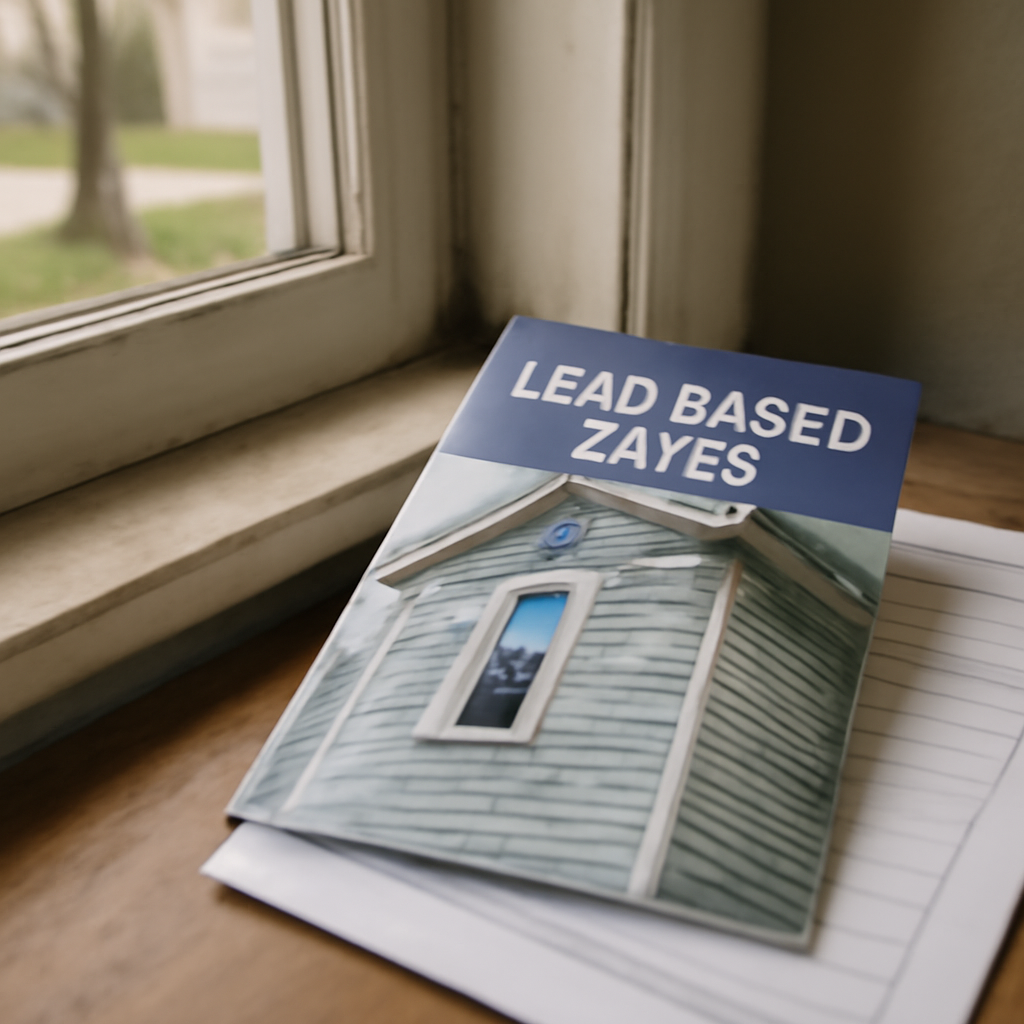
People searching for a “lead based paint brochure” are almost always looking for the same federal document that other searchers call a pamphlet or a booklet. The three terms describe one publication: the EPA’s “Protect Your Family From Lead in Your Home,” document number EPA-747-K-99-001 in its current revision. The naming variations matter mostly because they reveal whether a person is reading colloquial guidance or federal regulatory text — and the legal obligations attached to the document only activate when it sits inside that regulatory framework. This guide summarizes EPA, HUD, and CDC lead-safety guidance current as of 2026 — consult a certified lead inspector for testing and your physician for blood-lead screening for children.
Is this mold, asbestos, or water damage? Get a free instant screen
Upload a clear photo of the suspect area. You'll get an instant AI screening opinion and what to do next. This is screening guidance, not a professional determination.
Screening guidance only. AI can be wrong. Confirm asbestos, mold type, or lead with lab testing or a licensed professional before acting.
Brochure, pamphlet, or booklet — what the EPA actually calls it
Federal regulations consistently use “pamphlet.” The term appears in 24 CFR Part 35 (HUD’s Lead Safe Housing Rule), 40 CFR Part 745 Subpart F (EPA’s disclosure rule), and Title X of the Housing and Community Development Act of 1992. Real estate professionals, property management companies, and state housing agencies replicate that language in their compliance materials.
“Brochure” and “booklet” are colloquial. Tenants who received the document at lease signing often call it a brochure because it looks like a small folded publication. Buyers who skim the document during closing call it a booklet because the EPA version runs to 16 pages. Both descriptions are accurate as plain English. Neither is the term written into federal law.
The practical takeaway: if a landlord, real estate agent, or contractor hands a renter or buyer a “lead based paint brochure,” it should be the EPA pamphlet — or a state-equivalent version that EPA has approved. A glossy marketing flyer titled “lead awareness brochure” is not a substitute.
What the EPA pamphlet actually contains
The current EPA pamphlet is structured around five topics. Each topic answers a question most homeowners and renters of pre-1978 housing ask when they first encounter the document.
Why lead-based paint is a hazard
The pamphlet explains that lead-based paint produces dust, chips, and chalk as it ages. Children under six absorb lead more readily than adults, and even low blood-lead levels — below 5 micrograms per deciliter — can cause measurable harm to developing brains. Pregnant women face risk because lead crosses the placenta. Adults face cardiovascular, kidney, and reproductive risks at higher exposures.
Where lead is typically found
The pamphlet maps the highest-probability locations in older housing: window sashes and sills, door frames, stair railings, porches, exterior siding, and any surface that experiences friction or impact. Soil near the foundation can also contain lead, especially within drip lines of painted exterior walls.
How to identify lead hazards
Visible deterioration — chipping, peeling, chalking, or flaking — is the most common hazard signal. The pamphlet also describes risk factors a homeowner cannot see, such as lead in household dust generated during normal wear or DIY renovation. The document directs readers to certified lead-based paint inspectors and risk assessors for definitive identification.
What to do about lead
The pamphlet recommends temporary measures like wet cleaning, frequent handwashing for children, and prompt cleanup of paint chips, alongside permanent measures like hiring an EPA-certified RRP firm for any renovation that disturbs painted surfaces. It distinguishes between lead-safe renovation, interim controls, and full abatement.
Where to find more information
The final section directs readers to the National Lead Information Center, EPA regional offices, state lead programs, and the CDC childhood lead poisoning prevention program. The pamphlet is a starting point, not a complete reference.
Federal distribution requirements
The pamphlet’s legal weight comes from federal rules that require its delivery in specific transactions. Two parallel regulations create those obligations.
EPA real estate disclosure rule
Under 40 CFR Part 745 Subpart F, sellers and lessors of pre-1978 residential property must give the buyer or tenant the EPA pamphlet before the sales contract or lease becomes binding. The rule covers nearly all residential pre-1978 housing — single-family homes, condos, townhouses, apartments, mobile homes with foundation attachment — with narrow exceptions for zero-bedroom units, certified lead-free housing, and short-term leases.
HUD Lead Safe Housing Rule
Under 24 CFR Part 35, federally assisted housing — public housing, Section 8 vouchers, project-based Section 8, HOME-funded properties, and others — must distribute the same pamphlet plus comply with additional requirements based on the level of federal assistance. The pamphlet is the on-ramp; the rule’s requirements escalate from there.
Both rules require the recipient to sign an acknowledgment. The landlord, seller, or property manager keeps the signed acknowledgment for at least three years. EPA can audit compliance, and tenants or buyers who never received the pamphlet have civil enforcement avenues.
How to get the EPA brochure
The pamphlet is freely available in multiple formats. EPA publishes a downloadable PDF on its lead program website in English, Spanish, and several other languages. The National Lead Information Center provides print copies on request. State health departments — including the Colorado Department of Public Health and Environment for Front Range residents — distribute the pamphlet through county health offices and online portals.
Property managers, real estate agents, and home inspectors typically maintain print copies. Buyers and renters do not need to wait for a landlord or agent to provide it — the document is in the public domain and can be downloaded directly.
For broader context on how the pamphlet fits into the pre-1978 housing hazard landscape, see the asbestos and lead hazard guide. The pamphlet sits alongside other federal lead-safety documents that together form the Title X compliance package.
State-equivalent versions
EPA allows states to publish their own pamphlets if the content meets or exceeds the federal version. As of 2026, Massachusetts, Maryland, Vermont, New Jersey, and a few other states have approved state-specific pamphlets that include local resources and contact information. Colorado uses the federal EPA pamphlet directly.
When a state-equivalent version exists, landlords and sellers in that state must use it instead of the generic federal pamphlet. The substitution does not change the underlying disclosure rule — the same Lead Warning Statement, disclosure form, and signed acknowledgment requirements apply.
Translations available
EPA publishes the pamphlet in roughly a dozen languages: English, Spanish, Vietnamese, Russian, Arabic, Chinese (simplified), Korean, Somali, French, Haitian Creole, Polish, and several others. The federal rule requires landlords and sellers to provide the pamphlet “in a form the recipient can understand,” which in practice means using the appropriate translation when the recipient’s primary language is not English.
Front Range housing markets — particularly Denver, Aurora, Commerce City, and Pueblo — have significant Spanish-speaking renter populations. Landlords serving those markets typically maintain Spanish-language pamphlets alongside the English version.
How the pamphlet has changed over time
The current EPA pamphlet is not the original. The first federally required lead pamphlet was published in 1996 as part of the initial Title X disclosure rule implementation. EPA, HUD, and the Consumer Product Safety Commission jointly developed the document, and it was revised in 1998, 2003, 2012, and most recently in the late 2010s to update health threshold information and CDC reference values.
Older copies of the pamphlet in landlord or property management files may no longer be compliant. The current version reflects the CDC’s 2021 update of the blood-lead reference value from 5 to 3.5 micrograms per deciliter, which lowered the threshold at which public health agencies recommend follow-up action for children. Landlords distributing pre-2012 copies should request fresh stock from EPA or the National Lead Information Center.
The version number on each pamphlet appears in the footer — EPA-747-K-99-001 is the current document identifier in continuous use across revisions. Property managers in older buildings often have stacks of obsolete editions on hand from prior renovation cycles.
Common confusion points
Three terminology issues come up repeatedly when homeowners search for the lead-based paint brochure.
“Lead paint” vs “lead-based paint”
The hyphenated “lead-based paint” is the federal regulatory term, defined at 40 CFR 745.103 as paint containing 1.0 mg/cm² or more by XRF, or 0.5% or more by lab weight analysis. “Lead paint” without the hyphen is colloquial. The pamphlet uses the hyphenated form throughout because it sits inside the federal regulatory framework.
“Brochure” vs “pamphlet” vs “booklet”
All three terms refer to the same EPA document. The federal regulatory term is “pamphlet.” Use any of the three when searching, but expect to receive the EPA pamphlet — not a different document.
“Lead disclosure form” vs “lead pamphlet”
These are two separate documents. The disclosure form is a one-page form signed by both parties that lists known hazards and acknowledges receipt of the pamphlet. The pamphlet is the 16-page EPA publication. The federal rule requires both — the form alone is not compliant.
“Lead inspection” vs “lead risk assessment”
The pamphlet references both terms because they describe two different professional services under federal certification rules. A lead inspection identifies the presence of lead-based paint surface by surface, typically using an XRF analyzer, and produces a report listing every painted component above the federal threshold. A risk assessment goes further: it identifies which lead-based paint surfaces are actually creating hazards through deterioration, friction, or impact, and recommends specific interim controls or abatement. Risk assessors must be separately certified under state programs.
“Lead-safe” vs “lead-free”
The pamphlet uses both phrases, and they are not interchangeable. “Lead-free” means the home contains no lead-based paint above the federal threshold — typically certified by a comprehensive XRF inspection. “Lead-safe” means the home may contain lead-based paint, but identified hazards have been addressed through interim controls or abatement. Most pre-1978 homes that undergo treatment achieve lead-safe status; few achieve lead-free certification because the cost of removing every painted surface is prohibitive.
How property managers should handle pamphlet distribution
For property management companies running multiple pre-1978 units, the pamphlet distribution workflow is operational, not theoretical. A few practices come up consistently in HUD field office guidance and EPA enforcement actions.
Maintain a single source of truth for current pamphlets — typically a folder of recent PDFs in the leasing office plus a stack of printed copies in the appropriate languages for the tenant base. Include the pamphlet delivery in the standard lease packet so it is not skipped during fast turnovers. Track signed acknowledgments in the tenant file alongside the lease, with the date of delivery clearly recorded.
For renewal leases, federal rule guidance generally treats the pamphlet as a one-time delivery requirement per tenancy if the original delivery is documented. New tenants and lease assignments to new occupants trigger a fresh delivery. Property managers who acquire pre-1978 buildings from prior owners should obtain the prior owner’s signed acknowledgment files at closing or initiate a fresh delivery cycle with current tenants.
When to call a professional
The brochure is informational and not a substitute for testing or remediation. Homeowners and renters who see deteriorated paint in pre-1978 housing should consider two steps. First, hire a state-certified lead-based paint inspector or risk assessor to identify whether the paint actually meets the federal lead-based paint threshold. Second, if children under six or pregnant occupants live in the home, ask a pediatrician about blood-lead testing as a baseline.
Renovation work that will disturb painted surfaces in pre-1978 housing requires an EPA-certified RRP firm. Front Range homeowners can find certified firms through the EPA’s online certified-firm locator or by contacting an EPA-certified lead paint inspector for assessment before renovation begins. For a deeper terminology walkthrough of the federal document itself, the EPA lead-based paint pamphlet sourcing guide covers where to obtain the document and which version is current.
References
- EPA Protect Your Family From Lead in Your Home — U.S. Environmental Protection Agency
- HUD Lead-Based Paint Program — U.S. Department of Housing and Urban Development
- CDC About Childhood Lead Poisoning — Centers for Disease Control and Prevention
- NIH Research on Childhood Lead Exposure — National Institutes of Health
If you are buying or renting pre-1978 housing along the Front Range and want a certified inspector to assess actual lead-based paint risk before signing, reach out through our contact page to connect with a local professional. The brochure is a starting point — testing tells you what your specific home actually contains.
Lead paint test kits
Instant swab kits flag lead on painted surfaces in minutes — useful before a renovation in any pre-1978 home.
| Product | Why | Buy |
|---|---|---|
 3M LeadCheck Swabs 3M LeadCheck Swabs | EPA-recognized instant swabs. | Amazon — $208.00 |
 Lead Test Kit (lab-based) Lead Test Kit (lab-based) | Mail-in for a documented result. | Amazon — $35.00 |