How Much Radon Is Too Much in Your Home?
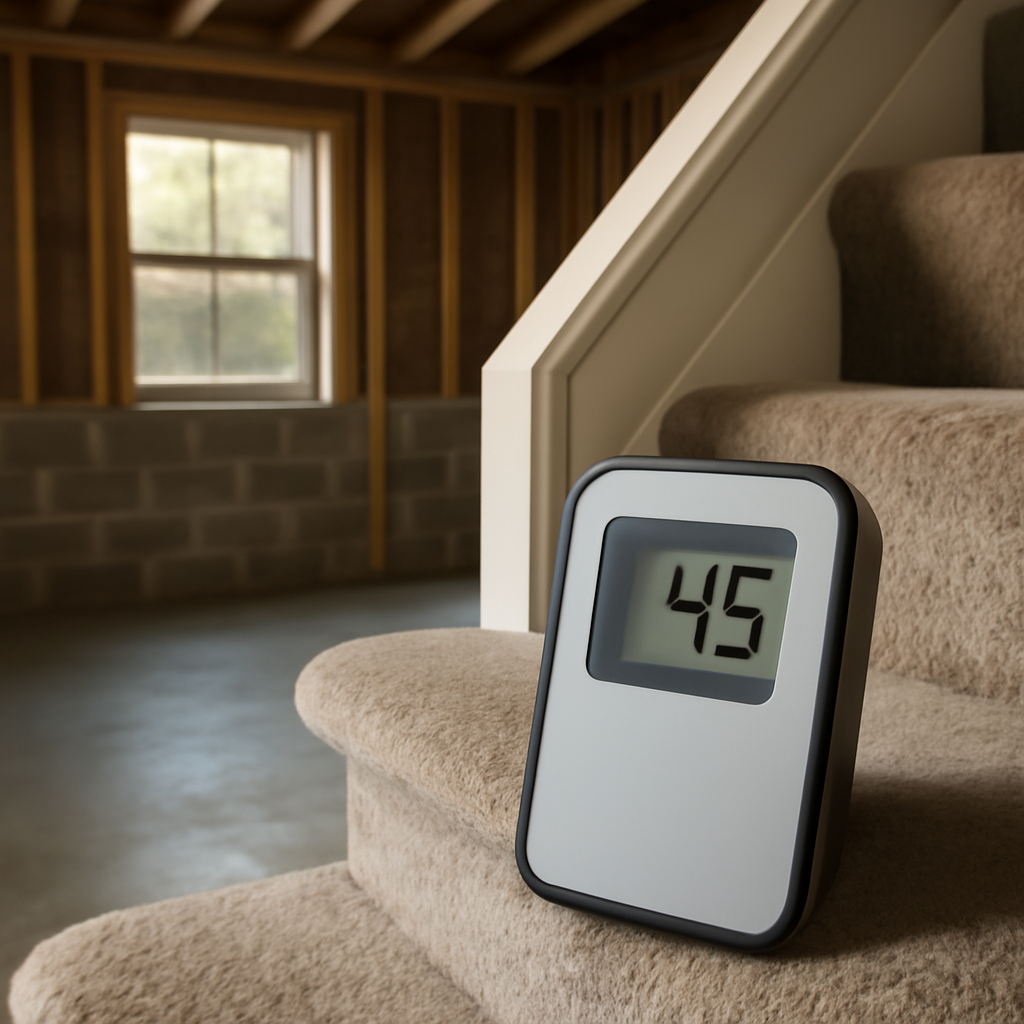
How much radon is too much is the question almost every homeowner reaches once a test result is in hand. The short answer EPA provides is 4 pCi/L: at or above that concentration, radon is high enough that action to reduce it is recommended. The fuller answer is that risk rises with any amount of radon, so “too much” is partly a matter of degree. This guide lays out the threshold, the risk behind it, and when to mitigate. It summarizes EPA and CDPHE guidance current as of 2026 and is informational only, not medical advice; consult EPA guidance and a certified professional for testing decisions and your physician for health questions.
Part of our Radon Levels guide — start there for the full picture →
How much radon is too much?
EPA’s answer is the 4 pCi/L action level. When the average radon concentration in a home reaches or exceeds 4 picocuries per liter of air, EPA recommends taking action to reduce it, usually through professional mitigation. That figure is the single most important number in radon, the line that triggers a concrete response. It represents a practical balance between the health risk radon poses and what can realistically be achieved to lower it in a typical home.
The 4 pCi/L threshold is not a strict boundary between harmless and dangerous, though. EPA is explicit that no amount of radon is entirely safe, and it advises homeowners to consider action even between 2 and 4 pCi/L. So “too much” has two answers: 4 pCi/L is definitely too much and demands action, while anything above the roughly 1.3 pCi/L national indoor average carries some elevated risk worth weighing. The dedicated explainer on the 4 pCi/L action level covers the threshold in full.
The risk behind the number
The action level exists because radon is dangerous in a specific, well-documented way. Radon is a radioactive gas, and as it decays it produces tiny radioactive particles. Inhaled, those particles lodge in the lungs and can damage cell DNA over years of exposure, which can lead to lung cancer. EPA and CDC identify radon as a leading cause of lung cancer, ranking second overall behind smoking and first among people who have never smoked.
Risk scales with both concentration and time. The higher the radon level and the more years a person breathes it, the greater the lifetime probability of harm. EPA estimates that long-term exposure to elevated radon raises lung-cancer risk, and that the risk at 4 pCi/L over a lifetime is substantial enough to justify the cost of mitigation. For smokers, the danger multiplies dramatically; radon and tobacco smoke together produce far higher risk than either alone. That combined effect is one reason households with smokers have extra incentive to keep radon low.
Putting the risk in perspective
EPA frames radon risk in terms comparable to other everyday hazards to make it concrete. The agency notes that radon at the action level over a lifetime carries a lung-cancer risk that public-health officials consider too high to ignore, especially because it is preventable. Unlike many environmental risks, radon has a clear fix: a mitigation system reliably lowers indoor levels. The preventability is what makes “too much” actionable rather than merely worrying.
How exposure time changes “too much”
The phrase “too much radon” depends not only on the concentration but on how long and how often someone breathes it. EPA’s risk estimates assume long-term exposure, on the order of years spent in the measured air. A given level in a bedroom occupied every night represents far more cumulative exposure than the same level in a storage room entered for a few minutes a week. This is why the action level is keyed to the lowest livable level of the home, the space where people actually spend time.
This time dimension also explains why brief exposure to an elevated level is less alarming than living with it for years. A homeowner who learns a basement reads 8 pCi/L need not panic about the time already spent there, but should act to keep future exposure low, since the risk accumulates going forward. The practical implication is to prioritize mitigation in spaces where occupants spend the most hours, and to view “too much” through the lens of long-term, repeated exposure rather than a single moment.
Thresholds and what each means
Translating the science into decisions means knowing the tiers. At or above 4 pCi/L, the answer is unambiguous: this is too much, and EPA recommends mitigation. Between 2 and 4 pCi/L, the level is elevated above average and EPA suggests considering action, a reasonable choice for households with children, smokers, or heavily used basements. Below 2 pCi/L, radon is relatively low, though no level is zero-risk and periodic retesting is wise.
Higher tiers raise urgency. A reading of 10 pCi/L is well into territory that calls for prompt mitigation, and readings of 20 pCi/L or more are very high and warrant fast action. The action level does not change at these higher numbers; it is already exceeded. What changes is the priority and the speed with which a homeowner should arrange mitigation. For a fuller breakdown of how the levels tier from moderate to very high, the guide on what is considered a high level of radon lays out each band.
The Colorado Front Range factor
Geography raises the odds of crossing the threshold. Colorado’s Front Range lies largely within EPA Radon Zone 1, the highest-potential category, because of uranium-bearing soils and rock. CDPHE reports that a large share of Colorado homes test above the 4 pCi/L action level, a rate well above the national average. That means a result of “too much” is genuinely common across Denver, Douglas, Arapahoe, Jefferson, El Paso, and surrounding counties.
High potential is a reason to test, not a verdict on any specific home. Construction, soil contact, and ventilation make neighboring houses read very differently. The only way to know whether a particular home has too much radon is to test it. CDPHE and EPA both recommend that every Front Range home be tested, and that confirmed elevated results be mitigated. The regional Colorado radon testing guide provides the local context.
Confirming an elevated reading before you act
A single short-term test that reads above the action level is a strong signal, but confirming it before committing to mitigation is sound practice. Short-term readings fluctuate with weather, season, and how the house was operated during the test, so a one-time spike can overstate the typical level. EPA generally recommends following an elevated short-term result with either a second short-term test or a longer-term test that captures a more representative average across changing conditions.
That said, confirmation should not become an excuse for indefinite delay, especially when the first reading is well above the action level. A result of 4.5 pCi/L invites a confirming test; a result of 15 pCi/L warrants moving toward mitigation promptly while any confirmation proceeds. The goal of confirmation is accuracy, not avoidance. Once a credible elevated level is established, the path is clear, and the guide on what counts as a high level of radon helps gauge how urgent a given reading is.
What mitigation costs and involves
Mitigation is generally affordable relative to the health stakes, though the exact figure varies with the home’s foundation, size, and layout, so treat any number as a rough estimate to confirm with local quotes. A typical sub-slab depressurization system is a one-time installation that then runs continuously for years. The work usually takes a single day: a contractor cores through the slab, installs a sealed pipe and an inline fan, routes the pipe to vent above the roofline, and seals foundation entry points to improve performance.
Ongoing costs are modest, mainly the electricity to run the fan and the occasional replacement of the fan over its service life. The system includes a simple manometer gauge that shows at a glance whether it is working. Because the installation is straightforward and the result reliably lowers radon, the cost-benefit calculation strongly favors acting on a confirmed elevated reading rather than living with it. Always retest after installation, since the post-mitigation number is the proof the system did its job.
What to do when radon is too much
An elevated result triggers a clear sequence. First, confirm it. A single short-term test at or above 4 pCi/L should be verified with a second short-term test or a long-term test, since short-term readings fluctuate. If the elevated level holds, the fix is professional mitigation. The standard approach, sub-slab depressurization, installs a pipe and fan system that draws soil gas from beneath the foundation and vents it safely above the roofline, typically bringing indoor levels down close to the outdoor baseline of around 0.4 pCi/L.
After installation, retest to confirm the system reduced levels below the action level; the post-mitigation number is the proof. Mitigation is generally affordable relative to the health stakes, and a properly installed system works continuously for years with minimal maintenance. Because EPA estimates long-term exposure raises lung-cancer risk, treating “too much” radon as a fixable problem and acting on a confirmed result is the sound response. Consult EPA guidance and a certified radon professional to choose and verify the right system.
Too much radon in special spaces
The question of how much is too much takes on nuance in spaces that are not standard living areas. A basement that doubles as a bedroom, home office, or playroom is treated like any occupied level, so the 4 pCi/L action level applies fully there. An unfinished basement used only for storage and laundry sees less occupancy, but if there is any plan to finish it or spend regular time there, the action level should guide the decision, since converting a high-radon basement into living space without mitigation increases exposure.
Crawl spaces and garages raise different considerations. Radon in a vented crawl space may be diluted before it reaches living areas, though gaps in the floor above can still let it migrate up. Attached garages and the rooms above them occasionally warrant attention too. The practical rule is that “too much” applies wherever people spend meaningful time, and that finishing or occupying a previously unused lower level is a reason to test, since a space that was acceptable as storage may exceed the action level once someone lives in it.
Radon and home value
Elevated radon affects more than health; it can affect a home sale. Because many purchase contracts include radon contingencies tied to the 4 pCi/L action level, a high reading discovered during a transaction often becomes a negotiating point, with buyers requesting mitigation or a credit. A home with a documented mitigation system and post-mitigation results below the action level removes that friction and reassures buyers, which is why some owners mitigate proactively before listing.
For a buyer, a confirmed high reading is not necessarily a reason to abandon a purchase, since mitigation is affordable and effective. The reasonable response is to factor the cost of a mitigation system into the negotiation and proceed with confidence that the problem is solvable. Framing elevated radon as a manageable, well-understood issue, rather than a deal-breaker, keeps both buyers and sellers focused on the straightforward fix rather than the alarm. The broader Colorado radon testing guide covers how this plays out in local transactions.
References
- EPA radon action level and risk guidance — U.S. Environmental Protection Agency
- CDPHE Colorado radon levels and mitigation — Colorado Department of Public Health and Environment
- CDC radon and lung cancer information — Centers for Disease Control and Prevention
Frequently asked questions
At what level is radon too much?
EPA recommends taking action at or above 4 pCi/L, which is the level considered too high to leave alone. EPA also advises considering action between 2 and 4 pCi/L, since no level of radon is completely risk-free.
What happens if radon is above 10 pCi/L?
A reading of 10 pCi/L is well above the action level and calls for prompt mitigation, and 20 pCi/L or higher warrants fast action. The threshold is already exceeded, so the priority is arranging professional mitigation quickly.
How does radon cause lung cancer?
As radon decays it produces radioactive particles that, when inhaled, lodge in the lungs and can damage cell DNA over years. EPA and CDC identify radon as a leading cause of lung cancer, and the risk multiplies for smokers.
Can elevated radon be fixed?
Yes. Professional mitigation, most commonly sub-slab depressurization, vents soil gas above the roofline and typically lowers indoor radon close to the outdoor baseline. Retesting after installation confirms the system reduced levels below the action level.
Front Range homeowners facing an elevated result can connect with a vetted local radon mitigation professional through our contact page.
Test your home for radon
Radon is invisible and odorless, so a test is the only way to know your level. A short-term kit gives a first reading in days; a digital monitor tracks it over time.
| Product | Why | Buy |
|---|---|---|
 AirChek Charcoal Radon Test Kit AirChek Charcoal Radon Test Kit | Lab fee usually included; EPA short-term protocol. | Amazon — $21.95 |
 First Alert RD1 Radon Test Kit First Alert RD1 Radon Test Kit | Widely stocked; 48-hour charcoal test. | Amazon — $16.98 |
 Airthings Corentium Home Airthings Corentium Home | Digital monitor with a long-term average. | Amazon — $147.31 |