How Much Is a Radon Mitigation System? Price Guide
If you have just learned your home tests above the EPA action level, the first practical question is usually about price: how much is a radon mitigation system, and what does that number actually buy? The short answer is that most residential systems fall in a broad national range, but the figure depends on the type of system, the home’s construction, and the local market. This guide gives a clear price overview, explains what a “system” includes, and breaks down how passive and active setups differ on cost. It summarizes EPA guidance current as of 2026; consult a certified radon professional for testing and mitigation decisions and your physician for any health questions.
Part of our Radon Mitigation Systems guide — start there for the full picture →
How Much a Radon Mitigation System Typically Costs
Most residential radon mitigation systems fall within a national range of roughly $800 to $2,500, with many homeowners landing somewhere in the middle. The EPA has long cited a typical range in this neighborhood, and that benchmark still holds for a standard active sub-slab system on an average home. Simpler installations on accommodating homes can come in lower, while complex homes push toward the upper end or beyond.
The price reflects a complete installed system, not just parts. It covers the design, the piping, the fan, the electrical connection, sealing of slab penetrations, and a monitoring gauge, plus the labor to install all of it. Because the number swings with home specifics, the only way to know your figure is a site assessment, but the typical range gives a realistic starting expectation. For a deeper look at the figure, our overview of the cost of a radon mitigation system covers the same ground from another angle.
What a Radon Mitigation System Includes
Understanding what you are paying for makes the price make sense. A standard active soil depressurization system is a coordinated set of components working together to pull radon-laden air from beneath the home and vent it safely above the roofline.
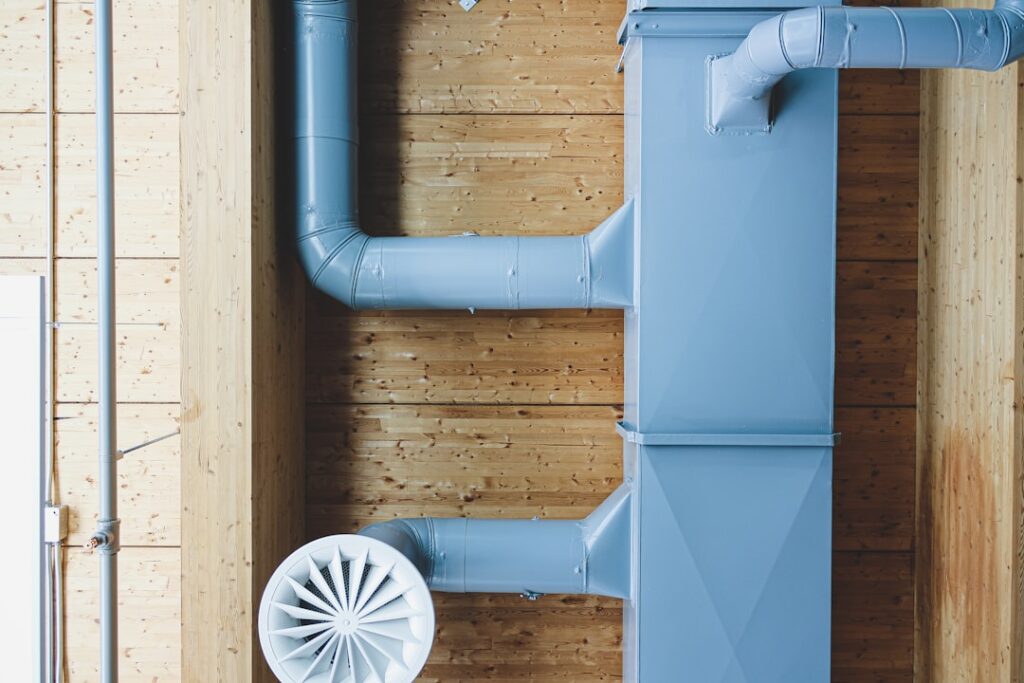
The core elements are a suction point cut into the slab or established in the sub-slab gravel, PVC piping that routes the gas upward, an inline fan that creates the suction, and an exterior vent that releases the gas above the eaves. A manometer, the simple U-shaped gauge mounted on the pipe, lets a homeowner confirm at a glance that the fan is running. Sealing cracks, sump openings, and other slab penetrations is part of the work too, because a tighter slab lets the fan work more efficiently. A full itemized breakdown of these parts appears in our guide to how much a radon mitigation system costs by component.
Passive Versus Active Systems and the Cost Difference
Not every system uses a fan, and the distinction drives a real price difference. A passive system relies on natural air pressure and the stack effect to draw radon up through the vent pipe, with no fan and no electricity. An active system adds an inline fan that mechanically pulls the gas out, which is far more reliable at reducing levels.
When Passive Costs Less
Passive systems are cheapest when built into new construction, where the rough-in piping is installed during the build at minimal extra cost. The trade-off is performance: passive systems often fail to reduce radon as far as needed, especially in high-radon regions like Colorado’s Front Range. Many passive systems are later upgraded to active by adding a fan, which is a relatively inexpensive conversion.
Why Active Costs More but Delivers
An active system costs more because of the fan, the electrical work, and the labor to retrofit it into an existing home. That added cost buys consistent, verifiable radon reduction, which is why active sub-slab depressurization is the standard for homes that test high. In a Front Range home, where radon levels are frequently elevated, an active system is usually the appropriate choice despite the higher price.
What Drives the Price Up or Down
Several home-specific factors move a quote within and beyond the typical range. Foundation type matters most. A home on a single concrete slab is straightforward, while a home with multiple foundation types, a crawl space, or an addition may need more than one suction point, which adds piping, fans, and labor.
Other drivers include the routing distance from the suction point to the roofline, the difficulty of the electrical connection, and whether sealing work is extensive. Aesthetic choices, such as routing the pipe through the interior to a roof vent rather than up an exterior wall, raise labor and material costs. Regional labor rates and local permitting also factor in. Because so much depends on the individual home, the line between a low and high quote is rarely about the contractor cutting corners and more about what the house requires. For the service and labor side of pricing specifically, see our guide to how much radon mitigation costs as a service.
Is a Radon Mitigation System Worth the Cost
Weighed against the stakes, a mitigation system is one of the more cost-effective home improvements available. Radon is a recognized long-term lung-cancer risk, and the EPA recommends action at or above 4 pCi/L. A one-time installed cost in the low thousands, set against the years of reduced exposure it delivers, makes the investment straightforward for a home that tests high.
There is a property angle as well. In radon-prone markets, a documented, working mitigation system can reassure buyers and smooth a future sale. After installation, the home should be retested to confirm the system brought levels down, and the fan should run continuously thereafter. Homeowners ready to move forward can start by reviewing the broader radon testing guidance for Front Range homeowners to confirm their numbers before committing to a system. The price is real, but for a home above the action level, so is the reason to pay it.
How System Type Affects the Price You Pay
The single number in a quote hides a real range, and the type of system needed for a particular home explains most of that range. The most common and economical configuration is a single-suction-point active sub-slab system on a home with a uniform concrete slab. When the foundation cooperates, one suction point can depressurize the whole sub-slab area, and the price lands toward the lower end of the typical band.
More complex homes need more system, and the price climbs accordingly. A house with multiple foundation sections, an addition with its own slab, or a partial basement combined with a crawl space may require two or more suction points, each with its own piping and sometimes its own fan. A crawl-space home uses a different method altogether, sealing a vapor barrier over the soil and drawing suction beneath it, which carries its own materials and labor cost. None of these reflects a contractor padding the bill; they reflect what the house physically requires to achieve effective depressurization.
This is why a firm price comes only after a site assessment. A contractor evaluating the foundation can tell a homeowner whether they are looking at a simple single-point system near the bottom of the range or a multi-point system toward the top. Understanding the relationship between system type and price lets a homeowner read a quote sensibly rather than assuming every house should cost the same.
Comparing Quotes Without Sacrificing Quality
Because the price varies, homeowners should gather more than one quote, but comparing them well means looking past the bottom line. A meaningful comparison weighs what each system includes, not merely what each costs. A bid that specifies the suction-point plan, the fan model and rating, the vent routing, the sealing scope, and a post-installation retest gives a homeowner something real to evaluate.
A suspiciously low quote often signals an omission rather than a bargain. It may skip the diagnostic test, plan an undersized fan, leave the slab inadequately sealed, or exclude the confirming retest, any of which can leave radon levels elevated after the money is spent. The cheapest system that fails to lower radon is the most expensive choice of all. A homeowner is better served by the bid that explains its approach clearly, even at a slightly higher price, than by the one that wins on cost alone.
Certification is the other filter. Confirm that the contractor holds recognized radon-mitigation credentials and is experienced in the home’s foundation type. A certified professional who scopes the job properly, prices it transparently, and verifies the result with a retest delivers genuine value, which is the real measure of what a radon mitigation system is worth, beyond the figure on the invoice.
New Construction Versus Retrofit Pricing
Whether a system goes into a home during construction or is added later makes a large difference in price, and homeowners benefit from understanding why. The cheapest moment to build in radon control is during new construction, when the rough-in piping and a passive vent can be installed before the slab is poured and the walls are closed. A passive rough-in adds only a modest cost to a new build, and if testing later shows elevated levels, adding a fan to convert it to an active system is inexpensive because the pipe is already in place.
Retrofitting an existing home costs more because the work is more involved. The crew must core through a finished slab, route piping through a built-out home, and find a code-compliant location for the fan, all without the open access a new build offers. This added labor is the main reason a retrofit lands in the typical price range rather than at the low end a new-construction rough-in enjoys. None of it reflects inefficiency; it reflects the reality of working within a finished structure.
For buyers of new homes in radon-prone areas like the Front Range, the lesson is to ask whether radon-resistant construction features are included. A passive system built in during construction is a small upfront cost that can save a meaningful sum later. For owners of existing homes, the retrofit price is simply the cost of protection, and it remains a sound investment against a recognized health risk. Knowing which situation applies helps a homeowner set realistic expectations and ask the right questions before signing a contract.
Whichever situation applies, the price should always be weighed against the value of a verified result rather than the lowest bid. A system that brings radon below the action level, confirmed by a post-installation test, has done its job regardless of where its price fell in the range. That verified reduction, not the figure alone, is what a homeowner is ultimately paying for, and it is the standard against which any quote should be judged.
Front Range homeowners who want a connection to a vetted radon professional for a system quote can reach out through our contact page.
References
- Consumer’s Guide to Radon Reduction — U.S. Environmental Protection Agency
- Health Risk of Radon — U.S. Environmental Protection Agency
- Radon in Colorado Homes — Colorado Department of Public Health and Environment
- Radon and Lung Health — American Lung Association
Frequently asked questions
How much is a radon mitigation system on average?
Most residential systems fall in a national range of roughly $800 to $2,500, with many homeowners landing in the middle. The figure covers a complete installed system and varies with foundation type, home complexity, and the local market.
What is included in that price?
A complete active system: a sub-slab suction point, PVC piping, an inline fan, an exterior vent, a manometer gauge, and sealing of slab penetrations, plus all the labor to install and connect it. It is a turnkey figure, not just parts.
Why are active systems more expensive than passive ones?
Active systems add a fan, electrical work, and the labor to retrofit them, but they reliably reduce radon. Passive systems use no fan and cost less, especially in new construction, but often fail to lower levels enough in high-radon areas.
Is a radon mitigation system worth the money?
For a home testing at or above the EPA action level of 4 pCi/L, yes. The one-time cost in the low thousands buys long-term reduction of a recognized lung-cancer risk, and a documented system can reassure future buyers.
Radon mitigation fans & parts
If a sub-slab depressurization system is the fix, the inline fan is the heart of it. Match the fan to your soil and pipe diameter — or have a certified installer size it.
| Product | Why | Buy |
|---|---|---|
 RadonAway RP145 Inline Fan RadonAway RP145 Inline Fan | Common 4-in. SSD workhorse fan. | Amazon — $152.00 |
 Fantech Rn2 Radon Fan Fantech Rn2 Radon Fan | Quiet operation; energy-efficient. | Amazon — $154.03 |
 Radon U-Tube Manometer Radon U-Tube Manometer | Confirms the system is pulling suction. | Amazon — $8.95 |