Flir Ir Camera: What Homeowners Need to Know
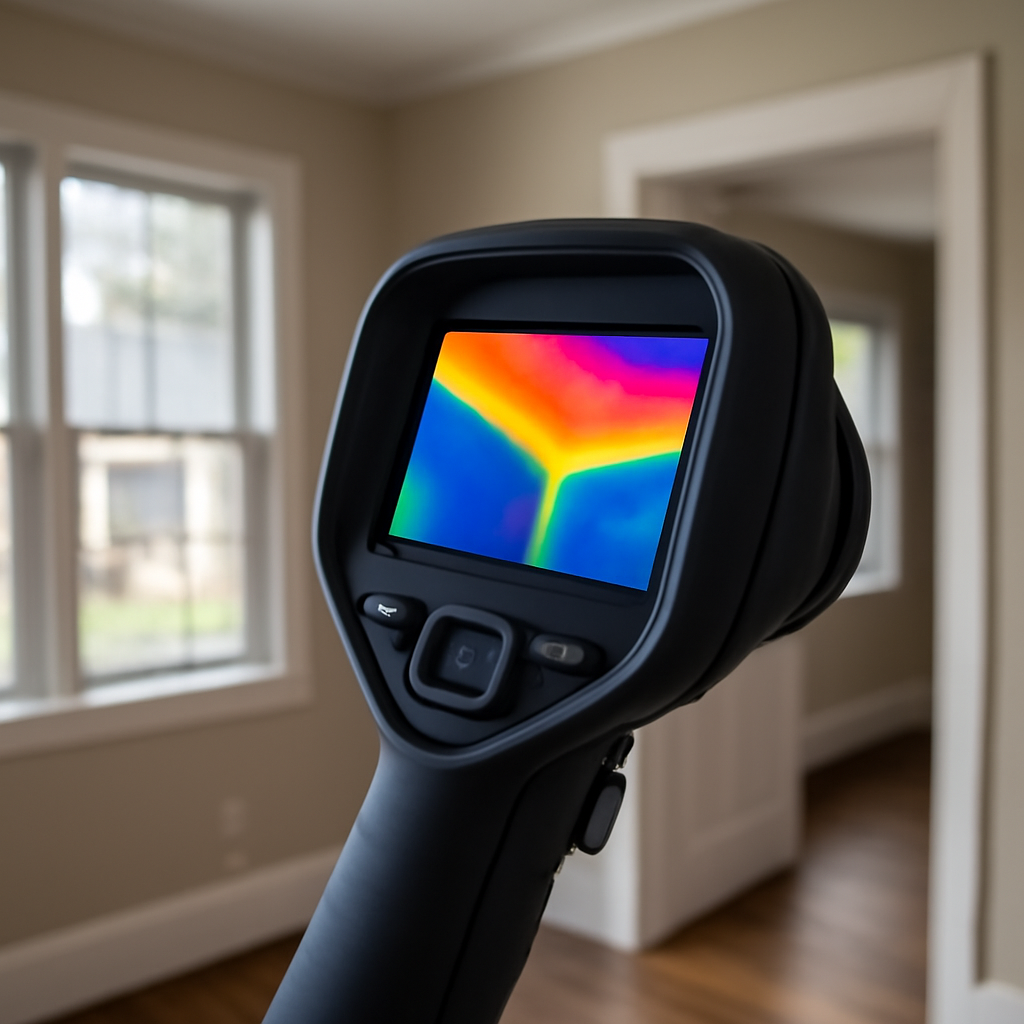
FLIR Systems is one of the largest manufacturers of infrared (IR) cameras for industrial, commercial, and consumer use. Homeowners encountering “FLIR IR camera” in inspection contexts often see one of three product families: handheld professional thermal imagers used by inspectors, smartphone-attached personal cameras used by enthusiasts and home users, and lower-cost compact models for occasional use. This guide explains the FLIR product families, the specifications that matter for residential applications, the common homeowner use cases, and how to think about choosing between owning a tool and hiring an inspector with one.
Part of our Thermal Imaging for Homes guide — start there for the full picture →
The FLIR IR camera product families
FLIR’s consumer and prosumer lineup organizes into three broad tiers, with the professional series above.
Phone-attached personal cameras
The FLIR ONE Pro and similar models plug into a smartphone via USB-C or Lightning. The thermal sensor and screen rely on the phone for processing and display. Resolution typically 160-by-120 with thermal MSX overlay that combines visible-light edges with thermal data. Price range $300 to $500. Good for homeowner curiosity scans and basic energy audits.
Compact standalone cameras
The FLIR C-series (C3, C5) and similar pocket cameras run independently of a phone, with dedicated touchscreen and battery. Resolution 80-by-60 or 128-by-96, with MSX. Price range $500 to $900. Good for inspectors who want a small backup or for serious homeowners.
Professional handheld cameras
The FLIR E-series (E4, E5, E6, E8, E76, E96) provide the resolution and feature set used by home inspectors. Resolution from 160-by-120 up to 640-by-480 with measurement modes, image fusion, video recording, and software analysis. Price range $1,500 to $10,000+. Used by working inspectors, energy auditors, and electrical maintenance professionals.
Industrial and scientific series
The FLIR T-series, GF-series, X-series, and others target industrial applications — predictive maintenance, gas detection, R&D, and specialized work. Rarely relevant for residential inspection. Mention here for completeness.
Specifications that actually matter for residential use
Six specs decide whether a FLIR IR camera does the job homeowners need.
Detector resolution
The number of thermal pixels in the image. Higher resolution does not invent defects but makes existing patterns easier to see. 80-by-60 is grainy and limits useful inspection. 160-by-120 is the practical floor for residential work. 320-by-240 and above give significantly cleaner images.
Thermal sensitivity
Often reported as Noise Equivalent Temperature Difference (NETD). Lower is better. A 50 millikelvin or better sensitivity resolves subtle temperature differences important in residential applications. Some cheaper sensors run 80 to 100 millikelvin, which limits their ability to distinguish small anomalies.
Temperature range
Most residential cameras cover roughly -20°C to 400°C. This is well beyond what homeowner applications need. Industrial cameras for hot equipment extend the upper range further.
Frame rate
9 Hz for export-controlled lower-end cameras, 30 Hz or 60 Hz for higher-end models. 9 Hz is fine for static building scans; higher rates help with moving subjects or video recording.
Field of view
Wider FOV captures more in one frame but reduces detail per object. Narrower FOV gives more detail on small targets at distance. Most general-purpose cameras use a 45-degree to 55-degree FOV.
Image fusion / MSX
FLIR’s Multi-Spectral Dynamic Imaging overlays visible-light edge detail on the thermal image, making it easier to identify exactly which window, outlet, or wall section the thermal pattern is on. Standard on consumer and most prosumer FLIR models.
What homeowners actually use a FLIR IR camera for
Five applications come up regularly.
DIY energy audits
Walking through the house on a cold day to identify air leaks around windows, doors, outlets, and attic hatches. The FLIR ONE Pro is sufficient for this; the patterns are obvious.
Insulation verification
Confirming insulation coverage after attic or wall improvements. Cold spots that remain after the work suggest missed areas.
Hidden leak investigation
Tracking warm or cool patches that suggest plumbing leaks or radiant-heat distribution. Confirmation requires a moisture meter, but the thermal scan localizes where to look.
Electrical panel hot-spot check
Identifying breakers running noticeably warmer than their neighbors. The dead-front cover should only be removed by qualified personnel. Visible-cover scans still catch some severe issues.
HVAC distribution diagnosis
Confirming whether each supply register delivers heated or cooled air at the expected temperature. Cold rooms with normal-looking registers often have kinked or disconnected ductwork.
Worked example: a FLIR ONE Pro home energy audit
A Lakewood homeowner buys a FLIR ONE Pro for $400 in November and runs a DIY winter energy audit. On a 25-degree morning with the thermostat at 70 degrees, they walk the house systematically.
Findings: a streak of cold air around the front door’s weather stripping where the seal has compressed. A pattern of cold rectangles between the studs on the master bedroom’s north-facing wall, indicating settled blown-in insulation in the upper half of the cavity. A cold patch around the attic hatch in the hallway, suggesting weatherstripping failure. A cold streak running along the bottom edge of every recessed light in a kitchen ceiling — old non-IC-rated fixtures with no air seal.
The total tool investment of $400 paid for itself in the first year through targeted weatherstripping, $200 in insulation top-up, recessed light retrofit covers, and a hatch upgrade. The homeowner did not have FLIR-level interpretation training but recognized common patterns from research before starting. For a transactional or insurance-grade report, a professional with higher-resolution equipment and certification would still be needed.
How FLIR IR cameras compare to other brands
FLIR is not the only manufacturer. Comparable products from Fluke, Seek Thermal, Hikmicro, and Topdon target similar use cases. FLIR’s advantages in the consumer space include strong app integration, MSX image fusion, and broad service support. Fluke holds an edge in electrical-maintenance contexts. Hikmicro and Topdon undercut FLIR on price but with less mature software ecosystems.
For homeowner purposes, brand matters less than the spec match. A 160-by-120 FLIR ONE Pro and a 160-by-120 Hikmicro pocket camera both produce similar image quality. The deciding factor is software, ergonomics, and personal preference. The companion homeowner buyer guide to FLIR thermal cameras goes deeper into model-by-model differences.
Cost and value framing
Three buying frameworks help homeowners decide.
Single-use need
If you have one specific issue to investigate — a suspected leak, a cold room — hire an inspector with a professional camera. A single $250 to $400 visit beats a $400 camera you use once and shelve.
Ongoing curiosity
If you plan to scan the house periodically over years, a FLIR ONE Pro at $400 to $500 is a reasonable purchase. The tool stays useful for energy-improvement decisions and post-renovation verification.
DIY home improvement focus
Active DIY homeowners running multiple projects per year benefit from a compact standalone camera in the C-series range or comparable competitor. The price step from phone-attached to standalone adds usability when working in spaces where a phone is awkward.
For broader inspection tooling context, the homeowner guide to home inspection tools places thermal imagers in the broader workflow alongside moisture meters and borescopes.
What a phone-attached FLIR camera cannot do well
Three limitations of consumer phone-attached cameras are worth understanding.
Lower sensitivity
The FLIR ONE Pro detector resolves down to about 70 millikelvin. Professional E-series cameras detect smaller temperature differences, catching subtler defects.
Limited measurement modes
Consumer cameras provide spot temperatures and basic measurement boxes. Professional cameras offer multi-spot measurement, isotherms, automated alerts, and detailed data export.
App workflow friction
Working through a phone app in an attic, crawlspace, or cluttered electrical room is slower and more error-prone than a dedicated handheld camera. The convenience-cost trade is real.
For a phone-attached FLIR specifically, the buyer guide for the FLIR ONE Pro Android attachment covers ergonomics and workflow in more detail.
Maintenance and care
Four habits extend FLIR IR camera life.
Protect the lens
The thermal lens uses germanium, which is brittle and expensive. Protect it from impacts and from cleaning with abrasive cloths. Use only lens cleaner approved by the manufacturer.
Maintain calibration
Manufacturer-recommended calibration intervals (typically annually for professional cameras) preserve measurement accuracy. Consumer cameras rarely need formal recalibration but should be sanity-checked against known temperatures occasionally.
Charge before storage
Lithium batteries degrade fastest when stored fully discharged. Charge to roughly 50-80% before long-term storage.
Software updates
FLIR releases firmware and app updates that improve image processing and add features. Keep the device current.
When to hire instead of buy
Three triggers favor hiring a professional with a FLIR IR camera.
Transaction or insurance documentation
Reports from certified inspectors with professional equipment carry more weight than homeowner phone-camera photos.
Complex multi-system diagnosis
Active moisture intrusion, structural concerns, and electrical safety issues benefit from a professional using thermal imaging alongside moisture meters and other tools.
Health and safety adjacency
Suspected mold, asbestos disturbance, or electrical fire risk should involve trained professionals rather than DIY exploration.
Common interpretation mistakes for new FLIR users
Three errors come up regularly among homeowners using a FLIR IR camera for the first time.
Confusing reflective surfaces with hot or cold spots
Polished metals, glass, and glossy paint reflect ambient infrared rather than emitting their own. A glossy radiator can read as oddly cool because the camera is seeing reflections of cooler nearby surfaces. Recognize reflective objects before drawing conclusions about their temperature.
Comparing images on different temperature scales
Auto-scaling cameras adjust the color range to the temperatures in the current frame. Two images on different scales cannot be directly compared. For comparison work, lock the temperature scale manually so different rooms or different days use the same color range.
Reporting moisture from thermal alone
Cool patches suggest moisture but do not confirm it. A moisture meter applied directly to the surface is required for confirmation. Drawing moisture conclusions from thermal images alone is a common rookie mistake that leads to wasted remediation effort.
Battery and lens care for longevity
Two specific habits keep FLIR cameras working for years. Charge lithium batteries to mid-range (50-80%) before long-term storage rather than full or empty. Both extremes accelerate degradation. The germanium lens at the front of the camera is brittle and expensive to replace; protect it from impacts and clean only with manufacturer-approved supplies. Household glass cleaner damages anti-reflective coatings on germanium lenses.
References
- ENERGY STAR: Seal and Insulate — U.S. Environmental Protection Agency (ENERGY STAR)
- Infrared Certified Thermographer — InterNACHI
- ASHI Standards of Practice — American Society of Home Inspectors
- International Residential Code — International Code Council
Frequently asked questions
Which FLIR IR camera is right for a homeowner?
For occasional energy audits and curiosity inspections, the FLIR ONE Pro phone attachment at $400 to $500 handles most needs. For frequent DIY use, a compact standalone like the C-series at $500 to $900 is more comfortable. Professional inspection work requires E-series cameras starting around $1,500.
What resolution does a useful FLIR IR camera need?
160-by-120 is the practical floor for residential applications. 80-by-60 is grainy enough to miss small defects. 320-by-240 and above give significantly cleaner images. Higher resolution does not invent defects but makes existing patterns easier to interpret.
Can a FLIR ONE Pro replace a professional inspection?
For curiosity and basic energy audits, yes. For transaction documentation, insurance claims, or complex multi-system diagnoses, no. Professional inspectors combine thermal imaging with moisture meters and other tools, and their reports carry more weight in formal contexts.
How does FLIR compare to other thermal camera brands?
FLIR's strengths include strong app integration, MSX image fusion, and broad service support. Fluke holds an edge in electrical-maintenance contexts. Hikmicro and Topdon undercut FLIR on price but with less mature software ecosystems. For homeowner purposes, spec match matters more than brand.
How long does a FLIR camera typically last?
With reasonable care — protecting the germanium lens, charging the battery to mid-range for storage, keeping firmware current, and sanity-checking calibration against known temperatures — a quality FLIR consumer camera lasts many years. Professional cameras need annual calibration to maintain measurement accuracy.
Thermal imaging cameras
Infrared cameras reveal hidden moisture, missing insulation, and air leaks. Phone-attachment models are the budget entry point; standalone units have higher resolution.
| Product | Why | Buy |
|---|---|---|
 FLIR ONE Pro (phone) FLIR ONE Pro (phone) | Plugs into iPhone/Android; inspector favorite. | Amazon — $349.00 |
 Topdon TC001 Topdon TC001 | High-res phone module at a low price. | Amazon — $199.99 |
 FLIR C5 Compact FLIR C5 Compact | Standalone pocket camera with Wi-Fi. | Amazon — $611.50 |