FHD IR Camera: What “Full HD Infrared” Actually Means
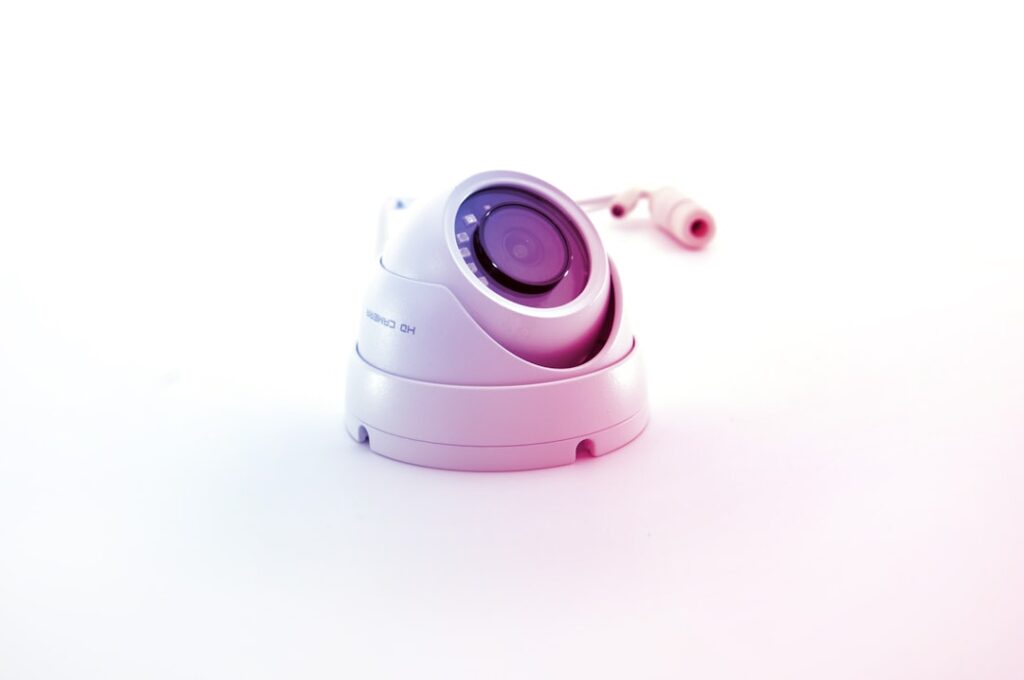
“FHD IR camera” is a search term that returns confusing results. Some hits are extremely expensive research-grade thermal imagers. Most are near-infrared (NIR) night-vision cameras with Full HD visible-light imaging plus an IR-illuminator that lights up dark scenes invisibly. Those are two completely different products solving completely different problems. This guide explains what “FHD IR” actually means, why true Full HD thermal cameras are rare, and how to read product listings in the category without getting misled.
What does FHD IR actually mean?
FHD stands for Full High Definition — 1920×1080 pixel resolution. It is the standard resolution for consumer video and most modern security cameras. IR stands for infrared, but the term covers two completely different camera technologies: thermal imaging (long-wavelength infrared, 8–14 micrometres) that detects heat directly, and near-infrared (NIR, around 700–1000 nanometres) that uses invisible illumination to light up a scene for a visible-light sensor to capture.
The confusion sits in the marketing language. A security camera advertised as “FHD IR” almost always means a 1080p visible-light camera with IR LEDs that illuminate the scene at night. The camera does not see heat. It sees the reflected near-infrared light from the LEDs, just as a normal camera sees reflected visible light during the day. A thermal camera advertised as “FHD IR” — if such a product is genuinely thermal — is a research-grade instrument costing $10,000 and up.
Why is true FHD thermal so rare and expensive?
Thermal cameras use microbolometer sensor arrays. Each pixel is a tiny resistor that changes electrical resistance based on the heat reaching it. Manufacturing these pixels at small sizes and high yields is technically harder than manufacturing visible-light CMOS pixels, which is why thermal sensor resolution lags visible-light resolution by roughly two decades.
The current professional-tier thermal resolutions hover around 320×240 to 640×480 for handheld cameras. 1024×768 thermal sensors exist but cost into the tens of thousands of dollars. A genuine 1920×1080 thermal sensor — true FHD thermal — exists in research and military instruments at price points that put them well out of consumer or even most professional inspection budgets.
The U.S. Department of Energy’s guidance on thermographic inspection notes that the resolution of practical building thermography cameras has improved gradually over the years but remains far below visible-light camera resolution. ASHRAE’s standards for building thermography reflect the same reality — the working professional resolution is 320×240, with 640×480 in the high tier.
What are most listings actually selling?
The majority of products marketed as “FHD IR camera” in consumer retail are one of two things:
Security cameras with IR illumination
Wired and WiFi security cameras for residential and commercial use almost universally include IR LEDs that turn on automatically in low-light conditions. The visible-light CMOS sensor captures the scene illuminated by these invisible LEDs and produces a clear nighttime image — usually black and white, since the IR illumination does not carry colour information. The sensor itself is a normal Full HD CMOS chip, not a thermal sensor. The camera does not detect heat. It sees the reflected near-infrared LED light.
These cameras are useful for nighttime surveillance, doorbell cameras, baby monitors, and general security. They do not solve the problems thermal cameras solve — they cannot find insulation gaps, moisture intrusion, or electrical hot spots, because they only see surfaces in IR illumination, not temperature.
Night-vision and wildlife cameras
Trail cameras, hunting cameras, and night-vision scopes use the same NIR + Full HD architecture as security cameras. They illuminate the scene with invisible IR light and capture in 1080p or higher resolution. Again, these are not thermal cameras. The image is a normal photograph lit by light the human eye cannot see — the wildlife or person being photographed does not perceive the flash.
How can a buyer tell the difference?
A few telltales separate true thermal cameras from NIR night-vision cameras in product listings:
Thermal cameras list resolution in pixels like 160×120, 320×240, or 640×480 for the thermal sensor — never 1920×1080 in consumer-tier products. They list a NETD (Noise Equivalent Temperature Difference) spec in millikelvin (e.g., 40 mK). They reference temperature measurement ranges in degrees Celsius or Fahrenheit (e.g., -20°C to 400°C). They show colour-mapped temperature images in their marketing photos — the familiar rainbow or iron-bow palette where blue is cold and white is hot.
NIR night-vision cameras list resolution in standard video formats (1080p, 4K). They reference IR LED count and IR illumination distance (e.g., 30m IR range, 12 IR LEDs). They show black-and-white nighttime photographs in their marketing — normal scenes illuminated by invisible light. They typically cost between $30 and $300 for consumer security models, while real thermal cameras start around $200 for entry tier and climb sharply from there.
When does a buyer actually want each one?
The use cases barely overlap. NIR night-vision and IR-illuminated security cameras solve visibility-in-the-dark problems: nighttime surveillance, perimeter monitoring, doorbell cameras, wildlife trail cameras. Thermal cameras solve temperature-detection problems: insulation surveys, moisture detection, electrical inspection, energy audits, machinery thermal monitoring.
A homeowner trying to find missing attic insulation needs a thermal camera. A homeowner trying to see who is at the door at night needs an FHD IR security camera. The two products both contain the letters “IR” in their marketing, but they are not substitutes for each other.
What if a buyer genuinely needs high-resolution thermal?
For practical building inspection and home maintenance work, 320×240 thermal resolution covers most use cases. 640×480 thermal is the professional tier. Above that, the cost climbs sharply and the buyer is typically a research lab, industrial inspection firm, or military contractor — not a residential inspector or homeowner.
Buyers who think they need FHD thermal resolution often actually need better professional technique with a moderate-resolution camera. Emissivity adjustment, thermal-load timing (scanning during peak temperature differential), distance management, and reflection awareness improve readings far more than chasing higher pixel counts. ASHI’s standards of practice and InterNACHI’s thermography training materials both emphasise technique over resolution for residential inspection work.
The home inspection tools pillar guide and the thermal imaging camera explainer cover the thermal category in plain language for buyers who do need a real heat-detection camera.
What about cameras that combine both technologies?
A handful of products combine a true thermal sensor with a visible-light camera in a single body. FLIR’s MSX-equipped cameras and Seek’s SeekFusion cameras both work this way. The thermal sensor captures heat data, the visible-light sensor captures edges and texture, and the software overlays the two for an image that looks more like a normal photograph with heat colours painted on. The thermal sensor in these cameras is still 160×120, 320×240, or 640×480 — the FHD-style image quality comes from the visible-light camera’s contribution, not the thermal sensor itself.
For buyers who want both nighttime visibility and heat detection in one tool, these combination cameras are the practical answer. They are not cheap — typically starting in the mid-hundreds and climbing into the thousands for professional units — but they deliver both functions in one workflow.
What about thermal vision through phone attachments?
Phone-attached thermal cameras like the FLIR ONE and Seek Compact use the smartphone’s high-resolution display to show thermal images that benefit from sub-pixel rendering. The underlying thermal sensor is still 160×120 or 206×156, but the displayed image looks sharper on a 1080p or higher phone screen than the raw sensor data would suggest. Buyers sometimes interpret this as “FHD thermal” — it is not. It is moderate-resolution thermal data displayed cleanly on a high-resolution screen.
How to read product listings without getting misled
A short checklist. Look for explicit thermal sensor resolution (160×120, 320×240, 640×480). Look for NETD specifications in millikelvin. Look for temperature range in degrees. Look for thermal palette samples in product photos. If those are present, you are looking at a real thermal camera. If the listing emphasises IR LED count, IR illumination range, and 1080p or 4K video — without thermal-specific specs — you are looking at an NIR night-vision camera. Both products have legitimate uses, but they solve different problems.
The price gap is the other strong signal. NIR night-vision security cameras run $30–300. Entry thermal cameras start around $200 and climb from there, with 640×480 thermal cameras typically costing $1500 and up. A “thermal” camera advertised at $50 with 1080p resolution is almost certainly an NIR security camera mislabelled or ambiguously marketed.
Why does the marketing language conflate the two technologies?
The conflation happens for several reasons. “Infrared” is a single word that covers a broad portion of the electromagnetic spectrum — near-infrared (NIR), short-wave infrared (SWIR), mid-wave infrared (MWIR), and long-wave infrared (LWIR) all qualify. Consumer security cameras use NIR illumination; thermal cameras use LWIR detection. Both are technically infrared, but the use cases barely overlap. Manufacturers and retailers benefit from the broad term because it sounds more advanced than “night vision” or “thermal”, and search engines do not enforce a distinction.
Some product listings actively exploit the confusion. A $50 “FHD IR camera” with 1080p video and IR LEDs costs the manufacturer roughly the same as a basic webcam plus illumination LEDs, but selling it under language that overlaps with thermal cameras (which start at $200 and climb sharply) lifts the perceived value. Buyers who do not know the difference assume they are getting a thermal camera at a bargain price. They are not — they are getting a perfectly functional NIR night-vision camera with marketing-language ambiguity.
What questions should a buyer ask before purchasing?
Before buying anything labelled “FHD IR” or similar, ask: Does this product measure temperature? If yes, what is the temperature range and accuracy? Does it produce thermal palette images (rainbow, iron-bow, gray-scale heat maps)? What is the thermal sensor resolution? Does it require IR LEDs to see in the dark, or does it detect heat directly?
Honest answers split the products cleanly. Thermal cameras measure temperature, produce thermal palette images, have low-resolution thermal sensors, and detect heat directly. NIR night-vision cameras do not measure temperature, produce normal black-and-white or colour images, have high-resolution visible-light sensors, and require IR LED illumination to see in the dark.
How to choose the right tool for your actual problem
Diagnose your problem first. If you want to see what is happening on your property at night for security or monitoring, an FHD IR security camera (NIR + 1080p) is the right tool. If you want to find missing insulation, water leaks behind walls, or electrical hot spots, a thermal camera at 320×240 or higher is the right tool. They are different products and confusing one for the other leads to disappointment.
Buyers cross-shopping the thermal category should look at the infrared camera purchase framework for genuine thermal buying guidance. The “FHD IR” label is a marketing label that hides which product category you are actually buying — read past it.
References
- Thermographic Inspections for Energy Efficiency — U.S. Department of Energy
- Building Thermography Standards Reference — ASHRAE
- Infrared Thermography Training — InterNACHI
- ASHI Standards of Practice — American Society of Home Inspectors