Black Mold Skin: What Homeowners Need to Know
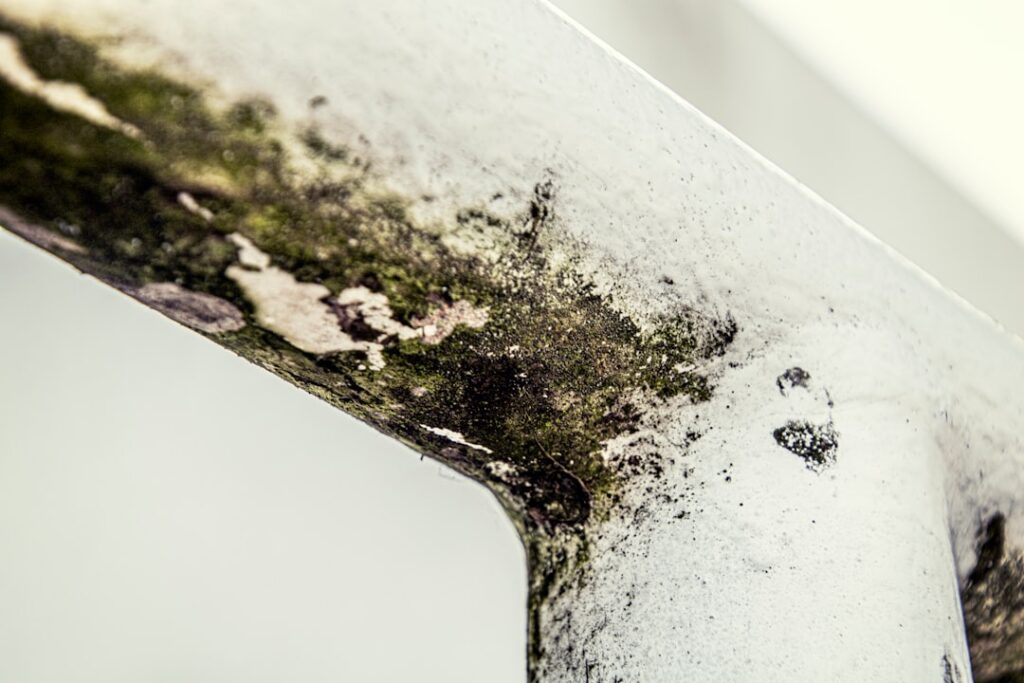
Skin reactions associated with mold exposure are a medical question. Anyone experiencing rashes, irritation, or other dermatologic symptoms they suspect are linked to mold should see a physician — clinical evaluation, diagnosis, and treatment require professional medical care. This article paraphrases EPA, CDC, and NIEHS guidance on residential mold and is written for homeowners; it is not medical advice. The home-side question — which household pathways drive skin contact with mold in the first place, and how to interrupt those pathways — is the focus here. Stopping the exposure source supports the medical recovery process; it does not replace it.
Part of our Black Mold & Your Health guide — start there for the full picture →
Is this mold, asbestos, or water damage? Get a free instant screen
Upload a clear photo of the suspect area. You'll get an instant AI screening opinion and what to do next. This is screening guidance, not a professional determination.
Screening guidance only. AI can be wrong. Confirm asbestos, mold type, or lead with lab testing or a licensed professional before acting.
Skin exposure pathways at home — the practical list
Skin contact with mold or mold-contaminated material at home falls into a small set of identifiable pathways:
- Direct surface contact: handling visibly moldy materials during cleanup, gardening, or storage retrieval.
- Bedding and bedroom surfaces: sleeping on bedding stored in damp areas, pillows that have absorbed humidified-room moisture, mattresses on damp basement floors.
- Clothing and closets: wearing items from a closet adjacent to a moisture problem, particularly basement-level closets.
- Bathroom surfaces: contact with moldy grout, caulk, shower curtains, fan grilles, and floor tile.
- Upholstered furniture: couches, chairs, and rugs in rooms with hidden moisture issues.
- HVAC-deposited dust: settled spores from contaminated ductwork transferring to skin via furniture, clothing, and bedding.
The intensity of any single pathway depends on contact frequency and surface area. Daily contact with bedding far outweighs occasional contact with a hidden basement colony.
The home-side action question
For someone whose physician is evaluating possible mold-related skin symptoms, the home-side parallel work is to identify which of these pathways apply, document the relevant colonies and contents, and remove or remediate them. This is concrete and methodical work. It runs independently of the medical evaluation, and both should proceed at full speed.
Locating the colony
Visual inspection paired with moisture-meter readings is the EPA-aligned starting point. A homeowner walking room-by-room is looking for:
- Discoloration on drywall, ceiling tile, baseboards, window sills, or HVAC registers.
- Musty odors that intensify near specific walls, closets, or fixtures.
- Warped baseboards, peeling paint, or efflorescence suggesting subsurface dampness.
- Condensation on cold-side surfaces — single-pane windows, uninsulated walls, supply-line valves.
- Recent leaks, roof issues, or basement seepage in the past 12 months.
The parent guide on mold inspection methodology covers the visual and instrument-based checks step by step for homeowners.
HVAC inspection
HVAC is a frequent contributor to skin-contact exposure because it distributes settled spores onto every surface in the home. The inspection points are: return grille interior, blower compartment, supply register interiors, and the evaporator coil if accessible behind a service panel. Any visible growth on internal duct liner typically warrants either professional cleaning by a NADCA-certified contractor or duct liner replacement. The companion piece on [black mold dust](https://inspectandtest.net/guides/black-mold-dust/) covers the deposition pathway.
Bathroom-specific patterns
Bathrooms produce the highest daily skin-contact opportunity in most homes. Shower surfaces, fan grilles, floor tile, and bath-mat contact all happen on a daily cycle. Mold in any of these locations translates directly into daily exposure.
Front Range bathrooms in homes built before about 1990 often lack adequately sized exhaust fans. ASHRAE recommends a minimum of 50 CFM operated for at least 20 minutes after each shower. Continuous-running humidistat-controlled fans are an upgrade that reduces moisture cycling significantly. Caulk and grout that have darkened typically need physical removal and replacement; cleaning rarely restores them.
Bedroom and closet pathways
Bedrooms are where skin-contact exposure accumulates by hours of duration. Humidifiers placed near beds, basement bedrooms with elevated humidity, closets sharing walls with exterior moisture sources, and mattresses or upholstery near humidity sources all create localized contact zones.
Practical homeowner steps: maintain indoor RH between 30 and 50 percent per EPA guidance; locate humidifiers away from beds and upholstered furniture; inspect basement-bedroom corner areas and closet floors for any signs of moisture or musty odor; rotate bedding and launder regularly with hot water.
Contents handling — clothing, bedding, fabrics
Items that have been in contact with moldy areas can carry spore load even after the colony is removed. Washable fabrics generally clean adequately with hot water (per fabric tolerance) and standard laundry detergent. Items that cannot be hot-washed may need professional cleaning or replacement.
Heavily contaminated upholstered furniture and mattresses are often discarded because porous interiors cannot be reliably cleaned. Books and paper-based contents are typically discarded if visible mold is present. Carpet pad with saturation history almost always requires removal; face carpet sometimes survives if the backing has not been colonized.
Cleanup workflow for surfaces driving skin contact
EPA’s homeowner-scale guidance applies to mold patches under approximately ten square feet on non-porous surfaces. The sequence:
- Fix the moisture source first. Leaks, condensation, or saturation must be repaired before cleaning.
- Isolate the work area with plastic sheeting and tape; run an exhaust toward a window if possible.
- Wear an N95 respirator, gloves, and eye protection. Disposable coveralls for larger work.
- For non-porous surfaces (tile, glass, sealed metal, finished wood), wet-wipe with detergent and water. Bleach is not required for routine non-porous cleanup per EPA.
- For porous materials with visible growth (drywall, carpet pad, ceiling tile, insulation), cut out and bag the affected sections.
- Dry the cavity thoroughly. Use dehumidifiers and air movers until moisture meters confirm equilibrium.
When professional remediation is appropriate
EPA recommends professional remediation for any colony larger than ten square feet, for sewage- or contaminated-water-associated growth, for HVAC system contamination, and when occupants are immune-compromised or experiencing significant medical responses. The CDC’s added guidance: anyone with asthma, allergies, or other respiratory conditions should consider professional remediation regardless of colony size.
HVAC remediation specifically
When duct interiors show visible growth, options range from professional cleaning to replacement of liner. NADCA’s protocol is the residential standard. Post-remediation, the system should run with high-efficiency filtration (MERV-13 minimum on systems that tolerate it) for 2–6 weeks while settled-spore loading clears from interior surfaces.
The in-batch piece on recovering from mold exposure covers the contents-and-HVAC clearance steps in more detail.
Front Range moisture context
Colorado’s dry climate often misleads homeowners into thinking mold cannot cause significant indoor problems. The actual pattern: winter humidification raises bedroom RH well above the EPA-recommended 30-to-50-percent range, condensation accumulates on cold-side surfaces (window glass, uninsulated walls behind furniture), and localized colonies establish where moisture meets cellulose-rich substrates. Bathrooms in older Denver and Boulder county homes lacking proper exhaust ventilation are the second predictable location. Basement bedrooms in homes with marginal perimeter drainage round out the top three.
Documentation and physician coordination
Homeowners pursuing both medical evaluation and home remediation should document the cleanup work for the treating physician. Photographs of visible mold pre-cleanup, dates of leak events, dates of remediation, and photographs of post-cleanup conditions form a record that informs medical decision-making. The CDC notes that environmental documentation is useful clinical context even though it does not by itself diagnose any condition. Coordination between the physician’s evaluation timeline and the home cleanup timeline often shortens the overall path to symptom resolution.
What this article cannot tell you
It cannot say whether your specific skin symptoms are caused by mold rather than another household exposure. It cannot recommend topical or systemic treatments. It cannot evaluate your individual risk. These are physician questions. The home-side message is consistent across mold guidance: find the colony, fix the moisture, remove the source, clean affected contents, and document the work. If symptoms persist after thorough remediation, the medical evaluation continues with cleaner-environment context.
Interrupting daily exposure during remediation
While the colony is being addressed and the home is in active remediation, several practical changes interrupt ongoing daily skin contact. Move the most-affected occupants out of bedrooms adjacent to the work area. Rotate to bedding and clothing stored in areas distant from the colony. Use temporary HEPA-filtered air purifiers in primary sleeping areas. Increase laundry frequency for items in regular skin contact. Wipe down high-contact surfaces (door handles, light switches, bathroom counters) daily with detergent during the active work period.
These steps do not substitute for source remediation. They reduce the cumulative daily contact loading while the longer remediation process proceeds. For households with high-sensitivity occupants, temporary relocation to a non-affected residence during the most disruptive demolition and drying phases is sometimes the cleanest option.
Identifying the source colony when visible inspection fails
Sometimes systematic visual inspection turns up no visible mold but skin symptoms persist and the home is the suspected exposure source. In these cases, hidden-cavity inspection becomes the priority. Tools and techniques:
- Pin-type moisture meters survey suspected walls, particularly those adjacent to plumbing fixtures or perimeter walls in basements.
- Infrared thermography identifies temperature differentials suggesting hidden moisture.
- Inspection cameras on flexible cables pass through small access holes drilled at the bottom of suspected wall sections.
- HVAC interior inspection through register removal, blower-compartment access panel, and (if accessible) evaporator coil service door.
- Crawlspace inspection for upward-moving humid air and floor-framing condition.
- Attic inspection for roof-deck and insulation condition above suspected rooms.
This level of inspection is often professional-territory work. Credentialed mold inspectors and remediation firms on the Front Range have the tools and experience to do systematic hidden-cavity assessment without unnecessary destructive investigation.
Front Range patterns specific to skin contact
Front Range housing produces three patterns that drive most skin-contact mold concerns. Winter humidification in bedrooms — common in dry-climate Colorado — creates localized condensation behind bedroom furniture and on pillow-and-bedding surfaces, supporting colonies in continuous skin-contact zones. Marginally ventilated bathrooms in older Denver, Boulder, and Jefferson county homes produce shower-area colonies that transfer to towels, bath mats, and clothing during daily routines. Finished basement bedrooms with hidden perimeter-wall growth contribute to bedding and stored-clothing transfer over years.
Pre-purchase mold inspection should target these patterns for buyers with known mold sensitivity. Standard home inspection generally does not include destructive cavity investigation; a specialized mold inspection adds roughly $400-$800 to inspection cost but maps high-yield exposure pathways before the buyer commits.
Recurrence prevention after remediation
Once skin-contact exposure pathways have been interrupted through source remediation and contents cleanup, preventing recurrence becomes the operational priority. Practical recurrence-prevention steps that homeowners can integrate into normal maintenance:
- Install a hygrometer in primary living areas and maintain indoor RH between 30 and 50 percent per EPA guidance.
- Verify bathroom exhaust fans run for at least 20 minutes after each shower; consider humidistat-controlled fans for continuous moisture management.
- Inspect under-sink areas and behind appliances quarterly for any signs of slow leaks.
- Replace HVAC filters per manufacturer schedule; consider MERV-13 filtration if the system can handle the static-pressure increase.
- Annual visual inspection of attic decking, basement perimeter walls, and crawlspace conditions where present.
- Address any new water-damage events within the 48-hour mold-prevention window: stop the source, remove standing water, dry the cavity, and verify drying with a moisture meter.
These maintenance steps are inexpensive in time and money relative to the cost of remediating a recurrence. Homeowners who have already navigated one mold event typically find the prevention steps straightforward to integrate.
References
- Mold and Health — U.S. Environmental Protection Agency
- About Mold — Centers for Disease Control and Prevention
- Mold — National Institute of Environmental Health Sciences
- Mold and Dampness — American Lung Association
Frequently asked questions
What does black mold skin contact feel like?
Individual responses vary widely. Any specific skin symptom should be evaluated by a physician, because many other household allergens — dust mites, fragrances, detergents, plant proteins — produce similar reactions. The CDC notes that not all occupants exposed to mold develop skin reactions.
Should I clean it myself?
EPA suggests homeowner cleanup is appropriate for non-porous mold patches under ten square feet, assuming the moisture source has been repaired. Larger colonies, HVAC contamination, or any household with medical symptoms warrant a credentialed remediation contractor.
Will my skin clear up after I clean the mold?
That depends on individual response and is a question for the treating physician. The home-side answer is to remove the ongoing exposure source as fast as possible. Medical recovery then proceeds on its own timeline under clinical guidance.
Do I need bleach for shower mold?
Not for routine non-porous cleaning. Detergent and water is the EPA baseline. Bleach does not penetrate porous materials like degraded grout. If grout is darkened throughout, physical removal and replacement is the durable fix.
Front Range homeowners working to identify household exposure pathways feeding skin symptoms can connect with a vetted local inspector through our contact page for an on-site assessment.