Black Mold in the Bathroom: How Worried Should You Be?
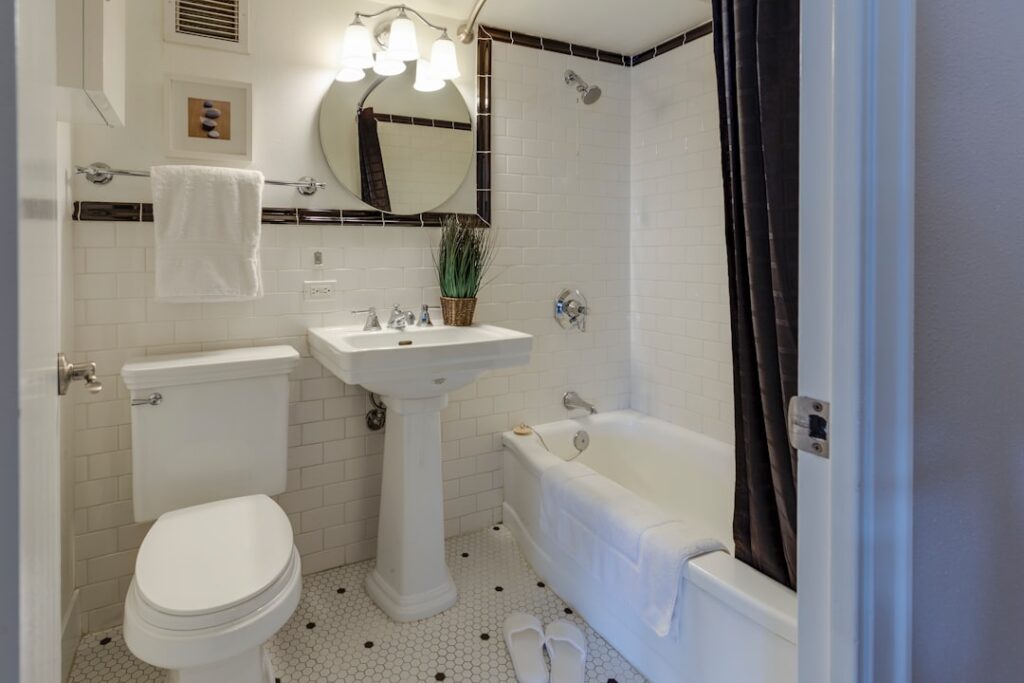
You spot a dark streak in the shower caulk, a gray-black film on the grout, or a fuzzy patch on the ceiling above the tub, and the first word that comes to mind is toxic. The honest answer sits between the two extremes you find online: a small dark patch in a bathroom is worth cleaning promptly, but it is almost never the poisonous Stachybotrys chartarum the horror stories describe. What actually matters is how much there is, what it is growing on, and whether anyone in the house is reacting to it.
Part of our Black Mold & Your Health guide — start there for the full picture →
Is this mold, asbestos, or water damage? Get a free instant screen
Upload a clear photo of the suspect area. You'll get an instant AI screening opinion and what to do next. This is screening guidance, not a professional determination.
Screening guidance only. AI can be wrong. Confirm asbestos, mold type, or lead with lab testing or a licensed professional before acting.
So is that black stuff actually toxic?
For a healthy adult looking at a coin-sized to hand-sized patch of dark growth on tile, glass, or caulk, the realistic risk is irritation, not poisoning. The EPA’s mold-and-health guidance is blunt about it: no matter the species, indoor mold should be removed and the moisture fixed, because spores and fragments can irritate eyes, skin, nose, throat, and lungs. But the same agencies decline to label ordinary shower mold a systemic poison. The CDC states that a causal link between specific indoor molds and serious illness in otherwise healthy people is not well established, while people with asthma, allergies, or weakened immune systems react more strongly and deserve more caution.
The phrase “toxic black mold” almost always points to Stachybotrys chartarum, which can produce trichothecene mycotoxins. Here is the part that gets lost: Stachybotrys needs sustained water saturation of cellulose — soaked drywall paper, wet ceiling tile, wet cardboard, wet wallpaper backing — typically after a leak or flood has kept material wet for a week or more. It does not colonize the glazed face of a ceramic tile or the surface of a silicone bead. If your “black mold” is on hard, non-porous shower surfaces, the odds it is Stachybotrys are low.
What you’re probably looking at instead
Most dark bathroom growth falls into one of three groups, and the color alone will not tell you which:
- Cladosporium — the usual suspect on shower tile and grout. Olive-green to black, surface-clinging, wipes off relatively easily. It produces allergens, not the mycotoxins that drive the scary headlines.
- Aspergillus/Penicillium — grayish to black colonies on damp drywall and around vents, often in small concentric rings.
- Stachybotrys — slimy when wet, powdery when dried, almost exclusively on soaked cellulose behind or below the finished surface, not on the tile itself.
One thing people mistake for black mold is not mold at all: a pink or orange slimy film in the shower or toilet is usually Serratia marcescens, an airborne bacterium that feeds on soap and mineral residue. It is a separate problem with a separate fix, covered in our note on pink mold in the bathroom. Telling species apart by eye is genuinely hard, which is why lab identification (a tape lift or air sample) only makes sense when a remediation plan or a health question hinges on it — not for wiping down a shower corner.
Why bathrooms grow mold so easily
Three conditions have to line up for mold, and a bathroom delivers all three several times a day. Humidity spikes past 70% during a hot shower. Food is everywhere — soap scum, skin cells, shampoo residue, the paper facing on drywall, even cellulose in latex paint. And ventilation is often an afterthought: a single weak fan, sometimes one that dumps into the attic instead of outside. The EPA’s moisture-control guidance flags indoor relative humidity above 60% as the point where growth becomes likely on cool surfaces; keeping it in the 30–50% range is the target. A poorly vented bathroom can sit above 60% for hours after every shower.
On the Colorado Front Range there is a specific trap. The dry outdoor air convinces people that mold is a coastal problem, so they run a small, unvented bathroom hard in winter. The humid air condenses on the cold exterior wall behind the shower, and a colony grows on the back of the drywall — discovered only when the paint blisters or a baseboard warps. Dry climate outside does not mean dry surfaces inside.
The warning signs that change the answer
Independent of species, bathroom mold turns from a chore into a real problem when you see any of these:
- More than about 10 square feet of visible growth. The EPA uses roughly 10 sq ft (a patch about 3 feet on a side) as the line above which professional remediation is the safer call.
- It comes back within days of a thorough cleaning — a sign the moisture source (a failed shower pan, a leak in the plumbing wall, chronic condensation) is still feeding it.
- A musty smell that lingers even when the surface looks clean — often growth inside the wall cavity.
- Soft, spongy, or sagging drywall behind tile or below the tub line — the substrate is saturated and has to be cut out, not cleaned in place.
- Symptoms that track with the house — congestion, cough, sinus irritation, or asthma flare-ups that ease when someone leaves for a day or two and return at home.
Cleaning it yourself, the right way
For a patch under 10 square feet on a hard, non-porous surface — tile, glass, a fiberglass tub surround, sealed grout — you can usually handle it. Wear gloves and an N95 respirator, and ventilate. Scrub with detergent and water; for staining detergent will not lift, the EPA notes a bleach solution of no more than 1 cup of household bleach per gallon of water can be used, then rinse and dry the area completely. The full step-by-step, including how to reach mildew in the grout, is in our shower black-mold removal guide.
Three things not to do:
- Do not paint over live mold. Mildew-resistant primer slows regrowth but cannot bury an active colony — it will bleed back through.
- Never mix bleach and ammonia. The reaction produces toxic chloramine gas.
- Do not scrub blackened silicone caulk expecting it to come clean. Once growth is inside the silicone matrix, the fix is to cut the bead out, clean and dry the substrate, and reseal with new mildew-resistant silicone.
The prevention that actually moves the needle is airflow. An exhaust fan sized to the room and ducted to the outdoors — run during the shower and for at least 20 minutes after — is the single biggest deterrent. A humidity-sensing or timer switch takes the memory out of it. Where no fan exists and ducting through the attic is impractical, cracking a window for 10 minutes after each shower gets you most of the way in dry Front Range weather.
When to stop cleaning and call an inspector
You do not need a lab test for a small shower patch. Testing and a professional look earn their keep when the area is large, when growth keeps returning despite better ventilation, when occupants have persistent symptoms, when you suspect hidden growth inside a wall or under the floor, or when a home is changing hands. A qualified mold inspector — credentialed through InterNACHI, the American Council for Accredited Certification, or a state program — typically starts with infrared imaging and a moisture meter to map wet spots, makes a small inspection cut only if the readings warrant it, and samples last, not first. Our mold inspection and testing hub walks through what that visit involves and how it differs from a DIY test kit.
Health questions worth a doctor’s answer
The NIEHS and CDC list nasal congestion, sneezing, watery eyes, throat irritation, cough, wheeze, and skin rash as the common reactions to indoor mold, with stronger responses in people who have asthma or hay fever. Symptoms that fade on vacation and return at home are the clearest signal that something indoors is contributing. If they persist, a primary-care doctor or allergist can order specific IgE testing for common mold allergens — a far better path than an internet symptom checklist. Direct-to-consumer “mycotoxin urine panels” are not endorsed by mainstream medicine for routine diagnosis. Children, older adults, and immunocompromised household members warrant erring toward early cleanup rather than waiting.
Common questions
Frequently asked questions
Is the black stuff in my shower caulk toxic black mold?
Almost always no. Growth on glazed tile and silicone caulk is typically Cladosporium, a surface mold that produces allergens rather than the mycotoxins associated with Stachybotrys. Stachybotrys needs soaked cellulose like wet drywall paper, not the face of a shower surface.
How large a patch can I safely clean myself?
The EPA's rule of thumb is that a homeowner can handle up to about 10 square feet on hard, non-porous surfaces using detergent and water, or a bleach solution of no more than one cup per gallon for stubborn staining. Larger areas, or growth on porous materials like drywall and carpet, generally call for a professional.
Why does the mold keep coming back after I clean it?
Recurring growth means the moisture source was never fixed. Confirm the exhaust fan vents outside rather than into the attic, check the shower pan and supply lines for hidden leaks, and make sure indoor humidity drops back under 60% within an hour of showering.
Can bathroom mold actually make me sick?
It can trigger congestion, coughing, and eye or skin irritation, especially in people with asthma, allergies, or a weakened immune system. Healthy adults often react little to a small surface patch, but the CDC still advises cleaning any indoor mold and seeing a doctor if symptoms persist.
This page reflects EPA, CDC, and NIEHS guidance current as of 2026; consult a certified inspector for testing decisions and your physician for symptoms. Front Range homeowners dealing with mold that spreads despite repeated cleaning, recurring water stains, or a musty smell that will not clear can reach out through our contact page for a referral to a vetted local inspector.
Mold removal & cleanup picks
For a small, contained patch (under ~10 sq ft) these EPA-friendly removers handle surface mold. Larger or recurring growth warrants a professional assessment first.
| Product | Why | Buy |
|---|---|---|
 RMR-86 Instant Mold Stain Remover RMR-86 Instant Mold Stain Remover | Fast-acting on stains; ventilate and wear PPE. | Amazon — $29.99 |
 Concrobium Mold Control Concrobium Mold Control | No-bleach formula that also helps prevent regrowth. | Amazon — $11.26 |
 Mold Armor Mold & Mildew Remover Mold Armor Mold & Mildew Remover | Widely stocked bathroom/surface remover. | Amazon — $22.98 |