Asbestos Wall Insulation: What Homeowners Know
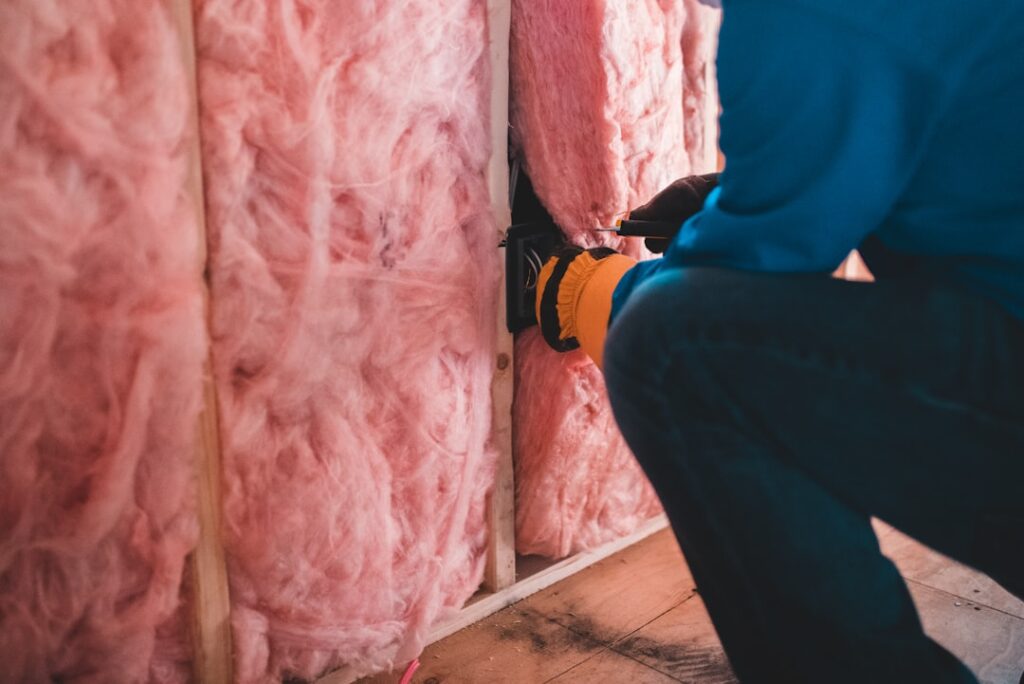
Insulation tucked inside a wall is, by design, out of sight—which is exactly what makes asbestos wall insulation easy to forget until a renovation opens the cavity. Unlike attic vermiculite or basement pipe wrap, wall insulation stays hidden behind drywall or plaster, and homeowners often disturb it without knowing what they have. Asbestos wall insulation is a quiet hazard in older homes. This guide summarizes EPA, CDC, and OSHA guidance current as of 2026 for informational purposes only; it is not a substitute for accredited laboratory testing or advice from a certified professional, and health concerns should go to your physician.
Part of our Asbestos in the Home guide — start there for the full picture →
Is this mold, asbestos, or water damage? Get a free instant screen
Upload a clear photo of the suspect area. You'll get an instant AI screening opinion and what to do next. This is screening guidance, not a professional determination.
Screening guidance only. AI can be wrong. Confirm asbestos, mold type, or lead with lab testing or a licensed professional before acting.
What Is Asbestos Wall Insulation?
Asbestos wall insulation is any insulating material containing asbestos that was installed inside wall cavities or applied to wall assemblies in older buildings. It took several forms: loose-fill granular insulation poured into cavities, including vermiculite from the contaminated Libby mine; rigid asbestos-containing board or block used in certain wall and partition assemblies; and asbestos-containing materials in plaster or sprayed-on applications on some walls. Each form was chosen for the same combination of thermal performance and fire resistance, and each now presents its own identification and handling challenge.
Because walls were finished over the insulation, the material is usually concealed, which sets it apart from more visible asbestos like exposed pipe wrap. A homeowner typically encounters it only when a wall is opened for remodeling, wiring, plumbing, or after damage. That hidden quality is why testing before wall work is the recurring recommendation. The concealment cuts both ways: it keeps intact material safely out of the air, but it also means a homeowner can live for years unaware that a wall holds asbestos, only to release it in a single afternoon of demolition. Unlike an attic a person can peer into or a basement pipe they can see, wall insulation gives no advance warning, which places the burden on knowing the home’s age and testing proactively rather than reacting to what becomes visible. The loose-fill form overlaps heavily with the broader question of whether asbestos was used in insulation, and the vermiculite variety with our vermiculite insulation and asbestos guide.
Why Asbestos Ended Up in Walls
The same properties that put asbestos in attics and on pipes put it in walls: thermal insulation, fire resistance, and low cost. Builders from the early 1900s into the late 1970s used asbestos-containing materials wherever those traits helped, and wall cavities were no exception. Vermiculite poured into block walls and cavities added insulation and fire resistance; rigid asbestos board served in fire-rated partitions; and asbestos found its way into some plaster systems.
Fire resistance was a particular driver in walls separating living spaces, garages, and mechanical rooms, where building practice favored materials that would not burn. The result is that a pre-1980 home can carry asbestos in its walls even when the attic and pipes are clear, and vice versa. Each location had its own products, so finding asbestos in one place neither confirms nor rules it out elsewhere.
How to Recognize It (and Why You Often Cannot)
Recognition is harder for wall insulation than for most asbestos materials because it is hidden. When a wall is opened, certain clues raise suspicion.
- Loose-fill granules — pebbly gray-brown to gold vermiculite poured into a cavity strongly suggests testing, given the Libby contamination history.
- Rigid board or block — dense, fibrous panels in older partitions or around mechanical chases.
- Age of the home — pre-1980 construction raises the baseline suspicion.
- Plaster systems — some older plaster contained asbestos, though appearance does not reveal it.
None of these confirms asbestos. The fibers are microscopic, and many materials look alike. A homeowner who opens a wall and finds suspect insulation should treat it as potentially asbestos-containing and stop, rather than continue working, until a lab settles the question.
The Hidden-Disturbance Risk
The defining hazard of wall insulation is accidental disturbance. Because the material is concealed, homeowners routinely break into it without realizing—cutting a hole for an outlet, removing a section of drywall, running a cable, or demolishing a wall during a remodel. Each of these can release fibers from asbestos-containing insulation directly into the work area and, through the home’s air, beyond it.
Loose-fill insulation is friable and releases fibers readily when a cavity is opened. Rigid board is non-friable but releases fibers when cut or broken. The common thread is that the act of accessing the wall is itself the disturbance. The CDC links inhaled asbestos fibers to asbestosis, lung cancer, and mesothelioma, with no safe exposure level, so a single afternoon of unprotected demolition in an asbestos wall carries real risk. This is why the EPA frames testing before disturbance as the central precaution.
What to Do Before Opening a Wall
The practical sequence is to test before, not after, the wall is opened. In a pre-1980 home, before any project that will breach a wall—remodeling, rewiring, adding a window, demolishing a partition—a homeowner should arrange asbestos testing of the wall materials. A certified inspector can sometimes sample through a small, controlled opening to identify what is inside before full demolition begins.
If a wall is opened and suspect insulation appears unexpectedly, the right move is to stop work immediately, leave the material undisturbed, limit access to the area, and avoid creating air currents. Do not vacuum or sweep loose granules with household equipment, which disperses fibers. Then call a certified asbestos inspector. The lab result determines whether the project can proceed as ordinary work or must continue as regulated abatement, consistent with the approach across our asbestos and lead hazard guide.
Asbestos in Masonry and Block Walls
A specific and often-overlooked form of wall insulation is loose-fill poured into the hollow cores of concrete block or masonry walls. Builders sometimes filled block cavities with vermiculite to add insulation and fire resistance, and because that vermiculite frequently came from the contaminated Libby mine, those cores can hold asbestos-contaminated material. Block foundation walls, garage walls, and exterior masonry in older homes are candidate locations.
This form is easy to forget because the material is sealed inside the block, invisible from either face. A homeowner only encounters it when cutting into a block wall for a window, door, vent, or utility penetration—at which point the granules pour out. Anyone drilling or cutting a poured-core block wall in a pre-1980 home should consider the possibility of vermiculite fill and test before breaching it, since the act of opening the core releases the loose granules directly into the work area.
Why Wall Insulation Is Easy to Overlook
Compared with attic vermiculite that a homeowner sees every time they open the hatch, or pipe wrap exposed in a basement, wall insulation hides completely behind finished surfaces. This invisibility is the root of its risk. A homeowner planning a kitchen remodel, a new doorway, or added electrical outlets rarely thinks about what insulation lurks in the walls until the drywall comes off.
The oversight is compounded by the variety of forms wall insulation can take—loose fill, board, block-core vermiculite, or asbestos-containing plaster—each requiring its own recognition and test. Inspectors and abatement professionals approach a pre-1980 wall with the assumption that something could be inside, which is why they advise testing before any breach. A homeowner who carries the same assumption into a renovation, rather than discovering insulation mid-demolition, is the one who avoids an accidental release. Treating concealed wall materials as suspect by default is the practical safeguard against the hidden-disturbance trap.
Testing, Removal, and Managing in Place
Confirmation comes only from an accredited laboratory analyzing a sample, since the fibers cannot be seen. The EPA advises against homeowner sampling because collecting a sample disturbs the material; a certified inspector samples safely and submits to a lab using polarized light or electron microscopy.
If the result is positive, the response depends on plans. Where the wall can stay intact and undisturbed, leaving the insulation in place is generally the EPA-preferred, lowest-risk path—the concealed material releases few fibers when nothing breaches it. When renovation requires opening or removing the wall, the work becomes regulated abatement: licensed contractors use containment, negative air pressure, wet methods, HEPA extraction, and sealed disposal at an authorized landfill. For loose-fill especially, removal is high-risk work that no homeowner should attempt, a point reinforced in our insulation identification guidance.
Why DIY Wall Work Goes Wrong
Wall renovation is one of the most common ways homeowners accidentally release asbestos, precisely because the material is invisible until the wall is open. A homeowner mid-project, having already cut into the cavity, is often the one who discovers the insulation—at which point fibers may already be airborne. Continuing to work, or trying to clean up with a shop vacuum, compounds the problem by spreading fibers through the house.
OSHA’s asbestos standards require containment, respiratory protection, and disposal procedures that a homeowner cannot replicate with ordinary tools. The economics that seem to favor DIY collapse once a contaminated home needs professional decontamination, and the long-term health stakes outweigh any saved labor cost. For confirmed asbestos wall insulation, disturbance is professional work.
When to Call a Professional
The triggers center on the moment a wall is breached. Bring in a certified asbestos inspector before any project that will breach a wall in a pre-1980 home, the moment suspect insulation appears in an opened wall, and whenever a sale or permit requires the material’s status documented—the earlier in the planning, the better, since testing before demolition is far safer than discovering material mid-project. The inspector tests, an accredited lab confirms, and a licensed abatement contractor handles any disturbance under EPA and OSHA rules.
Front Range homeowners planning to open walls in an older home, or who have already found something unexpected behind the drywall, can reach out through our contact page to connect with a vetted local inspector. Testing before the wall comes apart is the step that keeps a remodel from turning into an asbestos cleanup.
Common Projects That Breach Walls
Knowing which everyday projects open wall cavities helps a homeowner plan testing before, not after, the disturbance. Kitchen and bathroom remodels routinely require opening walls to move plumbing and electrical. Adding or relocating outlets, switches, and light fixtures cuts into wall cavities. Installing a new window or door breaches both the wall framing and any insulation in it. Running new wiring for an addition, a hot tub, or a home office disturbs cavities along the run.
Energy-efficiency upgrades are an underappreciated category. Drilling holes to blow in new insulation, air-sealing wall penetrations, or removing old insulation to upgrade it all directly disturb whatever is already in the cavity. Even hanging heavy items that require opening a wall to add backing can release material. For a pre-1980 home, each of these projects is a reason to test the wall materials first. The pattern across all of them is the same: the work that improves a home is also the work that breaks into concealed insulation, which is why the test belongs at the planning stage.
Asbestos in Plaster Wall Systems
Older homes with plaster rather than drywall walls present an additional consideration, because some plaster systems contained asbestos. Asbestos was added to certain plaster and stucco mixes for strength and fire resistance, and the brown coat or finish coat of a plaster wall could carry it. Unlike loose-fill insulation that pours out of a cavity, asbestos in plaster is bound in the wall surface itself.
This matters when a renovation involves removing or cutting into plaster walls, a common step when modernizing an older home or repairing damage. Demolishing plaster generates dust, and if the plaster is asbestos-containing, that dust carries fibers. The material is generally non-friable while intact, so an undisturbed plaster wall is low-risk, but the act of demolition or cutting changes that. A homeowner planning to remove plaster in a pre-1980 home should have it tested alongside any cavity insulation, since the wall assembly may hold asbestos in more than one component. Treating the whole wall system—surface and cavity—as potentially containing asbestos is the thorough approach.
References
- Protect your family from asbestos exposures — U.S. EPA
- Asbestos health effects — CDC / NIOSH
- Asbestos in construction and renovation — OSHA
Frequently asked questions
How do I know if my walls have asbestos insulation?
You often cannot tell until a wall is opened, and even then appearance does not confirm it. Loose-fill vermiculite granules and rigid board in pre-1980 homes raise suspicion. Only an accredited laboratory test on a sample collected by a certified inspector confirms asbestos.
Is asbestos wall insulation dangerous if the wall is intact?
Concealed, undisturbed insulation releases few fibers, so an intact wall is generally low risk and is often best left in place. The hazard arises when the wall is cut, drilled, or demolished, which can release fibers, especially from friable loose-fill material.
What should I do if I find insulation while opening a wall?
Stop work immediately, leave the material undisturbed, limit access, and avoid air currents. Do not vacuum or sweep loose granules with household equipment. Call a certified asbestos inspector to test before doing anything else, since fibers may already be at risk of release.
Can I remove asbestos wall insulation myself?
No. Removal of confirmed asbestos insulation, especially friable loose-fill, is regulated abatement work requiring containment, respirators, and sealed disposal under OSHA rules. Household tools spread fibers and can contaminate the whole home. Hire a licensed abatement contractor.
Planning to open walls in an older Front Range home, or already found something behind the drywall? Test before going further. Get in touch through our contact page to connect with a qualified local inspector who can arrange accredited testing.
Asbestos test kits
Asbestos can only be confirmed by a lab. A mail-in kit gets you a sealed sample container and accredited analysis — never sand or disturb suspect material first.
| Product | Why | Buy |
|---|---|---|
| Asbestos Test Kit (mail-in lab) | Includes PPE + sealed mailer. | Amazon |
| Pro-Lab Asbestos Test Kit | Widely available; lab fee separate. | Amazon |