Mold Testing in Monument, Colorado | InspectandTest
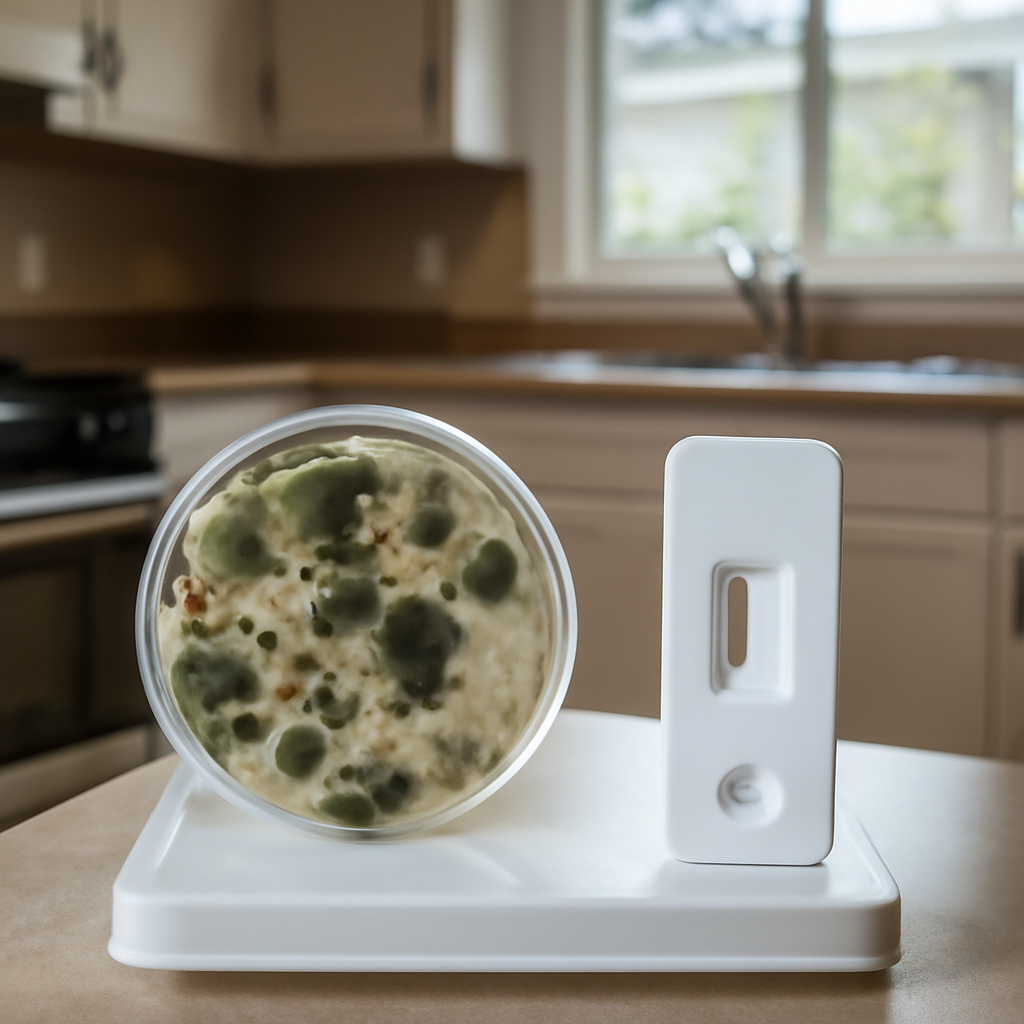
Monument sits at roughly 7,000 feet on the Monument Divide in El Paso County, the highest, coldest, and most heavily forested stretch of the Front Range corridor. Its largely 1990s-through-2020s housing favors big finished and walkout basements in Jackson Creek, Woodmoor, and Kings Deer, with some older Tri-Lakes stock. Long sealed winters and shaded, forested lots create conditions where mold can grow unseen. Mold testing identifies what is present and helps characterize a problem before remediation. This page explains how mold testing in Monument works, when it makes sense, and what it costs. This summary reflects EPA and CDC guidance current as of 2026 and is general information, not a medical or remediation diagnosis; consult a certified professional.
Part of our Mold Testing & Inspection guide — start there for the full picture →
Is this mold, asbestos, or water damage? Get a free instant screen
Upload a clear photo of the suspect area. You'll get an instant AI screening opinion and what to do next. This is screening guidance, not a professional determination.
Screening guidance only. AI can be wrong. Confirm asbestos, mold type, or lead with lab testing or a licensed professional before acting.
Mold testing in Monument: what to know
Mold testing collects samples, usually from the air or a surface, and a laboratory identifies the mold types present and, for air samples, compares indoor spore concentrations against an outdoor baseline. It answers what is here and how much, a different question from where the moisture is coming from, which an inspection addresses.
In Monument, testing most often follows a visible finding or a musty odor in a finished walkout basement in Jackson Creek or Woodmoor. The EPA’s guidance is that sampling is not always necessary, because visible mold should be cleaned up and the moisture corrected regardless of species. Testing earns its keep when a result needs documentation, when growth is suspected behind finishes, or when occupants report symptoms and want the air characterized. For the broader picture of how mold behaves and what results mean, our mold inspection and testing hub lays out the fundamentals.
Pairing matters. Many Monument homeowners begin with a mold inspection in Monument to locate the moisture source, then add testing only where it changes the plan. That sequence avoids paying for lab work that does not move a decision while still giving documented results when they are genuinely useful, such as before a sale.
It helps to set expectations about results. Mold spores are everywhere, indoors and out, so a result is interpreted relative to a same-day outdoor sample and the home’s conditions, not against a fixed safe threshold. At Monument’s elevation and in its forested setting, outdoor spore counts shift seasonally, which makes the same-day outdoor baseline especially important for a meaningful comparison.
There is no government-set safe limit for indoor mold spores the way there is a 4 pCi/L action level for radon, so the result is read as a comparison rather than a verdict. A tester looks at whether the indoor count is similar to the outdoor air on the same day and whether the mix of spore types matches. If indoor air mirrors outdoors and is dominated by the same common species, the result usually points away from an active indoor source; if it shows much higher counts or species associated with chronically wet building materials, that suggests a hidden problem worth pursuing. In Monument’s forested setting, where outdoor spore loads rise and fall with the seasons and tree cover, that same-day outdoor anchor is what keeps the indoor number meaningful.
Why Monument homes need mold testing
The sealed-home pattern drives the need. At about 7,000 feet, Monument’s long winters keep homes closed for months with limited air exchange, so indoor humidity from daily living accumulates and supports growth. When that moist air meets cold foundation and walkout walls, condensation forms behind finishes, and because that growth is hidden, air sampling is sometimes the practical way to gauge whether a finished lower level has an active problem when nothing is visible.
The forested setting concentrates the risk. Woodmoor, Kings Deer, and Red Rock Ranch sit among dense ponderosa and Gambel oak, where tree cover keeps roofs, north walls, and lots shaded and slow to dry. Lingering snow against foundations and damp, debris-filled gutters keep exterior surfaces wet longer, raising the odds of intrusion that later shows up as elevated indoor spores.
Walkout basements add a specific reason to test. The town’s sloped, wooded lots favor walkout designs where one side of the lower level is fully below grade against a hillside, taking hydrostatic pressure from snowmelt moving downslope. Seepage there can wet the back of finished walls unseen, and when an inspection suspects hidden growth in that wall, air or cavity sampling can help confirm whether remediation is warranted.
Indoor humidity is a quieter reason testing sometimes helps in Monument. In a tightly built home sealed through a long winter, daily moisture from showering, cooking, and laundry can drive relative humidity high enough to support surface growth without any liquid leak, and occupants may notice musty odors or mild symptoms before anything is visible. Air sampling can characterize whether that sealed-home dampness has translated into an elevated indoor spore load, which helps a homeowner decide between a simple ventilation-and-dehumidification fix and a closer hunt for hidden growth. The test in that case is a diagnostic step toward the right response, not an end in itself.
What Monument mold testing covers
Testing is matched to the question, with the common methods being air sampling and surface sampling.
Air sampling
An air sample draws a measured volume of air through a spore-trap cassette, indoors and outdoors on the same visit, so the lab can compare concentrations. This is the tool of choice when growth is suspected behind a finished walkout wall and nothing is visible, or when occupants in a sealed high-elevation home report symptoms. Closed-house conditions during sampling keep the reading representative.
Surface and tape-lift sampling
A surface or tape-lift sample confirms whether a visible stain or patch is actually mold and identifies the type. In a Jackson Creek walkout, this might confirm growth on a baseboard or behind peeling drywall on the uphill wall. Surface sampling is cheaper and more direct than air testing when there is something specific to confirm.
Post-remediation verification
A third common use of testing is clearance after a cleanup. Once a remediator has removed affected material and corrected the moisture, a post-remediation air sample compared to outdoors documents that the indoor spore load has returned to normal. For a Monument home sold after a walkout-basement water event, that clearance record reassures a buyer and supports disclosure, which is often worth the cost of one additional sample pair.
Mold testing cost in Monument
In the Monument and El Paso County market, mold testing typically runs about $100 to $300 per sample set including laboratory fees, with most jobs involving an indoor-plus-outdoor air pair or one to a few surface samples. A standalone testing visit that includes a basic walkthrough often falls in the $250 to $500 range overall, depending on how many samples the situation calls for.
Larger walkout homes in Kings Deer and Red Rock Ranch may need more than one air sample to represent multiple lower-level zones, which raises the total. A single surface confirmation on a visible spot is the least expensive option.
Weigh testing cost against its purpose. Paying for lab work that does not change a decision is wasted money, but documented results before a sale, or when symptoms are in question in a sealed winter home, can be well worth the few hundred dollars. The right move is to test where the result will guide remediation, disclosure, or peace of mind, and to skip it where visible mold simply needs cleanup.
Monument regulations and disclosure
Colorado does not license mold testers or set mold-specific lab standards, so the credibility of a result rests on the provider’s method and the lab’s accreditation rather than a state license. The Seller’s Property Disclosure asks sellers to report known mold and water damage, so a documented test result can become part of a transaction record.
For Monument’s walkout and acreage homes, El Paso County permitting records can confirm whether past drainage or foundation work was permitted, which gives context to a testing result. Because no license backs the work, ask whether samples go to an accredited laboratory and whether the provider follows recognized EPA and industry sampling protocols, including a same-day outdoor comparison sample.
Neighborhoods and areas served
Demand for testing in Monument follows the housing and terrain: finished and walkout basements in Jackson Creek and Woodmoor, wooded acreage homes in Kings Deer and Red Rock Ranch, and older stock around Downtown Monument and the Tri-Lakes area. Each profile points testing at a slightly different question, from confirming walkout seepage growth to characterizing humidity-driven surface mold.
Service typically extends to adjacent Palmer Lake, Colorado Springs, Black Forest, and the Tri-Lakes communities, which share Monument’s elevation and forest-cover moisture pattern. Homeowners weighing options across the region can also consult our mold testing guidance for El Paso County for broader context.
How to choose a Monument mold testing provider
Ask whether the provider collects a same-day outdoor air sample for comparison, sends samples to an accredited lab, and interprets results in context rather than handing over a raw spore count. A capable tester explains why a number is or is not concerning given the outdoor baseline, which matters especially at Monument’s elevation where outdoor counts shift seasonally.
Confirm the provider is candid about when testing is not needed, since the EPA position is that visible mold simply requires cleanup. For a Monument home, choose someone experienced with walkout and high-elevation sealed-home sampling. A tester who recommends only the samples that will inform a decision is the one to trust here.
Be cautious with providers who sell testing as a routine add-on to every visit or who lean on a scary-sounding raw count to push a large remediation. A trustworthy tester ties each sample to a question, confirms a visible spot, characterizes air where growth is hidden behind a walkout wall, or gauges whether sealed-home humidity has raised the indoor spore load, and explains what the lab result would and would not change. For peace of mind in a Woodmoor home with no visible problem, that often means a single indoor-outdoor air pair, interpreted honestly against the day’s outdoor baseline, rather than a battery of samples. Matching the testing to the actual decision, and saying so plainly, is the behavior to look for in Monument.
References
- When mold testing or sampling is useful — U.S. Environmental Protection Agency
- Mold and your health — Centers for Disease Control and Prevention
- Mold and indoor air research — National Institute of Environmental Health Sciences
Frequently asked questions
When is mold testing worth it in Monument?
When growth is suspected behind a finished walkout wall and nothing is visible, when symptoms are in question in a sealed winter home, or when documented results are needed for a sale. Visible mold usually just needs cleanup, not testing.
How much does mold testing cost in Monument?
Typically $100 to $300 per sample set including lab fees, with a standalone testing visit often $250 to $500 overall depending on how many air or surface samples the situation requires.
Why is the outdoor comparison sample important in Monument?
Spores are everywhere, so an indoor air result is interpreted against a same-day outdoor baseline. At Monument's elevation and forested setting, outdoor counts shift seasonally, making that same-day comparison especially important.
Air sampling or surface sampling for my Monument home?
Use air sampling when growth is hidden behind a walkout wall or symptoms are in question, and surface or tape-lift sampling when you have a visible spot to confirm. Surface sampling is cheaper and more direct for something specific.
Does Colorado license mold testers?
No. Colorado does not license mold testers or set mold lab standards, so confirm samples go to an accredited lab and the provider follows recognized EPA sampling protocols, including a same-day outdoor comparison.
Whether you are confirming a walkout-basement finding in Jackson Creek or documenting conditions before a sale in Woodmoor, the right mold testing answers a specific question. To connect with a vetted El Paso County provider, reach out through our contact page.