Mold Mitigation Companies: What Homeowners Need to Know
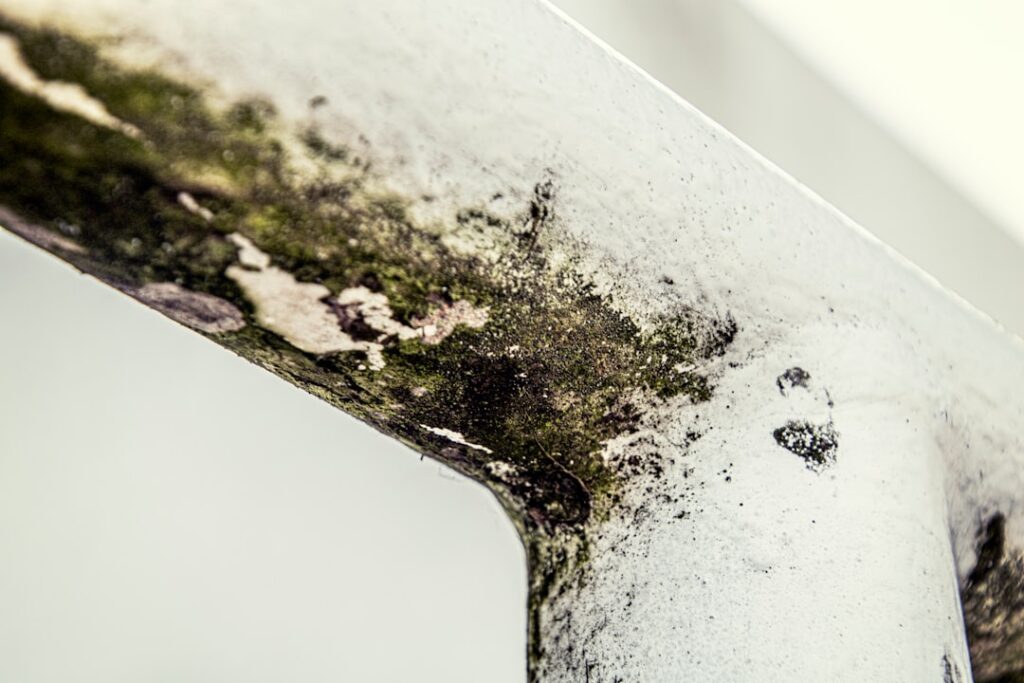
A water-stained ceiling, a musty basement, or a failed real-estate inspection sends most homeowners searching for help fast. Mold mitigation companies are the contractors who contain, remove, and clean up mold growth so it doesn’t spread or come back. Knowing what they actually do, what reasonable pricing looks like, and which credentials matter keeps you from overpaying or hiring someone who skips the steps that count. This guide summarizes EPA and CDC guidance current as of 2026 and reflects general industry practice; consult your physician about health symptoms and a certified professional before making remediation decisions for your specific home.
Part of our Types of Mold guide — start there for the full picture →
Is this mold, asbestos, or water damage? Get a free instant screen
Upload a clear photo of the suspect area. You'll get an instant AI screening opinion and what to do next. This is screening guidance, not a professional determination.
Screening guidance only. AI can be wrong. Confirm asbestos, mold type, or lead with lab testing or a licensed professional before acting.
What Do Mold Mitigation Companies Actually Do?
Mold mitigation companies address an active or recurring mold problem through a defined sequence of steps rather than a single spray-and-go visit. The work typically starts with an assessment: locating moisture sources, mapping the affected area in square feet, and deciding what materials can be cleaned versus what must be removed. The EPA’s core rule drives everything that follows. If mold covers more than roughly 10 contiguous square feet, professional containment and cleanup are recommended over a do-it-yourself approach.
From there, a reputable crew sets up containment with plastic sheeting and negative air pressure so spores don’t migrate into clean rooms. They remove porous materials that can’t be salvaged, such as soaked drywall, carpet padding, and insulation. Non-porous surfaces get cleaned and HEPA-vacuumed. The final and most important phase is fixing the moisture source, because mold returns within days if the leak, condensation, or humidity problem isn’t corrected. Some firms only remediate; others also handle the repairs. Clarify which before you sign.
A useful way to picture the work is as five distinct phases. First, assessment and moisture mapping. Second, containment: sealing the work zone with 6-mil polyethylene sheeting and running HEPA-filtered negative-air machines that exhaust outdoors so the contained room stays at lower pressure than the rest of the house. Third, removal of unsalvageable porous materials, bagged and sealed before they leave the containment. Fourth, cleaning and HEPA-vacuuming of structural surfaces, followed by structural drying with commercial dehumidifiers and air movers. Fifth, moisture-source repair and a clearance check. A company that can describe these phases in order, and tell you which ones it performs in-house versus subcontracts, is one that does the work properly.
Containment and Why It Matters
Containment is the step that separates a professional from a handyman. When mold is disturbed, it releases spores into the air. Without containment and negative pressure, those spores ride air currents into clean rooms, your HVAC return, and your belongings, sometimes seeding new growth and certainly expanding the cleanup. The EPA’s remediation guidance for larger jobs specifically calls for containment and controlled removal precisely to prevent this cross-contamination. If a bidder proposes tearing out moldy drywall in an open room with no containment, that’s a sign the job will spread the problem rather than solve it.
Mitigation vs. Remediation vs. Inspection
The terms overlap, and companies use them loosely. “Mitigation” generally means reducing and controlling the problem. “Remediation” means returning the indoor environment to normal, comfortable conditions. In practice most contractors treat the two as synonyms. What you should separate, though, is testing from removal. Independent testing tells you whether mold is present and at what levels; a removal contractor fixes it. Many homeowners hire one company that bundles both, but a third-party assessment avoids the conflict of interest that arises when the company diagnosing the problem also profits from the cleanup.
If you want a deeper breakdown of how the cleanup phase works, our overview of mold removal and remediation walks through the standard project stages. For the diagnostic side, see how a mold detection company approaches sampling and reporting.
What Mold Mitigation Companies Charge
Pricing varies with the size of the affected area, how accessible it is, and how much material must be torn out. Industry estimates commonly place small jobs, such as a bathroom or a closet, in the range of a few hundred to roughly $1,500. Mid-size jobs involving a basement wall or several rooms often land between $2,000 and $6,000. Whole-house or crawl-space contamination, or projects requiring structural drying and rebuild, can climb well past $10,000.
Several factors push costs up. Crawl spaces and attics are slow and uncomfortable to work in. HVAC contamination requires duct cleaning. If mold has damaged framing, the structural repair is a separate line item beyond remediation. Always get an itemized written estimate that separates containment, removal, cleaning, moisture repair, and rebuild. Vague flat-rate quotes make it impossible to compare bids or know what you’re actually paying for.
Does Insurance Cover It?
Homeowners insurance sometimes covers mold cleanup, but only when the underlying water damage was sudden and accidental, such as a burst pipe. Damage from long-term leaks, deferred maintenance, or flooding is usually excluded, and many policies cap mold coverage at a few thousand dollars regardless of cause. Read your policy’s mold endorsement before assuming a claim will pay, and document everything with photos before any work begins.
How to Vet a Mold Mitigation Company
Colorado does not license mold remediation contractors statewide, which makes independent vetting essential. Strong candidates carry industry certification, most commonly from the IICRC (Institute of Inspection, Cleaning and Restoration Certification), and carry general liability insurance plus workers’ compensation. Ask for proof of both. A legitimate firm will also describe containment and negative-air procedures without prompting; if a salesperson can’t explain how they’ll keep spores from spreading, keep calling.
Get at least three written estimates. Be wary of any company that pressures you into same-day signing, quotes a price before seeing the site, or insists on demolition without identifying the moisture source. Check that the contractor will provide post-remediation verification, ideally through an independent third party, confirming the area is clean and dry before they consider the job done. Reviews and local references from Front Range neighbors carry more weight than national ad copy.
Questions to Ask Before Signing
Use a short, consistent list with each bidder: What certifications do your technicians hold? How will you contain the work area? What’s your plan to find and fix the moisture source? Is post-remediation testing included or extra? What’s the warranty if mold returns? Comparing answers side by side surfaces the company that actually understands the work versus the one selling a quick teardown.
Pay attention to how each company explains its scope of work in writing. A strong proposal names the affected rooms, estimates the square footage to be removed, specifies containment and negative-air equipment, lists which materials come out, and states how the structure will be dried and verified. A weak proposal is a single flat number with no detail. The written scope is also what protects you if a dispute arises later, so insist on it before any deposit changes hands.
What to Expect During and After the Job
Most residential mitigation jobs run one to several days, depending on size and drying time. Expect the crew to seal off the work area, post warning signage, and ask you to keep children, pets, and air-handling equipment away from the containment. The HVAC system is usually shut down or sealed so it doesn’t pull spores through the ducts. Demolition and removal come first, then cleaning, then drying, which can add a day or more because structural materials must reach a verified low moisture content before reconstruction.
After the cleaning and drying, a reputable company recommends post-remediation verification, ideally performed by an independent party rather than the crew that did the work. Verification typically combines a visual inspection (no visible mold, no remaining moisture damage) with moisture readings and sometimes air sampling compared to an outdoor baseline. Only after the area passes should reconstruction, new drywall, insulation, paint, begin. Keep all documentation: the scope of work, before-and-after photos, moisture logs, and the clearance report. These records matter for resale disclosure, insurance, and any future warranty claim.
Watch for Upselling and Scare Tactics
The mold industry has a reputation for fear-based selling, and it’s earned in places. Be skeptical of any company that uses alarming “toxic black mold” language to pressure an immediate, expensive contract, that quotes a price before inspecting, or that pushes whole-house fogging and antimicrobial coatings as the centerpiece of the job. The EPA does not recommend routine biocide or fogging use as a substitute for physically removing mold and fixing moisture. Coatings and foggers may have a limited supporting role, but a company leaning on them instead of removal and moisture repair is selling theater, not a fix.
Colorado-Specific Considerations
The Front Range climate is dry, which leads some homeowners to assume mold isn’t a concern. It is. Mold here tends to cluster around specific moisture sources rather than ambient humidity: finished basements below grade, swamp-cooler condensation, ice-dam leaks after heavy snow, and bathrooms with weak ventilation. Older Denver and Boulder housing stock can hide moisture behind plaster and in crawl spaces. After spring snowmelt and summer monsoon storms, basement intrusion calls spike along the corridor from Fort Collins to Colorado Springs.
Because the regional problem is usually moisture-driven, a good local contractor spends as much time on drainage, grading, and ventilation as on cleanup. If a company treats every job as a spray-and-leave, the mold will likely return the next wet season. For health context on who is most vulnerable, the CDC notes that infants, older adults, and people with asthma or weakened immune systems face the greatest risk from indoor mold exposure.
Front Range homeowners should also factor in the freeze-thaw cycle. Water that enters a foundation crack in fall can freeze, expand, and widen the gap, then thaw and seep during the next warm spell, feeding basement mold on a seasonal rhythm. A mitigation company that understands the local building stock will look at exterior grading, downspout extensions, window-well drainage, and sump-pump function, not just the stain on the drywall. Fixing those exterior water paths is often what finally ends a recurring basement mold problem in Denver-area homes.
Altitude and the region’s intense sun play a smaller but real role. South- and west-facing walls heat and cool sharply, driving condensation cycles, while the dry ambient air can lull homeowners into ignoring a slow basement leak until growth is well established. A contractor familiar with these conditions reads the whole moisture story rather than reaching for a one-size-fits-all teardown.
How to Compare Bids Side by Side
Once you have three written estimates, comparing them well is what protects your budget. Don’t simply pick the lowest number. Line the bids up against each other on the points that matter: Does each name the affected rooms and estimated square footage? Does each specify containment and negative-air equipment? Does each state which materials will be removed versus cleaned? Does each include structural drying to a verified moisture content? And critically, does each address the moisture source, or does one quietly omit it to look cheaper?
A low bid that skips containment, ignores the water source, or proposes only fogging is not actually cheaper, it’s a partial job that often leads to a second remediation. A higher bid that itemizes every phase and includes independent verification may be the better value. Treat the estimate as a window into how the company works: the one that documents its process thoroughly usually performs it thoroughly, while the vague flat-rate quote signals corners that will be cut once the deposit is paid.
When to Call a Professional vs. DIY
Small surface mold on a non-porous surface, under that 10-square-foot threshold, is often a reasonable do-it-yourself cleanup with soap, water, and proper ventilation. Bring in a professional mitigation company when the affected area is large, when mold is hidden inside walls or ductwork, when there’s been significant water damage, or when a household member has a respiratory condition. If you’re starting from uncertainty, an independent inspection clarifies scope before you spend on removal. The broader mold inspection and testing hub covers how to decide between testing first and remediating directly.
References
- Mold Cleanup in Your Home — U.S. Environmental Protection Agency
- About Mold and Your Health — Centers for Disease Control and Prevention
- Mold Remediation Guidance — U.S. Environmental Protection Agency
Frequently asked questions
Are mold mitigation companies licensed in Colorado?
Colorado does not have a statewide license specifically for mold remediation. Instead, look for industry certification such as IICRC, proof of liability insurance, and workers' compensation. Independent vetting matters more in states without licensing.
How much does mold mitigation cost?
Small jobs often run a few hundred dollars to about $1,500, mid-size projects $2,000 to $6,000, and whole-house or crawl-space contamination can exceed $10,000. Always get an itemized written estimate that separates removal, cleaning, and moisture repair.
Will my homeowners insurance pay for mold removal?
Sometimes. Coverage usually applies only when the water damage was sudden and accidental, like a burst pipe, and many policies cap mold payouts. Long-term leaks and maintenance issues are typically excluded. Check your policy's mold endorsement first.
Do I need testing before hiring a mitigation company?
Not always, but independent testing avoids the conflict of interest that exists when the company diagnosing the problem also profits from removal. For large or hidden mold, a third-party assessment clarifies scope before you commit to a contract.
If you’re along the Front Range and want a neutral read on a mold problem before committing to a remediation contract, reach out through our contact page to connect with a vetted local inspector.