Mold Inspection in Adams County, Colorado
Adams County anchors the north metro, from older working-class neighborhoods in Commerce City and the north Denver fringe through fast-growing 1990s and 2010s subdivisions in Thornton and Brighton. Its housing mix and one local habit, evaporative “swamp” coolers are very common here, shape where mold turns up. This county-level hub explains what a mold inspection covers across Adams County, why indoor moisture appears even in Colorado’s dry climate, and what it costs, with links to live city pages for Thornton and Westminster. This guidance reflects EPA and CDC mold principles current as of 2026; mold is a building-moisture and health issue, so consult a physician for health symptoms and a qualified professional for testing.
Part of our Mold Testing & Inspection guide — start there for the full picture →
Is this mold, asbestos, or water damage? Get a free instant screen
Upload a clear photo of the suspect area. You'll get an instant AI screening opinion and what to do next. This is screening guidance, not a professional determination.
Screening guidance only. AI can be wrong. Confirm asbestos, mold type, or lead with lab testing or a licensed professional before acting.
Mold inspection in Adams County: what to know
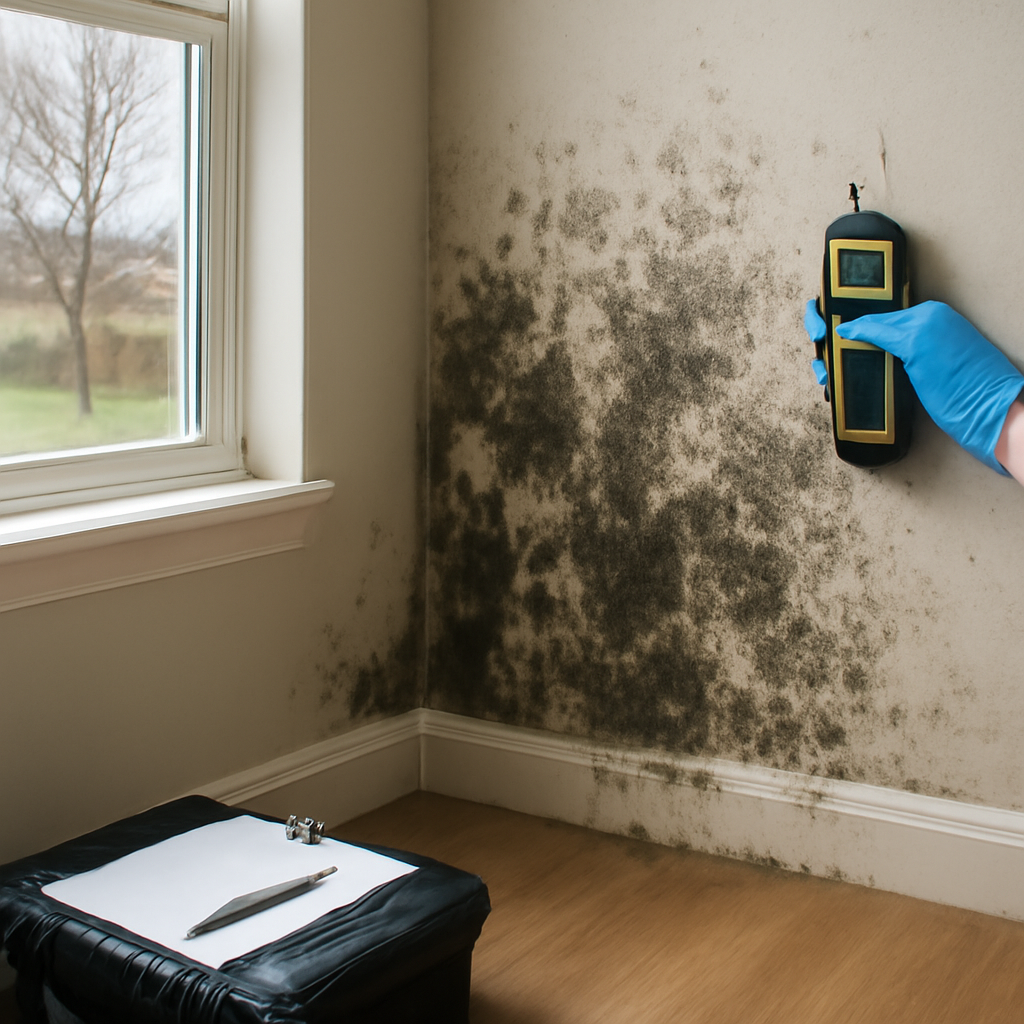
A mold inspection is a visual and moisture-based investigation of where water enters a home and whether mold has grown as a result. Mold needs moisture, so a competent inspection hunts the water source, behind a Thornton basement wall, under a Westminster kitchen sink, or around a Commerce City swamp cooler, rather than chasing spores in isolation. The EPA’s guidance is consistent: fix the moisture and you control the mold.
Adams County’s dry outdoor air leads some homeowners to assume mold is a coastal problem, but indoor moisture is local. A plumbing leak, a finished-basement foundation crack, or an evaporative cooler running too wet creates the dampness mold needs regardless of the arid climate. For how inspection and testing fit together, our plain-language mold hub for homeowners covers the science and process.
An inspection differs from testing. The inspection locates moisture and visible growth and traces the cause; testing, when warranted, samples air or surfaces to confirm elevated spore levels. In many Adams County homes a thorough visual inspection answers the question without lab work, and testing is reserved for confirming a hidden problem or clearing a remediation.
Why Adams County homes get mold
Evaporative coolers are the standout local driver. Swamp coolers, which cool by adding moisture to the air, are very common across Adams County’s housing, and one that drips, overflows, or runs without adequate exhaust raises indoor humidity enough to support mold near ducts, ceilings, and upper-floor rooms. An inspector who knows the north-metro cooling pattern checks those areas first.
The housing mix adds two more drivers. Older 1950s through 1970s stock in Commerce City and along the north Denver fringe has aged plumbing, roofing, and below-grade waterproofing, where a slow undetected leak can feed mold inside wall cavities. Newer Thornton and Brighton subdivisions from the 1990s through 2010s commonly have finished basements where a foundation crack, window-well leak, or failed sump lets water in behind finished walls and under carpet.
The South Platte basin shapes groundwater and drainage. Parts of Adams County sit on low-lying ground near the South Platte where the water table and poor lot drainage can push moisture toward foundations, raising the odds of basement intrusion in affected neighborhoods. An inspector reads grading and below-grade signs accordingly.
Climate concentrates whatever moisture exists. Cold Colorado winters keep homes sealed for months, so humidity from a leaking swamp cooler, a plumbing drip, or a damp basement does not vent out, letting mold establish in the spaces families use. That combination of a moisture source and a sealed home is the core mold setup in Adams County.
What an Adams County mold inspection covers
A thorough inspection walks the whole home for water intrusion and the conditions that allow growth, then traces any finding to its source so the fix addresses the cause.
Evaporative coolers and HVAC
Because swamp coolers are so common in Adams County, the inspector checks the unit, its water lines and pan, and the ducts and ceilings below for overflow staining and elevated humidity. HVAC condensate and bathroom exhaust are reviewed as additional moisture sources.
Basements and below-grade spaces
In Thornton, Brighton, and Westminster finished basements, the inspector checks foundation walls for cracks and staining, window wells for drainage, the sump system, and behind finished surfaces where leaks hide. A moisture meter reads suspect drywall and framing, since a wall can look dry on the surface while damp inside, a concern heightened in low-lying South Platte basin areas.
Plumbing and the building envelope
Under-sink cabinets, water-heater pans, supply lines, and the area around tubs and showers are common leak points, especially in older Commerce City and north-fringe homes with aged plumbing. Roof and envelope checks catch intrusion that feeds attic and ceiling mold.
Mold inspection cost in Adams County
A visual mold inspection in the Adams County market typically runs about $300 to $500 for a standard home, with larger homes or those needing extensive moisture mapping at the higher end. If air or surface sampling is added, each sample plus lab analysis usually adds roughly $100 to $250, and most assessments involve two or more samples to compare indoor and outdoor or affected and unaffected areas.
An older Commerce City home with aged plumbing or a low-lying basement near the South Platte can take longer to inspect than a newer Thornton tract home, nudging the cost up. A straightforward newer home with a single finished basement is usually at the lower end of the range.
The cost is small against what hidden moisture can do. Catching a leaking swamp cooler or a slow basement leak early lets a homeowner fix a few hundred dollars of drywall and a moisture source, while ignoring it can mean structural rot and a remediation running into the thousands. An inspection that finds the source is the cheapest step in the sequence.
Adams County regulations and disclosure
Colorado does not license mold inspectors or remediators, so credentials are voluntary and worth confirming. Look for an inspector who follows recognized industry guidance and explains findings in terms of moisture source and EPA cleanup principles rather than fear. The EPA does not set a numeric “safe” spore limit, so be skeptical of anyone selling a single number as a pass-fail verdict.
Colorado’s Seller’s Property Disclosure asks sellers to report known mold and water damage. A buyer in Thornton, Westminster, or Commerce City who sees a disclosed past leak, or suspects an undisclosed one, has good reason to commission an independent inspection before closing. Documented moisture findings are a legitimate basis for negotiating repairs in any Adams County transaction.
The swamp-cooler factor in north-metro mold
Few moisture sources are as characteristically Adams County as the evaporative cooler. “Swamp” coolers are very common across the north metro because they cool efficiently in Colorado’s dry climate, but they do it by deliberately adding water vapor to the air, which makes them a moisture source a humid-climate inspector would never think to check. A mold inspection in Thornton, Northglenn, or Commerce City that skips the cooler skips one of the most likely culprits.
The problems take a few forms. A cooler with a failing float valve can overflow, sending water down the ducting and staining the ceilings of the rooms below, a pattern an inspector recognizes as a telltale ring or discoloration around a register. A unit run on a high setting in muggy late-summer weather, or one without adequate exhaust windows cracked to let the moist air escape, can push indoor humidity high enough to dampen drywall and support growth in closets and upper-floor corners. Because the cooler sits on the roof and pushes air down through the house, the moisture it adds tends to collect in the upper levels, the opposite of the basement pattern most people associate with mold.
Seasonality matters too. Coolers run only in the warm months, so a cooler-driven moisture problem is a summer phenomenon that may have dried out by the time of a winter inspection, leaving only the staining behind as evidence. An inspector who knows the local pattern reads that history, the water marks at the registers, the corrosion at the cooler’s pan and lines, even when the unit is off, and asks about cooling-season humidity rather than assuming a dry winter house tells the whole story.
The fix is usually maintenance rather than demolition: servicing the float valve, clearing the drain, running the cooler at a moderate setting with enough cross-ventilation, and addressing any duct or ceiling damage the overflow caused. An inspection that correctly identifies the cooler as the source points a homeowner toward that inexpensive fix instead of chasing a phantom basement leak, which is exactly why local knowledge of the swamp-cooler pattern makes an Adams County mold inspection more useful than a generic one.
Adams County communities and areas served
Mold inspection demand spans the county. Thornton and Brighton generate the most finished-basement inspections from their fast 1990s and 2010s growth. Westminster, shared with Jefferson County, adds suburban housing. Commerce City, Northglenn, and Federal Heights hold older stock where aged plumbing and swamp-cooler moisture dominate, and parts of Aurora that fall in Adams County round out the service area.
For city-specific guidance, see our live pages on mold inspection in Thornton and mold inspection in Westminster. Across Adams County the principle holds: find the moisture, fix the moisture, and the mold problem follows.
How to choose an Adams County mold inspection provider
Choose an inspector who uses moisture meters and, where appropriate, infrared screening to find hidden water, and who knows to check evaporative coolers, since swamp-cooler moisture is a leading north-metro source. Ask how they trace a finding to its source, because a competent Adams County inspector treats mold as a symptom of a moisture problem.
Be cautious of any provider who both inspects and sells remediation, since that creates an incentive to find expensive problems. An independent inspection and a separate remediation contractor keep the assessment honest. A good inspector also right-sizes testing, recommending samples only when a hidden or disputed problem genuinely calls for them rather than as a default upsell.
Finally, prefer an inspector who knows the local building stock, the older homes of Commerce City versus the newer basements of Thornton and Brighton, because that knowledge shapes where they look and what they expect to find.
References
- Mold cleanup and moisture control guidance — U.S. Environmental Protection Agency
- Mold and your health — Centers for Disease Control and Prevention
- Mold and indoor air health research — National Institute of Environmental Health Sciences
Frequently asked questions
Can a swamp cooler cause mold in an Adams County home?
Yes. Evaporative coolers are very common in the north metro and cool by adding moisture to the air. One that overflows, drips, or runs without enough exhaust can raise indoor humidity enough to support mold near ducts, ceilings, and upper rooms.
Does Colorado's dry climate mean Adams County homes don't get mold?
No. Outdoor humidity is low, but indoor moisture from swamp coolers, plumbing leaks, finished-basement cracks, and low-lying South Platte basin drainage creates the localized dampness mold needs.
How much does a mold inspection cost in Adams County?
A visual inspection typically runs $300 to $500 for a standard home. Adding air or surface sampling usually costs $100 to $250 per sample with lab analysis. Older homes with aged plumbing can take longer to inspect.
What's the difference between mold inspection and mold testing?
An inspection locates moisture and visible growth and traces the cause. Testing samples air or surfaces to confirm elevated spore levels. Many Adams County homes need only a thorough visual inspection; testing confirms hidden or disputed problems.
Are older Commerce City homes more mold-prone?
They can be. Older 1950s to 1970s stock has aged plumbing, roofing, and waterproofing, where slow undetected leaks feed mold inside walls. An inspector checks these aging systems closely in north-fringe and Commerce City homes.
From Commerce City’s older homes to Thornton’s newer basements, controlling mold in Adams County starts with finding the moisture, often a swamp cooler. To connect with a vetted local inspector who knows north-metro housing, reach out through our contact page.