House Mold Test Kit: What Homeowners Need to Know
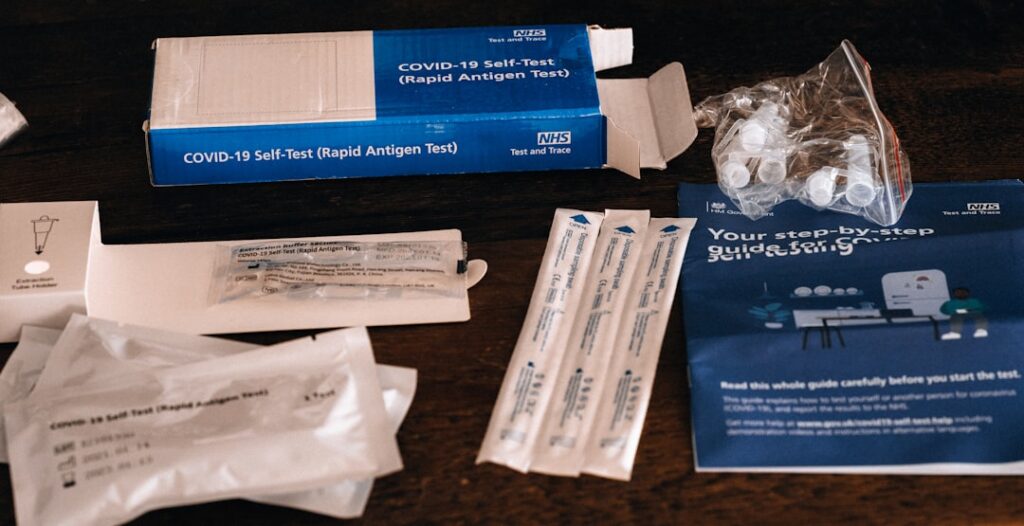
A house mold test kit is designed for the conditions a single-family residence presents: basements, crawl spaces, attics, multiple bathrooms, and HVAC systems serving the whole structure. Those conditions differ in important ways from apartment-rental sampling or commercial-property assessment. This guide walks through how the house mold test kit category fits residential houses, how to choose between options, and where the DIY ceiling lies. It summarizes EPA and CDC guidance current as of 2026 — consult a certified mold inspector for testing decisions and your physician for symptom evaluation.
Part of our Mold Testing & Inspection guide — start there for the full picture →
Is this mold, asbestos, or water damage? Get a free instant screen
Upload a clear photo of the suspect area. You'll get an instant AI screening opinion and what to do next. This is screening guidance, not a professional determination.
Screening guidance only. AI can be wrong. Confirm asbestos, mold type, or lead with lab testing or a licensed professional before acting.
What makes a house different from an apartment for mold sampling
Houses have more spaces, more variability, and more access. A typical single-family residence has a basement or crawl space, an attic, at least one HVAC system, multiple bathrooms, a kitchen, and exterior walls that experience the full range of weather without buffering from neighboring units. Each of these features creates moisture-management challenges that apartments often lack.
The basement is the most common growth site in residential houses. Below-grade walls experience capillary moisture rise, condensation when warm summer air contacts cool foundation walls, and slow leaks at the cove joint where slab meets wall. Crawl spaces add their own challenges — exposed soil, missing or torn vapor barriers, and limited airflow create high-humidity environments that support continuous growth on joists and subfloor.
The attic deserves attention because warm moist air from living spaces rises and condenses on cool roof sheathing in winter. Bathroom exhaust fans vented into the attic rather than to the exterior are a common installation defect that loads the attic with humidity from every shower. Whole-house investigation in a residential structure includes attic inspection that an apartment unit would not require.
Kit categories that fit a residential house
The general kit categories — tape lift, ERMI dust, Petri-dish settle plate, IAQ monitor — all apply to houses. The selection criteria shift because houses present more sampling locations and more types of conditions.
Tape-lift sampling for visible spots
Tape lifts are useful in houses for the same reason they are useful in apartments: identifying a visible patch with high confidence. The difference in a house is the variety of substrates. Basement joist mold looks different from bathroom ceiling mold, which looks different from attic sheathing mold. Each location may need its own sample because the genus mix varies with substrate and conditions.
For a deeper look at basement sampling specifically, see our basement mold sampling protocol guide. The protocol differs slightly from above-grade sampling because basements often have unique substrate and ventilation conditions.
ERMI dust testing for whole-house screening
ERMI is particularly well-suited to single-family houses because the dust integrates spore deposition from all parts of the home that contribute to common circulation. A living-room dust sample in a typical residence reflects activity from the bathrooms, kitchen, basement, and bedrooms because forced-air HVAC mixes air across the whole structure.
The single-score output is convenient but the species breakdown matters. A house with an elevated index driven by Aspergillus versicolor and Stachybotrys chartarum has a different problem than a house with the same index score driven by outdoor-air Cladosporium that drifted in through open windows during summer.
Indoor air-quality monitors for ongoing residential monitoring
Houses are good candidates for continuous IAQ monitoring because residents control the building 24/7. A monitor placed in the basement or master bedroom tracks humidity through every season, captures the impact of weather events, and provides historical data when a problem is suspected later. The monitor is not a diagnostic tool but provides context for when other testing might be warranted.
Front Range homeowners in finished basements should consider continuous monitoring as a standard utility — basements are the highest-risk zone in most Colorado homes and the conditions there often differ markedly from main-floor readings.
Where to sample in a single-family house
A complete residential investigation typically samples at minimum five locations: basement or lowest level, suspect room (if symptoms are room-specific), a neutral comparison room such as the living room, near the HVAC return or air handler, and an outdoor control. Houses with multiple HVAC zones or significant separation between floors may add samples.
The outdoor control deserves the same emphasis here as anywhere else. A residential sample collected without same-day outdoor comparison cannot be interpreted. The outdoor sampler should be positioned away from open mulch, compost, leaf piles, or other obvious local spore sources.
For the broader investigation context, our mold inspection hub walks through the full residential assessment sequence including visual inspection, moisture mapping, and post-remediation clearance.
Whole-house considerations DIY kits cannot address
A house mold test kit is sample-specific. It tells you what is on the tape or in the dust or in the cassette. It does not tell you what the building envelope is doing, where the moisture is coming from, or how the HVAC is distributing spores across zones. Those questions require the inspector’s site walk.
Houses also present hidden spaces that DIY kits cannot reach. Wall cavities, the back of crawl-space rim joists, the inside of HVAC ductwork, and the underside of attic insulation all hide growth that a homeowner cannot easily sample without disrupting the building. Professional assessment includes borescope inspection and invasive sampling when warranted.
Cost expectations for residential testing
DIY tape lifts run $60 to $125 per visible spot. A homeowner sampling three visible patches in different rooms is looking at $180 to $375 total. ERMI dust kits cost $200 to $400 for a single house-wide sample. Indoor air-quality monitors cost $80 to $300 one-time. A professional residential assessment with three to five samples, written report, and moisture mapping typically runs $400 to $900 in the Front Range market.
Insurance considerations apply if a recent water event drives the testing. Standard homeowner policies in Colorado often exclude long-term moisture damage but cover sudden events such as burst pipes. Document the original water incident, the dry-out work, and any testing or remediation chronology so the claim file is coherent.
Common DIY mistakes in residential testing
The most common homeowner mistake with house mold test kits is sampling only the suspect spot without a neutral comparison. A tape lift from a basement joist that returns Penicillium presence does not tell you whether the same Penicillium is in your living room — and the answer changes the response. If the same species is everywhere at similar levels, the source is probably outdoor air or HVAC distribution. If the basement reading is dramatically higher than the living room, the basement is the source.
Another common mistake: testing immediately after cleaning. Wiping down a visible patch with bleach or detergent before sampling destroys the sample. Photograph the area, collect the sample, then clean if appropriate. Test results from sanitized surfaces routinely return false negatives.
Homeowners also frequently rush to test before the moisture source is addressed. A tape lift confirming Stachybotrys is useful only if the underlying leak is known and being repaired. Testing without solving the moisture problem produces data but not progress; the growth returns within weeks.
House-specific scenarios that benefit from professional testing
A few residential situations specifically warrant professional assessment over DIY. A house with a finished basement and any history of foundation moisture issues should be assessed before any new finishing work or carpet replacement. A house with attic mold suspected based on roof leaks or insulation discoloration should have the attic specifically sampled because access conditions favor professional equipment.
A house under contract in a real-estate transaction should have professional assessment for the documentation value alone. A buyer presenting an independent third-party mold report to a seller has more negotiating leverage than a buyer presenting a hardware-store Petri-dish photograph.
A house with multiple HVAC zones, especially older homes where retrofitted air conditioning was added to a hydronic-heat structure, can present complex spore-distribution patterns that residential homeowners cannot easily interpret without professional help.
Seasonal patterns in residential testing
House test results vary by season more than apartment results because houses experience the full range of building-envelope interactions with weather. Summer in Colorado brings high outdoor pollen and outdoor mold counts; air samples collected in July show different profiles than the same locations sampled in January. Winter creates condensation issues at exterior walls and attic ceilings; sampling timed to follow a cold snap captures the worst-case conditions.
Spring snowmelt creates a unique residential testing window. Foundations that leak during snowmelt may dry by mid-summer with growth still active behind drywall. Testing two to four weeks after the last melt event captures conditions while moisture is still present and growth is active, before the structure dries and the growth goes dormant.
What the test cannot answer about your house
Even a thorough professional residential assessment cannot tell you whether mold made anyone sick. That is a medical question requiring a physician. The lab report describes spore species and concentrations. The clinical interpretation — whether those exposures explain symptoms in your household — belongs to medical professionals familiar with environmental exposure.
Testing also cannot predict future growth. A clean test today does not prevent a future basement leak from creating new growth. The investigation establishes a baseline and identifies present conditions. Ongoing prevention requires moisture control, ventilation, and periodic visual inspection of high-risk zones.
Comparing house testing to sibling-context articles
House-focused testing differs in scope and concerns from commercial-property testing (which adds tenant disclosure and OSHA considerations), apartment-rental testing (which adds landlord-notification protocols), and inspection-grade transaction testing (which adds buyer-disclosure liability). The single-family residential context simplifies several variables — the homeowner is also the decision-maker, the building is small enough for a single-day assessment, and access to every space is generally available.
For renter-specific guidance see our apartment mold detection guide. For sub-niche kit deep dives see our at-home black mold test kit guide. For information on related residential moisture tools, our moisture meter guide covers the hardware that complements any test kit.
When to call a professional
Call a certified mold inspector for any residential situation involving more than 10 square feet of visible growth, hidden mold suspected from smell or symptoms, transaction documentation needs, post-water-event clearance after a flood or burst pipe, or HVAC-related concerns where samples need to span multiple zones. The inspector should hold InterNACHI or ACAC credentials, use an AIHA-accredited lab, and provide a written report including photos, moisture readings, and interpreted lab results.
The inspector should also be willing to explain results in plain language and answer follow-up questions about what the numbers mean for your specific home. A report that reads like raw data without interpretation is incomplete — pay for the interpretation as much as the sampling.
References
- Mold Testing or Sampling — U.S. Environmental Protection Agency
- About Mold — Centers for Disease Control and Prevention
- Brief Guide to Mold, Moisture, and Your Home — U.S. Environmental Protection Agency
- Mold Inspection Standards — International Association of Certified Home Inspectors
Frequently asked questions
What is the best mold test kit for a house?
Tape-lift kits are best for identifying visible spots, ERMI dust kits are best for whole-house screening, and continuous IAQ monitors are best for ongoing moisture surveillance. Most houses benefit from a combination rather than a single product, with professional assessment reserved for ambiguous results or transaction documentation.
Should I test for mold before buying a house?
Professional mold assessment is reasonable for any house with a past leak history, finished basement, visible water staining, or musty smell at showings. A buyer-paid third-party report carries more weight than a seller-paid assessment because the financial incentive is reversed.
Where should I place a mold test kit in my house?
For tape lifts, sample any visible patch. For ERMI dust, the standard collection area is the living room or main hallway because forced-air HVAC mixes spores across zones. For IAQ monitors, place the device in the highest-risk room, typically a basement or below-grade finished space.
How often should I test my house for mold?
Routine testing without symptoms or visible signs is not generally recommended. Test after any significant water event, when symptoms suggest hidden growth, before a real-estate transaction, or as post-remediation clearance after professional cleanup.
Front Range homeowners who want a vetted residential inspector to combine assessment with moisture mapping across basement, attic, and crawl-space conditions can reach our team via the contact page for a referral.
DIY mold test kits
A test kit can confirm whether a suspect patch is mold and (with lab analysis) what type — though visible mold over ~10 sq ft generally warrants a professional.
| Product | Why | Buy |
|---|---|---|
 DIY Mold Test (lab included) DIY Mold Test (lab included) | Surface + air-sampling options. | Amazon — $49.99 |
 Healthful Home 5-Minute Mold Test Healthful Home 5-Minute Mold Test | Rapid screening strips. | Amazon — $35.47 |
 Mold Test Plates (DIY petri dishes) Mold Test Plates (DIY petri dishes) | Settle-plate style sampling you culture at home. | Amazon — $22.99 |