Asbestos Testing in Johnstown, Colorado | InspectandTest
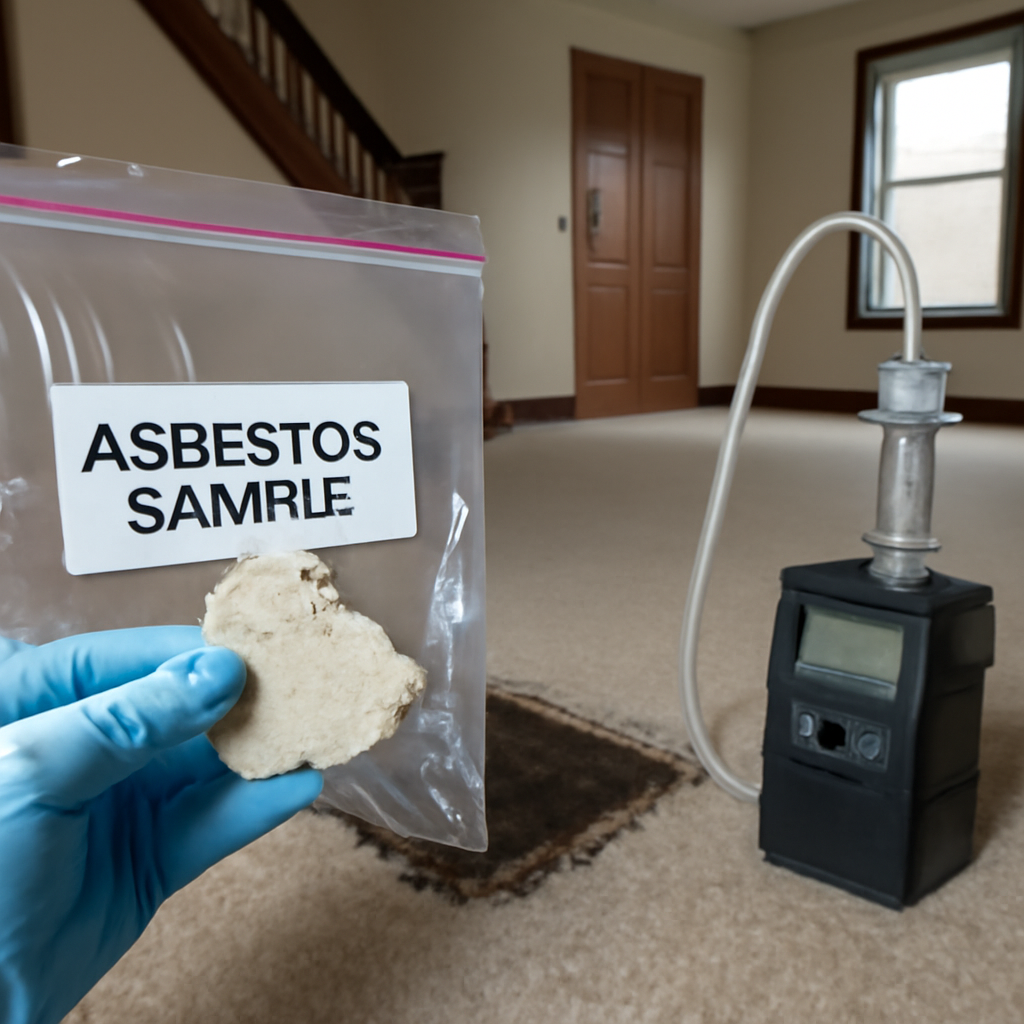
Asbestos was used in dozens of common building materials through the 1970s and into the 1980s, which makes any home built before roughly 1980 a candidate for testing before renovation or demolition. In Johnstown, that risk concentrates in the early-1900s sugar-beet and farm-town housing around historic Old Town Johnstown, but it also reaches the older mid-century homes scattered between the town’s newer subdivisions. Asbestos is only dangerous when disturbed and its fibers become airborne, so the goal of asbestos testing johnstown homeowners pursue is to identify it before a remodel turns a safe material into an inhalation hazard. This page explains what to test, when, and what it costs. This summary reflects EPA and OSHA guidance current as of 2026; consult a certified professional before disturbing any suspect material.
Part of our Asbestos in the Home guide — start there for the full picture →
Is this mold, asbestos, or water damage? Get a free instant screen
Upload a clear photo of the suspect area. You'll get an instant AI screening opinion and what to do next. This is screening guidance, not a professional determination.
Screening guidance only. AI can be wrong. Confirm asbestos, mold type, or lead with lab testing or a licensed professional before acting.
Asbestos testing in Johnstown: what to know
Asbestos testing means collecting a small sample of a suspect material under controlled conditions and sending it to an accredited lab for analysis, usually by polarized light microscopy. You cannot tell whether a material contains asbestos by looking at it, which is why lab confirmation is the only reliable answer before any work that would disturb it.
The trigger is almost always renovation. An Old Town Johnstown bungalow being updated, or any pre-1980 home getting new flooring, a kitchen remodel, or a basement finish, is exactly when hidden asbestos becomes a live hazard. For the broader context on why pre-1978 housing carries this risk, our guide to asbestos and lead in older homes lays out the full picture.
The key principle is that intact, undisturbed asbestos is generally not an immediate danger; the hazard appears when material is cut, sanded, scraped, or demolished and fibers go airborne. That is why testing is renovation-driven rather than a routine annual concern. A Johnstown homeowner who plans to leave a popcorn ceiling or vinyl floor untouched faces little risk, but one about to tear into it should know what is in it first, because once fibers are released, they are invisible, odorless, and can lodge in the lungs for decades.
Why Johnstown homes need asbestos testing
Housing age is the driver. Asbestos-containing materials were standard in construction through the 1970s, so the older a Johnstown home, the higher the chance of finding them. The historic Old Town Johnstown core, an early-1900s sugar-beet and farm town, holds the town’s oldest stock, where original and mid-century renovation materials, floor tile, pipe insulation, plaster, and roofing, may all predate the asbestos phase-out.
The common materials are worth knowing. In Johnstown’s older homes, asbestos can hide in nine-inch vinyl floor tile and its black mastic, popcorn ceiling texture, pipe and boiler insulation, plaster and joint compound, cement siding and shingles, and roofing felt. A farm-town home that has been remodeled in layers over a century can have asbestos materials buried under newer finishes, which a renovation suddenly exposes. Even where the original structure is newer, an addition or update done in the 1960s or 1970s can introduce asbestos into an otherwise modern home.
The newer subdivisions change the math but do not eliminate it. The bulk of Johnstown’s housing, the 2000s-through-2020s growth in Thompson River Ranch, Pintail Commons, and Rocksbury, was built well after the major asbestos phase-out, so those homes carry low risk. But Johnstown’s rapid growth means buyers frequently move from a new-build into an older Old Town or rural-parcel property, or buy an older home to renovate, and that is exactly the population that needs testing. The presence of so much new construction does not mean the older stock is fiber-free, and the two housing types call for very different assumptions before a remodel.
What a Johnstown asbestos test covers
A professional samples each suspect material separately, since a single home can contain several distinct asbestos products. The inspector documents the location and condition of each material, collects a small sample using wet methods to avoid releasing fibers, and submits it to an accredited lab.
Which materials get sampled
Common targets in an older Johnstown home include vinyl floor tile and sheet flooring, ceiling texture, plaster and drywall joint compound, pipe and duct insulation, exterior cement siding, and roofing. Each distinct material is its own sample because one can contain asbestos while another in the same house does not. Johnstown shares its older-housing profile with surrounding towns, so a Weld County asbestos testing overview helps frame the regional pattern.
How sampling is done safely
A trained sampler wets the material, cuts a small piece with minimal disturbance, seals it in a labeled container, and patches the spot. This wet-method approach keeps fibers from going airborne during collection, which is why DIY sampling is risky, an untrained homeowner scraping a popcorn ceiling for a sample can release more fibers than the test was meant to prevent. The accredited lab then reports the percentage and type of asbestos, which determines whether abatement is required.
Asbestos testing cost in Johnstown
Individual asbestos samples in the Johnstown market typically run about $30 to $75 each at the lab, while a professional inspection with sampling, where a certified inspector collects multiple samples and interprets the results, usually runs $250 to $600 depending on how many materials need testing and the home’s size.
A single-material test, say one popcorn ceiling before a remodel, sits at the low end. A whole-house pre-renovation survey of an older Old Town Johnstown home with many suspect materials costs more because each material is sampled and analyzed separately.
The cost is small against the alternative. Disturbing asbestos without knowing it is there can contaminate a home and expose a family to fibers that carry a decades-long lung-disease and mesothelioma risk, and cleaning up an uncontrolled release costs far more than testing would have. For a few hundred dollars, a Johnstown homeowner planning to renovate an older home gets a clear inventory of what is safe to disturb and what needs a licensed abatement contractor, which is exactly the information that prevents an expensive and hazardous mistake. Testing before work, rather than after a problem, is always the cheaper path.
Scope drives the price more than anything. A homeowner replacing one floor needs only that floor and its mastic tested, a modest cost, while a full gut renovation of a century-old farm-town home warrants a comprehensive survey covering flooring, ceilings, plaster, insulation, siding, and roofing. Matching the test scope to the actual planned work keeps the cost proportionate, so tell the inspector exactly what you intend to disturb and let them sample accordingly rather than defaulting to the largest survey.
What happens if asbestos is found
A positive result does not always mean immediate removal. If the material is intact and will not be disturbed, the safest course is often to leave it in place and manage it. If your renovation will disturb it, Colorado regulation requires that abatement above certain quantities be handled by a state-certified asbestos contractor using containment, negative air pressure, and proper disposal. A homeowner should never sand, scrape, or demolish confirmed asbestos material themselves. The test result is what lets you make that call correctly, by telling you which materials are safe to work around and which require a licensed professional before the project goes forward.
Asbestos and older outbuildings on Johnstown parcels
Johnstown’s agricultural roots mean many properties, especially older ones near Old Town or on rural plains parcels, include detached structures the main-house inspection can overlook. Older garages, sheds, barns, and farm outbuildings from the sugar-beet era frequently used asbestos-cement siding and shingles, sometimes called transite, along with roofing felt and other fiber-containing products that held up well in a working farm setting. A buyer or homeowner focused on renovating the house can forget that tearing down or re-roofing one of these structures carries the same fiber risk as work inside the home.
The practical guidance is to extend the testing question to anything you plan to disturb on the property, not just the living space. If a Johnstown homeowner intends to demolish an old shed, replace transite siding on a detached garage, or strip an aging outbuilding roof, those materials should be sampled first, because cutting or breaking asbestos-cement releases fibers just as readily outdoors as in. Colorado’s abatement and disposal rules apply to these materials too, so a confirmed positive on an outbuilding means handling and disposal through the proper channels rather than a trip to the regular landfill. Folding outbuildings into the pre-project test plan keeps the whole parcel safe rather than just the house.
Colorado regulations and disclosure
Colorado regulates asbestos through the CDPHE Air Pollution Control Division, which sets abatement and disposal rules and requires certified contractors for projects above defined thresholds. The state’s Seller’s Property Disclosure asks sellers to report known asbestos, so a documented test result becomes part of any Johnstown transaction. For renovation, the practical rule is to test before disturbing any pre-1980 material.
Disclosure and regulation work together here. A Johnstown seller of an older Old Town home who has tested can disclose accurate information and avoid a surprise during the buyer’s inspection, while a buyer planning to renovate should test before closing or before demolition so the project budget reflects any abatement. Because the state enforces contractor certification and disposal rules, attempting to skip testing and quietly remove suspect material is both a health risk and a regulatory one, which is why the documented test is the responsible starting point.
Neighborhoods and areas served
Asbestos testing demand in Johnstown concentrates in the older housing of historic Old Town Johnstown and any pre-1980 homes on rural parcels around town, while the newer Thompson River Ranch, Pintail Commons, and Rocksbury subdivisions carry low risk. Service typically extends to adjacent Loveland, Milliken, Windsor, and Berthoud, where similar older cores sit among newer growth. A neighboring asbestos testing in Windsor guide covers a comparable town.
The split between Johnstown’s old and new stock shapes who needs testing. A family in a 2015 Pintail Commons home has little reason to test unless an older detached structure is involved, while a buyer renovating an early-1900s Old Town bungalow should treat pre-renovation testing as standard. Knowing which side of that line your home falls on, by build date rather than neighborhood name alone, is the first step in deciding whether testing is warranted before you start a project.
How to choose a Johnstown asbestos testing provider
Use a certified asbestos inspector who samples with wet methods, submits to an accredited lab, and interprets the results in light of your renovation plans. A good provider tells you plainly which materials are safe to leave alone and which need a certified abatement contractor, rather than pushing removal of everything.
Confirm the lab is accredited and ask whether the inspector is independent of any abatement company, since a tester who also sells removal has an incentive to over-find. A trustworthy Johnstown provider explains the difference between manage-in-place and abatement, gives you the written lab report, and points you to a certified contractor only when the material genuinely needs removal. That separation between testing and removal keeps the diagnosis honest.
Ask about turnaround and documentation. A useful asbestos test ends with a written lab report naming each material, its asbestos content and type, and a recommendation. For a renovation on a deadline, ask about rush lab options, and for a real-estate transaction, make sure the report is something you can hand to a buyer or contractor. That documentation is part of what you are paying for, and it is what makes the result usable in a negotiation, a permit application, or an abatement bid.
References
- Asbestos in the home and renovation — U.S. Environmental Protection Agency
- Asbestos exposure standards — Occupational Safety and Health Administration
- Colorado asbestos regulation and certification — Colorado Department of Public Health and Environment
Frequently asked questions
Which Johnstown homes are most likely to contain asbestos?
Homes built before roughly 1980, concentrated in the early-1900s housing around historic Old Town Johnstown and older rural-parcel properties. The newer Thompson River Ranch and Pintail Commons subdivisions carry low risk.
Can I tell if a material contains asbestos by looking at it?
No. Asbestos cannot be identified visually. A small sample must go to an accredited lab for microscopy. That lab confirmation is the only reliable way to know before disturbing any suspect material.
How much does asbestos testing cost in Johnstown?
Individual lab samples run about $30 to $75 each, while a professional inspection with sampling typically runs $250 to $600 depending on how many materials need testing and the home's size.
When should I test for asbestos in a Johnstown home?
Before any renovation, flooring replacement, or demolition in a home built before about 1980. Intact asbestos is generally safe; the hazard comes from disturbing it, so test before the work begins.
What happens if asbestos is found in my Johnstown home?
If it is intact and undisturbed, it can often be managed in place. If your project will disturb it, Colorado requires a certified contractor for abatement above set quantities. Never remove it yourself.
Before you renovate an older Johnstown home, knowing what is in the walls and floors protects your family from a hidden fiber hazard. To connect with a vetted local asbestos inspector, reach out through our contact page.