What Makes Black Mold: A Plain-Language Biology Guide
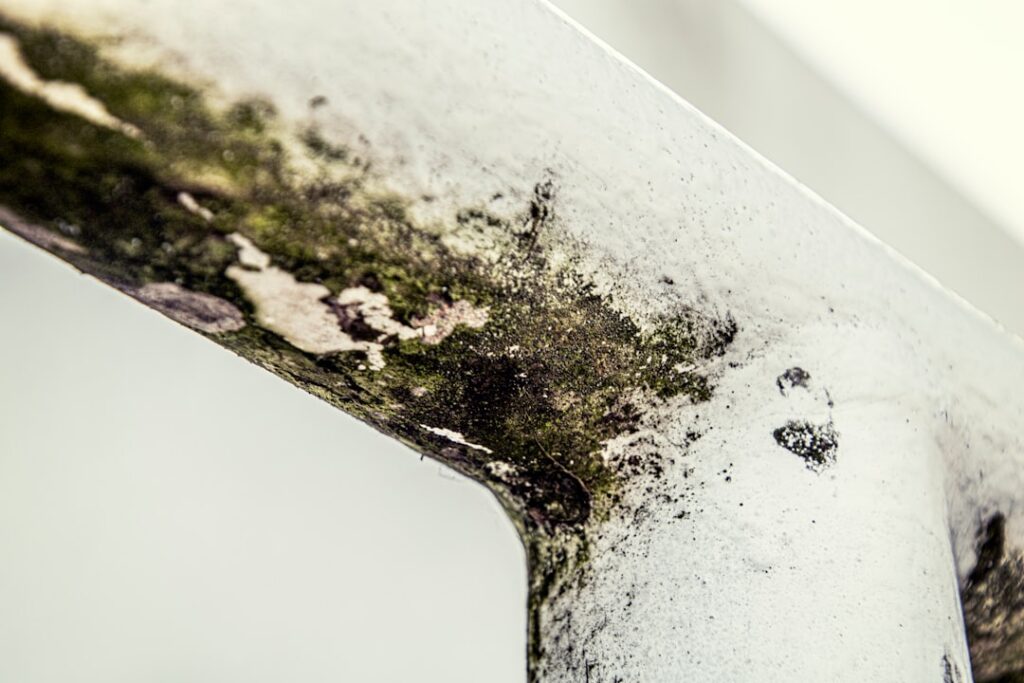
The question of what makes black mold appear in a home sits at the intersection of biology and building physics. Mold is not deposited fully formed; it grows from microscopic spores that are present everywhere, only becoming visible after a sequence of biological events triggered by specific environmental conditions. Understanding the lifecycle — spore landing, germination, hyphal growth, colony establishment, and sporulation — helps homeowners interpret what they are seeing and predict what will happen next. This guide summarizes EPA and CDC guidance current as of 2026 and is not a substitute for a physician’s evaluation of health questions or a certified inspector’s evaluation of a specific home.
Part of our Black Mold & Your Health guide — start there for the full picture →
Is this mold, asbestos, or water damage? Get a free instant screen
Upload a clear photo of the suspect area. You'll get an instant AI screening opinion and what to do next. This is screening guidance, not a professional determination.
Screening guidance only. AI can be wrong. Confirm asbestos, mold type, or lead with lab testing or a licensed professional before acting.
The Lifecycle in Five Stages
Mold biology proceeds through five overlapping stages that each take a predictable amount of time under typical home conditions.
Stage One: Spore Landing
Mold spores are constantly in the air. Indoor air carries roughly the same spore mix as outdoor air filtered through the building envelope, with some species amplified by indoor sources. A spore is essentially a hardened cell with a thick wall, biologically dormant, capable of surviving for years in dry conditions. When a spore lands on a surface, it remains inert until conditions support germination.
Stage Two: Germination
Germination requires three inputs simultaneously: water activity at the surface above roughly 0.80, an organic nutrient source, and temperature in the species’ growth range. When these align, the spore wall softens and a germ tube extends outward. Germination typically takes 24 to 48 hours after sustained moisture begins.
Stage Three: Hyphal Growth
The germ tube becomes a hypha — a tubular structure that grows outward across or into the substrate. Hyphae secrete enzymes that break down cellulose, lignin, or other organic compounds into smaller molecules the mold can absorb. A single hypha grows at roughly 200 micrometers per hour under ideal conditions and branches as it extends.
Stage Four: Mycelium Formation
The branching network of hyphae becomes a mycelium, the visible “body” of the mold. At this stage the colony becomes large enough to see — typically within 72 hours of germination under good growth conditions. The mycelium continues to expand outward, consuming nutrients and exploring the surface.
Stage Five: Sporulation
Once the mycelium reaches maturity, it produces fruiting structures that release new spores. This is when color often becomes most apparent, because the spores themselves carry the pigment that gives “black” mold its name. Sporulation can begin within a week of initial germination and continues for as long as the colony is active. A single mature colony can release millions of spores per day.
What “Makes” Black Specifically
Color in mold comes from melanin and related pigments in the spore walls and sometimes in the hyphae themselves. Stachybotrys, Cladosporium, Aspergillus niger, and Alternaria — the most common “black” molds in homes — all produce melanized spores. Melanin is biologically protective: it shields the cell from UV radiation and chemical oxidation. That is partly why these species can survive harsh conditions and re-establish quickly after partial cleaning.
Color also varies with life stage. A young colony often appears lighter or gray because spore production has not yet peaked. As sporulation accelerates, the colony darkens. Bleach can lift the pigment without killing the underlying hyphae, which is why visibly “bleached” mold sometimes returns within weeks at full color — the pigment regenerates as the colony continues to sporulate.
The Substrate Side of “What Makes Mold”
Mold cannot make itself from nothing. It needs organic carbon and nitrogen sources. Building materials supply these in varying degrees. Paper-faced drywall is rich in cellulose and is among the most mold-friendly indoor materials. Wood, OSB, and engineered wood products offer cellulose plus lignin. Fabric, paper, and cardboard are all easy substrates. Even “inorganic” surfaces become viable once they accumulate dust, soap residue, or skin oils — the organic film on top is enough to feed germination.
This is why mold appears on tile in showers despite the tile itself being inorganic. The substrate that matters is the thin biofilm of soap and skin oil on the tile surface, not the tile beneath. The same principle explains mold on painted concrete basement walls and on the inside of HVAC ductwork.
The Moisture Side
Water is the rate-limiting factor in mold formation under most household conditions. The threshold is not “wet” or “dry” in homeowner language — it is water activity, a measure of available liquid water at the surface. Different species have different thresholds, but a general indoor floor sits around 0.80. Below that, growth stalls; above that, growth proceeds.
Sources of water activity at problematic levels include obvious bulk water events (leaks, floods, spills), persistent high humidity (relative humidity above 60 percent for days), and condensation at cold surfaces (single-pane windows, uninsulated ducts, basement walls in summer). For deeper coverage of moisture sources, our mold inspection and testing hub covers the homeowner-side investigation.
The Temperature Window
Most household molds grow between 40 and 100 degrees Fahrenheit, with peak growth between 60 and 85 degrees. This range matches typical indoor conditions year-round, which is why mold is fundamentally a year-round risk rather than a seasonal one. Cooler conditions slow but do not stop growth — an unheated basement still grows mold during a wet spring, just more slowly than the same basement in summer.
Refrigerator-temperature surfaces, freezer surfaces, and exterior surfaces in winter can still grow specific cold-tolerant species, though much more slowly. Heat sterilization above roughly 140 degrees kills most mold, but routine heating of a wet building does not reach those temperatures.
Time Compounds Everything
The relationship between time and mold extent is roughly exponential under sustained moisture. EPA guidance points to a 24-to-48-hour window for drying wet materials before colonization is likely. After 72 hours, visible growth is common. After two weeks, colonies become dense enough to require remediation rather than cleaning. After a month, hidden cavity growth often outpaces visible growth, leading to remediation budgets two to three times higher than they would have been with prompt response.
That timeline explains why bulk-water events demand immediate professional drying — water mitigation companies exist precisely because the cost of mold prevention is much lower than the cost of mold remediation.
Why Air Currents Matter
Mold spores travel on air. A single active colony in one room releases spores into the home’s air stream, where the HVAC system circulates them throughout the building. Spores land on every surface — usually inert because most surfaces are not wet enough to support germination — but they wait. When a previously dry surface becomes wet, established spore deposits germinate quickly because they are already present in large numbers.
This is why secondary growth often appears in rooms distant from the original moisture source after a leak. The spores were already there; the moisture activated them.
What Stops Mold From Forming
Three controls reliably prevent mold formation. The first is moisture control: keep indoor relative humidity between 30 and 50 percent, fix leaks within 48 hours, and dry wet materials completely. The second is material selection: use gypsum-only board (no paper facing), cement board, foam insulation, and sealed concrete in wet areas. The third is air movement: stagnant pockets at floor-wall junctions, behind furniture against exterior walls, and inside closets accumulate humidity that open spaces do not. A small fan or improved ventilation often eliminates a recurring mold spot.
Our mold air quality guide covers ventilation strategy in more depth.
Common Confusion About Causation
Homeowners sometimes assume mold “comes from” a single dramatic event — a flood, a burst pipe, a roof failure. Those events do cause mold, but most household mold develops gradually from chronic small moisture sources. A bathroom fan that has not worked properly for years, a basement that maintains 65 percent humidity all summer, a kitchen sink trap that drips half a drop per minute — these are the slower causes, and they account for more residential mold than acute water events.
References
- EPA Mold Course Chapter 2: how mold grows — U.S. Environmental Protection Agency
- CDC basic facts about mold biology — Centers for Disease Control and Prevention
- NIEHS mold and indoor environments overview — National Institute of Environmental Health Sciences
- EPA brief guide to mold, moisture, and your home — U.S. Environmental Protection Agency
Frequently asked questions
How long does it take black mold to form after water damage?
Germination typically begins within 24 to 48 hours after sustained moisture begins. Visible mycelium usually appears within 72 hours under good growth conditions, and significant colony density within two weeks. Drying wet materials within the first 48 hours usually prevents the problem.
Can black mold form without visible water?
Yes. Condensation on cold surfaces and high indoor humidity above 60 percent provide enough moisture for growth without standing water. Many mold problems originate from humidity rather than bulk water events.
Does black mold die when surfaces dry out?
Active hyphae become dormant when moisture falls below threshold, but spores remain viable for years and reactivate when moisture returns. Drying alone does not eliminate the colony; it pauses growth until conditions favor germination again.
What temperature kills black mold?
Sustained temperatures above roughly 140 degrees Fahrenheit kill most mold, but routine heating of a home never reaches those temperatures. Heat is not a practical residential control. Moisture management is the controlling variable.
Front Range homeowners who want a connection to a vetted local mold inspector after understanding the biology can reach out through our contact page.