Mold Inspection in Eaton, Colorado | InspectandTest
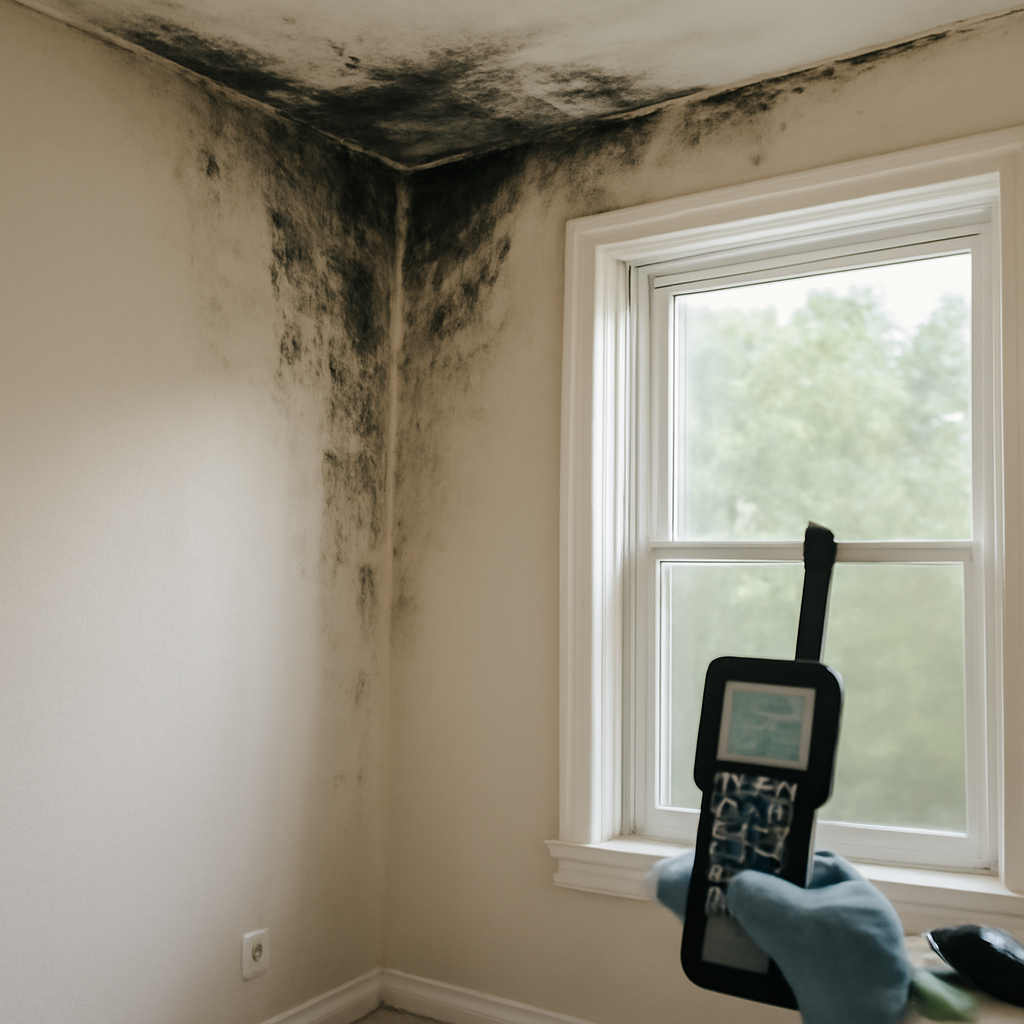
Eaton is a historic agricultural town about ten miles north of Greeley on the northern Weld County plains, a tight-knit sugar-beet community with a walkable late-1800s and early-1900s downtown surrounded by farm parcels and modest newer subdivisions. That older core hides moisture differently than the new east-side homes do, which is why mold inspection eaton homeowners ask about looks at the housing era first. This page explains what a local mold inspection covers, why Eaton’s homes and climate drive the risk, and what it costs. This summary reflects EPA and CDC guidance current as of 2026; consult a certified professional for testing decisions and your physician for health symptoms.
Part of our Mold Testing & Inspection guide — start there for the full picture →
Is this mold, asbestos, or water damage? Get a free instant screen
Upload a clear photo of the suspect area. You'll get an instant AI screening opinion and what to do next. This is screening guidance, not a professional determination.
Screening guidance only. AI can be wrong. Confirm asbestos, mold type, or lead with lab testing or a licensed professional before acting.
Mold inspection in Eaton: what to know
A mold inspection is a visual and moisture-focused assessment of a home, not a single air test. The inspector looks for water staining, past leaks, condensation, and the conditions that let mold grow, then uses a moisture meter and often a thermal camera to find dampness hidden behind finishes. The objective is to locate the moisture source, because mold is the symptom and water is the cause.
Eaton’s high-plains climate is dry much of the year, which leads homeowners to assume mold is not a local concern. It is. Evaporative coolers add summer humidity indoors, snowmelt and storms soak foundations, and a single leak in a sealed winter home can sustain growth for months. For the broader science of how mold colonies start and spread, our plain-language mold inspection and testing hub covers the conditions that matter.
An inspection is not remediation. The inspector finds where moisture is entering and where growth has taken hold, documents it, and recommends next steps. An inspector who only inspects, rather than also selling the cleanup, has no reason to overstate a problem, which is worth seeking in a small farm-town market like Eaton where the same providers serve the surrounding plains.
Why Eaton homes need mold inspection
The housing stock drives the inspection. Eaton’s downtown and original grid hold meaningful late-1800s and early-1900s housing, homes with basements, crawl spaces, original framing, and a century of additions where flashing, grading, and drainage may never have been ideal. These older structures hide moisture in wall cavities and under floors. The newer east-side subdivisions are tightly built, which traps interior humidity from evaporative coolers and poorly ventilated baths.
Eaton’s farm setting adds specific drivers. Many parcels are rural with private wells and septic systems, and a plumbing or well-related leak in an outlying home can feed growth unnoticed. Irrigation ditches and agricultural watering raise soil moisture around foundations during the growing season, and a home with poor grading lets that water reach the slab or basement. The cold, sealed northern-plains winter then keeps the house closed for months, so any moisture that entered has nowhere to go.
Health context makes finding the source worthwhile. The CDC links indoor dampness and mold to respiratory irritation and worsened asthma, so drying the source is a health step, not a cosmetic one. A family in an older downtown Eaton home with a damp basement, or one on a rural parcel with a slow well-line leak, has the conditions an inspection is designed to find before the problem spreads.
What an Eaton mold inspection covers
A thorough inspection starts outside, checking grading, downspouts, and how water moves away from the foundation, since most interior mold traces back to exterior water. Inside, the focus is on basements, crawl spaces, bathrooms, laundry areas, kitchens, and windows where condensation collects during sealed winters.
Moisture mapping and thermal imaging
A moisture meter reads dampness inside drywall and framing without cutting in, and a thermal camera reveals temperature differences that mark hidden wet spots behind finishes. In an older downtown Eaton home, this is how an inspector finds a slow basement seep or a leak behind aging plumbing before it becomes visible staining. Thermal imaging does not see mold; it points to the moisture that allows it.
Air and surface sampling
When growth is suspected but not visible, the inspector may take air samples to compare indoor spore counts against an outdoor baseline, or swab a stained surface. Samples go to an accredited lab. Sampling is most useful for confirming a hidden problem or verifying a cleanup worked, not as a substitute for finding the water source. The EPA’s guidance holds: if you can see or smell mold, you generally do not need a test to know you should fix the moisture.
Mold inspection cost in Eaton
A visual mold inspection of a typical Eaton single-family home generally runs about $300 to $500. Adding air or surface sampling with lab analysis raises the total, often by $100 to $200 per sample depending on rooms tested and lab turnaround. A larger older downtown home with a basement and additions, or a rural parcel with outbuildings, sits at the higher end because there is more area and concealed space to assess.
Bundling a mold inspection into a pre-purchase home inspection is usually cheaper than a standalone visit, since the inspector is already on site. For a buyer in Eaton, that bundle is efficient and gives one coordinated report. Weigh the cost against the alternative: an undetected basement or well-line leak that rots framing and spreads spores can cost many thousands to remediate, so a few hundred dollars to find the source early is sound protection.
Prices vary with access and scope. A home with a tight crawl space or a fully finished basement takes longer and may cost more, while a compact newer east-side home with open mechanical areas is quicker. Ask any Eaton provider for a written scope so you know whether sampling is included or quoted separately before the visit.
Eaton regulations and disclosure
Colorado does not license mold inspectors or remediators, and there is no statewide mold standard, so vetting credentials falls to homeowners and buyers. The Seller’s Property Disclosure asks sellers to report known moisture and mold problems, so a documented inspection protects a seller from later claims and gives a buyer a clear basis for negotiation.
Without a state license, look for nationally recognized certifications, such as those from the American Council for Accredited Certification, or IICRC training for remediation. Weld County permitting applies to structural repairs and basement finishing, and a basement finish done without proper vapor control is a common root cause of the mold an inspector later finds. For rural Eaton parcels, well and septic condition also bear on moisture, so confirm those systems when buying an outlying home.
Neighborhoods and areas served
Mold turns up across Eaton regardless of address: the older basement and crawl-space homes of downtown Eaton and the original grid, the tightly built newer east-side subdivisions, and the rural well-and-septic parcels on the surrounding plains. Older homes leak at the envelope and newer homes trap interior humidity, but both need the same moisture-first approach.
Service typically extends across the northern Weld plains, including adjacent Greeley, Ault, Severance, and Galeton. Homeowners coordinating a county-wide picture can start with our hub for mold inspection across Weld County. The climate and soil conditions are consistent from Eaton down to Greeley, so the inspection approach travels well across these farm-belt communities.
How to choose an Eaton mold inspection provider
Ask whether the provider separates inspection from remediation. An inspector who does not also sell the cleanup has no reason to inflate findings, which protects you. Confirm they use a moisture meter and ideally thermal imaging, follow EPA mold guidance, and document the moisture source rather than just photographing visible spots.
For a home sale, ask for findings in writing with photos, moisture readings, and a clear statement of the suspected water source. That document carries weight in a negotiation and gives a remediation contractor a precise scope. If sampling is recommended, a straight provider explains why, what the lab can and cannot tell you, and what a result means, rather than treating every musty smell as a reason to test.
In a small farm-town market, reputation travels. Ask neighbors downtown or on the plains who they used, confirm the provider serves the Eaton area regularly rather than driving out occasionally, and check that they will return to verify a cleanup if you proceed to remediation. That follow-through is the mark of a provider worth hiring in Eaton.
What happens after an Eaton mold inspection
The report is the start of the decision, not the end of it. A good inspection tells an Eaton homeowner three things: where moisture is entering, where growth has taken hold, and how extensive the problem is. From there the path depends on what was found. A small, contained patch of surface mold tied to a fixable leak is often handled by correcting the water source and cleaning a limited area, while widespread growth behind finishes calls for professional remediation under containment.
Fixing the moisture source comes first regardless of cleanup scale, because mold returns wherever water keeps arriving. In a downtown Eaton home, that might mean regrading soil away from the foundation, repairing gutters and downspouts, or sealing a basement crack. In a newer east-side home, it more often means correcting drainage, fixing a plumbing leak, or improving ventilation in a bath or laundry that an evaporative-cooler summer keeps damp. On a rural parcel, a well-line or septic issue may be the source. The EPA’s guidance is consistent: control the moisture and the mold problem becomes manageable.
For larger jobs, remediation follows recognized practices, isolating the work area, using negative air pressure to keep spores from spreading, removing affected materials, and cleaning surrounding surfaces. Afterward, a clearance check confirms the home returned to a normal condition. An Eaton homeowner who keeps the inspection report, the remediation scope, and the clearance result builds a paper trail that protects them at resale, since Colorado’s disclosure asks about known mold history.
Seasonal moisture patterns in Eaton
Mold risk in Eaton is not constant through the year, and recognizing the seasonal rhythm helps a homeowner stay ahead of it. The wettest pressure on foundations comes in spring, when snowmelt and the start of agricultural irrigation raise soil moisture around homes, and in summer, when plains thunderstorms and evaporative coolers add water from outside and humidity from inside. A basement that stays dry in a parched August stretch can take on moisture during a wet May or a stormy July.
Winter brings the opposite problem: the home seals up against the cold, ventilation drops, and any moisture already present has nowhere to escape, so slow growth that started in a damp season can continue unseen behind finishes. An inspection timed to a homeowner’s actual concern, after a wet spring, when a musty smell appears, or before a purchase closes, catches the problem when it is active. Pairing the inspection’s moisture-source findings with simple seasonal habits, running a dehumidifier in humid stretches, keeping gutters clear before spring melt, and watching the basement after big storms, keeps an Eaton home ahead of the conditions that let mold take hold.
References
- Mold cleanup and moisture control guidance — U.S. Environmental Protection Agency
- Mold and your health — Centers for Disease Control and Prevention
- Mold and indoor dampness research — National Institute of Environmental Health Sciences
Frequently asked questions
Does Eaton's dry farm climate mean mold is not a concern?
No. Evaporative coolers add summer humidity, snowmelt and irrigation soak foundations, and sealed winters trap moisture indoors. A single basement or well-line leak can sustain mold for months in a dry-climate town like Eaton.
How much does a mold inspection cost in Eaton?
A visual inspection of a typical home runs about $300 to $500. Air or surface sampling with lab analysis adds roughly $100 to $200 per sample. Bundling it into a pre-purchase inspection is usually cheaper.
Do older downtown Eaton homes have more mold risk?
Older downtown homes hide moisture in basements, crawl spaces, and aging additions, while newer east-side homes trap interior humidity. Rural parcels add well and septic concerns. All need a moisture-first inspection.
Does Colorado license mold inspectors?
No. Colorado has no state mold license or standard. Look for national certifications, separate inspection from remediation, and confirm the provider documents the moisture source rather than only photographing visible mold.
Eaton’s older downtown homes and rural parcels hide moisture in ways a quick look misses, so a mold inspection before you buy or remodel is sound protection. To connect with a vetted local inspector serving Eaton and the northern Weld plains, get in touch through our contact page.