How to Test for Asbestos Exposure: A Clear Guide
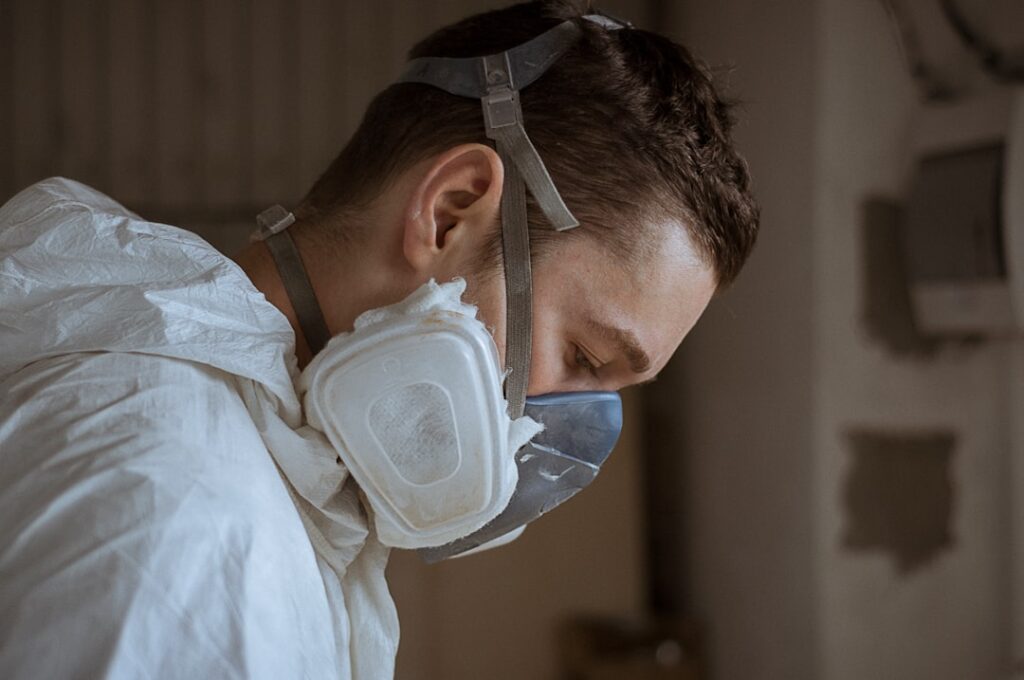
People who search for how to test for asbestos exposure are usually asking one of two very different questions, and confusing them leads to wasted effort. One question is medical: has my body been affected by breathing asbestos fibers? The other is about the home: do the materials in my house contain asbestos? These require completely different approaches. Exposure testing is a medical matter handled by a physician, while material testing is handled by accredited laboratories analyzing samples. This guide summarizes EPA, CDC, and OSHA guidance current as of 2026, and it is not medical advice. For any symptom or exposure concern, consult your doctor; for testing decisions about materials, use a certified professional.
Part of our Asbestos in the Home guide — start there for the full picture →
Is this mold, asbestos, or water damage? Get a free instant screen
Upload a clear photo of the suspect area. You'll get an instant AI screening opinion and what to do next. This is screening guidance, not a professional determination.
Screening guidance only. AI can be wrong. Confirm asbestos, mold type, or lead with lab testing or a licensed professional before acting.
Exposure Testing Is a Medical Question
There is no home kit that tells a person whether asbestos fibers have harmed their lungs. Testing for the health effects of asbestos exposure is medical, and it belongs with a physician. A doctor evaluates exposure history, symptoms, and physical findings, and may order imaging or breathing tests to look for changes associated with past exposure. None of that can be done with a swab or a mail-in sample.
This distinction matters because the internet is full of products marketed for “asbestos testing.” Those products test materials, not people. A person worried about their own health after working around old insulation or during a renovation should route that concern to a healthcare provider, not to a lab that analyzes drywall.
What a Physician May Consider
A doctor assessing possible asbestos-related health effects typically starts with a detailed history: where and when a person may have encountered asbestos, in what occupation or setting, and for how long. From there, a physician may use chest imaging such as an X-ray or CT scan and lung-function testing to evaluate the lungs. The interpretation of those results is a clinical judgment, which is exactly why this path runs through medicine rather than a home test.
Because asbestos-related conditions can take many years to develop after exposure, a physician also considers the long latency involved. Anyone with a known history of significant exposure should discuss appropriate monitoring with their doctor rather than attempt to self-assess.
Testing Materials in the Home Is Different
The other meaning of the search is about the house itself. Determining whether a building material contains asbestos is a laboratory question, and it is where home inspection and environmental testing actually apply. Suspect materials in older homes include certain floor tiles, popcorn ceilings, pipe insulation, joint compound, and some siding products.
Materials cannot be confirmed by sight. The only reliable way to know is laboratory analysis of a properly collected sample, typically by polarized light microscopy at an accredited lab. Because disturbing asbestos-containing material releases fibers, sampling itself carries risk and is best handled by a trained professional. The broader picture of identifying and managing these hazards appears in the site’s guide to asbestos and lead in older homes.
Why the Two Tests Should Never Be Confused
The practical danger of conflating the two is that a person may test their walls, get a clean result, and assume their health is fine, or test nothing and assume the worst about their lungs. A clean material test says nothing about past exposure elsewhere, and a health concern says nothing about whether current materials are safe. They answer separate questions.
The right mental model is simple: worried about your body, see a doctor; worried about your house, get materials tested by a professional. Both can be true at once, and each has its own correct path.
Who Performs Material Testing
Material testing involves a trained inspector or sampler collecting small pieces of suspect material under controlled conditions and sending them to an accredited laboratory. The lab analyzes the sample and reports whether asbestos is present and in what concentration. Proper sampling minimizes fiber release, which is why a do-it-yourself approach is discouraged for friable or easily damaged materials.
If a sample confirms asbestos, the next step is not necessarily removal. Intact, undisturbed material is often safely managed in place, and removal is a regulated activity reserved for licensed abatement professionals under federal standards. Readers can review how the testing-to-action chain works in the related overview of professional lead and asbestos assessments through the pillar resources.
When Material Testing Makes Sense
Testing materials is most relevant before a renovation, before demolition, or when suspect material is already damaged. Cutting, sanding, or tearing out old material without knowing its asbestos status can release fibers into the air, which is precisely the situation safety guidance aims to prevent. Knowing before disturbing is the entire point.
For pre-1978 homes especially, assuming suspect materials may contain asbestos until tested is the cautious default. That assumption guides safe handling and prevents accidental disturbance during otherwise routine projects.
What to Do If You Suspect You Were Exposed
Someone who believes they breathed asbestos fibers, whether at work or during a home project, should bring that history to a physician. The doctor can decide whether monitoring or imaging is warranted based on the nature and duration of the exposure. There is no benefit in trying to substitute a material test or an online product for that conversation.
It also helps to document the circumstances of any suspected exposure: the setting, the approximate dates, and the materials involved. That record gives a physician useful context and supports any future monitoring decisions.
Reducing Future Exposure at Home
Whether or not past exposure is a concern, limiting future exposure is straightforward. Leave suspect materials undisturbed, avoid drilling or sanding them, and bring in professionals before any renovation that might affect them. If material is damaged, restrict access to the area and consult a qualified asbestos professional about testing and proper handling.
These precautions protect everyone in the household. The goal is to avoid creating airborne fibers in the first place, which is far easier than dealing with a contaminated space after the fact.
Where Asbestos Hides in Older Homes
The material side of the question becomes clearer once a homeowner knows where asbestos was commonly used. For much of the twentieth century, asbestos was prized for its heat resistance and durability, so it appeared in a long list of building products. Knowing the usual suspects helps a homeowner identify what to leave undisturbed and what to have tested before a project.
Common asbestos-containing materials include vinyl floor tiles and the black mastic beneath them, popcorn and other textured ceilings, pipe and boiler insulation, certain joint compounds and textured wall finishes, cement siding and roofing products, and some duct insulation. Older homes may also contain asbestos in vermiculite attic insulation. None of these can be confirmed by appearance alone, which is precisely why laboratory analysis is the only reliable answer. A homeowner who recognizes these categories can avoid accidentally cutting, sanding, or demolishing them before testing.
Why Intact Material Is Often Left Alone
A frequent surprise for homeowners is that a positive material test does not automatically mean removal. Asbestos is dangerous when its fibers become airborne, which happens when material is damaged, crumbling, or disturbed. Material that is intact and in good condition often poses little immediate risk if left undisturbed, and managing it in place can be both safer and far less expensive than removal.
This principle changes how a homeowner should think about old materials. The goal is not to strip every trace of asbestos from a house but to prevent fibers from being released. An undisturbed popcorn ceiling or sealed floor tile may be safely encapsulated or simply left alone, while damaged pipe insulation in a basement is a different matter. The condition of the material, not merely its presence, drives the decision, and that decision is best made with professional input.
What Happens During Professional Material Sampling
For homeowners who do need material testing, understanding the process removes some of the mystery. A trained inspector or sampler first identifies suspect materials and assesses their condition. Sampling is done carefully to minimize fiber release: the area may be lightly misted to suppress dust, a small piece is collected into a sealed container, and the sampled spot is patched or sealed afterward. The number of samples depends on the materials and areas of concern.
Samples then go to an accredited laboratory, where analysts use polarized light microscopy to identify and quantify asbestos. In some cases, more specialized microscopy is used for materials where standard methods are inconclusive. The lab reports whether asbestos is present, the type, and the percentage. This documented result is what guides any decision about management or abatement, and it is the kind of evidence a do-it-yourself approach cannot reliably produce. Homeowners can see how this fits into the wider hazard picture through the related pillar resources on lead and asbestos.
The Long Latency Behind Exposure Concerns
One reason exposure testing belongs with a physician is the long timeline of asbestos-related disease. Conditions linked to asbestos exposure can take many years, sometimes decades, to appear after the exposure occurred. This latency means that a person worried today about exposure from years ago cannot get a meaningful answer from any home test, and even medical evaluation focuses on history and monitoring rather than an instant verdict.
For someone with a known history of significant exposure, this is a reason to maintain a relationship with a healthcare provider who is aware of that history. A physician can recommend appropriate monitoring over time rather than a single test. This long view is yet another way the medical and material questions diverge: materials can be tested today with a clear result, while exposure is a clinical matter assessed over a much longer horizon.
Who Faces Higher Material-Disturbance Risk
While exposure assessment is medical, knowing who tends to disturb asbestos materials helps homeowners think about prevention. Renovation and demolition work is the most common way fibers get released in a home setting, so anyone planning to remodel an older house should treat suspect materials with caution before starting. Do-it-yourself enthusiasts who sand, cut, or tear out old materials without testing are a frequent and avoidable source of disturbance.
Older homes built during the decades when asbestos was widely used carry the most suspect materials, so the risk of disturbance rises with the age of the house. A homeowner who recognizes this can plan projects around testing, leaving suspect materials undisturbed until their status is known. This preventive mindset addresses the material side of asbestos directly, reducing the chance of creating airborne fibers in the first place, which is far easier than dealing with a contaminated space afterward.
Keeping the Two Questions Straight Over Time
Because both questions can resurface throughout home ownership, it helps to have a durable mental framework. Any time a project might disturb old materials, the material question applies, and the answer is professional testing before work begins. Any time a person develops a health concern they connect to past exposure, the exposure question applies, and the answer is a conversation with a physician.
These two tracks rarely intersect, and confusing them leads to the wrong action. Testing a wall does nothing for a health worry, and seeing a doctor does nothing to clear a material for renovation. Homeowners who keep the framework in mind respond correctly each time the topic arises, directing material concerns to qualified asbestos professionals and health concerns to medical care without hesitation or wasted effort.
How Occupational and Home Exposure Differ
Not all asbestos exposure carries the same weight, and a physician evaluating a patient considers the source carefully. Occupational exposure has historically been the most significant. Workers in trades such as insulation, shipbuilding, boiler repair, brake manufacturing, demolition, and older construction often handled asbestos directly over years, accumulating far more fiber contact than a typical homeowner ever would. For these individuals, a doctor familiar with occupational history is especially valuable, because the pattern and duration of exposure shape the clinical picture.
Home exposure is usually a different scale. A homeowner who once disturbed a popcorn ceiling during a single weekend project faces a very different exposure profile than a tradesperson with decades of daily contact. That does not make a home concern meaningless, but it does mean the conversation with a physician should include honest detail about what actually happened: whether a respirator was worn, how long the work lasted, how much material was disturbed, and whether the area was ventilated. A doctor weighs all of this rather than treating every exposure as identical. The point is not to dismiss home exposure but to describe it accurately so the medical assessment reflects reality.
Documenting an Exposure History for a Doctor
Because a physician’s evaluation leans heavily on history, preparing that history before an appointment makes the visit more useful. A person concerned about past exposure can write down the settings where asbestos may have been present, the approximate years involved, the type of work or activity, and any protective measures used. Old employment records, union records, or even photographs of a renovation can help anchor dates and circumstances that memory alone might blur.
This kind of preparation matters more for asbestos than for many other health questions because of the long timeline involved. A person may be trying to recall events from twenty or thirty years earlier, and specifics fade. A written summary gives the doctor a clearer starting point and reduces the chance that an important detail is forgotten in the moment. For households with several people who shared the same exposure setting, such as a family that lived through a major renovation together, each person’s recollection can fill gaps in the others. None of this is medical advice; it is simply a way to make the medical conversation, which is where exposure questions belong, as productive as possible.
Common Misconceptions About Exposure Testing
Several persistent myths send people down the wrong path. One is the belief that a blood test or urine test can confirm whether asbestos has harmed a person. There is no simple bodily fluid test that serves as a definitive asbestos-exposure verdict, which is part of why a physician relies on history, imaging, and lung-function evaluation instead. Another misconception is that a single exposure event guarantees illness; the reality is more nuanced, and a doctor considers dose, duration, and time since exposure rather than treating any contact as automatically harmful.
A third myth confuses the two questions this guide separates: people sometimes assume that buying a material test kit and swabbing their walls will somehow reveal their personal health status. It will not. A material kit, where one is even appropriate, speaks only to whether a building product contains asbestos, never to what is happening inside a person’s lungs. Clearing up these misconceptions helps people spend their effort where it counts, sending health worries to a physician and material questions to qualified asbestos professionals, rather than chasing products that cannot answer the question being asked.
The Bottom Line
Testing for asbestos exposure and testing for asbestos in materials are not the same task. Exposure is a medical question answered by a physician through history, imaging, and lung-function evaluation. Materials are a laboratory question answered by accredited analysis of samples collected by trained professionals. Matching the concern to the correct path prevents both false reassurance and unnecessary alarm.
Anyone uncertain which question applies to their situation can usually sort it out quickly: a worry about health goes to a doctor, and a worry about the house goes to a qualified asbestos professional. Each has the tools the other does not.
References
- EPA overview of asbestos hazards and material testing — U.S. Environmental Protection Agency
- CDC information on asbestos and health effects — Centers for Disease Control and Prevention
- OSHA standards for asbestos handling and worker safety — Occupational Safety and Health Administration
- Asbestos.com resource on exposure and health concerns — The Mesothelioma Center
Frequently asked questions
Is there a home kit to test for asbestos exposure?
No. No home kit tells you whether asbestos fibers have affected your body. Exposure testing is medical and belongs with a physician, who evaluates history, symptoms, and may order imaging or lung-function tests. Home kits test materials, not people.
How is testing the home different from testing exposure?
Testing the home means analyzing suspect materials in a lab to see if they contain asbestos. Testing exposure means a doctor assessing whether your health has been affected. They answer separate questions and follow completely different paths.
Who should collect asbestos material samples?
A trained professional should collect samples, because disturbing asbestos-containing material can release fibers. The sample goes to an accredited laboratory for analysis. Do-it-yourself sampling is discouraged for damaged or friable materials.
What if I think I was exposed at work?
Bring that history to a physician. Describe where, when, and for how long the exposure may have occurred. The doctor can decide whether imaging or ongoing monitoring is warranted, since asbestos-related conditions can take many years to appear.
Front Range homeowners who want a qualified local professional to assess suspect materials before a renovation can connect with a vetted inspector through our contact page.
Asbestos test kits
Asbestos can only be confirmed by a lab. A mail-in kit gets you a sealed sample container and accredited analysis — never sand or disturb suspect material first.
| Product | Why | Buy |
|---|---|---|
 Asbestos Test Kit (mail-in lab) Asbestos Test Kit (mail-in lab) | Includes PPE + sealed mailer. | Amazon — $34.99 |
| Pro-Lab Asbestos Test Kit | Widely available; lab fee separate. | Amazon — $34.99 |