HIKMICRO Thermal: What Homeowners Need to Know
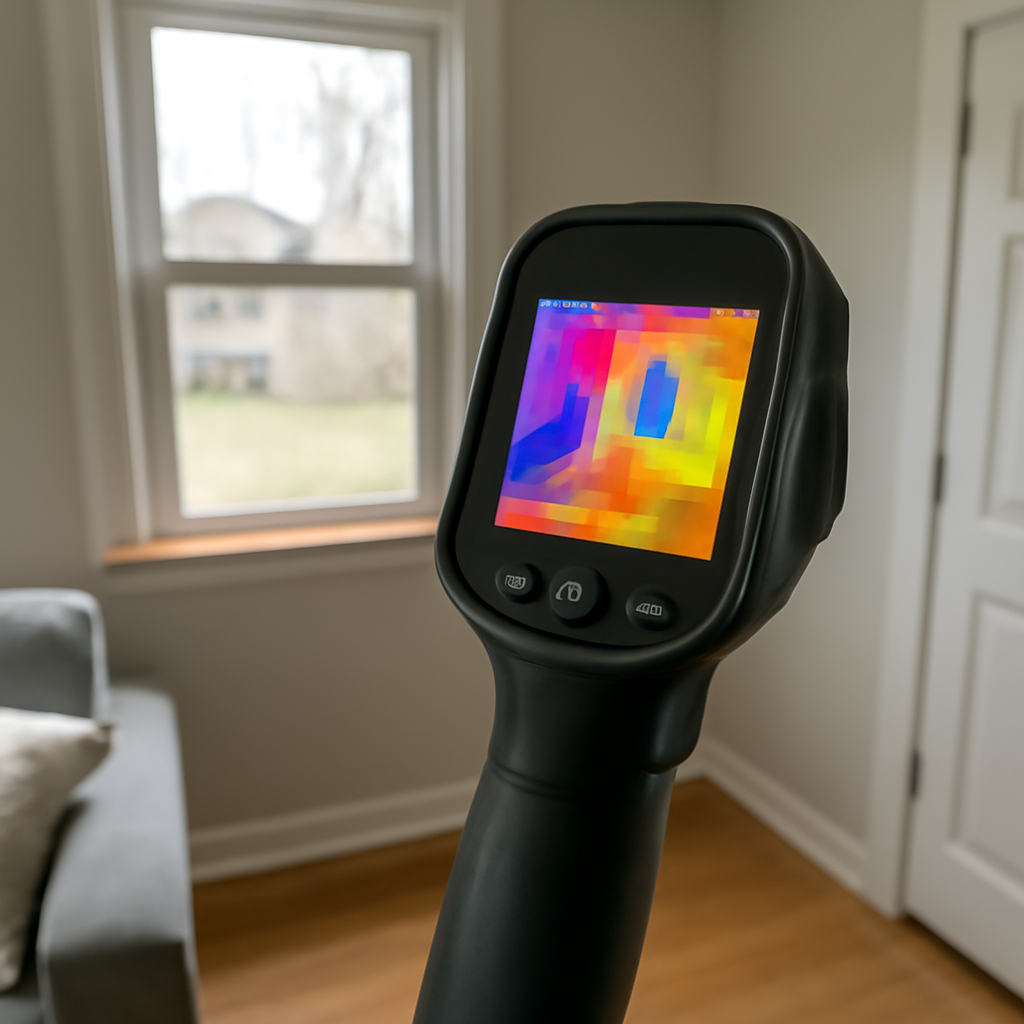
HIKMICRO thermal cameras have become a popular middle ground for homeowners and working inspectors who want capable infrared imaging without the price of top-tier professional units. The brand spans pocket-sized spot cameras, handheld inspection models, and outdoor monoculars and scopes, all built on the same heat-sensing technology used across the thermal field. This guide explains what HIKMICRO thermal devices do, which specifications matter, where they fit in a home inspection, and how they compare to alternatives — using home-inspection standards as the reference point rather than vendor marketing.
Part of our Thermal Imaging for Homes guide — start there for the full picture →
What HIKMICRO thermal cameras are
HIKMICRO makes thermal imaging devices that detect infrared radiation — emitted heat — and convert it into a false-color image showing temperature differences. The product range relevant to homeowners falls into a few groups: compact pocket cameras (the Pocket series), handheld inspection cameras with built-in displays, and outdoor observation monoculars. Each uses a microbolometer sensor, the same detector class found in other thermal brands, paired with the company’s own image-processing and a companion app for analysis and reporting.
The appeal is value. HIKMICRO units frequently offer resolution and sensitivity comparable to pricier competitors at a lower cost, which has made them common among home inspectors building a tool kit on a budget. They sit in the same category as the cameras covered across our home inspection tools hub, and they compete directly with established lines for the homeowner and small-business buyer.
The brand grew out of a large parent company with deep experience in imaging sensors, which helps explain how it reached competitive image quality quickly. For a homeowner, the practical effect is that a HIKMICRO unit at a given price often carries a higher-resolution sensor than a similarly priced camera from a legacy thermal brand. That value proposition is the main reason the name comes up so often in buyer comparisons and inspector forums, and it is a legitimate reason to consider the brand rather than dismissing it as an unknown.
HIKMICRO’s lineup is broad enough that the name alone does not tell you much — a pocket spot camera and a high-resolution handheld inspection model are very different tools that happen to share a brand. Matching the specific model to the intended job matters more than the badge, which is why the rest of this guide focuses on specifications rather than marketing tiers.
Specifications that matter
Across the HIKMICRO range, the same core specs determine real-world performance:
- Thermal resolution — models span roughly 96×96 and 160×120 on pocket units up to 256×192 and higher on handheld inspection cameras. Higher resolution resolves finer detail and lets you scan from farther back.
- Thermal sensitivity (NETD) — many HIKMICRO inspection models advertise NETD below 40 mK, sharp enough to reveal subtle moisture patterns.
- Temperature range — typically wide enough to capture both cool damp areas and hot electrical components.
- Refresh rate — 25 Hz or higher on many models, giving smooth scanning.
- Image fusion — a visible-light overlay that adds outline detail to the thermal image, similar in concept to features on competing cameras.
Resolution and NETD are the two specs that most separate a useful inspection camera from a toy. For a homeowner spot-checking insulation, a 160×120 pocket model suffices; for chasing subtle moisture or semi-professional work, a 256×192 or higher handheld with low NETD is the better fit. Our handheld thermal imaging camera guide compares these tiers across brands.
The advertised NETD figures deserve a sanity check rather than blind trust. A low number on a spec sheet is encouraging, but real-world sensitivity also depends on the lens, the processing, and the conditions, so two cameras quoting the same NETD can perform differently. The most reliable signal is consistent performance across independent user reports rather than a single headline number. That said, HIKMICRO’s better inspection models genuinely do reach sensitivities that reveal subtle moisture patterns, which is the capability that separates a serious diagnostic tool from a novelty.
Resolution interacts with working distance in a way buyers often overlook. A 256×192 sensor lets an inspector resolve a small anomaly from across a room, while a 96×96 pocket unit may need to be a foot or two away to show the same thing. For scanning large walls, high ceilings, or an attic from a hatch, that distance advantage translates into a faster, more thorough job. For close-up spot checks of an outlet or a pipe, the lower-resolution unit is perfectly adequate.
Real home-inspection uses
A HIKMICRO thermal camera handles the standard infrared inspection tasks:
- Moisture screening — damp drywall reads cooler from evaporation, flagging a spot to confirm with a moisture meter.
- Insulation assessment — gaps and settled insulation show as cooler areas between studs in winter.
- Air-leak detection — drafts around windows, doors, and outlets streak across the image.
- Electrical inspection — overloaded breakers and loose connections appear as hot spots.
- Radiant-floor and plumbing tracing — heating loops and hot-water lines show as warm paths.
The Department of Energy recognizes thermographic scanning as a legitimate way to locate insulation deficiencies and air leakage, and a HIKMICRO camera performs that screening well within its resolution class. As with any thermal device, InterNACHI and ASHI guidance applies: the camera flags anomalies, and the inspector verifies them. A documented thermal imaging inspection pairs these images with confirmation steps.
For a Front Range homeowner, the seasonal pattern is worth keeping in mind. The wide day-to-night and indoor-outdoor temperature swings common across Colorado’s winters create exactly the thermal contrast these cameras need, so a cold-weather scan of insulation and air sealing tends to be productive. The same scan in a mild spring week may reveal little. A HIKMICRO camera does not change that fundamental dependence on a temperature differential; no thermal camera does. Timing the scan to the conditions is part of getting useful results from any brand.
Pricing and how it compares
HIKMICRO’s price positioning is its strongest selling point. Pocket-series cameras commonly run around $200 to $500, handheld inspection models roughly $500 to $1,500, and higher-resolution units more. That undercuts comparable-resolution cameras from longer-established premium brands, which is why HIKMICRO appears frequently in budget-conscious tool comparisons.
Against a smartphone attachment, a standalone HIKMICRO adds a built-in display, its own battery, faster operation, and usually higher resolution — meaningful upgrades for frequent use. Against premium professional cameras, HIKMICRO typically trails in advanced measurement features, lens options, software ecosystem maturity, and long-term support, though the imaging gap has narrowed considerably. The right choice depends on how often the tool will be used and whether advanced analysis and documentation features justify the premium. For occasional homeowner use, the value tier is usually the sensible pick.
The software ecosystem is one area where established brands have historically held an edge. Professional thermographers rely on desktop analysis and reporting software to correct parameters and build client documents, and the maturity of that software varies between brands. HIKMICRO provides companion apps and analysis tools that have improved over time, but a buyer who depends on advanced reporting should confirm the specific model’s software supports the workflow they need before purchasing. For a homeowner who just wants to find problems, the bundled app is usually more than enough.
Limitations, maintenance, and buying tips
HIKMICRO cameras share every limitation of thermal imaging generally. They read surface temperature only, so they cannot see through walls or detect moisture directly — they show temperature differences a person interprets. They need a temperature differential to reveal insulation and leak problems, so mild-weather scans show little. Reflective surfaces, sunlight, and recent HVAC operation can mislead, and emissivity settings affect measurement accuracy on shiny materials.
Maintenance is light: keep the germanium lens clean using approved methods, store the camera dry and protected, keep the firmware and companion app updated, and follow any manufacturer guidance on periodic calibration to keep temperature readings trustworthy. When buying, prioritize resolution and NETD over flashy extras, confirm the unit includes the analysis app you need for reporting, and check the warranty and regional support, which can be less established than legacy brands. Buy from authorized sellers to avoid gray-market units without support. Matched to the right job and verified with a moisture meter, a HIKMICRO thermal camera is a strong-value entry into infrared inspection.
How HIKMICRO fits a homeowner’s tool kit
For most homeowners, a thermal camera is one tool among several rather than a standalone solution, and a HIKMICRO unit slots into that kit naturally. The camera finds the suspicious area; a moisture meter confirms whether a cool patch is actually wet; a borescope can look inside a wall cavity through a small hole; and a basic outlet tester or panel inspection follows up on electrical hot spots. Buying a value-priced thermal camera frees budget for those companion tools, which is part of why the brand appeals to people building a kit deliberately rather than splurging on a single premium device.
The Pocket-series cameras in particular have found a following because they are small enough to carry routinely. A homeowner can keep one in a drawer and pull it out whenever a room feels drafty, a bill spikes, or a stain appears, treating it as an everyday diagnostic rather than a special-occasion instrument. The handheld inspection models, with larger screens and higher resolution, suit someone doing more deliberate whole-house surveys or light professional work, where the extra detail and easier handling earn their higher price.
What to confirm before you buy
A short checklist prevents most buyer’s remorse. Confirm the resolution and NETD match your intended use, since those drive real capability more than any other feature. Verify the unit measures the temperature range you need, particularly the high end if electrical work is a priority. Check that the companion app handles the storage, sharing, or reporting you expect. Confirm the warranty terms and that regional support exists, an area where newer brands can lag legacy names. And buy from an authorized seller, because gray-market imports may carry no warranty and no firmware support.
One last point separates a satisfied owner from a frustrated one: treat the camera as a screening tool, never as a final authority. Even a sharp, well-specified HIKMICRO image is a starting point that an inspector or homeowner confirms with another method. That discipline — flag, then verify — is what every standards body recommends and what turns a value-priced camera into a genuinely useful part of inspecting and maintaining a home.
A final word on value versus cost. The reason HIKMICRO has earned its place in so many buyer comparisons is not that it is the absolute best camera available, but that it delivers most of what a homeowner or budget-conscious inspector needs at a price that leaves room in the budget for the companion tools and training that actually determine whether thermal imaging is used well. A modest camera in skilled hands, backed by a moisture meter and an understanding of when conditions support a scan, outperforms an expensive camera used without that discipline. Viewed through that lens, the brand’s value proposition is genuinely sound for the right buyer with the right expectations.
References
- ENERGY STAR: Seal and Insulate — U.S. Environmental Protection Agency (ENERGY STAR)
- Infrared Thermal Imaging in Home Inspections — InterNACHI
- Standard of Practice — American Society of Home Inspectors
Frequently asked questions
What does a HIKMICRO thermal camera detect?
It maps surface temperature differences that point to damp drywall, missing insulation, air leaks, and electrical hot spots. It does not see through walls or measure moisture directly; you confirm anomalies with a moisture meter. It is a screening tool the inspector verifies.
How much do HIKMICRO thermal cameras cost?
Pocket-series cameras commonly run about $200 to $500, handheld inspection models roughly $500 to $1,500, and higher-resolution units more. The brand generally undercuts comparable-resolution premium cameras, which is a main reason for its popularity.
How does HIKMICRO compare to premium brands?
HIKMICRO often matches premium resolution and sensitivity at a lower price, but typically trails in advanced measurement features, lens options, software maturity, and long-term support. For occasional homeowner use the value tier is usually sufficient.
What specs matter most when buying one?
Thermal resolution and thermal sensitivity (NETD, lower is better) matter most. For insulation and draft checks a 160x120 unit suffices; for subtle moisture detection or semi-professional work, choose a 256x192 or higher model with NETD below about 40 mK.