EPA Asbestos Rules: What Homeowners Need to Know
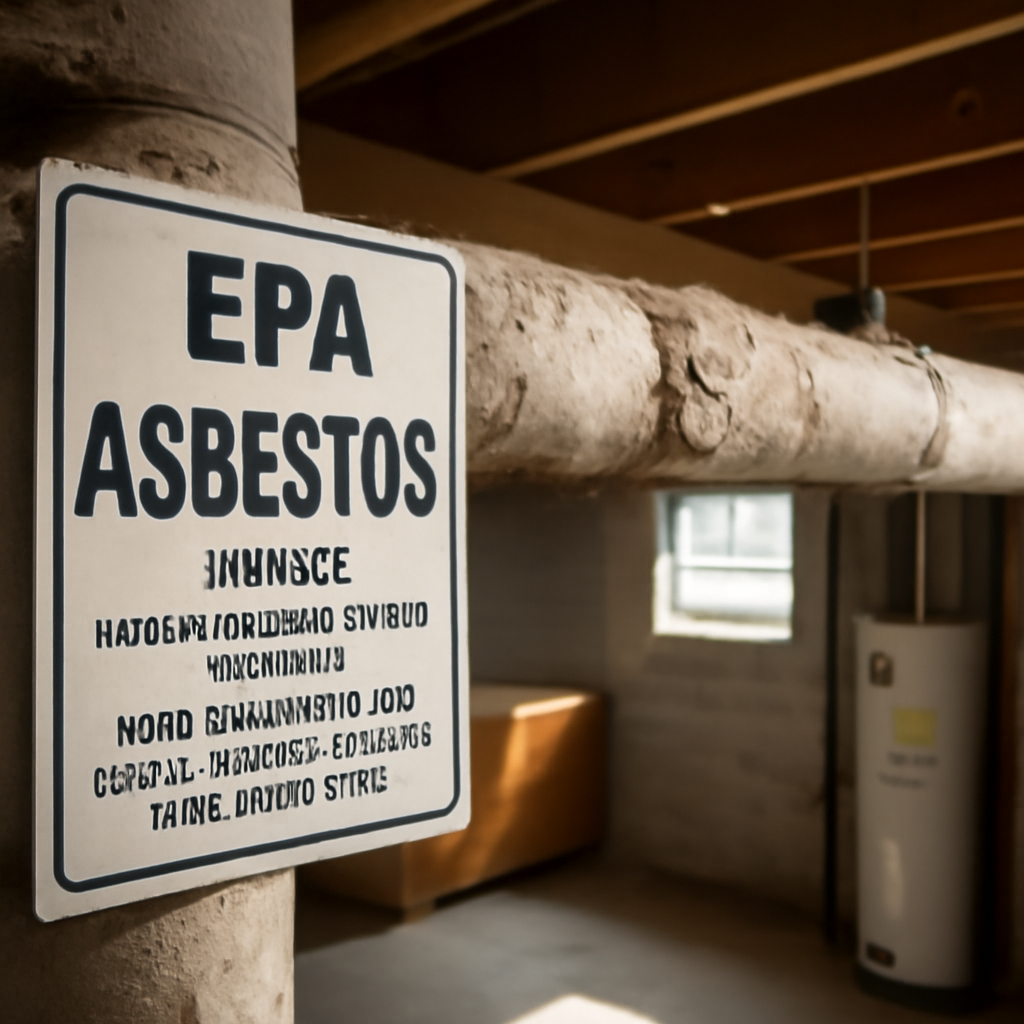
The Environmental Protection Agency is the federal agency most homeowners encounter when they discover asbestos, yet its rules are often misunderstood. The EPA does not inspect private homes, but its regulations shape how asbestos must be handled, disturbed, and disposed of, and they set the framework that licensed contractors and state programs follow. Knowing what the EPA asbestos rules do and do not require helps homeowners avoid both dangerous shortcuts and needless panic. This guide summarizes EPA, OSHA, and CDC guidance current as of 2026 — always confirm specifics with a certified asbestos professional, since lab testing and abatement decisions should never rest on assumptions.
Part of our Asbestos in the Home guide — start there for the full picture →
Is this mold, asbestos, or water damage? Get a free instant screen
Upload a clear photo of the suspect area. You'll get an instant AI screening opinion and what to do next. This is screening guidance, not a professional determination.
Screening guidance only. AI can be wrong. Confirm asbestos, mold type, or lead with lab testing or a licensed professional before acting.
What do the EPA asbestos rules cover?
The EPA regulates asbestos primarily through the Clean Air Act’s NESHAP standard, which governs how asbestos is handled during demolition and renovation and how the waste is disposed of, and through the Toxic Substances Control Act, under which the EPA finalized a 2024 rule banning the ongoing use of chrysotile asbestos. The EPA also administers the AHERA framework for schools and provides guidance for homeowners. What the EPA does not do is require a homeowner to remove intact asbestos from a private single-family home — its long-standing position is that undisturbed, intact asbestos is often best left in place.
That nuance is the heart of the matter, and it connects to the broader question of where asbestos lives and when it must be addressed, covered in the guide to asbestos and lead in pre-1978 housing.
NESHAP: the disturbance and disposal rule
The National Emission Standards for Hazardous Air Pollutants (NESHAP) is the EPA rule most relevant to renovation and demolition. It requires that regulated asbestos-containing material be kept wet during removal, handled to prevent fiber release, sealed in leak-tight, labeled containers, and disposed of at a landfill permitted to accept asbestos waste. For many commercial and multi-unit projects, and demolitions, NESHAP requires advance notification to the regulating authority before work begins.
Single-family residential renovations have some exemptions from the notification requirement, but the safe-handling and disposal principles still apply, and OSHA worker-protection rules apply to any hired crew. The practical takeaway: even when notification is not required, asbestos cannot legally be dumped with regular trash, and disturbance must be controlled. This is why hired work goes through professional asbestos removal rather than ordinary demolition.
NESHAP also draws a line between friable and non-friable material. Friable asbestos — material that can be crumbled by hand pressure, such as old pipe insulation or deteriorated popcorn ceiling — is the most tightly regulated because it releases fibers easily. Non-friable material like intact floor tile or cement siding is lower risk while intact, but the moment it is cut, sanded, or demolished into a friable state during a renovation, the full handling and disposal rules apply. Homeowners often misjudge this distinction, assuming “hard” asbestos products are harmless; the danger is created by the act of disturbing them.
The 2024 chrysotile ban — what it does and doesn’t mean
In 2024 the EPA finalized a rule under the Toxic Substances Control Act to ban the ongoing use, manufacture, and import of chrysotile asbestos, the only form still being commercially imported into the United States. This phases out remaining uses in products such as certain gaskets, brake blocks, and chemical-industry diaphragms over staged deadlines.
Homeowners should understand the limit of this ban: it addresses new uses going forward. It does not remove the asbestos already installed in millions of existing homes built before the 1990s. A 1965 house with asbestos floor tile, pipe wrap, and popcorn ceiling is unaffected by the 2024 rule — that material still requires testing and careful handling if disturbed. The ban reduces future exposure; it does nothing to the legacy asbestos already in place.
EPA-recognized test methods for homeowners
The EPA provides guidance on identifying and sampling suspect materials, and it recognizes laboratory analysis (polarized light microscopy) as the accepted method for confirming asbestos in bulk samples. The agency advises homeowners not to sample casually, because the act of taking a sample can release fibers, and to use accredited inspectors and labs.
This guidance underpins the safe sequence every homeowner should follow: suspect, test through a certified inspector and accredited lab, then plan any work around confirmed results. The step-by-step approach is laid out in the guide on how to check for asbestos.
How EPA rules interact with state and OSHA rules
EPA rules are the federal floor; states often run their own, sometimes stricter, asbestos programs and accreditation requirements. OSHA, a separate agency, regulates worker exposure — permissible exposure limits, respiratory protection, and decontamination — for anyone doing the work professionally. In practice, a licensed abatement contractor must satisfy EPA disposal rules, state licensing, and OSHA worker-protection standards simultaneously.
For homeowners, the consequence is simple: hire contractors who can document compliance with all three, and confirm where the waste will go. Vetting those contractors follows the same logic as the guide to asbestos removal contractors.
The AHERA framework and what it signals for homes
One EPA program homeowners hear about is AHERA, the Asbestos Hazard Emergency Response Act, which governs asbestos management in schools. AHERA does not apply to private residences, but it is instructive because it codifies the EPA’s preferred philosophy: identify asbestos, assess its condition, and manage it in place through an operations-and-maintenance plan rather than reflexively removing everything. Schools are required to inspect, develop management plans, and act when material deteriorates.
The homeowner takeaway is the same management mindset. Intact asbestos in good condition is monitored and left alone; deteriorating or soon-to-be-disturbed material is addressed by professionals. AHERA shows that even where the EPA imposes the strictest oversight — buildings full of children — the standard is informed management, not blanket removal. That should reassure a homeowner who discovers asbestos but has no renovation planned.
The contrast with how schools must operate is itself instructive. AHERA requires school districts to maintain a written management plan, conduct periodic re-inspections, and train custodial staff who might disturb the material. A homeowner is not bound by any of that, but borrowing the spirit of it — knowing where the asbestos is, checking its condition occasionally, and not disturbing it casually — is exactly the prudent approach the EPA’s residential guidance encourages. The regulation written for the highest-stakes setting validates the calm, monitor-in-place response for the ordinary home.
What this means for your home
Put the rules together and the homeowner’s path is clear. Intact asbestos in good condition is generally not something the EPA requires you to remove — leaving it undisturbed and monitoring it is often the lower-risk choice. The moment material will be disturbed by renovation, demolition, or damage, EPA disposal rules, OSHA worker rules, and state licensing all kick in, and the job belongs to certified professionals. The 2024 ban is good news for the future but changes nothing about the legacy material already in older homes. Test before you disturb, never dump asbestos in regular trash, and treat the EPA framework as the safety floor it was designed to be.
A few practical scenarios show how the framework plays out. A homeowner refinishing a 1965 basement with original 9-inch floor tile should test the tile and mastic first; if positive and the tile will be removed, that is a job for a certified contractor following disposal rules, not a weekend with a pry bar. A homeowner who simply wants to leave that tile in place and float a new floor over it may disturb nothing and trigger no requirements. The same material, the same house — two very different regulatory outcomes driven entirely by whether the material is disturbed.
Another common case is a popcorn ceiling in a home of the right era. Scraping it dry is exactly the kind of disturbance the rules exist to control, so testing comes first; if positive, removal is professional abatement work. Painting over an intact, undisturbed textured ceiling, by contrast, generally disturbs nothing. The throughline across every scenario is the EPA’s core message: the presence of asbestos is not the trigger — disturbing it is. A homeowner who internalizes that distinction can navigate the rules confidently rather than fearfully, and can tell the difference between a situation that needs a certified contractor and one that simply needs to be left alone.
The EPA framework can feel intimidating from the outside — multiple agencies, federal and state layers, technical terms like NESHAP and TSCA — but its practical demands on a homeowner are few and clear. Do not disturb suspect material without testing. Do not let an uncertified crew tear into it. Do not dump it with the trash. Beyond those, the agency’s own guidance leans toward calm management of intact material rather than reflexive removal. The rules exist to prevent fibers from reaching human lungs, and every requirement traces back to that single goal. A homeowner who keeps that purpose in mind will find the regulations far more navigable than their acronyms suggest, and will make decisions that are both compliant and genuinely protective of the household.
For Front Range homeowners specifically, the EPA framework pairs naturally with the region’s older housing stock. Plenty of homes across the Denver metro and surrounding counties date to the asbestos era, so the question of what the rules require comes up during renovations more often than in newer subdivisions. The reassuring reality is that the same principles apply everywhere: confirm with testing, hire certified professionals for any disturbance, and dispose of waste lawfully. A homeowner who follows that sequence satisfies the EPA, OSHA, and state requirements at once, and does so while keeping their household safely clear of the fibers the entire regulatory structure was built to contain.
Disposal: what the EPA requires
Disposal is the part of the EPA framework homeowners most often get wrong, and it carries real legal weight. Asbestos waste cannot go in household trash, a construction dumpster, or a transfer station that does not accept it. Under EPA rules, the material must be kept wet, sealed in leak-tight containers — typically labeled 6-mil polyethylene bags — and transported to a landfill specifically permitted to receive asbestos waste. The facility documents receipt, and that paper trail is the homeowner’s proof the material was handled lawfully.
This requirement is why a legitimate abatement bid includes a line item for disposal, and why a suspiciously cheap bid is a warning sign. Improper disposal — dumping asbestos with regular construction debris — is an environmental violation that can expose the property owner, not just the contractor, to liability. When hiring out the work, a homeowner should ask which permitted facility will receive the waste and request the disposal documentation when the job is done.
For small homeowner projects in jurisdictions that allow limited self-disposal, local solid-waste authorities and the state health department set the procedures, including how to package and where to deliver the material. The rules vary, so checking with the local authority before starting is essential. The overarching principle is consistent everywhere: asbestos leaves the home wet, sealed, and labeled, and arrives at a facility licensed to bury it — never the curb, never an ordinary landfill, never the air through careless handling.
References
- Asbestos laws and regulations — U.S. Environmental Protection Agency
- Asbestos worker-protection standards — Occupational Safety and Health Administration
- About asbestos and health effects — Centers for Disease Control and Prevention
Frequently asked questions
Does the EPA require me to remove asbestos from my home?
No. The EPA does not require homeowners to remove intact asbestos from a private single-family home, and its guidance is that undisturbed asbestos in good condition is often best left in place and monitored. Removal becomes regulated when material is disturbed, damaged, or part of a demolition or renovation.
What is the EPA NESHAP asbestos rule?
NESHAP is the Clean Air Act standard governing how asbestos is handled during demolition and renovation and how it is disposed of. It requires wetting, controlled handling, labeled leak-tight containers, and disposal at a permitted landfill, plus advance notification for many larger and commercial projects.
Did the 2024 EPA ban remove asbestos from old homes?
No. The 2024 rule bans the ongoing use, manufacture, and import of chrysotile asbestos going forward. It does not affect the asbestos already installed in homes built before the 1990s, which still requires testing and careful handling if disturbed.
Can I throw asbestos away with regular trash?
No. EPA rules require asbestos waste to be wetted, sealed in labeled leak-tight containers, and disposed of at a landfill permitted to accept asbestos. Dumping it with household trash is illegal and releases fibers.
If you have found suspect material in a Front Range home and want guidance that fits EPA rules, reach out through our contact page to connect with a certified inspector.