FLIR Ex Series: What Homeowners Need to Know
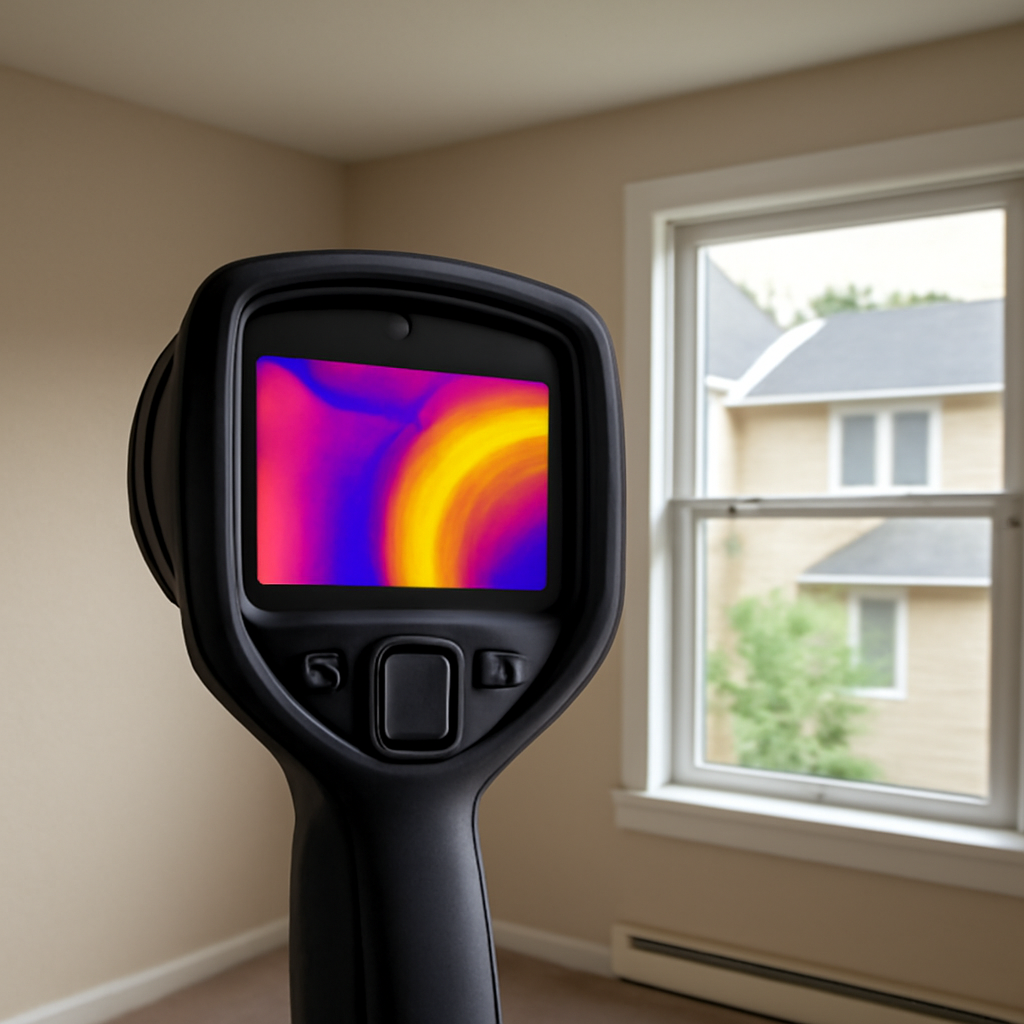
Among entry- and mid-level thermal cameras, the FLIR Ex series is one of the most recognizable lines in the home-inspection world. The family spans several models, historically the E4, E5, E6, and E8, that share a body and feature set but differ mainly in detector resolution. Understanding how the flir ex series is tiered, what MSX adds, and where each model fits helps buyers avoid overpaying or buying too little camera. This guide relies on published specifications and trade-body guidance rather than hands-on testing.
What is the FLIR Ex series?
The FLIR Ex series is a line of compact, point-and-shoot thermal cameras designed for building professionals, electricians, and serious homeowners. The models share the same rugged housing, fixed focus, and simple interface, which lowers the learning curve. What separates them is primarily the thermal detector resolution, with price climbing as resolution increases.
Because the bodies are similar, choosing within the series is mostly a question of how much resolution you need. All of them detect infrared radiation and render surface temperature as a color image, and all support FLIR’s MSX feature. The simplicity is intentional: these are tools meant to be picked up and used without extensive training, which suits the home-inspection context where speed matters. For how to interpret the images they produce, see our guide on what thermal camera colors mean.
Resolution tiers across the line
Resolution is the defining difference, and it is measured in thermal pixels. The historical lineup illustrates the tiering, with each step up roughly doubling the detector pixel count and sharpening the image.
E4
The entry model carries the lowest resolution in the series, suitable for finding large temperature contrasts like missing insulation, drafts, and obvious overheating. It is the budget gateway into the FLIR ecosystem.
E5 and E6
The middle tiers step up resolution, producing clearer images that resolve smaller anomalies. These models are popular with home inspectors who want better image quality than the E4 without paying for the top model.
E8
The top of the series offers the highest resolution, delivering detailed images that resolve fine thermal detail and small anomalies from a useful distance. It commands the highest price and targets users who need image quality for documentation and demanding work.
What MSX adds
One feature shared across the Ex series is MSX, FLIR’s Multi-Spectral Dynamic Imaging. MSX overlays edge detail from the camera’s built-in visible-light camera onto the thermal image, embossing outlines, text, and structural features into the otherwise blurry thermal picture. The result is a thermal image that is far easier to interpret and to orient within a scene.
For a home inspector, MSX is genuinely practical. It lets you see, for example, the outline of a wall stud or an electrical label superimposed on the heat pattern, which helps locate exactly where an anomaly sits. MSX does not increase thermal resolution; it improves readability. That distinction matters when comparing models, since a lower-resolution camera with MSX still produces a more legible image than a raw thermal picture of the same resolution.
How the Ex series fits home inspection
Home inspectors use thermal cameras to screen for energy and moisture clues quickly, then verify with other tools. The Ex series fits this role because it is fast, durable, and simple. An inspector can scan a wall, spot a cool anomaly, and flag it for moisture-meter confirmation without fiddling with focus or complex settings.
InterNACHI’s guidance on infrared thermography frames thermal imaging as a screening method that reveals leads requiring further investigation, which aligns with the Ex series design philosophy. The U.S. Department of Energy similarly recommends infrared scanning for locating air leaks and insulation gaps during energy assessments, a task all Ex models handle. For a broader comparison against competing cameras, our roundup of the best thermal imaging cameras for home inspection places the Ex series in context.
How the Ex series fits among FLIR’s broader lineup
The Ex cameras sit at the entry-to-mid portion of a much larger range. Below them are smartphone-attachment and pocket cameras aimed at casual users, and above them are professional series with far higher resolution, manual focus, interchangeable lenses, and advanced measurement and reporting features built for thermographers and engineers. Placing the Ex series in that context helps a buyer judge whether it is the right tier.
For most home inspectors and serious homeowners, the Ex series hits a practical sweet spot: enough resolution and the readability of MSX to screen buildings effectively, in a simple, durable package, without the cost and complexity of a high-end thermographic camera. Buyers whose work demands the highest image quality or specialized analysis may outgrow it, while casual users may find even the entry model more than they need. Knowing where it sits prevents both overbuying and underbuying within the wider family.
Choosing the right Ex model
The decision hinges on resolution needs and budget. For occasional energy walkthroughs and large-contrast tasks, the entry model is adequate and economical. For an inspector building thermal imaging into a professional service, a mid-tier or top model produces images clear enough to document and to spot subtler anomalies, which can justify the higher cost.
Consider how often you will use the camera, whether you need to present images to clients, and how small the anomalies you hunt for tend to be. Buyers who frequently chase subtle moisture signatures benefit from higher resolution, while those checking for obvious drafts and insulation gaps may not. Pairing any Ex camera with a moisture meter is essential, as covered in our guide to the thermal imaging plus moisture meter workflow.
Specs beyond resolution
While resolution defines the tiers, several shared specifications shape how the Ex cameras perform in the field. Thermal sensitivity, expressed as NETD, determines how well a camera separates subtle temperature differences from noise; lower values reveal fainter anomalies like the cool signature of damp drywall. Temperature measurement range matters for tasks like checking electrical panels, where surfaces can run hot.
Field of view affects how much area you capture and how close you must stand, and the fixed-focus design of the Ex series keeps operation simple at the cost of manual focusing flexibility. The cameras store radiometric images, meaning temperature data is embedded in each file for later analysis, which is valuable for documentation. Battery life and the rugged, drop-rated housing round out the practical picture. None of these overrides resolution as the primary buying decision, but they explain why two cameras of similar resolution can feel different in use.
How MSX compares to true resolution
Buyers often wonder whether MSX can substitute for higher resolution, and the answer is no, though the confusion is understandable. MSX makes a thermal image dramatically more legible by embossing visible-light edge detail onto it, so text, outlines, and structural features become recognizable. A lower-resolution image with MSX looks far more useful than the same raw thermal data without it.
But MSX does not add thermal information. The underlying detector still resolves only as many thermal pixels as its sensor allows, so a small temperature anomaly that falls below the sensor’s resolving power remains undetected no matter how crisp the visible-light overlay appears. MSX improves orientation and presentation; resolution determines what thermal detail exists to present. A buyer chasing subtle anomalies needs genuine resolution, while a buyer who mainly needs readable images for context benefits greatly from MSX even at a lower tier.
Pairing the Ex series with verification tools
An Ex camera is only half of a sound inspection workflow. Because thermal imaging shows surface temperature rather than moisture, every promising anomaly should be confirmed with a contact method before it becomes a finding. The standard companion is a moisture meter: locate a suspicious cool area with the camera, then press a meter to the surface to learn whether it is actually wet.
This pairing mirrors the methodology InterNACHI and ASHI teach, where thermal imaging screens quickly and other instruments verify. It also protects the inspector from acting on a false positive, such as a thermal bridge or a sun-warmed patch that merely looks like a problem. Our guide to the thermal imaging plus moisture meter workflow details how the two tools combine, and the Ex series fits naturally into that approach because its speed and MSX readability make the screening step efficient.
The limits every Ex camera shares
No matter which model you choose, the same limitations apply to all thermal cameras. They show surface temperature, not moisture, and they cannot see through walls. A cool area might be water, an air leak, a thermal bridge, or simply a different material. Sunlight, recent HVAC operation, and surface reflectivity can all create misleading patterns.
This is why thermal imaging is a screening step, never a final verdict. A reputable inspector confirms every thermal clue with a contact method before drawing a conclusion. The Ex series, including the top model, produces clues to investigate, not proof. Treating the image that way prevents the costly mistake of acting on a misread pattern. The home inspection tools buyer’s guide covers the verification instruments that complete the kit.
The Ex series in a homeowner’s hands
Although the line targets professionals, serious homeowners and landlords sometimes invest in an Ex camera, and it suits several household tasks well. During a seasonal energy check, the camera reveals air leaks around windows, doors, and outlets as cool streaks, and broad cool patches expose missing or settled insulation, the very issues the Department of Energy recommends sealing. MSX makes those findings easy to locate against the visible outlines of the room.
At the electrical panel, an Ex camera can flag a connection running hotter than its neighbors, a clue to a loose or overloaded circuit worth an electrician’s attention. After a suspected leak, a cool area on a ceiling can suggest where water traveled. For a homeowner, the entry tier is usually sufficient for these contrast-heavy tasks, while the simplicity of the fixed-focus, point-and-shoot design keeps the learning curve gentle. The same discipline professionals use still applies: treat the image as a lead and confirm with a moisture meter.
Buying new, used, or renting an Ex camera
Because the Ex series has been on the market for years, units appear regularly on the secondhand market, which raises the buy-new-versus-used question. A used Ex camera can be a sound value if it powers on, holds calibration, and comes from a seller who can demonstrate it working, since the rugged housing tends to age well. The risks are a damaged detector, a depleted battery, or a unit that has drifted out of calibration without a way to verify it.
Renting is the better path for a one-time need. Tool-rental outlets and some suppliers offer thermal cameras by the day or week, sparing the purchase cost for a single project. The decision mirrors the broader buy-rent calculus for any thermal camera: buy if you will use it repeatedly, rent for an isolated task, and in either case pair it with a moisture meter. Our roundup of thermal cameras for home inspection helps weigh the Ex series against alternatives before committing.
Is the Ex series worth it?
For homeowners and inspectors who want a simple, durable thermal camera with the readability boost of MSX, the Ex series remains a sensible choice. The tiered resolution lets buyers spend according to need: an entry model for casual energy work, a higher tier for professional documentation. The shared body and interface keep the learning curve low across the line.
The honest caveat is that thermal resolution sets a ceiling on what any model can resolve, and MSX improves readability without raising that ceiling. Buyers should size resolution to their hardest task and remember that the camera is one half of a workflow that depends on moisture-meter confirmation. Matched to the right tasks and paired with verification, an Ex camera earns its place in a home-inspection toolkit.
References
- Infrared Thermography in Inspections — International Association of Certified Home Inspectors (InterNACHI)
- Detecting Air Leaks — U.S. Department of Energy
- Home Inspection Standards and Resources — American Society of Home Inspectors (ASHI)
Thermal imaging cameras
Infrared cameras reveal hidden moisture, missing insulation, and air leaks. Phone-attachment models are the budget entry point; standalone units have higher resolution.
| Product | Why | Buy |
|---|---|---|
 FLIR ONE Pro (phone) FLIR ONE Pro (phone) | Plugs into iPhone/Android; inspector favorite. | Amazon — $349.00 |
 Topdon TC001 Topdon TC001 | High-res phone module at a low price. | Amazon — $199.99 |
 FLIR C5 Compact FLIR C5 Compact | Standalone pocket camera with Wi-Fi. | Amazon — $449.00 |