Mold Inspection Bergen County NJ: A Clear Guide
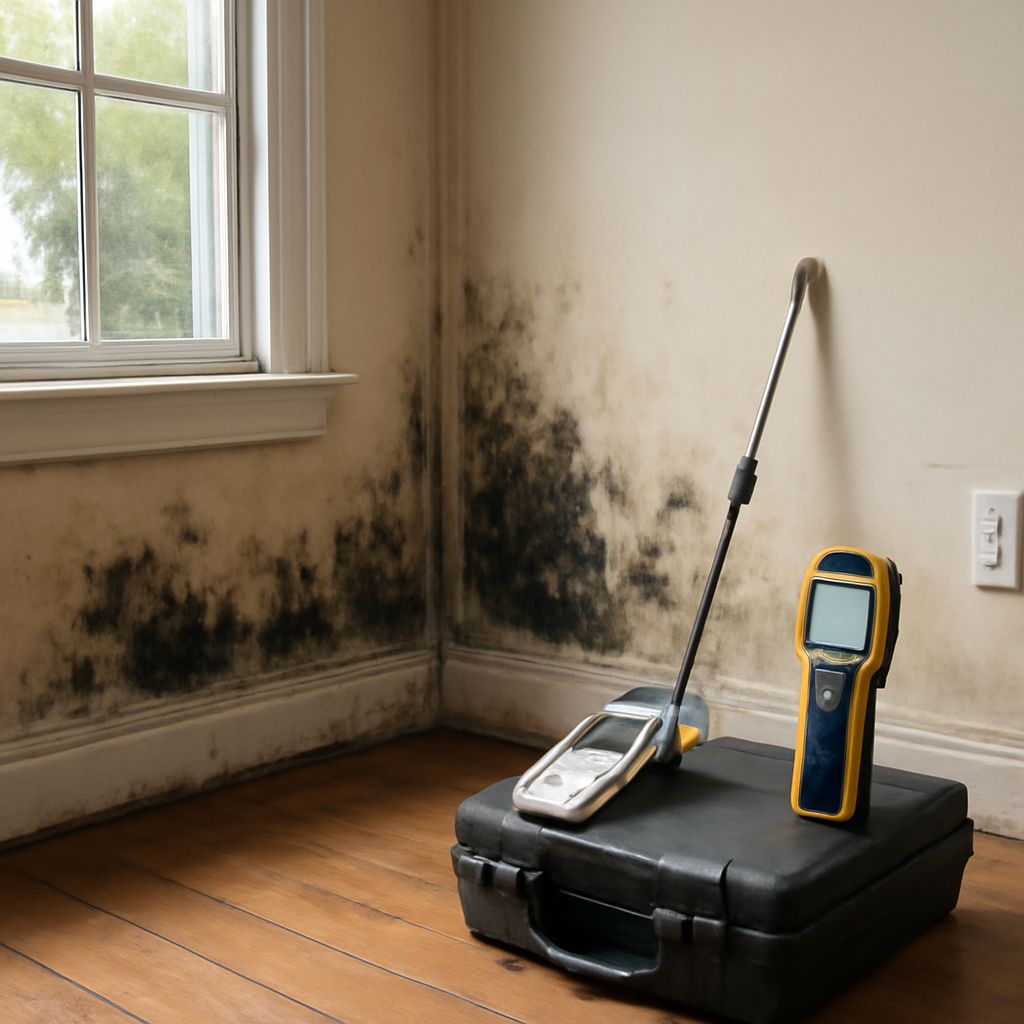
Bergen County’s humid Northeast summers, older housing stock, frequent basements, and proximity to rivers prone to flooding make mold a recurring concern for North Jersey homeowners. A professional mold inspection answers the questions a quick look cannot: how far the growth extends, where the moisture comes from, and whether the air shows elevated spore levels. This guide to mold inspection Bergen County NJ explains what an inspection includes, what it costs, how New Jersey regulates the work, and how to choose a qualified inspector. This article summarizes EPA and CDC guidance current as of 2026 and is educational only; consult a physician for health symptoms and a certified professional for testing and removal decisions.
Is this mold, asbestos, or water damage? Get a free instant screen
Upload a clear photo of the suspect area. You'll get an instant AI screening opinion and what to do next. This is screening guidance, not a professional determination.
Screening guidance only. AI can be wrong. Confirm asbestos, mold type, or lead with lab testing or a licensed professional before acting.
What a Mold Inspection in Bergen County Includes
A mold inspection is an assessment, separate from remediation, that documents the presence, extent, and likely cause of mold. A thorough inspection in a Bergen County home generally covers:
- Visual examination of basements, bathrooms, attics, crawl spaces, and around windows and plumbing.
- Moisture detection using moisture meters and sometimes infrared thermal imaging to find damp areas behind surfaces.
- Humidity readings to gauge whether ambient conditions favor growth.
- Air or surface sampling, when warranted, sent to a lab for analysis.
- A written report describing findings, photographs, and recommended next steps.
The EPA notes that when mold is visible and the moisture source is known, sampling is often unnecessary because the response is the same regardless of species. A good inspector will tell you when testing adds value and when it does not, rather than reflexively selling a lab panel. Our overview of the mold inspection and testing process describes what a complete assessment should cover.
New Jersey Licensing and the Independence Question
Unlike Texas, New Jersey does not have a dedicated state license specifically for residential mold inspectors or remediators, so credentialing falls to the homeowner to verify. That makes the independence question even more important: hire an inspector who does not also perform remediation, so the diagnosis is not biased toward selling you the cure. Look instead for recognized certifications such as those from the IICRC, the American Council for Accredited Certification (ACAC), or InterNACHI’s mold credentials, which indicate standardized training.
An independent inspector’s incentive is to assess accurately, while a company that both inspects and remediates has a financial reason to find more work. This conflict is the single biggest reason to separate the two roles in a state without dedicated licensing.
How Much Does a Mold Inspection Cost in Bergen County?
A basic visual mold inspection in the Bergen County area commonly runs from roughly $300 to $600, with the price rising when air or surface sampling and lab analysis are added, often $100 to $300 or more per sample set. Larger homes, multiple suspected areas, and infrared imaging add to the total. Bergen County pricing tends to sit at the higher end of national ranges, reflecting the elevated cost of living and labor across the New York metro area.
Cost factors include:
- Home size and number of areas to be assessed.
- Whether sampling is included and how many samples are taken.
- Use of thermal imaging to locate hidden moisture.
- Report depth, from a basic summary to a detailed protocol.
Ask exactly what the quoted fee includes, since “free” inspections offered by remediation companies often come with a built-in incentive to find a large, billable problem.
When Bergen County Homeowners Need a Mold Inspection
An inspection is most useful in a few situations:
- After flooding or a leak, common near the Hackensack and Passaic Rivers and in homes with finished basements.
- Persistent musty odors with no visible source, suggesting hidden growth.
- Unexplained respiratory symptoms among occupants when the cause is unclear.
- Real estate transactions, where buyers or sellers want documented air-quality information.
- Post-remediation verification, to confirm a cleanup succeeded.
Basements are the classic Bergen County trouble spot; our guide on black mold in the basement covers the moisture dynamics an inspector will examine. For surface growth elsewhere, the principles in cleaning mold on walls apply once an inspection confirms the scope.
What the Inspection Report Should Contain
The deliverable that justifies the fee is a clear, useful report. A quality Bergen County mold inspection report should include several elements.
Findings by location. A room-by-room account of where growth, moisture, or elevated humidity was found, supported by photographs.
Moisture readings. Documented moisture-meter values and, where used, thermal images showing damp areas behind surfaces, so the moisture source is identified rather than guessed.
Sampling results, if performed. Lab analysis of any air or surface samples, compared against an outdoor control, with plain-language interpretation rather than raw numbers alone.
Likely cause. An assessment of what is driving the moisture, a leak, condensation, drainage, or humidity, because the cause dictates the fix.
Recommendations. Clear next steps, whether that is monitoring, small-area cleanup, or a referral for remediation, with the scope a remediator would need.
A report that offers only a verdict without photos, moisture data, or a cause is far less valuable. Insist on seeing a sample report before booking so you know what you are paying for.
Bergen County Conditions That Drive Mold
North Jersey’s environment shapes where and why mold appears, and a local inspector should account for it. Humid summers push indoor humidity high enough to feed growth on cool surfaces, especially in finished basements that stay damp. Proximity to the Hackensack and Passaic Rivers and low-lying areas means flooding and high water tables are recurring concerns, and homes that have flooded once often harbor hidden growth in wall cavities and subfloors. The region’s older housing stock includes many homes with stone or block foundations that wick moisture, and finished basements built over them without proper vapor control are classic trouble spots. A thorough inspection weighs these regional patterns rather than treating every home as generic.
How to Vet a Bergen County Mold Inspector
Without state licensing, due diligence rests on the homeowner. Use this checklist:
- Confirm independence. The inspector should not also sell remediation services.
- Verify certifications. Look for IICRC, ACAC, or InterNACHI mold credentials.
- Confirm insurance. Professional liability coverage protects you.
- Review a sample report. A quality report includes photos, moisture readings, and clear recommendations.
- Ask about methodology. A good inspector explains when sampling helps and when it is unnecessary.
Air Sampling Versus Surface Sampling
When a Bergen County inspection includes testing, it usually takes one of two forms, and understanding the difference helps you interpret what an inspector proposes.
Air sampling uses a calibrated pump to draw a measured volume of indoor air through a collection cassette, capturing airborne spores that a lab then counts and identifies. The result is most meaningful when compared against an outdoor control sample taken the same day, because outdoor spore levels set the baseline for what is normal. Air sampling helps when mold is suspected but not visible, or when occupants report symptoms and the question is whether airborne spores are elevated.
Surface sampling collects material directly from a suspect spot using a swab, tape lift, or bulk sample, and the lab identifies what is growing there. This confirms whether a visible patch is mold and what type, but it does not measure air quality. It is most useful for documenting a specific growth or distinguishing mold from a look-alike.
Neither test is automatically necessary. The EPA notes that when mold is visible and the moisture source is known, the response is the same regardless of species, so a good inspector recommends sampling only when it will actually inform a decision, not as a reflexive upsell.
When a Bergen County Mold Inspection Pays Off
The cost of an inspection is easiest to justify when it heads off a far larger expense or protects a major transaction. In a home purchase, a few hundred dollars spent confirming there is no hidden moisture or mold problem can prevent inheriting a multi-thousand-dollar remediation, or provide negotiating leverage if a problem is found. After a basement flood, mapping the true extent of moisture before drying ensures hidden pockets are not sealed up to fester. For a household with a member who has asthma or allergies, locating and documenting an indoor source can be the step that finally explains persistent symptoms. And for a seller, a clean inspection report can reassure cautious buyers and smooth a sale. In each case, the inspection earns its fee by converting uncertainty into documented fact, which is exactly what a damp, basement-heavy North Jersey housing market often needs.
Health Considerations
The CDC notes mold exposure can cause nasal congestion, throat irritation, coughing, and wheezing, with stronger reactions in people who have asthma, allergies, or weakened immune systems. There is no medical test proving a specific illness came from a specific building’s mold, so both the CDC and EPA emphasize finding and fixing moisture over chasing a diagnosis. An inspection’s value lies in locating that moisture and documenting the extent of growth so remediation can be scoped correctly.
When to Call a Professional
Call an independent inspector when you suspect hidden mold, smell persistent musty odors, have had flooding, or need documentation for a sale. Call a remediation professional once an inspection confirms growth exceeding about 10 square feet, HVAC contamination, or contaminated-water sources. Call a doctor if household members have persistent respiratory symptoms. Keeping inspection and remediation in separate hands gives Bergen County homeowners the most trustworthy path forward.
Preparing for a Mold Inspection
A little preparation makes a Bergen County mold inspection more accurate and efficient. Before the inspector arrives, clear access to suspect areas, the basement, around the water heater and furnace, under sinks, and attic hatches, so the inspector can examine them without moving stored belongings. Note the history of any leaks, floods, or water events, including dates, since that timeline helps the inspector target hidden growth. Point out any musty odors and where they seem strongest, and mention any occupant symptoms that track with time spent at home.
Avoid cleaning or painting over visible growth right before the inspection, since that can mask the very evidence the inspector needs to assess the extent and cause. If the inspection is tied to a home purchase, share any disclosure documents or prior reports. For an air-sampling inspection, the inspector may ask that windows and exterior doors stay closed for a period beforehand so indoor readings are not skewed by outdoor air. This kind of preparation, combined with hiring an independent, certified inspector, gives you the most reliable picture of what is actually happening in the home and what, if anything, needs remediation. A well-prepared inspection also tends to take less time and cover more ground, since the inspector is not working around obstacles or guessing at a history you could have provided up front. The clearer the picture you supply, the more confidently the inspector can distinguish a minor surface issue from a hidden problem that warrants sampling or referral. In a region with as many finished basements and flood-prone areas as Bergen County, that distinction often determines whether a homeowner spends a few hundred dollars on monitoring or several thousand on remediation, so the accuracy of the inspection genuinely matters.
References
- Mold Cleanup in Your Home — U.S. Environmental Protection Agency
- About Mold and Your Health — Centers for Disease Control and Prevention
- A Brief Guide to Mold, Moisture, and Your Home — U.S. Environmental Protection Agency
If you are in the Front Range and want help connecting with a vetted local inspector before a mold issue affects your purchase, reach out through our contact page.