What Does Black Mold Grow On: A Surface-by-Surface Guide
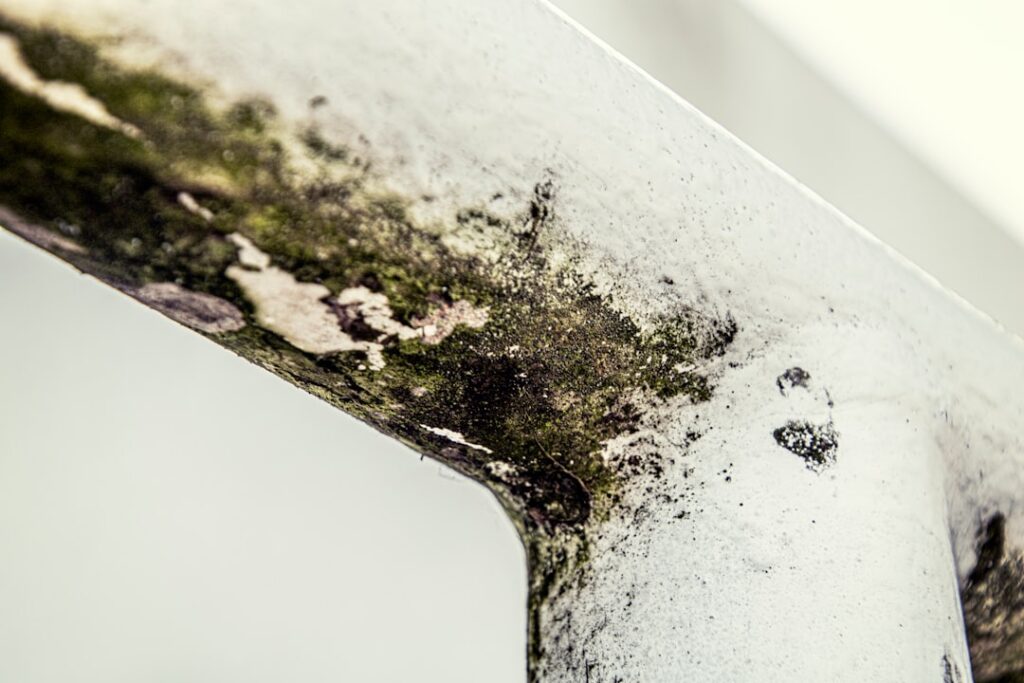
The question of what does black mold grow on is fundamentally a question about substrate. Mold needs organic carbon and nitrogen, and different building materials supply these in different amounts. This guide walks through the materials commonly found in homes and explains which support fast mold growth, which support slow growth, and which essentially resist colonization until something organic accumulates on the surface. Understanding the substrate side helps homeowners predict where mold is most likely to appear and choose materials that reduce future risk. This article summarizes EPA and CDC guidance current as of 2026.
Is this mold, asbestos, or water damage? Get a free instant screen
Upload a clear photo of the suspect area. You'll get an instant AI screening opinion and what to do next. This is screening guidance, not a professional determination.
Screening guidance only. AI can be wrong. Confirm asbestos, mold type, or lead with lab testing or a licensed professional before acting.
The Material Spectrum
Building materials sit on a spectrum from highly mold-friendly to mold-resistant. Three properties determine where a material sits on this spectrum: organic content, porosity, and surface roughness. Materials high in cellulose or lignin, with porous structure that retains moisture, and with rough surfaces that trap dust and biofilm support faster growth than materials low in organic content with sealed smooth surfaces.
The spectrum has practical implications for both remediation and new construction. Mold on highly friendly substrates usually requires replacement rather than cleaning. Mold on resistant substrates can often be wiped away because the growth is on the surface film rather than in the material. For broader diagnostic context, our mold inspection and testing hub covers what professionals consider.
Paper-Faced Drywall
Standard drywall has paper facings on both sides over a gypsum core. The paper is essentially pure cellulose — ideal mold food. Drywall is among the most mold-friendly common building materials in residential construction. Once a paper-faced drywall surface stays wet long enough, mold colonizes quickly on the paper layer and can extend into the gypsum core if wetness persists.
Drywall mold typically appears as flat blotchy stains following moisture patterns. Pressing the surface often reveals softness, and the back side of the drywall is usually more contaminated than the front. EPA guidance recommends removing and replacing porous materials such as paper-faced drywall when contamination is significant. Surface cleaning of drywall mold is unreliable because the colony extends into the paper and beyond.
Mold-resistant alternatives: paperless gypsum board (such as DensArmor or M-Bloc), cement board for wet areas, or fiber-reinforced gypsum products. These materials substantially reduce drywall-zone mold risk in bathrooms, basements, and other wet-area applications.
Wood and Wood Products
Wood contains cellulose and lignin and supports mold growth at moisture contents above roughly 16 percent. Softer woods such as pine and fir support faster growth than dense hardwoods. Engineered wood products — OSB, particleboard, MDF — generally support faster mold than solid lumber because the binders contain cellulose that mold can use, and the increased surface area exposes more organic material.
Wood mold often appears as scattered dark spots that grow into larger patches over time. On structural framing, mold typically follows moisture migration paths — at the bottom of studs near subfloor moisture, at the tops of studs near ceiling leaks, and along band joists where rim insulation has compressed. Sealed and finished wood is more resistant than bare wood because the finish reduces moisture absorption, but the protection is partial.
Wood replacement decisions depend on structural significance and extent. Cosmetic finish wood with mold can sometimes be sanded and refinished. Structural wood with surface mold can sometimes be cleaned and treated. Wood with mold penetrating beyond the surface usually requires replacement, especially when structural integrity is in question.
Carpet and Carpet Pad
Carpet pad is one of the most mold-friendly materials in typical homes. Foam pad absorbs water, holds it for extended periods, and provides a sheltered environment for colonization. The carpet itself varies by fiber — synthetic fibers such as polyester and olefin are less mold-friendly than natural fibers such as wool or cotton, but accumulated dust, skin oil, and food residue on any carpet provides organic substrate.
Wet carpet pad almost always grows mold within a few weeks unless removed and replaced. The pad cannot be reliably dried in place because moisture penetrates deep into the foam structure. Carpet itself can sometimes be saved if it dries quickly, but the decision depends on water source — clean-water events allow more salvage potential than gray-water or sewer-backup events, which generally require full replacement.
In basements and over concrete slabs, mold-resistant alternatives include sealed concrete with area rugs, luxury vinyl plank, ceramic tile, or engineered wood with proper subfloor membranes.
Fabric and Soft Goods
Curtains, upholstered furniture, mattresses, stored clothing, and similar soft goods all support mold growth on the fibers themselves and on accumulated organic deposits. Cotton, wool, and silk are particularly susceptible. Natural-fiber items stored in damp basements often develop mold within months even without acute water events.
Soft goods with light mold contamination can sometimes be cleaned through commercial laundering, dry cleaning, or specialty restoration services. Heavily contaminated items, especially upholstered furniture and mattresses with extensive porous interiors, are usually discarded rather than restored.
Paper, Cardboard, and Books
Stored cardboard boxes, books, paperwork, and similar materials in damp environments grow mold quickly because they are essentially pure cellulose. Basements with stored cardboard are a textbook example. The mold often progresses through stacks because the inner items stay damper longer than items exposed to air circulation.
Mold-contaminated paper materials are usually discarded. Books with significant value can sometimes be restored through specialty archival processes, but the cost generally exceeds the value of routine household paperwork. Photographing important documents before they become mold-contaminated is the simplest preservation strategy.
Tile, Glass, and Sealed Metal
Tile, glass, and sealed metal surfaces themselves are inorganic and do not support direct mold growth. However, any organic film accumulated on these surfaces — soap residue on shower tile, skin oils on glass shower doors, dust on metal duct interiors — provides substrate for mold growth at the surface film level.
This is why mold appears on “clean” tile in showers. The tile itself is not the substrate; the soap-residue film on top is. Cleaning the surface usually removes the visible mold because the colony has not penetrated the material. The mold returns, however, if the underlying moisture and film conditions persist.
Painted Surfaces
Paint covers a wide range of behaviors depending on type. Latex paint over drywall provides only a thin organic layer and is moderately mold-friendly when wet. Oil-based paint is more resistant. Mold-resistant paints with additives marketed for kitchen and bathroom use perform better than standard paints but do not eliminate growth potential.
Mold on painted surfaces sometimes appears to be on the paint but is actually growing on the substrate beneath, with the visible discoloration migrating through the paint over time. Surface cleaning may temporarily lift the visible mold, but if the underlying material is contaminated, the staining returns.
Concrete and Masonry
Bare cured concrete is poor mold habitat — it is alkaline, inorganic, and dries relatively quickly. However, painted concrete, concrete with surface organic deposits (dust, oils, biofilm), and concrete with adjacent porous materials all support mold at the surface level. Basement walls with paint or sealer plus dust accumulation are common mold zones.
Efflorescence — white or yellow mineral deposits on concrete — is sometimes mistaken for mold but is actually salt deposits from water moving through the concrete. The presence of efflorescence indicates the moisture conditions that favor mold elsewhere.
Insulation
Insulation behavior varies dramatically by type. Kraft-faced fiberglass batt insulation includes paper facing that supports mold growth when wet, and the fiberglass itself accumulates dust over time. Unfaced fiberglass is less friendly but still grows mold on dust deposits. Cellulose insulation is mold-friendly because it is essentially treated paper. Spray-foam insulation is among the most mold-resistant insulating materials because of low organic content and limited moisture absorption.
Wet insulation typically must be removed and replaced. Drying insulation in place is unreliable, and the material’s thermal performance often degrades after significant moisture exposure regardless of mold considerations.
HVAC Components
HVAC interior surfaces accumulate dust on metal, condensation on cold surfaces, and biofilm on coil fins. The combination supports mold growth on internally insulated flex duct (where the inner fiberglass liner traps moisture and dust), on coil fins and drain pans, and inside the air handler cabinet. Once mold establishes in the system, every fan cycle distributes spores throughout the home.
Internally insulated duct with extensive contamination is generally replaced rather than cleaned because the fiberglass liner cannot be reliably decontaminated. Metal duct can usually be cleaned mechanically. Coil and drain pan contamination can be cleaned, though severely corroded components are often replaced. For more on the HVAC mold side, our HVAC mold remediation guide covers the process.
Choosing Mold-Resistant Materials in Renovations
Renovation projects in wet areas — bathrooms, basements, kitchens, laundry rooms — are opportunities to reduce future mold risk through material selection. Paperless gypsum board or cement board for wet walls, sealed concrete or tile flooring rather than carpet in basements, spray-foam insulation rather than kraft-faced batt where possible, and mold-resistant paint products all raise the threshold for future colonization. None of these eliminate mold risk under chronic water events, but they reduce the probability of growth from minor moisture incidents.
References
- EPA brief guide to mold, moisture, and your home — U.S. Environmental Protection Agency
- CDC basic facts about mold and dampness — Centers for Disease Control and Prevention
- EPA mold remediation guide — U.S. Environmental Protection Agency
- NIEHS mold and indoor environments overview — National Institute of Environmental Health Sciences
Front Range homeowners renovating a wet area and wanting a vetted local inspector to assess mold risk can reach out through our contact page.